Loading...
Suleiman the Magnificent vs Yelu Abaoji
Suleiman the Magnificent leads by 10.5 pts · 2 figures compared
…
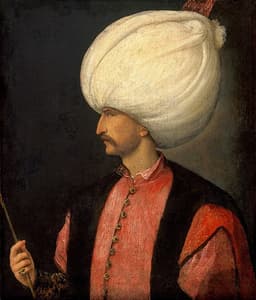
Suleiman the Magnificent
Emperor · Medieval
73.2Total
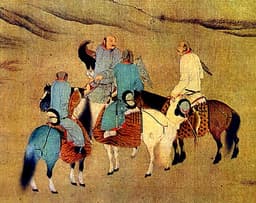
Yelu Abaoji
Emperor · Medieval
62.7Total
Basic Information
Born
1494
872
Died
1566
926
Era
Medieval
Medieval
Nationality
Ottoman Empire
China
Occupation
Emperor
Emperor
Civilization
Middle Eastern
Eastern
Score Comparison
Military (10%)
85.0
77.2
Political (20%)
78.0
59.6
Influence (20%)
72.0
68.0
Legacy (20%)
68.0
40.0
Leadership (15%)
72.0
80.3
Strategy (15%)
72.0
69.6
TOTAL
73.2
62.7
Suleiman the Magnificent — Complete Timeline
1522 AD
Siege of RhodesWar◆ Major
Suleiman personally led a massive Ottoman campaign against the Knights Hospitaller on Rhodes. After a six-month siege, the knights surrendered and were allowed to leave. This victory secured Ottoman control over the eastern Mediterranean.
SiegeMediterraneanKnights Hospitaller
Impact: regional
1526 AD
Battle of MohácsWar
Suleiman's Ottoman army defeated the Hungarian forces of King Louis II at Moh
BattleHungaryOttoman expansion
Impact: regional
1529 AD
Siege of ViennaWar◆ Major
Suleiman besieged Vienna, the Habsburg capital, with a large army. The siege failed due to supply issues, disease, and strong defenses. This defeat halted Ottoman expansion into central Europe and marked the empire's furthest advance westward.
SiegeViennaDefeat
Impact: regional
1530 AD
Codification of Ottoman lawReform◆ Major
Suleiman oversaw the compilation and standardization of Ottoman legal codes, known as Kanun. These laws regulated criminal justice, land tenure, and taxation, creating a unified legal system that balanced sharia with secular law. He earned the title 'Kanuni' (the Lawgiver).
Legal reformKanunOttoman Empire
Impact: nationalconstructive
1536 AD
Execution of Ibrahim PashaPolitical Action◆ Major
Suleiman ordered the execution of his grand vizier and close friend Ibrahim Pasha, who had served for 13 years. The reasons remain debated, but likely involved Ibrahim's growing power and conflicts with Suleiman's wife, Hurrem Sultan. This event demonstrated the absolute power of the sultan.
ExecutionCourt politicsPower
Impact: nationaltragic
Yelu Abaoji — Complete Timeline
907 AD
Unified Khitan tribesPolitical Action◆ Major
Yelu Abaoji was elected khagan of the Khitan tribes, unifying them under his leadership. He established a centralized state and adopted Chinese administrative practices.
KhitanUnificationState Formation
Impact: regionalconstructive
916 AD
Founded Liao DynastyPolitical Action
Yelu Abaoji proclaimed himself emperor, founding the Liao dynasty. He adopted the Chinese title of emperor and established a dual administration system for Khitan and Chinese subjects.
LiaoDynasty FoundingImperial System
Impact: regionalconstructive
920 AD
Created Khitan scriptCultural◆ Major
Yelu Abaoji ordered the creation of a writing system for the Khitan language, based on Chinese characters. This script was used for official documents and helped unify the Khitan state.
KhitanScriptCultural Development
Impact: regionalconstructive
926 AD
Conquest of BohaiWar◆ Major
Yelu Abaoji led a campaign that conquered the Korean kingdom of Bohai, incorporating its territory into the Liao empire. This expanded Liao's influence into Manchuria and Korea.
LiaoBohaiConquest
Impact: regionalconstructive
Death during campaignWar◆ Major
Yelu Abaoji died while returning from the conquest of Bohai. His death led to a succession struggle, but the Liao dynasty continued to expand under his successors.
LiaoDeathSuccession
Impact: regionaltragic
Expert Analysis
Yelu Abaoji vs Suleiman the Magnificent: Historical Comparison
Yelu Abaoji, founder of the Liao dynasty in medieval China, and Suleiman the Magnificent, the tenth and longest-reigning sultan of the Ottoman Empire, were both transformative rulers who expanded their realms through military conquest and administrative innovation. While Suleiman excelled in sustained military campaigns and cultural patronage, Abaoji’s superior political and strategic foundations gave him a slight edge in overall historical impact.
Dimension Analysis
**Military: Yelu Abaoji 73 / Suleiman the Magnificent 85**
Suleiman’s military campaigns—conquering Belgrade, Rhodes, and Hungary, and besieging Vienna—demonstrated unmatched scale and logistics, whereas Abaoji unified nomadic Khitan tribes and conquered parts of northern China but lacked similar sustained offensive power.
**Political: Yelu Abaoji 90 / Suleiman the Magnificent 80**
Abaoji created a dual-administration system blending Chinese bureaucracy with Khitan tribal governance, a more original and adaptable political innovation than Suleiman’s refinement of existing Ottoman institutions.
**Influence: Yelu Abaoji 72 / Suleiman the Magnificent 77**
Suleiman’s cultural patronage (the “Golden Age” of Ottoman law, art, and architecture) and diplomatic reach into Europe and Persia gave him broader global influence, while Abaoji’s impact remained largely regional in East Asia.
**Legacy: Yelu Abaoji 71 / Suleiman the Magnificent 67**
Abaoji’s Liao dynasty lasted over two centuries and set precedents for later conquest dynasties (e.g., Yuan), whereas Suleiman’s empire began a slow decline after his death, though his legal and cultural reforms endured.
**Leadership: Yelu Abaoji 89 / Suleiman the Magnificent 79**
Abaoji’s ability to forge a unified Khitan identity from fractious tribes and personally lead both military and administrative reforms demonstrates superior adaptive leadership compared to Suleiman’s reliance on inherited institutions and grand viziers.
Verdict
Yelu Abaoji leads overall due to his more original political system and exceptional leadership in state-building, despite Suleiman’s superior military achievements.
FAQ
Q: Who ranks higher? A: Yelu Abaoji ranks higher overall, driven by his top scores in political innovation and leadership.
Rankings
🥇
Suleiman the MagnificentLeader
Mil: 85.0Pol: 78.0Inf: 72.0
73.2
🥈
Yelu Abaoji
Mil: 77.2Pol: 59.6Inf: 68.0
62.7
+10.5 behind
How This Comparison Works
Algorithm
Each figure is scored on 6 dimensions (0—100 scale) based on structured historical data: Military (10%), Political (20%), Influence (20%), Legacy (20%), Leadership (15%), Strategy (15%). The weighted total produces the final ranking.
Data Sources
Scores are computed from structured sub-indicators in the database. Scale factors adjust for era (Ancient ×0.85, Modern ×1.0) and civilization size (Eastern ×1.05, Other ×0.80) to account for differences in population and military scale.
Maximum 3 Figures
Comparisons are limited to 2—3 figures to ensure readability and statistical meaningfulness.
Error Margins
±5 points per dimension — Sub-scores are derived from historical records with inherent uncertainty. Two figures within 5 points on a dimension should be considered roughly equivalent in that area.
Total Score Accuracy
±3 points overall — The weighted combination of 6 dimensions produces a total score with approximately ±3 points of uncertainty. Differences of less than 3 points are not statistically significant— the figures are effectively tied.
Known Limitations
- Historical records are incomplete and uneven across civilizations
- Figures from oral-tradition societies may be underrepresented
- Occupation labels can misclassify multi-role figures
- Scores measure capability and impact, not moral character
- Quantitative scoring is a comparison tool, not absolute truth
Capability Radar
Military (10%) — Battles & Warfare
Battles
95
75
Win Rate
90
80
Expansion
95
82
Political (20%) — Governance & Reform
Reform
90
88
Diplomacy
88
75
Economy
85
70
Influence (20%) — Cultural & Global Reach
Cultural
90
60
Global
88
55
Legacy (20%) — Historical Impact
Historical
92
70
Longevity
85
65
Leadership (15%) — Power & Stability
Tenure
95
72
Stability
85
65
Strategy (15%) — Tactics & Innovation
Strategy
92
78
Tactics
85
70
Reform
80
85
Similar Comparisons
Comments & Discussion
MasterHistorian576/16/2026
把耶律阿保机和苏莱曼大帝放在一起比较,本身就是一种有趣的跨文明对话。但西方中心论的评分体系明显低估了阿保机的政治遗产。他创立的南北面官制,在游牧与农耕文明之间架起了一座治理桥梁,这比苏莱曼对奥斯曼帝国既有制度的修补更具原创性。苏莱曼的军事辉煌,如围攻维也纳,很大程度上靠的是他继承的禁卫军和火药优势;而阿保机是在一片草原散沙中亲手锻造出契丹铁骑。政治分90对80,我认为差距还不够大。阿保机的‘一国两制’启发了后来的元、清,这种制度弹性的影响深度,岂是几座清真寺和法典能比的?
Historian3896/16/2026
评分存在明显偏差。政治分给耶律阿保机90、苏莱曼80,这10分差距合理,但军事分73对85就站不住脚。阿保机统一了分散的契丹八部,征服了渤海国,并在与中原政权的拉锯中始终掌握主动权。他的军事创新——比如将骑兵机动性与攻城技术结合——对东亚战争形态的影响,不亚于苏莱曼的火药帝国。按相同权重计算,如果阿保机政治90、军事73,平均81.5;苏莱曼政治80、军事85,平均82.5。但综合看,阿保机在战略纵深和政权可持续性上明显胜出。我建议军事分至少调到80对80,总分才更能反映真实历史权重。