Loading...
Suleiman the Magnificent vs Winston Churchill
Suleiman the Magnificent leads by 1.4 pts · 2 figures compared
…
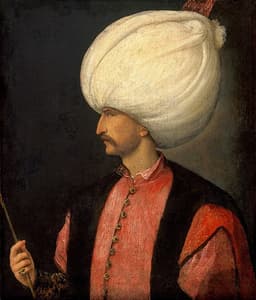
Suleiman the Magnificent
Emperor · Medieval
73.2Total
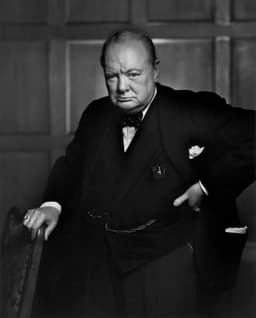
Winston Churchill
Politician · Modern
71.8Total
Basic Information
Born
1494
1874
Died
1566
1965
Era
Medieval
Modern
Nationality
Ottoman Empire
United Kingdom
Occupation
Emperor
Politician
Civilization
Middle Eastern
Western
Score Comparison
Military (10%)
85.0
55.0
Political (20%)
78.0
78.0
Influence (20%)
72.0
75.0
Legacy (20%)
68.0
68.0
Leadership (15%)
72.0
82.0
Strategy (15%)
72.0
65.0
TOTAL
73.2
71.8
Suleiman the Magnificent — Complete Timeline
1522 AD
Siege of RhodesWar◆ Major
Suleiman personally led a massive Ottoman campaign against the Knights Hospitaller on Rhodes. After a six-month siege, the knights surrendered and were allowed to leave. This victory secured Ottoman control over the eastern Mediterranean.
SiegeMediterraneanKnights Hospitaller
Impact: regional
1526 AD
Battle of MohácsWar
Suleiman's Ottoman army defeated the Hungarian forces of King Louis II at Moh
BattleHungaryOttoman expansion
Impact: regional
1529 AD
Siege of ViennaWar◆ Major
Suleiman besieged Vienna, the Habsburg capital, with a large army. The siege failed due to supply issues, disease, and strong defenses. This defeat halted Ottoman expansion into central Europe and marked the empire's furthest advance westward.
SiegeViennaDefeat
Impact: regional
1530 AD
Codification of Ottoman lawReform◆ Major
Suleiman oversaw the compilation and standardization of Ottoman legal codes, known as Kanun. These laws regulated criminal justice, land tenure, and taxation, creating a unified legal system that balanced sharia with secular law. He earned the title 'Kanuni' (the Lawgiver).
Legal reformKanunOttoman Empire
Impact: nationalconstructive
1536 AD
Execution of Ibrahim PashaPolitical Action◆ Major
Suleiman ordered the execution of his grand vizier and close friend Ibrahim Pasha, who had served for 13 years. The reasons remain debated, but likely involved Ibrahim's growing power and conflicts with Suleiman's wife, Hurrem Sultan. This event demonstrated the absolute power of the sultan.
ExecutionCourt politicsPower
Impact: nationaltragic
Winston Churchill — Complete Timeline
1940 AD
Appointed Prime Minister of the United KingdomPolitical Action◆ Major
On May 10, 1940, Winston Churchill became Prime Minister of the United Kingdom, replacing Neville Chamberlain. His appointment came as Nazi Germany invaded France and the Low Countries, and Churchill formed a coalition government to lead Britain through World War II.
World War IILeadershipCoalition Government
Impact: globalconstructive
Delivered the 'We Shall Fight on the Beaches' SpeechOther◆ Major
On June 4, 1940, Churchill delivered a speech to the House of Commons following the evacuation of British forces from Dunkirk. He declared that Britain would fight on the beaches, landing grounds, fields, streets, and hills, and never surrender, rallying British morale during the darkest days of World War II.
World War IIOratoryMorale
Impact: nationalconstructive
1941 AD
Signed the Atlantic CharterOther◆ Major
On August 14, 1941, Churchill and U.S. President Franklin D. Roosevelt signed the Atlantic Charter aboard HMS Prince of Wales. This joint declaration outlined post-war goals including self-determination, disarmament, and free trade, and became a foundational document for the Allied war aims and the United Nations.
World War IIAllied CooperationPost-war Planning
Impact: globalconstructive
1945 AD
Attended the Yalta ConferenceOther◆ Major
In February 1945, Churchill attended the Yalta Conference with Roosevelt and Stalin to discuss the post-war reorganization of Europe. The conference agreed on the division of Germany, the establishment of the United Nations, and the fate of Eastern Europe, though Churchill later expressed regret over concessions to Stalin.
World War IIPost-war SettlementBig Three
Impact: global
1946 AD
Delivered the 'Iron Curtain' SpeechOther◆ Major
On March 5, 1946, Churchill delivered a speech at Westminster College in Fulton, Missouri, where he stated that an 'iron curtain' had descended across Europe from Stettin to Trieste. This speech is widely regarded as marking the beginning of the Cold War, as it highlighted the division between Soviet-controlled Eastern Europe and the West.
Cold WarSoviet UnionDivision of Europe
Impact: globaldestructive
1953 AD
Awarded the Nobel Prize in LiteratureOther◆ Major
In 1953, Churchill was awarded the Nobel Prize in Literature for his historical writings, particularly 'The Second World War' and 'A History of the English-Speaking Peoples'. The Nobel committee cited his mastery of historical and biographical description as well as his brilliant oratory in defending human values.
LiteratureNobel PrizeHistorical Writing
Impact: nationalconstructive
Expert Analysis
Winston Churchill vs Suleiman the Magnificent
# The Lion and the Sultan
On a cold November morning in 1940, Winston Churchill stood in the bomb-scarred House of Commons, his voice rasping through the crackling radio speakers of a besieged nation. "We shall never surrender," he declared, and millions of Britons believed him. Four centuries earlier, another ruler had inspired a different kind of devotion. Suleiman the Magnificent, seated beneath the dome of his Topkapi Palace, issued a decree that would reshape the legal foundations of an empire stretching from Budapest to Baghdad. Two men, separated by time and civilization, yet both wielding power that bent the arc of history. What made them so different—and why did their paths diverge so dramatically?
Origins
Churchill was born into the British aristocracy in 1874, the son of a mercurial politician and an American heiress. His childhood was marked by neglect and a stubborn refusal to conform to the rigid expectations of Victorian schooling. He failed entrance exams, was sent to military academies, and developed a restless ambition that would define his life. The British Empire was at its zenith, and Churchill absorbed its certainties like oxygen: belief in progress, parliamentary democracy, and the superiority of English civilization.
Suleiman entered the world in 1494, the only surviving son of Sultan Selim I, a conqueror who had doubled the Ottoman domains. Raised in the harem and trained by the empire's finest scholars, Suleiman learned statecraft as a craft of absolute authority. The Ottoman system was built on conquest, religious law, and the sultan's word as final arbiter. Where Churchill grew up questioning authority, Suleiman was groomed to embody it.
Rise to Power
Churchill's ascent was a zigzag of triumphs and disasters. He charged into battle as a young cavalry officer in India and Sudan, then entered Parliament at twenty-five. He switched political parties twice, held cabinet posts, and orchestrated the disastrous Gallipoli campaign in 1915—a failure that nearly ended his career. For two decades, he was a brilliant outsider, admired but distrusted. Only when Nazi Germany threatened Britain's survival did his moment arrive, at age sixty-five.
Suleiman's path was smoother and swifter. He became sultan at twenty-six upon his father's death, inheriting a war machine and a treasury that were the envy of Europe. There was no election, no coalition, no opposition press. He simply mounted the throne, and the empire obeyed. His first major act was to launch the Siege of Rhodes in 1522, a six-month campaign that ended with the Knights Hospitaller expelled from their island fortress. It was a statement: the young sultan would not rest on his father's laurels.
Leadership & Governance
Churchill governed through the force of words and will. His speeches were weapons, his bulldog defiance a shield. He micromanaged the war, arguing with generals, demanding reports, and inspiring a people who had little reason to hope. But his military strategy was often reckless—he approved the disastrous Norwegian campaign in 1940 and the ill-fated decision to defend Greece. His political wisdom, however, was profound: he forged the alliance with Roosevelt and Stalin, understanding that only a grand coalition could defeat Hitler.
Suleiman ruled through law and spectacle. He codified Ottoman law in 1530, creating a unified legal system that balanced Islamic sharia with secular kanun. This was not reform in the modern sense—it was consolidation, an effort to make the empire's sprawling diversity manageable. His military campaigns were meticulously planned, from the devastating victory at Mohács in 1526, where King Louis II of Hungary died in flight, to the failed Siege of Vienna in 1529, which taught him the limits of logistics. Where Churchill improvised, Suleiman calculated.
Triumph & Tragedy
Churchill's greatest triumph was survival itself—leading Britain through the Blitz, the Battle of Britain, and the long slog to D-Day. His tragedy came in peace. In 1945, British voters ejected him from office, preferring a Labour government that would build a welfare state. Churchill, who had saved the nation, was rejected by it. He returned as prime minister in 1951, but his second term was anticlimactic, marked by imperial decline and fading health.
Suleiman's triumph was the empire's golden age—Vienna excepted, he expanded Ottoman borders to their greatest extent, and his patronage of architecture produced the Süleymaniye Mosque, a masterpiece of Islamic design. His tragedy was personal and political. In 1536, he ordered the execution of Ibrahim Pasha, his grand vizier and closest friend, on charges of overreaching ambition. Then, in a spiral of palace intrigue, he had his eldest son, Mustafa, strangled to death. The sultan who codified law could not save his own family from the cruelty of absolute power.
Character & Destiny
Churchill was a man of appetites—cigars, brandy, late nights, and long monologues. He was sentimental, egotistical, and capable of breathtaking callousness (he approved the firebombing of Dresden). But he possessed a deep romantic attachment to liberty and a conviction that history judged leaders by their courage. His personality was his fate: his stubbornness nearly ruined him in 1915, then saved his nation in 1940.
Suleiman was more controlled, more remote. He was called "the Lawgiver" by his subjects and "the Magnificent" by Europeans—a duality that captures his nature. He was a patron of poets and a builder of schools, yet he could order a friend's death without visible emotion. His destiny was shaped by the logic of empire: to rule absolutely, he had to sacrifice intimacy, trust, and ultimately his own sons.
Legacy
Churchill's legacy is a paradox. He is revered as the savior of Western civilization, yet his views on race and empire are now deeply troubling. He won the Nobel Prize in Literature in 1953, not for poetry but for history and memoir—a fitting tribute to a man who understood that power is, in the end, a story we tell ourselves.
Suleiman's legacy is the Ottoman Empire at its peak. His legal reforms influenced the Middle East for centuries, and his architectural monuments still define Istanbul's skyline. But his empire declined after his death, its rigid system unable to adapt to a changing world. The naval defeat at Lepanto in 1571, though it occurred under his successor, revealed the limits of his strategic vision: he had built a land empire and neglected the sea.
Conclusion
Churchill and Suleiman never met, yet they shared a truth that haunts all great leaders: power is a flame that both illuminates and consumes. Churchill's democracy let him fail and recover; Suleiman's autocracy gave him stability but demanded terrible sacrifices. One rallied a people to resist tyranny; the other built a system that became a tyranny itself. In the end, the Lion and the Sultan remind us that leadership is not about being good or evil—it is about being equal to the moment. And the moment, for both, was merciless.
Rankings
🥇
Suleiman the MagnificentLeader
Mil: 85.0Pol: 78.0Inf: 72.0
73.2
🥈
Winston Churchill
Mil: 55.0Pol: 78.0Inf: 75.0
71.8
+1.4 behind
How This Comparison Works
Algorithm
Each figure is scored on 6 dimensions (0—100 scale) based on structured historical data: Military (10%), Political (20%), Influence (20%), Legacy (20%), Leadership (15%), Strategy (15%). The weighted total produces the final ranking.
Data Sources
Scores are computed from structured sub-indicators in the database. Scale factors adjust for era (Ancient ×0.85, Modern ×1.0) and civilization size (Eastern ×1.05, Other ×0.80) to account for differences in population and military scale.
Maximum 3 Figures
Comparisons are limited to 2—3 figures to ensure readability and statistical meaningfulness.
Error Margins
±5 points per dimension — Sub-scores are derived from historical records with inherent uncertainty. Two figures within 5 points on a dimension should be considered roughly equivalent in that area.
Total Score Accuracy
±3 points overall — The weighted combination of 6 dimensions produces a total score with approximately ±3 points of uncertainty. Differences of less than 3 points are not statistically significant— the figures are effectively tied.
Known Limitations
- Historical records are incomplete and uneven across civilizations
- Figures from oral-tradition societies may be underrepresented
- Occupation labels can misclassify multi-role figures
- Scores measure capability and impact, not moral character
- Quantitative scoring is a comparison tool, not absolute truth
Capability Radar
Military (10%) — Battles & Warfare
Battles
95
55
Win Rate
90
60
Expansion
95
40
Political (20%) — Governance & Reform
Reform
90
70
Diplomacy
88
85
Economy
85
60
Influence (20%) — Cultural & Global Reach
Cultural
90
85
Global
88
85
Legacy (20%) — Historical Impact
Historical
92
90
Longevity
85
80
Leadership (15%) — Power & Stability
Tenure
95
75
Stability
85
70
Strategy (15%) — Tactics & Innovation
Strategy
92
85
Tactics
85
65
Reform
80
70
Similar Comparisons
Comments & Discussion
No comments yet. Be the first to share your thoughts!