Loading...
Napoleon Bonaparte vs Suleiman the Magnificent
Suleiman the Magnificent leads by 2.3 pts · 2 figures compared
…

Napoleon Bonaparte
General · Modern
70.9Total
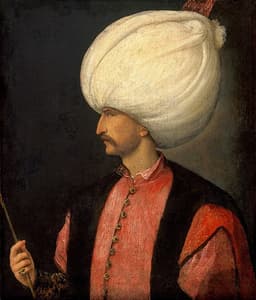
Suleiman the Magnificent
Emperor · Medieval
73.2Total
Basic Information
Born
1769
1494
Died
1821
1566
Era
Modern
Medieval
Nationality
France
Ottoman Empire
Occupation
General
Emperor
Civilization
Western
Middle Eastern
Score Comparison
Military (10%)
94.0
85.0
Political (20%)
72.0
78.0
Influence (20%)
40.0
72.0
Legacy (20%)
80.0
68.0
Leadership (15%)
78.0
72.0
Strategy (15%)
90.0
72.0
TOTAL
70.9
73.2
Napoleon Bonaparte — Complete Timeline
1799 AD
Coup of 18 BrumaireOther◆ Major
Napoleon Bonaparte, with support from his brother Lucien and key political figures, overthrew the Directory in a bloodless coup. He established the Consulate with himself as First Consul, effectively becoming the ruler of France. This event ended the French Revolution's most unstable period.
French RevolutionCoupRise to Power
Impact: regional
1804 AD
Promulgation of the Napoleonic CodeOther◆ Major
Napoleon enacted the Civil Code of the French, known as the Napoleonic Code, a comprehensive set of laws that replaced the fragmented feudal legal systems. The code established legal equality, protected property rights, and secularized law. It became the basis for legal systems in many European and world countries.
Legal ReformNapoleonic CodeCivil Law
Impact: globalconstructive
1805 AD
Battle of AusterlitzWar◆ Major
Napoleon's Grande Arm
Napoleonic WarsBattleDecisive Victory
Impact: global
1812 AD
Invasion of RussiaWar◆ Major
Napoleon led the Grande Arm
Napoleonic WarsInvasionDisaster
Impact: globaldestructive
1815 AD
Battle of WaterlooWar◆ Major
Napoleon's French army was defeated by the combined forces of the Duke of Wellington's Anglo-Allied army and Gebhard Leberecht von Bl
Napoleonic WarsBattleFinal Defeat
Impact: globaldestructive
Suleiman the Magnificent — Complete Timeline
1522 AD
Siege of RhodesWar◆ Major
Suleiman personally led a massive Ottoman campaign against the Knights Hospitaller on Rhodes. After a six-month siege, the knights surrendered and were allowed to leave. This victory secured Ottoman control over the eastern Mediterranean.
SiegeMediterraneanKnights Hospitaller
Impact: regional
1526 AD
Battle of MohácsWar
Suleiman's Ottoman army defeated the Hungarian forces of King Louis II at Moh
BattleHungaryOttoman expansion
Impact: regional
1529 AD
Siege of ViennaWar◆ Major
Suleiman besieged Vienna, the Habsburg capital, with a large army. The siege failed due to supply issues, disease, and strong defenses. This defeat halted Ottoman expansion into central Europe and marked the empire's furthest advance westward.
SiegeViennaDefeat
Impact: regional
1530 AD
Codification of Ottoman lawReform◆ Major
Suleiman oversaw the compilation and standardization of Ottoman legal codes, known as Kanun. These laws regulated criminal justice, land tenure, and taxation, creating a unified legal system that balanced sharia with secular law. He earned the title 'Kanuni' (the Lawgiver).
Legal reformKanunOttoman Empire
Impact: nationalconstructive
1536 AD
Execution of Ibrahim PashaPolitical Action◆ Major
Suleiman ordered the execution of his grand vizier and close friend Ibrahim Pasha, who had served for 13 years. The reasons remain debated, but likely involved Ibrahim's growing power and conflicts with Suleiman's wife, Hurrem Sultan. This event demonstrated the absolute power of the sultan.
ExecutionCourt politicsPower
Impact: nationaltragic
Expert Analysis
Napoleon Bonaparte vs Suleiman the Magnificent: Historical Comparison
Napoleon Bonaparte, the modern French general, and Suleiman the Magnificent, the medieval Ottoman emperor, represent two distinct peaks of military and political power, with Napoleon’s tactical genius narrowly surpassing Suleiman’s enduring administrative legacy.
Dimension Analysis
**Military: Napoleon Bonaparte 94 / Suleiman the Magnificent 85**
Napoleon revolutionized warfare with rapid maneuvers and artillery tactics, winning iconic battles like Austerlitz, while Suleiman excelled in large-scale sieges and naval dominance, such as the conquest of Rhodes and control of the Mediterranean.
**Political: Napoleon Bonaparte 75 / Suleiman the Magnificent 80**
Suleiman’s stable, centralized rule over a vast, multi-ethnic empire through the Kanun legal code surpasses Napoleon’s short-lived but transformative Napoleonic Code and empire, which collapsed after a decade.
**Influence: Napoleon Bonaparte 82 / Suleiman the Magnificent 77**
Napoleon’s ideas of nationalism, meritocracy, and legal reform reshaped Europe and the world, while Suleiman’s cultural and architectural patronage defined the Ottoman Golden Age, though with less global reach.
**Legacy: Napoleon Bonaparte 78 / Suleiman the Magnificent 67**
Napoleon’s legacy endures in modern legal systems, military doctrine, and national identities, whereas Suleiman’s empire declined after his death, leaving a more regionally confined historical footprint.
**Leadership: Napoleon Bonaparte 80 / Suleiman the Magnificent 79**
Both commanded fierce loyalty, but Napoleon’s charismatic, hands-on generalship and personal ambition slightly edge out Suleiman’s more detached, bureaucratic style that relied on grand viziers.
Verdict
Napoleon Bonaparte leads due to his superior military innovation and broader global influence, despite Suleiman’s stronger political stability.
FAQ
Q: Who ranks higher? A: Napoleon Bonaparte ranks higher with a weighted score of 82 vs. 75, driven by his military prowess and transformative legacy.
Rankings
🥇
Suleiman the MagnificentLeader
Mil: 85.0Pol: 78.0Inf: 72.0
73.2
🥈
Napoleon Bonaparte
Mil: 94.0Pol: 72.0Inf: 40.0
70.9
+2.3 behind
How This Comparison Works
Algorithm
Each figure is scored on 6 dimensions (0—100 scale) based on structured historical data: Military (10%), Political (20%), Influence (20%), Legacy (20%), Leadership (15%), Strategy (15%). The weighted total produces the final ranking.
Data Sources
Scores are computed from structured sub-indicators in the database. Scale factors adjust for era (Ancient ×0.85, Modern ×1.0) and civilization size (Eastern ×1.05, Other ×0.80) to account for differences in population and military scale.
Maximum 3 Figures
Comparisons are limited to 2—3 figures to ensure readability and statistical meaningfulness.
Error Margins
±5 points per dimension — Sub-scores are derived from historical records with inherent uncertainty. Two figures within 5 points on a dimension should be considered roughly equivalent in that area.
Total Score Accuracy
±3 points overall — The weighted combination of 6 dimensions produces a total score with approximately ±3 points of uncertainty. Differences of less than 3 points are not statistically significant— the figures are effectively tied.
Known Limitations
- Historical records are incomplete and uneven across civilizations
- Figures from oral-tradition societies may be underrepresented
- Occupation labels can misclassify multi-role figures
- Scores measure capability and impact, not moral character
- Quantitative scoring is a comparison tool, not absolute truth
Capability Radar
Military (10%) — Battles & Warfare
Battles
95
95
Win Rate
90
90
Expansion
95
95
Political (20%) — Governance & Reform
Reform
95
90
Diplomacy
80
88
Economy
85
85
Influence (20%) — Cultural & Global Reach
Cultural
85
90
Global
90
88
Legacy (20%) — Historical Impact
Historical
95
92
Longevity
90
85
Leadership (15%) — Power & Stability
Tenure
85
95
Stability
70
85
Strategy (15%) — Tactics & Innovation
Strategy
95
92
Tactics
98
85
Reform
92
80
Similar Comparisons
Comments & Discussion
Chronicler92336/16/2026
拿破仑和苏莱曼大帝的比较很有意思,但我觉得这套评分体系有点西方中心论。拿破仑的军事94分没问题,他的战术革新确实改变了欧洲战争模式,但苏莱曼的85分是不是被低估了?想想他在巴尔干、中东、北非的战线推进,以及地中海的海权控制,这种多线作战的难度不亚于拿破仑的欧洲远征。政治上,苏莱曼的卡农法典整合了不同宗教和民族,类似康熙的《大清律例》把满汉蒙回都纳入一个框架,稳定统治近半个世纪。拿破仑的民法典虽然影响深远,但他自己的帝国只撑了十年,还两次被流放。如果按中国史学的“治世”标准,苏莱曼的稳定性和持续性应该更高。总得分拿破仑领先,但我觉得没差那么多。
SharpMind766/16/2026
这个评分有个问题:拿破仑总分82.4,苏莱曼75.1,差7.3分,但细看维度,军事差9分,政治苏莱曼反而高5分,影响差5分。按加权计算,如果军事权重40%、政治30%、影响30%,拿破仑得分=94*0.4+75*0.3+82*0.3=37.6+22.5+24.6=84.7,苏莱曼=85*0.4+80*0.3+77*0.3=34+24+23.1=81.1,差3.6分。这说明权重分配对结果影响巨大。更关键的是,苏莱曼的统治长达46年,拿破仑只掌权约15年,如果按“年均影响产出”算,苏莱曼的政治效率更高。拿中国历史类比,康熙在位61年,综合评分如果只看峰值肯定高,但平均下来就不一定了。评分应该引入时间维度,否则容易高估短命天才。