Loading...
Soeharto vs Tokugawa Ieyasu
Tokugawa Ieyasu leads by 19.8 pts · 2 figures compared
…
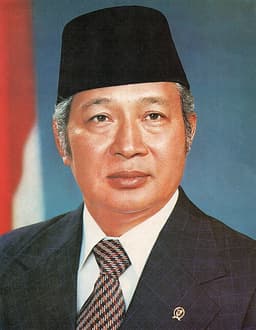
Soeharto
General · Modern
62.0Total
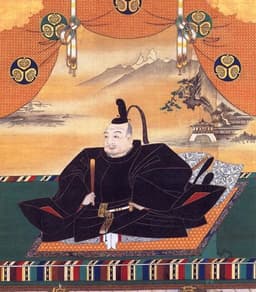
Tokugawa Ieyasu
General · Modern
81.8Total
Basic Information
Born
1921
1543
Died
—
1616
Era
Modern
Modern
Nationality
Indonesia
Japan
Occupation
General
General
Civilization
Eastern
Eastern
Score Comparison
Military (10%)
55.0
78.0
Political (20%)
70.0
82.0
Influence (20%)
55.0
88.0
Legacy (20%)
58.0
75.0
Leadership (15%)
78.0
85.0
Strategy (15%)
60.0
82.0
TOTAL
62.0
81.8
Soeharto — Complete Timeline
1966 AD
Assumed Power via SupersemarPolitical Action
Soeharto received the Supersemar order from President Sukarno, granting him authority to restore order after the 30 September Movement. This marked the beginning of his rise to power.
Power TransitionSupersemarIndonesia
Impact: national
1967 AD
Inaugurated as Acting PresidentPolitical Action◆ Major
Soeharto was inaugurated as acting president, replacing Sukarno. He formally became president in 1968, beginning the New Order regime that lasted 32 years.
PresidencyNew OrderIndonesia
Impact: national
1975 AD
Invasion of East TimorWar◆ Major
Soeharto ordered the invasion of East Timor following its declaration of independence. The occupation resulted in widespread human rights abuses and an estimated 100,000-200,000 deaths.
InvasionEast TimorHuman Rights
Impact: regionaldestructive
1998 AD
Resignation Amidst Economic CrisisPolitical Action
Soeharto resigned as president after massive protests triggered by the Asian Financial Crisis. His resignation ended the New Order regime and led to democratic reforms.
ResignationCrisisReformasi
Impact: nationaltragic
Tokugawa Ieyasu — Complete Timeline
1600 AD
Battle of SekigaharaWar
Tokugawa Ieyasu led the Eastern Army to victory over Ishida Mitsunari's Western Army at Sekigahara. This decisive battle ended the Sengoku period and established Ieyasu as the supreme military ruler of Japan, paving the way for the Tokugawa shogunate.
Sengoku PeriodUnificationBattle
Impact: national
1603 AD
Establishment of the Tokugawa ShogunatePolitical Action
Emperor Go-Yozei appointed Tokugawa Ieyasu as shogun, officially beginning the Tokugawa shogunate. Ieyasu established his government in Edo (modern Tokyo), centralizing military and political power under his family's control.
ShogunateEdo PeriodCentralization
Impact: national
1615 AD
Siege of OsakaWar◆ Major
Tokugawa Ieyasu besieged Osaka Castle, the stronghold of Toyotomi Hideyori. The castle fell, and Hideyori committed suicide. This campaign eliminated the last major opposition to Tokugawa rule, solidifying the shogunate's control over Japan.
Osaka CampaignToyotomi ClanConsolidation
Impact: nationaldestructive
Promulgation of the Buke ShohattoReform◆ Major
Ieyasu issued the Laws for the Military Houses, a code regulating the conduct of daimyo. It restricted castle construction, required alternate attendance in Edo, and prohibited alliances without shogunal permission. This law helped control the feudal lords.
Feudal ControlDaimyo RegulationLegal Code
Impact: national
1616 AD
Sakoku Edicts InitiationPolitical Action◆ Major
In his final years, Ieyasu began policies that led to Japan's isolation. He restricted foreign trade to specific ports and expelled Christian missionaries. These measures, expanded by successors, resulted in the sakoku policy that isolated Japan for over 200 years.
IsolationismForeign PolicyChristianity
Impact: national
Expert Analysis
Tokugawa Ieyasu vs Soeharto
# The Unifier and the Strongman: Tokugawa Ieyasu and Soeharto
On a winter morning in 1600, a 57-year-old general stood on a hill overlooking the fog-shrouded valley of Sekigahara, watching the fate of Japan hang in the balance of a single day's battle. Four centuries later, in the tropical heat of Jakarta, another general in crisp khaki received a piece of paper that would hand him control of an archipelago of 17,000 islands. Both men emerged from chaos to impose order. Both ruled for decades. But the peace Tokugawa Ieyasu built lasted 250 years, while Soeharto's New Order crumbled in a matter of weeks. The difference lies not in their ambition, but in how they understood power itself.
Origins
Tokugawa Ieyasu was born into a world of endless war. The son of a minor lord in Japan's warring states period, he spent his childhood as a hostage—first to the Oda clan, then to the Imagawa. This brutal apprenticeship taught him patience, calculation, and the art of survival. He learned that power was something to be gathered slowly, like water seeping through stone. By the time he reached adulthood, he had developed a philosophy of governance that prized stability above all else.
Soeharto emerged from a different kind of chaos. Born in 1921 in a small village in Java, he grew up under Dutch colonial rule. His father was a minor irrigation official, his mother a peasant. The Japanese occupation of Indonesia during World War II shattered the old order and gave young men like Soeharto their first taste of military command. He rose through the ranks of the Indonesian army during the revolution against the Dutch, learning that power in a post-colonial state was fluid, personal, and often brutal.
Rise to Power
Ieyasu's path to supremacy was measured in decades. He served under the great unifier Oda Nobunaga, then bided his time under Toyotomi Hideyoshi. When Hideyoshi died, leaving a young heir, Ieyasu saw his moment. The Battle of Sekigahara in 1600 was not a sudden seizure of power but the culmination of a lifetime of patient maneuvering. His victory was decisive—the Eastern Army crushed the Western forces in a single morning—but Ieyasu understood that battles win wars, not peace.
Soeharto's rise was swifter and more opportunistic. The 1965 coup attempt in Indonesia—the so-called 30 September Movement—unleashed a wave of violence that killed hundreds of thousands. Soeharto, then a general commanding the army's strategic reserve, positioned himself as the savior of the nation. In March 1966, he received the Supersemar order from President Sukarno, a document that granted him authority to restore order. Within a year, he had sidelined Sukarno entirely. Where Ieyasu had spent forty years climbing a ladder, Soeharto kicked the ladder away in eighteen months.
Leadership & Governance
Their ruling styles reveal the deepest differences. Ieyasu governed through systems. The Tokugawa shogunate was a masterpiece of institutional design: the *bakuhan* system divided Japan into semi-autonomous domains controlled by daimyo, while the shogunate held the center. The Laws for the Military Houses (Buke Shohatto) of 1615 regulated every aspect of daimyo behavior, from castle construction to marriage alliances. Ieyasu did not need to kill his rivals—he bound them in a web of rules so tight that rebellion became unthinkable.
Soeharto governed through networks. His New Order was built on a pyramid of patronage: generals received business concessions, bureaucrats received positions, and everyone owed loyalty to the president. The military was given a "dual function"—both defense and social-political roles—that made it the backbone of the regime. Economic growth was real—Indonesia's GDP per capita quadrupled during his rule—but it was growth without institutions. The system worked as long as the money flowed.
Triumph & Tragedy
Ieyasu's greatest triumph was the Siege of Osaka in 1615, where he destroyed the last remnants of the Toyotomi clan. But his true achievement was what followed: the Sakoku edicts that sealed Japan from the outside world. To modern eyes, isolation seems a tragedy—a nation turning its back on progress. But for Ieyasu, it was the logical conclusion of a life spent watching foreign guns and foreign ideas tear his country apart. He chose peace over change.
Soeharto's triumph was economic: Indonesia went from a basket case to a rising Asian tiger. His tragedy was the 1997 Asian Financial Crisis. When the rupiah collapsed and the IMF demanded reforms, the entire patronage system unraveled. Students filled the streets. His own generals abandoned him. In May 1998, after 32 years in power, Soeharto resigned in a televised speech that lasted barely two minutes. The strongman who had crushed every enemy found he had built nothing that could survive him.
Character & Destiny
Ieyasu was famously patient. His favorite saying was: "The strong man is the one who can endure." He waited for his enemies to make mistakes, for rice prices to rise, for the seasons to turn. He understood that time was his ally. Soeharto was a master of control—of information, of opponents, of the narrative. But control is brittle. When the crisis came, he had no reservoir of trust to draw upon.
Legacy
Ieyasu's legacy is the Edo period—250 years of peace that shaped Japanese identity. The isolation he imposed preserved a unique culture, though it also left Japan dangerously backward by the time Commodore Perry arrived in 1853. Soeharto's legacy is more ambiguous. He lifted millions out of poverty, but also crushed democracy, looted the nation, and left behind a culture of corruption that Indonesia still struggles to escape.
Conclusion
Standing at the end of their lives, both men might have claimed success. But Ieyasu built a house that stood for centuries, while Soeharto built a tent that collapsed in the first storm. The difference was not in their strength, but in their understanding of what strength truly means. Ieyasu knew that power, to last, must become invisible—woven into laws, customs, and the quiet habits of everyday life. Soeharto never learned that lesson. In the end, the patient general outlasted the strongman, not because he was stronger, but because he was wiser.
Rankings
🥇
Tokugawa IeyasuLeader
Mil: 78.0Pol: 82.0Inf: 88.0
81.8
🥈
Soeharto
Mil: 55.0Pol: 70.0Inf: 55.0
62.0
+19.8 behind
How This Comparison Works
Algorithm
Each figure is scored on 6 dimensions (0—100 scale) based on structured historical data: Military (10%), Political (20%), Influence (20%), Legacy (20%), Leadership (15%), Strategy (15%). The weighted total produces the final ranking.
Data Sources
Scores are computed from structured sub-indicators in the database. Scale factors adjust for era (Ancient ×0.85, Modern ×1.0) and civilization size (Eastern ×1.05, Other ×0.80) to account for differences in population and military scale.
Maximum 3 Figures
Comparisons are limited to 2—3 figures to ensure readability and statistical meaningfulness.
Error Margins
±5 points per dimension — Sub-scores are derived from historical records with inherent uncertainty. Two figures within 5 points on a dimension should be considered roughly equivalent in that area.
Total Score Accuracy
±3 points overall — The weighted combination of 6 dimensions produces a total score with approximately ±3 points of uncertainty. Differences of less than 3 points are not statistically significant— the figures are effectively tied.
Known Limitations
- Historical records are incomplete and uneven across civilizations
- Figures from oral-tradition societies may be underrepresented
- Occupation labels can misclassify multi-role figures
- Scores measure capability and impact, not moral character
- Quantitative scoring is a comparison tool, not absolute truth
Capability Radar
Military (10%) — Battles & Warfare
Battles
35
85
Win Rate
40
90
Expansion
20
75
Political (20%) — Governance & Reform
Reform
55
90
Diplomacy
65
85
Economy
70
88
Influence (20%) — Cultural & Global Reach
Cultural
50
85
Global
55
70
Legacy (20%) — Historical Impact
Historical
60
90
Longevity
55
95
Leadership (15%) — Power & Stability
Tenure
85
95
Stability
75
95
Strategy (15%) — Tactics & Innovation
Strategy
45
92
Tactics
30
88
Reform
60
80
Similar Comparisons
Comments & Discussion
ShadowStrategist6/16/2026
Ieyasu's 250-year peace proves he understood institutional power, not just personal rule. He systematically dismantled rival domains through land redistribution and the sankin kotai system, creating structural checks that outlived him. Soeharto, by contrast, built a personality cult around corruption and military force—the moment Suharto's health faltered, his entire house of cards collapsed. That's the difference between a statesman who builds a constitution and a warlord who just builds a bank
战国骨灰盒6/16/2026
比起建立制度,苏哈托更像是把印尼当成私人提款机——他家族控制了全国70%的棕榈油生意,结果1997年金融危机一来,连他的将军们都在背后捅刀子。而德川家康呢?他让儿子秀忠、家光接力完善幕府架构,这种代际传承的智慧,苏哈托那些贪污的儿孙永远学不会。一个在种树,一个在伐木,结局自然不同。
HardDataHitter6/16/2026
Let's talk numbers: Soeharto's Indonesia grew at 7% annually but 40% of state oil revenue went to his cronies. Ieyasu's Edo period saw rice production double and the population reach 30 million—growth without massive resource leakage. The diverging legacy isn't about modernization vs. tradition; it's about Ieyasu's systematic meritocracy versus Soeharto's family-based kleptocracy. When you build a system where talent rises, it lasts. When you build a system where family gets a cut, it rots.
岛国智匠6/16/2026
家康最绝的一招是"参勤交代"——让各地大名把家眷留在江户当人质,自己来回跑消耗财力。这比苏哈托的军事镇压高明太多了:不流血就能把对手锁死。苏哈托只会用枪杆子和特务吓人,结果1998年学生一上街,三十年的铁腕政权两个月就崩盘了。家康的锁链是文化和制度编成的,比铁丝网牢靠百倍。
PragmatistReformer6/16/2026
Both men were brutal pragmatists, but Ieyasu knew when to stop the bloodshed. After Sekigahara, he executed only the core opposition and integrated former enemies like the Shimazu clan into his system. Soeharto, however, used the 1965-66 massacres to eliminate rivals wholesale, creating a permanent wound in Indonesian society. His New Order was built on fear, while Ieyasu's Tokugawa shogunate built on negotiated submission. Fear-based regimes always have shorter shelf lives.
四百年旁观者6/16/2026
有趣的是:家康统一日本时62岁,苏哈托掌权时44岁——年轻那位反而缺乏接班人规划。家康晚年精心培养秀