Loading...
This comparison has not been analyzed yet.
One-time AI generation (~1 minute). Scores and timeline are already available below.
Sigismund of Luxembourg vs Taejo of Goryeo
Taejo of Goryeo leads by 3.1 pts · 2 figures compared
…
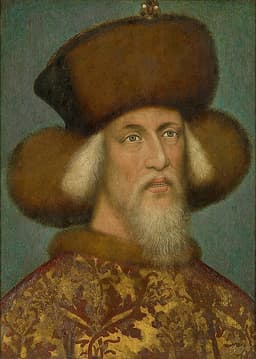
Sigismund of Luxembourg
Emperor · Medieval
60.0Total
Taejo of Goryeo
Emperor · Medieval
63.1Total
Basic Information
Born
1368
877
Died
1437
943
Era
Medieval
Medieval
Nationality
Holy Roman Empire
Korea
Occupation
Emperor
Emperor
Civilization
Western
Eastern
Score Comparison
Military (10%)
50.0
61.7
Political (20%)
62.7
59.3
Influence (20%)
62.0
72.0
Legacy (20%)
52.0
55.0
Leadership (15%)
74.0
72.0
Strategy (15%)
60.0
55.0
TOTAL
60.0
63.1
Sigismund of Luxembourg — Complete Timeline
1410 AD
Election as King of GermanyPolitical Action◆ Major
Sigismund, King of Hungary and son of Charles IV, was elected King of Germany by one faction of electors, while Jobst of Moravia was elected by another. This led to a double kingship until Jobst's death in 1411.
ElectionDouble Kingship
Impact: national
1414 AD
Convening of the Council of ConstancePolitical Action
Sigismund convened the Council of Constance to end the Western Schism. The council deposed all three rival popes and elected Pope Martin V, restoring unity to the Catholic Church.
CouncilEnd of Schism
Impact: globalconstructive
1415 AD
Execution of Jan HusPolitical Action
Despite granting Jan Hus a safe-conduct to the Council of Constance, Sigismund allowed Hus to be tried and burned at the stake for heresy. This act sparked the Hussite Wars in Bohemia.
ExecutionHussite Wars
Impact: regionaltragic
1433 AD
Coronation as Holy Roman EmperorPolitical Action◆ Major
Sigismund was crowned Holy Roman Emperor in Rome by Pope Eugene IV. His coronation marked the end of a long struggle for imperial recognition and solidified his authority.
CoronationImperial Authority
Impact: globalconstructive
Taejo of Goryeo — Complete Timeline
918 AD
Battle of CheonjuWar◆ Major
Wang Geon, a general under the Later Goguryeo kingdom, defeated the forces of Gyeon Hwon at Cheonju. This victory solidified his power and set the stage for the founding of the Goryeo dynasty.
Later Three KingdomsGoryeo Foundation
Impact: regional
Founding of the Goryeo DynastyPolitical Action
Wang Geon declared himself king and founded the Goryeo dynasty, with its capital at Songak (modern Kaesong). He unified the Later Three Kingdoms (Later Goguryeo, Later Baekje, and Silla) through a combination of military conquest and diplomatic marriages.
Goryeo DynastyUnificationKorean History
Impact: regionalconstructive
936 AD
Unification of the Later Three KingdomsWar◆ Major
Taejo of Goryeo completed the unification of the Later Three Kingdoms by defeating the Later Baekje kingdom. This brought the entire Korean peninsula under Goryeo rule, ending the Later Three Kingdoms period.
UnificationLater Three KingdomsGoryeo
Impact: regionalconstructive
943 AD
Promulgation of the Ten InjunctionsReform◆ Major
Taejo issued the Ten Injunctions, a set of political and cultural guidelines for his successors. These injunctions emphasized Confucian governance, Buddhist patronage, and the importance of maintaining good relations with China.
GovernanceConfucianismBuddhism
Impact: nationalconstructive
This comparison has not been analyzed yet.
One-time AI generation (~1 minute). Scores and timeline are already available below.
Rankings
🥇
Taejo of GoryeoLeader
Mil: 61.7Pol: 59.3Inf: 72.0
63.1
🥈
Sigismund of Luxembourg
Mil: 50.0Pol: 62.7Inf: 62.0
60.0
+3.1 behind
How This Comparison Works
Algorithm
Each figure is scored on 6 dimensions (0—100 scale) based on structured historical data: Military (10%), Political (20%), Influence (20%), Legacy (20%), Leadership (15%), Strategy (15%). The weighted total produces the final ranking.
Data Sources
Scores are computed from structured sub-indicators in the database. Scale factors adjust for era (Ancient ×0.85, Modern ×1.0) and civilization size (Eastern ×1.05, Other ×0.80) to account for differences in population and military scale.
Maximum 3 Figures
Comparisons are limited to 2—3 figures to ensure readability and statistical meaningfulness.
Error Margins
±5 points per dimension — Sub-scores are derived from historical records with inherent uncertainty. Two figures within 5 points on a dimension should be considered roughly equivalent in that area.
Total Score Accuracy
±3 points overall — The weighted combination of 6 dimensions produces a total score with approximately ±3 points of uncertainty. Differences of less than 3 points are not statistically significant— the figures are effectively tied.
Known Limitations
- Historical records are incomplete and uneven across civilizations
- Figures from oral-tradition societies may be underrepresented
- Occupation labels can misclassify multi-role figures
- Scores measure capability and impact, not moral character
- Quantitative scoring is a comparison tool, not absolute truth
Capability Radar
Military (10%) — Battles & Warfare
Battles
55
65
Win Rate
45
70
Expansion
40
70
Political (20%) — Governance & Reform
Reform
60
80
Diplomacy
75
75
Economy
50
70
Influence (20%) — Cultural & Global Reach
Cultural
55
70
Global
55
55
Legacy (20%) — Historical Impact
Historical
70
75
Longevity
60
70
Leadership (15%) — Power & Stability
Tenure
70
75
Stability
35
65
Strategy (15%) — Tactics & Innovation
Strategy
50
75
Tactics
40
60
Reform
30
55
Similar Comparisons
Comments & Discussion
No comments yet. Be the first to share your thoughts!