Loading...
This comparison has not been analyzed yet.
One-time AI generation (~1 minute). Scores and timeline are already available below.
Shi Jingtang vs Uijong of Goryeo
Shi Jingtang leads by 3.3 pts · 2 figures compared
…
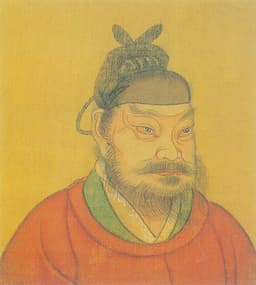
Shi Jingtang
Emperor · Medieval
46.3Total

Uijong of Goryeo
Emperor · Medieval
43.0Total
Basic Information
Born
892
1127
Died
942
1173
Era
Medieval
Medieval
Nationality
China
Korea
Occupation
Emperor
Emperor
Civilization
Eastern
Eastern
Score Comparison
Military (10%)
40.0
50.8
Political (20%)
39.4
33.6
Influence (20%)
53.3
45.5
Legacy (20%)
49.2
34.2
Leadership (15%)
41.5
44.5
Strategy (15%)
45.0
63.2
TOTAL
46.3
43.0
Shi Jingtang — Complete Timeline
936 AD
Rebelled against Later TangWar◆ Major
Shi Jingtang, a general of Later Tang, rebelled against Emperor Li Congke. He sought help from the Khitan Liao dynasty, promising territorial concessions in return for military support.
Later TangRebellionKhitan Alliance
Impact: regionaldestructive
Founded Later Jin DynastyPolitical Action◆ Major
With Khitan support, Shi Jingtang defeated Later Tang and proclaimed himself emperor, founding the Later Jin dynasty. He ruled as a vassal of the Liao emperor, paying tribute and acknowledging Liao suzerainty.
Later JinDynasty FoundingVassalage
Impact: national
938 AD
Ceded Sixteen Prefectures to LiaoPolitical Action
Shi Jingtang formally ceded the Sixteen Prefectures of the Youyun region to the Khitan Liao dynasty as payment for their aid. This territorial loss weakened Chinese defenses and gave the Liao a strategic foothold for centuries.
Later JinLiaoTerritorial Cession
Impact: regionaldestructive
942 AD
Death and succession crisisPolitical Action
Shi Jingtang died, leaving a weak successor. His death triggered a power struggle that led to the Later Jin's eventual conquest by the Liao dynasty in 947.
Later JinSuccessionDecline
Impact: nationaltragic
Uijong of Goryeo — Complete Timeline
1160 AD
Neglect of military officialsPolitical Action
Uijong's reign was marked by favoritism toward civil officials and neglect of the military, including unfair promotions and insults. This created deep resentment among generals, culminating in the 1170 coup.
PolicyMilitaryGoryeo
Impact: nationaldestructive
1170 AD
Military coup by Jeong Jung-buPolitical Action
General Jeong Jung-bu led a coup against King Uijong, who had neglected military officials in favor of civil scholars. The king was deposed and exiled to Geojedo Island, marking the beginning of a century of military rule in Goryeo.
CoupMilitary RuleGoryeo
Impact: nationaldestructive
Exile to GeojedoPolitical Action◆ Major
After being deposed, Uijong was exiled to Geojedo Island, where he was later murdered in 1173 on the orders of the military regime. His death eliminated any possibility of a royal restoration.
ExileAssassinationGoryeo
Impact: nationaltragic
This comparison has not been analyzed yet.
One-time AI generation (~1 minute). Scores and timeline are already available below.
Rankings
🥇
Shi JingtangLeader
Mil: 40.0Pol: 39.4Inf: 53.3
46.3
🥈
Uijong of Goryeo
Mil: 50.8Pol: 33.6Inf: 45.5
43.0
+3.3 behind
How This Comparison Works
Algorithm
Each figure is scored on 6 dimensions (0—100 scale) based on structured historical data: Military (10%), Political (20%), Influence (20%), Legacy (20%), Leadership (15%), Strategy (15%). The weighted total produces the final ranking.
Data Sources
Scores are computed from structured sub-indicators in the database. Scale factors adjust for era (Ancient ×0.85, Modern ×1.0) and civilization size (Eastern ×1.05, Other ×0.80) to account for differences in population and military scale.
Maximum 3 Figures
Comparisons are limited to 2—3 figures to ensure readability and statistical meaningfulness.
Error Margins
±5 points per dimension — Sub-scores are derived from historical records with inherent uncertainty. Two figures within 5 points on a dimension should be considered roughly equivalent in that area.
Total Score Accuracy
±3 points overall — The weighted combination of 6 dimensions produces a total score with approximately ±3 points of uncertainty. Differences of less than 3 points are not statistically significant— the figures are effectively tied.
Known Limitations
- Historical records are incomplete and uneven across civilizations
- Figures from oral-tradition societies may be underrepresented
- Occupation labels can misclassify multi-role figures
- Scores measure capability and impact, not moral character
- Quantitative scoring is a comparison tool, not absolute truth
Capability Radar
Military (10%) — Battles & Warfare
Battles
45
46
Win Rate
40
45
Expansion
25
50
Political (20%) — Governance & Reform
Reform
20
5
Diplomacy
60
10
Economy
25
10
Influence (20%) — Cultural & Global Reach
Cultural
20
5
Global
30
5
Legacy (20%) — Historical Impact
Historical
55
10
Longevity
40
5
Leadership (15%) — Power & Stability
Tenure
35
15
Stability
15
5
Strategy (15%) — Tactics & Innovation
Strategy
30
57
Tactics
35
58
Reform
20
63
Similar Comparisons
Comments & Discussion
No comments yet. Be the first to share your thoughts!