Loading...
Sejong the Great vs Vijayalaya Chola
Sejong the Great leads by 13.5 pts · 2 figures compared
…

Sejong the Great
Emperor · Medieval
67.7Total
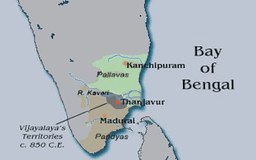
Vijayalaya Chola
Emperor · Medieval
54.2Total
Basic Information
Born
1397
820
Died
1450
870
Era
Medieval
Medieval
Nationality
Korea
India
Occupation
Emperor
Emperor
Civilization
Eastern
Indian
Score Comparison
Military (10%)
55.0
45.0
Political (20%)
78.0
40.8
Influence (20%)
65.0
58.0
Legacy (20%)
65.0
54.0
Leadership (15%)
80.0
64.0
Strategy (15%)
60.0
60.0
TOTAL
67.7
54.2
Sejong the Great — Complete Timeline
1432 AD
Promotion of Scientific InstrumentsInvention◆ Major
Sejong the Great commissioned the development of advanced astronomical instruments, including the armillary sphere and water clock. These tools improved timekeeping and calendar accuracy in Joseon.
ScienceAstronomyInvention
Impact: nationalprogressive
1433 AD
Military Campaigns against JurchensWar◆ Major
Sejong the Great launched military campaigns against the Jurchen tribes in the north, securing the border and establishing the Four Forts and Six Garrisons. This expanded Joseon territory and stabilized the frontier.
JurchenBorderExpansion
Impact: regionalconstructive
1443 AD
Creation of HangulInvention
King Sejong the Great oversaw the creation of Hangul, the Korean alphabet, to improve literacy among commoners. The script was promulgated in 1446 and remains the writing system of Korea.
HangulAlphabetLiteracy
Impact: globalprogressive
1446 AD
Promulgation of the HunminjeongeumCultural◆ Major
Sejong the Great officially promulgated the Hunminjeongeum, the document explaining the new Hangul script. This marked the formal introduction of the alphabet to the Korean people.
HangulPublicationLanguage
Impact: globalprogressive
Vijayalaya Chola — Complete Timeline
820 AD
Foundation of the Imperial Chola DynastyPolitical Action◆ Major
Vijayalaya Chola established the Imperial Chola dynasty, reviving the ancient Chola lineage after centuries of obscurity. He consolidated control over the Kaveri delta region, laying the foundation for the Chola Empire's future expansion.
Impact: regionalconstructive
850 AD
Capture of Thanjavur from the MutharaiyarWar◆ Major
Vijayalaya Chola captured the city of Thanjavur from the Mutharaiyar chieftains, who were vassals of the Pallavas. This victory established the Chola kingdom as an independent power and made Thanjavur the new Chola capital.
Impact: regionalconstructive
860 AD
Construction of the Vijayalaya Choleswaram TempleCultural
Vijayalaya Chola built the Vijayalaya Choleswaram temple at Narthamalai, a rock-cut temple dedicated to Shiva. This temple is one of the earliest Chola architectural monuments, reflecting the transition from Pallava to Chola styles.
constructive
Expert Analysis
Origins
Sejong the Great was born in 1397 as the third son of King Taejong of Joseon, a dynasty that had overthrown the Goryeo kingdom in 1392. His early education emphasized Confucian scholarship, and he was groomed for leadership despite not being the heir apparent. His father's abdication in 1418 allowed Sejong to ascend the throne at age 21. Vijayalaya Chola, by contrast, emerged from relative obscurity in the 9th century. He claimed descent from the ancient Chola dynasty, which had declined after the 3rd century. Little is known of his early life, but he likely served as a feudatory under the Pallava kingdom before asserting independence. His rise capitalized on the weakening of Pallava control in the Kaveri delta.
Rise to Power
Sejong's rise was largely hereditary, but he solidified his authority through administrative reforms and cultural projects. His turning point came in 1446 with the promulgation of Hunminjeongeum, the document explaining Hangul. This move was controversial among the Confucian elite, who favored Chinese characters, but Sejong's political skill allowed him to implement it. Vijayalaya Chola's rise was more martial. Around 850 CE, he captured Thanjavur from the Mutharaiyar chieftains, who were Pallava vassals. This victory established the Chola capital and marked the beginning of the Imperial Chola dynasty. He then consolidated control over the surrounding regions, laying the foundation for future expansion.
Leadership & Governance
Sejong's leadership was defined by his commitment to improving the lives of commoners. He oversaw the creation of Hangul to increase literacy, commissioned astronomical instruments like the armillary sphere and water clock, and promoted agricultural innovations. His governance was centralized, relying on Confucian bureaucracy. Vijayalaya Chola's leadership was more focused on territorial consolidation and temple building. He constructed the Vijayalaya Choleswaram temple at Narthamalai, a rock-cut Shiva temple that served both religious and political purposes. His governance style was feudal, with local chieftains retaining some autonomy under Chola suzerainty. While Sejong scored 78.0 in political skill, Vijayalaya scored 40.8, reflecting the difference in their administrative achievements.
Triumph & Tragedy
Sejong's greatest triumph was the creation of Hangul, which revolutionized Korean literacy and culture. His military campaigns against the Jurchens (1433-1443) secured the northern border and established the Four Forts and Six Garrisons. However, his later years saw economic strain from these campaigns and the costs of his cultural projects. His total score of 67.7 reflects balanced achievements across domains. Vijayalaya's triumph was capturing Thanjavur and founding a dynasty that would dominate South India for centuries. His tragedy was that his reign was short (c. 848-871) and he died before seeing the Chola empire's full expansion. His total score of 54.2 is lower due to limited political and military scores, but his influence and legacy scores (58.0 and 54.0) are notable for a founder.
Character & Destiny
Sejong was characterized by intellectual curiosity and a benevolent paternalism. He personally involved himself in linguistic and scientific projects, a rarity for a monarch. His destiny was to be remembered as a cultural luminary rather than a conqueror. Vijayalaya was a pragmatic warrior, seizing opportunity from the declining Pallavas. His destiny was to revive a dormant lineage, but his lack of written records means his personality remains obscure. Historians assess Sejong as a model Confucian ruler, while Vijayalaya is seen as a capable founder who set the stage for his successors.
Legacy
Sejong's legacy is immense: Hangul remains the writing system of both Koreas, and his scientific instruments advanced Korean astronomy. His total influence score of 65.0 reflects this enduring impact. Vijayalaya's legacy is the Imperial Chola dynasty, which reached its zenith under Rajaraja I and Rajendra I. His temple at Narthamalai is a UNESCO World Heritage site, and his founding act is celebrated in Tamil history. However, his personal legacy is overshadowed by later Chola rulers. In terms of lasting impact on civilization, Sejong's creation of a phonetic alphabet for commoners has had a broader and more direct effect on literacy and culture than Vijayalaya's political foundation.
Conclusion
Sejong the Great had a greater impact on history than Vijayalaya Chola. His total score of 67.7 versus Vijayalaya's 54.2 reflects this, but the qualitative difference is more significant. Sejong's creation of Hangul directly empowered millions of people to read and write, fostering a unique cultural identity that persists today. Vijayalaya's foundation of the Imperial Chola dynasty was politically important, but his achievements were primarily military and religious, and his dynasty's later glories were due to successors. While Vijayalaya scored 64.0 in leadership, Sejong's 80.0 in leadership and 78.0 in political skill demonstrate a more comprehensive governance. Thus, Sejong the Great stands as the more consequential figure.
Rankings
🥇
Sejong the GreatLeader
Mil: 55.0Pol: 78.0Inf: 65.0
67.7
🥈
Vijayalaya Chola
Mil: 45.0Pol: 40.8Inf: 58.0
54.2
+13.5 behind
How This Comparison Works
Algorithm
Each figure is scored on 6 dimensions (0—100 scale) based on structured historical data: Military (10%), Political (20%), Influence (20%), Legacy (20%), Leadership (15%), Strategy (15%). The weighted total produces the final ranking.
Data Sources
Scores are computed from structured sub-indicators in the database. Scale factors adjust for era (Ancient ×0.85, Modern ×1.0) and civilization size (Eastern ×1.05, Other ×0.80) to account for differences in population and military scale.
Maximum 3 Figures
Comparisons are limited to 2—3 figures to ensure readability and statistical meaningfulness.
Error Margins
±5 points per dimension — Sub-scores are derived from historical records with inherent uncertainty. Two figures within 5 points on a dimension should be considered roughly equivalent in that area.
Total Score Accuracy
±3 points overall — The weighted combination of 6 dimensions produces a total score with approximately ±3 points of uncertainty. Differences of less than 3 points are not statistically significant— the figures are effectively tied.
Known Limitations
- Historical records are incomplete and uneven across civilizations
- Figures from oral-tradition societies may be underrepresented
- Occupation labels can misclassify multi-role figures
- Scores measure capability and impact, not moral character
- Quantitative scoring is a comparison tool, not absolute truth
Capability Radar
Military (10%) — Battles & Warfare
Battles
30
45
Win Rate
35
50
Expansion
25
55
Political (20%) — Governance & Reform
Reform
90
35
Diplomacy
75
40
Economy
80
35
Influence (20%) — Cultural & Global Reach
Cultural
85
40
Global
70
30
Legacy (20%) — Historical Impact
Historical
80
55
Longevity
85
50
Leadership (15%) — Power & Stability
Tenure
70
50
Stability
85
45
Strategy (15%) — Tactics & Innovation
Strategy
45
45
Tactics
40
40
Reform
50
30
Similar Comparisons
Comments & Discussion
No comments yet. Be the first to share your thoughts!