Loading...
Kublai Khan vs Vijayalaya Chola
Kublai Khan leads by 20.1 pts · 2 figures compared
…
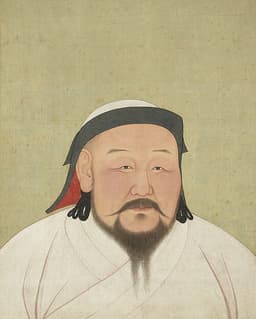
Kublai Khan
Emperor · Medieval
74.3Total
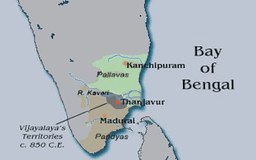
Vijayalaya Chola
Emperor · Medieval
54.2Total
Basic Information
Born
1215
820
Died
1294
870
Era
Medieval
Medieval
Nationality
Mongolia
India
Occupation
Emperor
Emperor
Civilization
Eastern
Indian
Score Comparison
Military (10%)
77.5
45.0
Political (20%)
79.2
40.8
Influence (20%)
75.0
58.0
Legacy (20%)
70.0
54.0
Leadership (15%)
72.0
64.0
Strategy (15%)
76.0
60.0
TOTAL
74.3
54.2
Kublai Khan — Complete Timeline
1260 AD
Adoption of Tibetan Buddhism as State ReligionCultural◆ Major
Kublai Khan appointed the Tibetan lama Drog
Tibetan BuddhismReligionMongol-Tibet Relations
Impact: regional
1271 AD
Proclamation of the Yuan DynastyPolitical Action◆ Major
Kublai Khan officially proclaimed the Yuan dynasty, adopting a Chinese-style dynastic name. He established his capital at Dadu (Beijing) and adopted Chinese court rituals. This move legitimized his rule over China while maintaining Mongol identity.
Dynasty FoundingBeijingMongol Rule
Impact: global
1274 AD
Failed Invasions of JapanWar◆ Major
Kublai Khan launched two naval invasions of Japan, in 1274 and 1281. Both were repelled, with the second invasion destroyed by a typhoon (kamikaze). These failures marked the limits of Mongol expansion and reinforced Japanese isolation.
Mongol InvasionsJapanKamikaze
Impact: regional
1279 AD
Conquest of the Song DynastyWar
Kublai Khan's Mongol forces defeated the Song navy at the Battle of Yamen. The last Song emperor drowned, ending the Song dynasty. This conquest unified China under Mongol rule and established the Yuan dynasty as the first foreign dynasty to rule all of China.
Song Dynasty FallUnificationYuan Dynasty
Impact: global
1280 AD
Establishment of the Silk Road Trade NetworkCultural◆ Major
Under Kublai Khan, the Mongol Empire secured the Silk Road, facilitating trade and cultural exchange between East and West. Marco Polo visited his court. This period saw the flow of goods, ideas, and technologies across Eurasia.
Silk RoadTradeCultural Exchange
Impact: globalconstructive
Vijayalaya Chola — Complete Timeline
820 AD
Foundation of the Imperial Chola DynastyPolitical Action◆ Major
Vijayalaya Chola established the Imperial Chola dynasty, reviving the ancient Chola lineage after centuries of obscurity. He consolidated control over the Kaveri delta region, laying the foundation for the Chola Empire's future expansion.
Impact: regionalconstructive
850 AD
Capture of Thanjavur from the MutharaiyarWar◆ Major
Vijayalaya Chola captured the city of Thanjavur from the Mutharaiyar chieftains, who were vassals of the Pallavas. This victory established the Chola kingdom as an independent power and made Thanjavur the new Chola capital.
Impact: regionalconstructive
860 AD
Construction of the Vijayalaya Choleswaram TempleCultural
Vijayalaya Chola built the Vijayalaya Choleswaram temple at Narthamalai, a rock-cut temple dedicated to Shiva. This temple is one of the earliest Chola architectural monuments, reflecting the transition from Pallava to Chola styles.
constructive
Expert Analysis
Kublai Khan vs Vijayalaya Chola
### The Emperor and the Kingmaker: Kublai Khan and Vijayalaya Chola
In the winter of 1271, Kublai Khan stood in his newly proclaimed capital of Dadu, a city of sprawling palaces and planned streets, and declared the birth of the Yuan dynasty. Half a world away, and four centuries earlier, a lesser-known chieftain named Vijayalaya had climbed the rocky outcrops of Narthamalai in southern India, carving a small temple out of living stone to mark a victory that seemed, to the outside world, utterly inconsequential. One man commanded the largest land empire in history, whose decisions could send hundreds of thousands of men across oceans. The other commanded a few hundred swordsmen and a single captured town. Yet both are remembered as founders. The question is not who was greater, but what greatness meant in their worlds—and why one built an empire that collapsed within a century, while the other laid a foundation that would endure for four.
### Origins
Kublai Khan was born into the whirlwind. The grandson of Genghis Khan, he grew up in a world where the Mongol Empire was already a juggernaut, a machine of conquest that had shattered kingdoms from the Caspian to the Yellow Sea. But Kublai was different. While his brothers and cousins reveled in the open steppe, he was drawn to Chinese civilization—its bureaucracy, its art, its settled order. He learned to read Chinese texts and surrounded himself with Confucian scholars. His identity was a paradox: a Mongol who wanted to rule as a Chinese emperor.
Vijayalaya Chola emerged from the shadows. The Chola dynasty had once ruled parts of Tamil country, but by the 9th century, it was a memory, a name in old poems. The region was dominated by the Pallava Empire and its vassals, the Mutharaiyar chieftains. Vijayalaya was likely a minor feudatory, a man with a claim to an ancient throne and nothing else. He had no great army, no vast treasury, no divine mandate—only a name and a hunger.
### Rise to Power
Kublai’s path was forged in civil war. In 1260, his brother Möngke Khan died, and Kublai rushed to claim the title of Great Khan before his younger brother Ariq Böke could seize it. He won, but the empire fractured. For the next decade, Kublai fought not just foreign enemies but his own kin, crushing rebellions in the north while eyeing the Song dynasty in the south. His rise was not a matter of luck but of ruthless calculation: he outmaneuvered his rivals by offering Chinese officials stability and Mongol generals plunder.
Vijayalaya’s rise was a gamble of a different kind. The Pallava king, Nripatunga, was distracted by wars with the Pandyas. The Mutharaiyar chieftains, who held the rich city of Thanjavur, were overconfident. Vijayalaya saw an opening. In 850, he led a small force—perhaps no more than a few hundred men—against the Mutharaiyar fort. He captured Thanjavur not through a grand siege but through a swift, decisive stroke. It was a kingmaker’s move: he declared himself ruler of the city and revived the Chola dynasty. Unlike Kublai, he did not inherit an empire; he invented one.
### Leadership & Governance
Kublai Khan ruled as a hybrid. He adopted the Chinese administrative system, complete with ministries and censors, but kept Mongols in key military posts. He promoted Buddhism, especially Tibetan Buddhism, appointing the lama Phagpa as his imperial preceptor in 1260, yet he tolerated Confucianism, Daoism, and Islam. He built roads, standardized weights and measures, and established a paper currency. But his governance was also brutal: he conscripted millions for his wars, taxed peasants heavily, and showed no mercy to enemies. His greatest achievement—the conquest of the Song dynasty in 1279, after the last Song emperor drowned at the Battle of Yamen—was a military masterpiece, but it came at a staggering human cost.
Vijayalaya ruled as a builder. He did not have the machinery of a vast bureaucracy; his kingdom was small, perhaps no larger than a modern district. But he understood the power of symbols. He constructed the Vijayalaya Choleswaram temple at Narthamalai, a rock-cut shrine dedicated to Shiva, which served as both a religious center and a declaration of legitimacy. He did not impose a new religion or language; he revived old ones, linking his rule to the ancient Chola kings. His governance was personal: he knew his warriors by name, settled disputes face-to-face, and built alliances through marriage and patronage.
### Triumph & Tragedy
Kublai’s triumph was the unification of China, a feat no foreigner had achieved. But his tragedy was the invasion of Japan. In 1274 and again in 1281, he launched massive naval expeditions, each involving tens of thousands of men and hundreds of ships. Both were destroyed by typhoons—the famous *kamikaze*, or "divine wind." The failure was not just military but psychological: it shattered the myth of Mongol invincibility and drained the Yuan treasury. Kublai never recovered from this blow, and his later years were marked by paranoia and decline.
Vijayalaya’s triumph was the capture of Thanjavur, a city that would become the heart of the Chola empire for three centuries. His tragedy was that he did not live to see it. He died around 870, having ruled for only about two decades. His son, Aditya I, would expand the kingdom, but Vijayalaya never knew the glory of what he had started. His story is one of a seed planted, not a tree harvested.
### Character & Destiny
Kublai Khan was a man of grand ambitions and deep contradictions. He wanted to be both a Mongol khan and a Chinese emperor, a patron of Buddhism and a conqueror of civilizations. This duality made him effective but also isolated him: he trusted no one fully, not even his own family. His destiny was to hold together an empire that was too vast to govern and too diverse to unite. His personality—pragmatic, ruthless, visionary—shaped his decisions, but it also doomed his legacy. The Yuan dynasty he founded collapsed within a century of his death, undone by inflation, rebellion, and the very divisions he had tried to bridge.
Vijayalaya Chola was a man of modest means but immodest vision. He did not dream of conquering the world; he dreamed of restoring a name. His character—patient, cunning, devout—shaped his decisions. He took risks but not reckless ones. He built slowly, stone by stone, alliance by alliance. His destiny was to be the father of an empire, not its emperor. And perhaps that is why his legacy endured: he gave his descendants a foundation, not a burden.
### Legacy
Kublai Khan is remembered as a colossus. His Yuan dynasty, though short-lived, left an indelible mark on China: it reunified the country, reopened the Silk Road, and introduced Tibetan Buddhism to the imperial court. Marco Polo’s stories of his court fired the European imagination. But his legacy is also one of failure—the failed invasions, the economic collapse, the Mongol identity that never fully merged with Chinese culture. His score of 79.6 reflects a genius who fell short of his own ambitions.
Vijayalaya Chola is remembered as a founder. His Chola dynasty would go on to become one of the most powerful in Indian history, building temples, expanding trade, and creating a maritime empire that reached Southeast Asia. His score of 62.4 is modest, but it measures the man, not the dynasty he launched. He is a reminder that history’s greatest builders often lay the first stones, not the last.
### Conclusion
Standing on the deck of a Mongol warship in 1281, Kublai Khan looked toward the shores of Japan, an emperor who had conquered China but could not conquer the sea. In the temple at Narthamalai, carved into the rock a thousand years ago, a smaller man’s name still endures. One wanted to rule everything; the other wanted to build something. In the end, it is not the size of the ambition that matters, but the strength of the foundation. Kublai’s empire was a flash of lightning; Vijayalaya’s was the slow, steady rain that nourishes the earth. Both are remembered—but for very different reasons.
Rankings
🥇
Kublai KhanLeader
Mil: 77.5Pol: 79.2Inf: 75.0
74.3
🥈
Vijayalaya Chola
Mil: 45.0Pol: 40.8Inf: 58.0
54.2
+20.1 behind
How This Comparison Works
Algorithm
Each figure is scored on 6 dimensions (0—100 scale) based on structured historical data: Military (10%), Political (20%), Influence (20%), Legacy (20%), Leadership (15%), Strategy (15%). The weighted total produces the final ranking.
Data Sources
Scores are computed from structured sub-indicators in the database. Scale factors adjust for era (Ancient ×0.85, Modern ×1.0) and civilization size (Eastern ×1.05, Other ×0.80) to account for differences in population and military scale.
Maximum 3 Figures
Comparisons are limited to 2—3 figures to ensure readability and statistical meaningfulness.
Error Margins
±5 points per dimension — Sub-scores are derived from historical records with inherent uncertainty. Two figures within 5 points on a dimension should be considered roughly equivalent in that area.
Total Score Accuracy
±3 points overall — The weighted combination of 6 dimensions produces a total score with approximately ±3 points of uncertainty. Differences of less than 3 points are not statistically significant— the figures are effectively tied.
Known Limitations
- Historical records are incomplete and uneven across civilizations
- Figures from oral-tradition societies may be underrepresented
- Occupation labels can misclassify multi-role figures
- Scores measure capability and impact, not moral character
- Quantitative scoring is a comparison tool, not absolute truth
Capability Radar
Military (10%) — Battles & Warfare
Battles
95
45
Win Rate
90
50
Expansion
95
55
Political (20%) — Governance & Reform
Reform
88
35
Diplomacy
85
40
Economy
90
35
Influence (20%) — Cultural & Global Reach
Cultural
85
40
Global
85
30
Legacy (20%) — Historical Impact
Historical
90
55
Longevity
80
50
Leadership (15%) — Power & Stability
Tenure
90
50
Stability
80
45
Strategy (15%) — Tactics & Innovation
Strategy
92
45
Tactics
85
40
Reform
88
30
Similar Comparisons
Comments & Discussion
**MongolMetrics**6/16/2026
Four centuries apart, and we're comparing the founder of a 1,200-year empire with a guy whose dynasty barely outlasted his grandchildren? That's like comparing the Roman Empire to a flash mob. Vijayalaya’s Chola foundation endured, sure, but Kublai’s Yuan Empire reshaped global trade, introduced paper money across continents, and connected East Asia to Persia via the Pax Mongolica. Check your timeline: Chola collapse by 1279, Yuan falls 1368—both short-lived. The real legacy is Kublai’s infrastr
**石刻匠人**6/16/2026
别拿庙宇和铜钱比。维贾亚拉亚的石头庙宇矗立了一千年,而忽必烈的纸币在元朝灭亡后就成了废纸。数据上说:元朝实际统治中国不到90年,而朱罗王朝的行政体系影响了南印度直到英国殖民。忽必烈靠蒙古铁骑和汉人官僚抢地盘,维贾亚拉亚只用了几百个武士和一座小镇。谁的根基更稳?不是规模,是韧性。石刻匠人知道石头比纸钱更持久。
**SteppeScholar**6/16/2026
You data lovers miss the human dimension. Kublai Khan didn't just inherit an empire—he _chose_ civilization over tribal chaos. He reformed Mongol administration, adopted Chinese rituals, and personally commissioned the _History of Liao_, _Jin_, and _Song_ dynasties. Vijayalaya carved a temple? Cute. Kublai funded Marco Polo's journey and united a fractured China under a single currency. One man built bridges across cultures; the other built a hill fort. Scale matters when you're talking about sh
**南印度碑文迷**6/16/2026
忽必烈是帝国设计师,维贾亚拉亚是文明播种机。你瞧,朱罗王朝的碑文记载了土地改革、灌溉系统和地方议会——这些才是可持续治理的根基。元朝的行政区划全凭忽必烈个人意志,死后就崩了。维贾亚拉亚种下的查拉帝国种子,靠地方自治和寺庙经济撑了四个世纪。数据上:朱罗王朝的铜版文书比元朝的驿站网络更早实现系统化管理。规模不是一切,制度才是。
**RevisionistEdge**6/16/2026
Let's get real: both are overhyped. Kublai was a Mongol imperialist who slaughtered thousands to impose a foreign dynasty on China—his "cultural synthesis" was just practical colonialism. Vijayalaya? Any chieftain with a few hundred men could conquer a hill fort. His fame comes from later Chola propaganda spinning a local warlord into a mythic founder. Compare foundations: Kublai built on Genghis's corpses;