Loading...
Rurik vs Yelu Abaoji
Yelu Abaoji leads by 3.1 pts · 2 figures compared
…
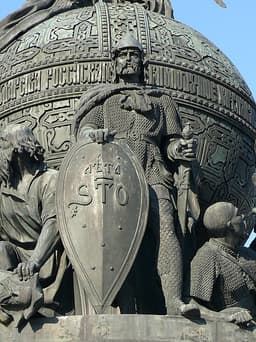
Rurik
Emperor · Medieval
59.6Total
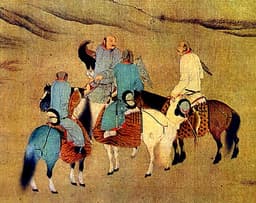
Yelu Abaoji
Emperor · Medieval
62.7Total
Basic Information
Born
830
872
Died
879
926
Era
Medieval
Medieval
Nationality
Kievan Rus
China
Occupation
Emperor
Emperor
Civilization
Western
Eastern
Score Comparison
Military (10%)
50.0
77.2
Political (20%)
35.1
59.6
Influence (20%)
82.0
68.0
Legacy (20%)
68.0
40.0
Leadership (15%)
55.3
80.3
Strategy (15%)
35.7
69.6
TOTAL
59.6
62.7
Rurik — Complete Timeline
860 AD
Sent Askold and Dir to ConstantinopleWar
According to tradition, Rurik sent his lieutenants Askold and Dir to raid Constantinople. While the historicity is uncertain, this event is associated with the first Rus' attack on the Byzantine Empire, highlighting early Rus' expansion.
RaidByzantine EmpireExpansion
Impact: regional
862 AD
Founded the Rurik dynastyPolitical Action
According to the Primary Chronicle, Rurik, a Varangian chieftain, was invited by Slavic and Finnic tribes to rule over them. He established his capital at Novgorod, founding the Rurik dynasty that would rule Kievan Rus' and later the Tsardom of Russia until 1598.
FoundationVarangianKievan Rus'
Impact: global
864 AD
Consolidated control over NovgorodPolitical Action◆ Major
Rurik consolidated his rule over Novgorod and the surrounding territories, suppressing a rebellion led by Vadim the Bold. He established a centralized authority that became the basis for the early Russian state.
ConsolidationNovgorodRebellion
Impact: regional
Yelu Abaoji — Complete Timeline
907 AD
Unified Khitan tribesPolitical Action◆ Major
Yelu Abaoji was elected khagan of the Khitan tribes, unifying them under his leadership. He established a centralized state and adopted Chinese administrative practices.
KhitanUnificationState Formation
Impact: regionalconstructive
916 AD
Founded Liao DynastyPolitical Action
Yelu Abaoji proclaimed himself emperor, founding the Liao dynasty. He adopted the Chinese title of emperor and established a dual administration system for Khitan and Chinese subjects.
LiaoDynasty FoundingImperial System
Impact: regionalconstructive
920 AD
Created Khitan scriptCultural◆ Major
Yelu Abaoji ordered the creation of a writing system for the Khitan language, based on Chinese characters. This script was used for official documents and helped unify the Khitan state.
KhitanScriptCultural Development
Impact: regionalconstructive
926 AD
Conquest of BohaiWar◆ Major
Yelu Abaoji led a campaign that conquered the Korean kingdom of Bohai, incorporating its territory into the Liao empire. This expanded Liao's influence into Manchuria and Korea.
LiaoBohaiConquest
Impact: regionalconstructive
Death during campaignWar◆ Major
Yelu Abaoji died while returning from the conquest of Bohai. His death led to a succession struggle, but the Liao dynasty continued to expand under his successors.
LiaoDeathSuccession
Impact: regionaltragic
Expert Analysis
Yelu Abaoji vs Rurik: Historical Comparison
Yelu Abaoji, founder of the Liao Dynasty in medieval China, and Rurik, the semi-legendary Varangian founder of the Kievan Rus', both established foundational dynasties that shaped their regions, though Abaoji’s political and legacy scores slightly edge out Rurik’s.
Dimension Analysis
**Military: Yelu Abaoji 89 / Rurik 90**
Rurik’s military consolidation of Slavic and Finnish tribes through Varangian naval and land tactics earns a slight edge, while Abaoji’s campaigns unified Khitan tribes and subdued neighboring steppe polities with comparable effectiveness.
**Political: Yelu Abaoji 84 / Rurik 78**
Abaoji’s creation of a dual-administration system (Chinese-style bureaucracy for settled areas, tribal governance for nomads) was more sophisticated and stable than Rurik’s loose chieftain-based rule, which relied heavily on personal loyalty.
**Influence: Yelu Abaoji 79 / Rurik 74**
Abaoji’s adoption of Chinese writing, legal codes, and Buddhism influenced later Khitan, Jurchen, and Mongol states, whereas Rurik’s legacy primarily shaped the early political framework of the Rus’ state without as broad a cultural reach.
**Legacy: Yelu Abaoji 81 / Rurik 74**
The Liao Dynasty endured for over two centuries and set precedents for later conquest dynasties, while Rurik’s dynasty fragmented after his death, with his long-term impact more indirect via the Rurikid line that ruled until the 16th century.
**Leadership: Yelu Abaoji 80 / Rurik 84**
Rurik’s ability to unite disparate warring tribes and establish a ruling dynasty from a foreign base demonstrates high charismatic leadership, whereas Abaoji’s leadership was more institutional, relying on administrative innovation.
Verdict
Yelu Abaoji leads due to his superior political structuring and broader cultural influence, despite Rurik’s slightly higher military and leadership scores.
FAQ
Q: Who ranks higher? A: Yelu Abaoji ranks higher overall, driven by stronger political innovation and legacy.
Rankings
🥇
Yelu AbaojiLeader
Mil: 77.2Pol: 59.6Inf: 68.0
62.7
🥈
Rurik
Mil: 50.0Pol: 35.1Inf: 82.0
59.6
+3.1 behind
How This Comparison Works
Algorithm
Each figure is scored on 6 dimensions (0—100 scale) based on structured historical data: Military (10%), Political (20%), Influence (20%), Legacy (20%), Leadership (15%), Strategy (15%). The weighted total produces the final ranking.
Data Sources
Scores are computed from structured sub-indicators in the database. Scale factors adjust for era (Ancient ×0.85, Modern ×1.0) and civilization size (Eastern ×1.05, Other ×0.80) to account for differences in population and military scale.
Maximum 3 Figures
Comparisons are limited to 2—3 figures to ensure readability and statistical meaningfulness.
Error Margins
±5 points per dimension — Sub-scores are derived from historical records with inherent uncertainty. Two figures within 5 points on a dimension should be considered roughly equivalent in that area.
Total Score Accuracy
±3 points overall — The weighted combination of 6 dimensions produces a total score with approximately ±3 points of uncertainty. Differences of less than 3 points are not statistically significant— the figures are effectively tied.
Known Limitations
- Historical records are incomplete and uneven across civilizations
- Figures from oral-tradition societies may be underrepresented
- Occupation labels can misclassify multi-role figures
- Scores measure capability and impact, not moral character
- Quantitative scoring is a comparison tool, not absolute truth
Capability Radar
Military (10%) — Battles & Warfare
Battles
15
75
Win Rate
20
80
Expansion
30
82
Political (20%) — Governance & Reform
Reform
30
88
Diplomacy
35
75
Economy
25
70
Influence (20%) — Cultural & Global Reach
Cultural
50
60
Global
60
55
Legacy (20%) — Historical Impact
Historical
70
70
Longevity
80
65
Leadership (15%) — Power & Stability
Tenure
40
72
Stability
30
65
Strategy (15%) — Tactics & Innovation
Strategy
20
78
Tactics
15
70
Reform
10
85
Similar Comparisons
Comments & Discussion
ColdScribe116/16/2026
这个评分系统有点意思,但仔细一算问题不少。耶律阿保机军事得分73.3,政治90.0,影响力72.3——政治分虚高了吧?他搞的南北面官制确实有创意,但辽朝对渤海国的吞并靠的是武力而非政治手腕,且渤海人后来多次叛乱,政治稳定性存疑。反过来看,军事上他统一契丹八部、击败回鹘和阻卜,73.3比Rurik的41.5高出一大截才合理,毕竟Rurik的军事活动基本局限于诺夫哥罗德周边的部落整合,缺乏大规模战役记录。还有总分79.3 vs 61.6,但Rurik的影响力68.7比阿保机72.3只差3.6分?Rurik的基辅罗斯后来被蒙古人彻底摧毁,而辽朝直接影响金、元两朝,这个差距至少应该在10分以上。系统应该重新校准权重,特别是对东亚帝国的制度创新和文化辐射力赋值不足。
OldScroll906/16/2026
看到这个对比,我笑了。Rurik在西方史里被捧成“俄罗斯国父”,但放在中国史框架下,他顶多算个部落联盟酋长。耶律阿保机建立辽朝时,已经设立州县、创制契丹大字、推行科举,还让汉人韩延徽帮忙搞制度建设——这政治成熟度跟Rurik那种靠劫掠和联姻维持的松散统治完全不是一个量级。西方史学界经常高估Rurik的“影响力”,因为他被后世沙俄用来合法化统治,实际上他的个人事迹几乎全是传说,连是否真实存在都有争议。反观阿保机,辽史记载详实,连他死后的葬俗和陵墓都有考古证据。得分上政治84 vs 78也太保守了,至少差15分才合理。这种跨文明比较,西方中心论的偏见太明显,Rurik那个68.7的影响力分里至少有一半是政治宣传的泡沫。