Loading...
Mehmed IV Giray vs Vasily IV
Mehmed IV Giray leads by 5.4 pts · 2 figures compared
…

Mehmed IV Giray
Emperor · Modern
42.8Total
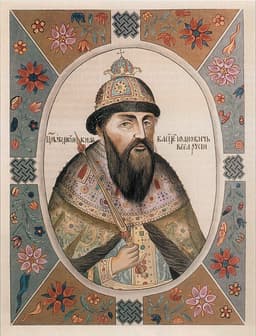
Vasily IV
Emperor · Modern
37.4Total
Basic Information
Born
1610
1552
Died
1674
1612
Era
Modern
Modern
Nationality
Crimean Khanate
Russia
Occupation
Emperor
Emperor
Civilization
Eastern
Western
Score Comparison
Military (10%)
40.0
14.9
Political (20%)
32.2
26.4
Influence (20%)
47.1
46.3
Legacy (20%)
37.5
36.7
Leadership (15%)
51.9
38.1
Strategy (15%)
50.0
54.8
TOTAL
42.8
37.4
Mehmed IV Giray — Complete Timeline
1646 AD
Battle of OchakivWar◆ Major
Mehmed IV Giray led Crimean forces in the Battle of Ochakiv against the Polish-Lithuanian Commonwealth. The battle ended in a Crimean defeat, with heavy losses, but demonstrated the khanate's continued involvement in the Polish-Ottoman wars.
BattlePolish-Ottoman WarOchakiv
Impact: regional
1648 AD
Raid on the Polish-Lithuanian CommonwealthWar◆ Major
Mehmed IV Giray launched a major raid into the Polish-Lithuanian Commonwealth, capturing thousands of slaves and plundering towns. This raid was part of the Khmelnytsky Uprising, where Crimean Tatars allied with Cossacks against Poland.
RaidKhmelnytsky UprisingSlave Raid
Impact: regionaldestructive
1654 AD
Deposition by the Ottoman EmpirePolitical Action◆ Major
Mehmed IV Giray was deposed by the Ottoman Sultan for failing to prevent Cossack raids on Ottoman territories. He was replaced by his brother, but later restored to the throne after a period of exile.
DepositionOttoman EmpireExile
Impact: regionaltragic
Vasily IV — Complete Timeline
1606 AD
Bolotnikov RebellionWar◆ Major
Ivan Bolotnikov led a massive peasant and Cossack uprising against Vasily IV, claiming to be a commander of the resurrected False Dmitry. The rebels besieged Moscow but were defeated by Vasily's army in 1607.
RebellionBolotnikovPeasant War
Impact: national
Coronation as Tsar Vasily IVPolitical Action◆ Major
Vasily Shuisky was proclaimed Tsar by a boyar assembly after the overthrow of False Dmitry I. His coronation was irregular, lacking the traditional Zemsky Sobor approval, which weakened his legitimacy.
CoronationBoyarsLegitimacy
Impact: national
1608 AD
Siege of Moscow by False Dmitry IIWar◆ Major
False Dmitry II, another impostor, established a rival court at Tushino near Moscow. Vasily IV's forces were unable to dislodge him, leading to a dual power situation in Russia for over a year.
TushinoImpostorSiege
Impact: national
1609 AD
Treaty of Vyborg with SwedenPolitical Action◆ Major
Vasily IV signed a treaty with Sweden, ceding the fortress of Korela in exchange for Swedish military aid against False Dmitry II and the Polish intervention. This brought Sweden into the Russian conflict.
SwedenTreatyMilitary Aid
Impact: regional
1610 AD
Overthrow and Forced MonasticismPolitical Action◆ Major
After the Polish army defeated Russian-Swedish forces at the Battle of Klushino, boyars overthrew Vasily IV. He was forcibly tonsured as a monk and later handed over to the Poles, dying in captivity in 1612.
OverthrowPolandCaptivity
Impact: nationaltragic
Expert Analysis
Origins
Mehmed IV Giray (born 1610) was a member of the Giray dynasty, the ruling family of the Crimean Khanate. His father was Canibek Giray, and he was raised in the court of Bakhchysarai, learning the arts of steppe warfare and Ottoman diplomacy. The Crimean Khanate was a vassal of the Ottoman Empire, and Mehmed's early life was shaped by the constant raiding and warfare along the northern Black Sea frontier.
Vasily IV (born 1552) came from the Shuisky family, one of the most prominent boyar clans in Russia. He grew up during the reign of Ivan the Terrible, witnessing the oprichnina and the consolidation of autocratic power. The Shuisky family had a long history of rivalry with other boyar factions, and Vasily was involved in court intrigues from a young age. He was a boyar and military commander before becoming tsar.
Rise to Power
Mehmed IV Giray became khan in 1641 after the death of his predecessor, but his reign was marked by instability. He rose to power through the Ottoman appointment system, but his authority was constantly challenged by rival Giray princes and the powerful Crimean nobility. His key turning point came in 1646 when he led a major raid into the Polish-Lithuanian Commonwealth, capturing thousands of slaves and plundering towns. This raid demonstrated his military capability but also strained relations with the Ottomans, who sought to control the khanate's aggressive policies.
Vasily IV rose to power during the Time of Troubles, a period of political crisis and foreign intervention in Russia. After the death of Boris Godunov in 1605, False Dmitry I seized the throne, but Vasily Shuisky led a conspiracy to overthrow him. In May 1606, Vasily was proclaimed tsar by a boyar assembly, though his coronation lacked the traditional legitimacy of the Zemsky Sobor. His rise was based on his family's influence and his role in the coup, but he faced immediate opposition from those who saw him as an illegitimate usurper.
Leadership & Governance
Mehmed IV Giray's leadership was typical of Crimean khans: he relied on raiding for economic gain and maintained a decentralized power structure. He allowed his nobles (mirzas) significant autonomy in organizing raids, which led to a lack of centralized control. His governance score of 32.2 reflects his inability to effectively manage the khanate's internal conflicts. For example, he failed to prevent Cossack raids on Ottoman territories, which led to his deposition in 1644. The Ottomans demanded he stop the raids, but he lacked the authority to control his own subjects.
Vasily IV's governance was even more chaotic. He ruled during a period of civil war, with multiple claimants to the throne. His political score of 26.4 is among the lowest for any tsar. He attempted to consolidate power by executing opponents and making deals with boyar factions, but his authority was constantly undermined. He faced the Bolotnikov Rebellion (1606-1607), a massive peasant and Cossack uprising that besieged Moscow. Vasily's forces eventually defeated the rebels, but the rebellion weakened his regime. He also faced the threat of False Dmitry II, who established a rival court near Moscow. Vasily's leadership score of 38.1 reflects his inability to unite the country.
Triumph & Tragedy
Mehmed IV Giray's greatest triumph was his successful raid on the Polish-Lithuanian Commonwealth in 1646, which brought substantial wealth and slaves to the Crimean Khanate. However, his greatest failure was his deposition by the Ottomans in 1644. After failing to control Cossack raids, the Ottoman Sultan replaced him with his brother, Islam III Giray. Mehmed's military score of 40.0 is moderate, reflecting his effectiveness in raiding but his inability to win major battles like the Battle of Ochakiv, where he was defeated by Polish forces.
Vasily IV's greatest triumph was his role in overthrowing False Dmitry I and his initial consolidation of power. However, his greatest failure was his inability to end the Time of Troubles. His treaty with Sweden in 1609, the Treaty of Vyborg, ceded the fortress of Korela in exchange for Swedish military aid. This intervention helped him temporarily, but it also brought Swedish forces into Russia. His decisive defeat at the Battle of Klushino in 1610 by Polish forces led to his overthrow. Vasily's military score of 14.9 is extremely low, indicating his poor performance as a commander.
Character & Destiny
Mehmed IV Giray was a typical Crimean ruler: focused on raiding and maintaining the autonomy of the khanate. His character was shaped by the steppe tradition of warfare and the need to satisfy his nobles. His destiny was tied to the Ottoman Empire, which ultimately controlled his fate. He was deposed and later restored briefly, but his reign was marked by instability. His strategy score of 50.0 is average, reflecting his tactical abilities but poor strategic decision-making.
Vasily IV was a cunning and ambitious boyar, but he was also indecisive and lacked the charisma needed to lead during a crisis. His character was shaped by the brutal politics of Ivan the Terrible's court, where treachery was common. His destiny was sealed by his inability to secure legitimacy and his reliance on foreign aid. After his overthrow, he was forcibly tonsured as a monk and died in captivity in 1612. His leadership score of 38.1 reflects his failure to provide effective guidance during the Time of Troubles.
Legacy
Mehmed IV Giray's legacy is mixed. He is remembered as a typical Crimean khan who conducted large-scale slave raids, but his reign did not significantly alter the course of Crimean history. His influence score of 47.1 is moderate, as his actions contributed to the ongoing conflict between the Crimean Khanate and Poland-Lithuania. However, his legacy is overshadowed by other khans like Selim I Giray. His total score of 42.8 places him as a minor figure in Crimean history.
Vasily IV's legacy is largely negative. He is remembered as a failed tsar who could not end the Time of Troubles. His reign saw the further disintegration of Russia, and his overthrow paved the way for Polish intervention and the eventual election of Michael Romanov as tsar. His legacy score of 36.7 is low, as he is often viewed as a tragic figure who was out of his depth. His total score of 37.4 reflects his poor performance across all metrics.
Conclusion
Mehmed IV Giray had a higher total score (42.8) than Vasily IV (37.4), and he had a greater impact on his region through his military campaigns and slave raids. However, neither figure was transformative. Vasily IV's failure to stabilize Russia during the Time of Troubles had more far-reaching consequences, as it led to foreign intervention and the eventual establishment of the Romanov dynasty. In terms of historical impact, Vasily IV's actions were more consequential for Russia's future, even if his personal scores were lower. Thus, Vasily IV had a greater impact on world history, despite his low scores.
Rankings
🥇
Mehmed IV GirayLeader
Mil: 40.0Pol: 32.2Inf: 47.1
42.8
🥈
Vasily IV
Mil: 14.9Pol: 26.4Inf: 46.3
37.4
+5.4 behind
How This Comparison Works
Algorithm
Each figure is scored on 6 dimensions (0—100 scale) based on structured historical data: Military (10%), Political (20%), Influence (20%), Legacy (20%), Leadership (15%), Strategy (15%). The weighted total produces the final ranking.
Data Sources
Scores are computed from structured sub-indicators in the database. Scale factors adjust for era (Ancient ×0.85, Modern ×1.0) and civilization size (Eastern ×1.05, Other ×0.80) to account for differences in population and military scale.
Maximum 3 Figures
Comparisons are limited to 2—3 figures to ensure readability and statistical meaningfulness.
Error Margins
±5 points per dimension — Sub-scores are derived from historical records with inherent uncertainty. Two figures within 5 points on a dimension should be considered roughly equivalent in that area.
Total Score Accuracy
±3 points overall — The weighted combination of 6 dimensions produces a total score with approximately ±3 points of uncertainty. Differences of less than 3 points are not statistically significant— the figures are effectively tied.
Known Limitations
- Historical records are incomplete and uneven across civilizations
- Figures from oral-tradition societies may be underrepresented
- Occupation labels can misclassify multi-role figures
- Scores measure capability and impact, not moral character
- Quantitative scoring is a comparison tool, not absolute truth
Capability Radar
Military (10%) — Battles & Warfare
Battles
45
15
Win Rate
40
10
Expansion
25
5
Political (20%) — Governance & Reform
Reform
20
10
Diplomacy
25
15
Economy
20
10
Influence (20%) — Cultural & Global Reach
Cultural
10
10
Global
10
5
Legacy (20%) — Historical Impact
Historical
15
20
Longevity
10
10
Leadership (15%) — Power & Stability
Tenure
30
20
Stability
15
5
Strategy (15%) — Tactics & Innovation
Strategy
30
10
Tactics
35
10
Reform
20
5
Similar Comparisons
Comments & Discussion
No comments yet. Be the first to share your thoughts!