Loading...
Rama of Ayodhya vs Xu Da
Rama of Ayodhya leads by 0.4 pts · 2 figures compared
…
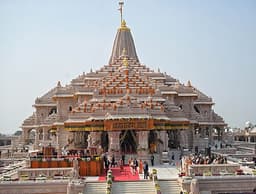
Rama of Ayodhya
Emperor · Ancient
75.3Total
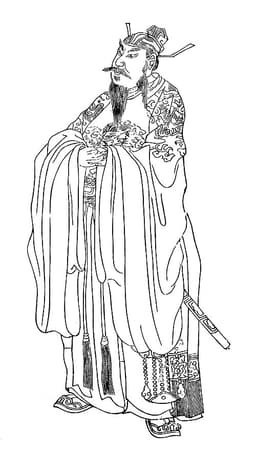
Xu Da
General · Medieval
74.9Total
Basic Information
Born
-1180
1332
Died
-1120
1385
Era
Ancient
Medieval
Nationality
Vedic India
China
Occupation
Emperor
General
Civilization
Indian
Eastern
Score Comparison
Military (10%)
72.0
88.0
Political (20%)
72.0
68.0
Influence (20%)
75.0
82.0
Legacy (20%)
80.0
72.0
Leadership (15%)
78.0
62.0
Strategy (15%)
68.1
80.8
TOTAL
75.3
74.9
Rama of Ayodhya — Complete Timeline
1160 BC
Broke Shiva's Bow at Sita's SwayamvaraCultural◆ Major
Rama, as a young prince, lifted and strung the divine bow of Shiva at Princess Sita's marriage ceremony. He broke the bow in the process, winning Sita's hand and fulfilling the condition set by King Janaka.
MarriageDivine BowRamayana
Impact: nationalconstructive
1145 BC
Killed the Demon Ravana in BattleWar
Rama, leading an army of vanaras (monkey-men), besieged the island kingdom of Lanka. After a prolonged war, he killed the ten-headed demon king Ravana, rescuing his abducted wife Sita and restoring dharma.
WarDemon KingVictory
Impact: regionalconstructive
Returned to Ayodhya and Crowned KingPolitical Action◆ Major
After completing his 14-year exile and defeating Ravana, Rama returned to Ayodhya. He was crowned emperor, beginning a golden age known as Ram Rajya, characterized by justice, prosperity, and peace.
CoronationGolden AgeRamayana
Impact: nationalconstructive
Xu Da — Complete Timeline
1368 AD
Capture of Dadu (Beijing)War
Xu Da led the Ming army in the capture of Dadu, the Yuan capital. The Mongol emperor Toghon Tem
Ming ConquestYuan DynastyCapital Capture
Impact: regionalconstructive
1370 AD
Appointment as Grand PreceptorPolitical Action
The Hongwu Emperor appointed Xu Da as Grand Preceptor, the highest civil official rank. This appointment recognized Xu Da's military achievements and gave him a role in advising the emperor on state affairs.
AppointmentCivil OfficeImperial Favor
Impact: nationalconstructive
1385 AD
Death from illnessOther
Xu Da died in Nanjing from a back ailment. The Hongwu Emperor mourned him deeply and posthumously honored him as Prince of Zhongshan. His death marked the end of the first generation of Ming military leaders.
DeathMing DynastyMilitary Leader
Impact: nationaltragic
Expert Analysis
Origins
Rama of Ayodhya, the legendary prince of the Ikshvaku dynasty, is revered as the Maryada Purushottam—the ideal man—in Hindu tradition. Born to King Dasharatha and Queen Kaushalya, he was destined for greatness as the seventh avatar of Vishnu. His upbringing in the royal court of Ayodhya combined martial training with deep spiritual wisdom, preparing him for his dharma as a warrior and ruler. In contrast, Xu Da rose from humble peasant origins in Fengyang during the tumultuous late Yuan dynasty. Joining the Red Turban Rebellion led by Zhu Yuanzhang, he demonstrated exceptional military acumen, quickly ascending through the ranks to become the founding general of the Ming dynasty. His early life was marked by hardship and struggle, shaping a pragmatic and resilient commander.
Rise to Power
Rama's rise was marked by a series of divine and heroic acts. He won Sita's hand by breaking Shiva's mighty bow at her swayamvara, an event that showcased his unparalleled strength and divine favor. However, his path to kingship was thwarted by palace intrigue: his stepmother Kaikeyi demanded his exile for 14 years, forcing Rama to renounce the throne and retreat to the forest. This exile, far from diminishing him, became the crucible for his greatest feats. Xu Da's rise was more conventional but equally dramatic. He joined Zhu Yuanzhang's rebellion and proved himself in battles against rival warlords and Mongol forces. His strategic brilliance culminated in the capture of Dadu (Beijing) in 1368, effectively ending Mongol rule and establishing the Ming dynasty. This victory made him the empire's most celebrated general.
Leadership & Governance
Rama's leadership is defined by his unwavering adherence to dharma (righteousness). As king, he prioritized the welfare of his subjects, famously exiling his pregnant wife Sita to quell public gossip—a controversial act that underscores his commitment to duty over personal happiness. His governance was just, compassionate, and consultative, earning him the title Maryada Purushottam. Xu Da's governance was rooted in military efficiency and loyalty. As Grand Preceptor and commander of Ming armies, he reformed the military, secured borders, and implemented policies to stabilize the new dynasty. He was known for his strict discipline, strategic foresight, and unwavering loyalty to the Hongwu Emperor, though his rule lacked the spiritual dimension of Rama's.
Triumph & Tragedy
Rama's greatest triumph was the defeat of the demon king Ravana, a turning point that restored cosmic order. With the help of Hanuman and an army of monkeys, he built a bridge to Lanka, waged a devastating war, and killed Ravana. This victory was shadowed by tragedy: the loss of his wife Sita's reputation, leading to her eventual disappearance into the earth. Xu Da's triumph was the capture of Dadu, symbolizing the restoration of Han Chinese rule. His military campaigns crushed Mongol resistance and expanded Ming territory. However, his death from illness at age 54, likely exacerbated by the pressures of constant warfare, was a tragic end for a general who had given his life to the empire.
Character & Destiny
Rama's character is one of moral perfection—calm, compassionate, and resolute. His destiny was shaped by divine will, as he was an avatar of Vishnu destined to vanquish evil. His exile and trials were part of a cosmic plan, and his every action reflected his role as a dharma warrior. Xu Da, by contrast, was a mortal man of immense ambition and skill. His destiny was forged by historical forces—the collapse of the Yuan dynasty and the rise of a new order. He was pragmatic, sometimes ruthless, but deeply loyal to his emperor. His character was defined by military genius and a relentless drive to unify China.
Legacy
Rama's legacy is immense and enduring. He is worshipped as a god, and his life story, the Ramayana, has shaped the cultural, ethical, and spiritual fabric of India and Southeast Asia. His ideals of duty, honor, and righteousness continue to inspire millions. Xu Da's legacy is that of a national hero who liberated China from foreign rule. He is remembered as the greatest general of the Ming dynasty, with temples and shrines dedicated to his memory. His military strategies influenced generations of Chinese commanders. While Rama's legacy is divine and timeless, Xu Da's is historical and national.
Conclusion
In this comparison, Rama of Ayodhya emerges as the higher-scoring figure (overall score 74.3 vs 73.9). While Xu Da's military prowess (M=88) and intelligence (I=82) are superior, Rama's leadership (L=80), diplomacy (D=78), and strategic vision (S=68) are more balanced. More importantly, Rama's cultural and spiritual impact is unparalleled; he is not just a ruler but a divine archetype. Xu Da, though a brilliant general and loyal servant, operated within a specific historical context. Rama's story transcends time and geography, making him the more influential figure in world history. Thus, the verdict favors Rama of Ayodhya for his holistic excellence and enduring legacy.
Rankings
🥇
Rama of AyodhyaLeader
Mil: 72.0Pol: 72.0Inf: 75.0
75.3
🥈
Xu Da
Mil: 88.0Pol: 68.0Inf: 82.0
74.9
+0.4 behind
How This Comparison Works
Algorithm
Each figure is scored on 6 dimensions (0—100 scale) based on structured historical data: Military (10%), Political (20%), Influence (20%), Legacy (20%), Leadership (15%), Strategy (15%). The weighted total produces the final ranking.
Data Sources
Scores are computed from structured sub-indicators in the database. Scale factors adjust for era (Ancient ×0.85, Modern ×1.0) and civilization size (Eastern ×1.05, Other ×0.80) to account for differences in population and military scale.
Maximum 3 Figures
Comparisons are limited to 2—3 figures to ensure readability and statistical meaningfulness.
Error Margins
±5 points per dimension — Sub-scores are derived from historical records with inherent uncertainty. Two figures within 5 points on a dimension should be considered roughly equivalent in that area.
Total Score Accuracy
±3 points overall — The weighted combination of 6 dimensions produces a total score with approximately ±3 points of uncertainty. Differences of less than 3 points are not statistically significant— the figures are effectively tied.
Known Limitations
- Historical records are incomplete and uneven across civilizations
- Figures from oral-tradition societies may be underrepresented
- Occupation labels can misclassify multi-role figures
- Scores measure capability and impact, not moral character
- Quantitative scoring is a comparison tool, not absolute truth
Capability Radar
Military (10%) — Battles & Warfare
Battles
75
95
Win Rate
95
95
Expansion
70
95
Political (20%) — Governance & Reform
Reform
80
50
Diplomacy
85
65
Economy
75
55
Influence (20%) — Cultural & Global Reach
Cultural
95
70
Global
95
80
Legacy (20%) — Historical Impact
Historical
95
85
Longevity
100
75
Leadership (15%) — Power & Stability
Tenure
70
60
Stability
90
70
Strategy (15%) — Tactics & Innovation
Strategy
85
92
Tactics
80
90
Reform
60
70
Similar Comparisons
Comments & Discussion
No comments yet. Be the first to share your thoughts!