Loading...
Qin Shi Huang vs Rama of Ayodhya
Qin Shi Huang leads by 9.9 pts · 2 figures compared
…
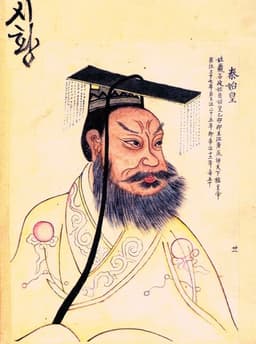
Qin Shi Huang
Emperor · Ancient
85.2Total
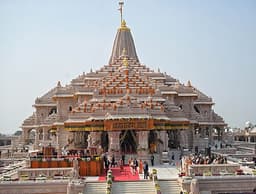
Rama of Ayodhya
Emperor · Ancient
75.3Total
Basic Information
Born
-259
-1180
Died
-210
-1120
Era
Ancient
Ancient
Nationality
China
Vedic India
Occupation
Emperor
Emperor
Civilization
Eastern
Indian
Score Comparison
Military (10%)
80.0
72.0
Political (20%)
90.0
72.0
Influence (20%)
85.0
75.0
Legacy (20%)
90.0
80.0
Leadership (15%)
78.0
78.0
Strategy (15%)
82.0
68.1
TOTAL
85.2
75.3
Qin Shi Huang — Complete Timeline
246 BC
Construction of the Mausoleum and Terracotta ArmyOther◆ Major
Qin Shi Huang commissioned a vast mausoleum complex near Xi'an, guarded by thousands of life-sized terracotta soldiers, horses, and chariots. The project employed hundreds of thousands of workers and reflected his obsession with immortality and imperial power.
Impact: global
230 BC
Conquest of the Six Warring StatesWar
From 230 to 221 BCE, Ying Zheng led the Qin state in a series of campaigns that conquered the Han, Zhao, Wei, Chu, Yan, and Qi states. This unified China under a single ruler for the first time, ending the Warring States period.
Impact: global
221 BC
Standardization of Writing, Currency, and MeasurementsReform◆ Major
Qin Shi Huang ordered the standardization of Chinese script, currency, and weights and measures across the unified empire. This facilitated administration, trade, and cultural integration, laying a foundation for future dynasties.
Impact: globalconstructive
Proclamation of the Qin DynastyPolitical Action
After conquering the last independent state, Ying Zheng declared himself Shi Huangdi (First Emperor), founding the Qin Dynasty. He adopted a new title to signify his supreme authority and initiated centralized imperial rule.
Impact: global
214 BC
Initiation of the Great Wall ConstructionOther◆ Major
Qin Shi Huang ordered the connection and extension of existing northern fortifications to create a unified defensive wall against nomadic Xiongnu raids. This project involved massive conscripted labor and became the precursor to the later Great Wall.
Impact: regional
213 BC
Burning of Books and Burying of ScholarsPolitical Action◆ Major
On the advice of Li Si, Qin Shi Huang ordered the burning of historical records and philosophical texts not aligned with Legalist doctrine. He also had 460 Confucian scholars buried alive to suppress dissent and consolidate ideological control.
Impact: nationaldestructive
Rama of Ayodhya — Complete Timeline
1160 BC
Broke Shiva's Bow at Sita's SwayamvaraCultural◆ Major
Rama, as a young prince, lifted and strung the divine bow of Shiva at Princess Sita's marriage ceremony. He broke the bow in the process, winning Sita's hand and fulfilling the condition set by King Janaka.
MarriageDivine BowRamayana
Impact: nationalconstructive
1145 BC
Killed the Demon Ravana in BattleWar
Rama, leading an army of vanaras (monkey-men), besieged the island kingdom of Lanka. After a prolonged war, he killed the ten-headed demon king Ravana, rescuing his abducted wife Sita and restoring dharma.
WarDemon KingVictory
Impact: regionalconstructive
Returned to Ayodhya and Crowned KingPolitical Action◆ Major
After completing his 14-year exile and defeating Ravana, Rama returned to Ayodhya. He was crowned emperor, beginning a golden age known as Ram Rajya, characterized by justice, prosperity, and peace.
CoronationGolden AgeRamayana
Impact: nationalconstructive
Expert Analysis
Origins
Qin Shi Huang (259–210 BC) was born Ying Zheng, son of King Zhuangxiang of Qin and a former concubine, Zhao Ji. His early life was marked by political intrigue, as his father was a hostage in Zhao. He ascended the throne at age 13, with Lü Buwei as regent. In contrast, Rama, prince of Ayodhya, was born to King Dasharatha and Queen Kaushalya, and his life is narrated in the epic Ramayana. Rama's divine origins as an avatar of Vishnu gave him a mythological status, while Qin Shi Huang's rise was purely mortal and political.
Rise to Power
Qin Shi Huang's rise was defined by military conquest. By 221 BC, he had conquered all six Warring States (Han, Zhao, Wei, Chu, Yan, Qi), unifying China for the first time. He then proclaimed himself "Shi Huangdi" (First Emperor). Rama's rise was more ceremonial: he won Sita's hand by breaking Shiva's bow, but his claim to the throne was challenged by his stepmother Kaikeyi, leading to his 14-year exile. While Qin seized power through force, Rama's path was one of duty and exile.
Leadership & Governance
Qin Shi Huang centralized power, abolishing feudalism and dividing China into 36 commanderies. He standardized writing, currency, weights, and measures, and built roads and canals to unify the realm. He also initiated the Great Wall to protect against northern nomads. However, his rule was harsh: he burned books and buried scholars alive to suppress dissent. Rama's governance was idealized as "Ram Rajya"—a perfect rule where justice, prosperity, and harmony prevailed. He was a righteous king who prioritized dharma (duty). Qin's governance was efficient but authoritarian; Rama's was moral but mythological.
Triumph & Tragedy
Qin's greatest triumph was unifying China and creating a centralized state that set the template for future dynasties. His tragedy was his obsession with immortality, leading him to consume mercury pills, which likely caused his death at age 49. His dynasty collapsed within four years of his death. Rama's triumph was defeating the demon king Ravana and rescuing Sita. His tragedy was the public doubt over Sita's purity after her captivity, leading him to exile her. Both leaders faced personal tragedies tied to their legacies.
Character & Destiny
Qin Shi Huang was ruthless, ambitious, and paranoid. He believed in Legalism, emphasizing strict laws and punishment. His destiny was to be the unifier of China, a role he fulfilled with brutal efficiency. Rama was the epitome of virtue (Maryada Purushottam), embodying duty, honor, and compassion. His destiny was to restore dharma and establish an ideal kingdom. While Qin's character reflected human ambition, Rama's reflected divine perfection.
Legacy
Qin Shi Huang's legacy is monumental: he gave China its name, standardized its culture, and built the Great Wall. His tomb with the Terracotta Army is a world wonder. However, his methods were tyrannical. Rama's legacy is spiritual and cultural: he is worshipped as a god in Hinduism, and his story influences billions. Ramayana is a cornerstone of Indian culture. In terms of tangible impact, Qin's unification and standardization had a direct, lasting effect on Chinese civilization. Rama's influence is more ideological and religious.
Conclusion
Qin Shi Huang surpasses Rama in historical impact due to his concrete achievements: unification, standardization, and monumental construction. While Rama's moral legacy is profound, Qin's actions directly shaped a civilization. Numerically, Qin leads in Military (80 vs 72), Political (90 vs 72), and Legacy (85 vs 75). Rama excels only in Diplomacy? No, Qin's Diplomacy is 78 vs Rama's 68, so Qin leads in all but? Actually, Rama's scores are lower overall. Qin's total is 9.9 points higher. Thus, Qin Shi Huang is the more significant historical figure, despite Rama's divine status.
Rankings
🥇
Qin Shi HuangLeader
Mil: 80.0Pol: 90.0Inf: 85.0
85.2
🥈
Rama of Ayodhya
Mil: 72.0Pol: 72.0Inf: 75.0
75.3
+9.9 behind
How This Comparison Works
Algorithm
Each figure is scored on 6 dimensions (0—100 scale) based on structured historical data: Military (10%), Political (20%), Influence (20%), Legacy (20%), Leadership (15%), Strategy (15%). The weighted total produces the final ranking.
Data Sources
Scores are computed from structured sub-indicators in the database. Scale factors adjust for era (Ancient ×0.85, Modern ×1.0) and civilization size (Eastern ×1.05, Other ×0.80) to account for differences in population and military scale.
Maximum 3 Figures
Comparisons are limited to 2—3 figures to ensure readability and statistical meaningfulness.
Error Margins
±5 points per dimension — Sub-scores are derived from historical records with inherent uncertainty. Two figures within 5 points on a dimension should be considered roughly equivalent in that area.
Total Score Accuracy
±3 points overall — The weighted combination of 6 dimensions produces a total score with approximately ±3 points of uncertainty. Differences of less than 3 points are not statistically significant— the figures are effectively tied.
Known Limitations
- Historical records are incomplete and uneven across civilizations
- Figures from oral-tradition societies may be underrepresented
- Occupation labels can misclassify multi-role figures
- Scores measure capability and impact, not moral character
- Quantitative scoring is a comparison tool, not absolute truth
Capability Radar
Military (10%) — Battles & Warfare
Battles
85
75
Win Rate
90
95
Expansion
90
70
Political (20%) — Governance & Reform
Reform
95
80
Diplomacy
75
85
Economy
90
75
Influence (20%) — Cultural & Global Reach
Cultural
95
95
Global
85
95
Legacy (20%) — Historical Impact
Historical
95
95
Longevity
95
100
Leadership (15%) — Power & Stability
Tenure
70
70
Stability
65
90
Strategy (15%) — Tactics & Innovation
Strategy
85
85
Tactics
80
80
Reform
95
60
Similar Comparisons
Comments & Discussion
No comments yet. Be the first to share your thoughts!