Loading...
Rama of Ayodhya vs Trajan
Trajan leads by 0.7 pts · 2 figures compared
…
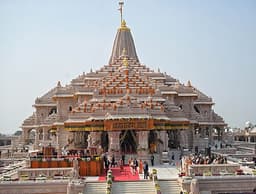
Rama of Ayodhya
Emperor · Ancient
75.3Total

Trajan
Emperor · Ancient
76.0Total
Basic Information
Born
-1180
53
Died
-1120
117
Era
Ancient
Ancient
Nationality
Vedic India
Roman Empire
Occupation
Emperor
Emperor
Civilization
Indian
Western
Score Comparison
Military (10%)
72.0
86.0
Political (20%)
72.0
79.2
Influence (20%)
75.0
82.0
Legacy (20%)
80.0
65.6
Leadership (15%)
78.0
73.2
Strategy (15%)
68.1
76.0
TOTAL
75.3
76.0
Rama of Ayodhya — Complete Timeline
1160 BC
Broke Shiva's Bow at Sita's SwayamvaraCultural◆ Major
Rama, as a young prince, lifted and strung the divine bow of Shiva at Princess Sita's marriage ceremony. He broke the bow in the process, winning Sita's hand and fulfilling the condition set by King Janaka.
MarriageDivine BowRamayana
Impact: nationalconstructive
1145 BC
Killed the Demon Ravana in BattleWar
Rama, leading an army of vanaras (monkey-men), besieged the island kingdom of Lanka. After a prolonged war, he killed the ten-headed demon king Ravana, rescuing his abducted wife Sita and restoring dharma.
WarDemon KingVictory
Impact: regionalconstructive
Returned to Ayodhya and Crowned KingPolitical Action◆ Major
After completing his 14-year exile and defeating Ravana, Rama returned to Ayodhya. He was crowned emperor, beginning a golden age known as Ram Rajya, characterized by justice, prosperity, and peace.
CoronationGolden AgeRamayana
Impact: nationalconstructive
Trajan — Complete Timeline
101 AD
Implemented the Alimenta Welfare ProgramReform◆ Major
Trajan expanded the Alimenta program, a state-funded welfare system that provided food subsidies and educational support for poor children in Italy. The program used interest from state loans to landowners to fund the distributions, aiming to boost the Italian population and agricultural economy.
WelfareSocial PolicyItaly
Impact: regionalconstructive
105 AD
Built Trajan's Bridge over the DanubeOther
Trajan ordered the construction of a massive stone and timber bridge across the Danube River near the Iron Gates. Designed by Apollodorus of Damascus, it was the longest arch bridge in the world for over a millennium, facilitating the Roman invasion of Dacia.
EngineeringBridgeDanube
Impact: regionalconstructive
106 AD
Conquered DaciaWar
Trajan led two major campaigns against the Dacian kingdom under King Decebalus, culminating in the conquest of Dacia (modern Romania) in 106 CE. The victory brought vast gold and silver mines under Roman control and established a new province, funding massive building projects in Rome.
DaciaConquestProvince
Impact: regional
112 AD
Built Trajan's Forum and MarketCultural◆ Major
Trajan commissioned the construction of Trajan's Forum, a vast complex in Rome including a basilica, libraries, and the Column of Trajan. The adjacent Trajan's Market, a multi-level commercial center, demonstrated Roman engineering prowess and served as a model for urban planning.
ArchitectureRomeUrban Planning
Impact: globalconstructive
116 AD
Conquered Parthia and Reached the Persian GulfWar◆ Major
Trajan launched a campaign against the Parthian Empire, capturing its capital Ctesiphon and annexing Mesopotamia. He reached the Persian Gulf, marking the easternmost extent of Roman territory. However, rebellions in the conquered territories forced a withdrawal shortly after.
ParthiaMesopotamiaExpansion
Impact: global
Expert Analysis
Origins
Trajan (Marcus Ulpius Traianus, 53–117 CE) was born into a prominent Roman family in Italica (modern Spain). His father was a senator and governor, providing Trajan with a privileged path into military and political life. He rose through the ranks under Emperor Domitian and later served as governor of Upper Germany before being adopted by Emperor Nerva in 97 CE.
Rama, according to the ancient Indian epic Ramayana, was the prince of Ayodhya, eldest son of King Dasharatha. His birth was divine—an avatar of the god Vishnu, sent to Earth to defeat the demon king Ravana. His upbringing in the royal court emphasized dharma (righteousness), duty, and sacrifice.
Rise to Power
Trajan’s ascent was swift and strategic. Upon Nerva’s death in 98 CE, he became emperor with the support of the army and Senate. His military reputation, especially his campaigns on the Rhine and Danube, secured his position. He was the first emperor born outside Italy, reflecting the empire’s expansion.
Rama’s rise was interrupted by palace intrigue. His stepmother Kaikeyi demanded Rama be exiled for 14 years, and her son Bharata be crowned. Rama accepted without protest, upholding his father’s word. During exile, he gathered allies—especially the monkey king Sugriva and the devoted Hanuman—and built a coalition to rescue his wife Sita from Ravana.
Leadership & Governance
Trajan ruled with a blend of military might and civic generosity. He expanded the empire to its greatest territorial extent, annexing Dacia (modern Romania) and conquering Parthia, reaching the Persian Gulf. Domestically, he implemented the Alimenta program, providing food subsidies for poor children, and launched massive building projects including Trajan’s Forum, Markets, and Bridge over the Danube. His governance emphasized efficiency, Romanization, and public welfare.
Rama’s leadership is defined by adherence to dharma. As king, he prioritized justice, prosperity, and moral order. His reign, Ram Rajya, is idealized as a golden age of peace and righteousness. He established a just administration, listened to his subjects, and even exiled his beloved wife Sita to appease public gossip—a controversial act highlighting his commitment to duty over personal desire.
Triumph & Tragedy
Trajan’s greatest triumph was the conquest of Dacia (101–106 CE), celebrated with his famous column. He also annexed the Nabatean Kingdom (Arabia Petraea) and defeated the Parthians, capturing their capital Ctesiphon. However, his eastern campaign overextended resources, and he died in 117 CE while returning to Rome, leaving his successor Hadrian to consolidate. His death marked the end of Rome’s expansionist era.
Rama’s triumph was the defeat of Ravana after a fierce battle in Lanka, rescuing Sita. Yet tragedy followed: rumors about Sita’s purity during captivity forced Rama to banish her. She later gave birth to twin sons, but Rama’s adherence to public opinion cost him personal happiness. His eventual death (or ascent to Vaikuntha) ended his earthly reign.
Character & Destiny
Trajan was pragmatic, ambitious, and beloved by the army. He was known for his humility (refusing personal honors) and direct involvement in campaigns. His destiny was to expand Rome’s glory, earning the title *Optimus Princeps* (Best Ruler). He represents the zenith of Roman imperial power.
Rama is the embodiment of *Maryada Purushottam* (perfect man). His destiny was divine: to restore dharma and establish ideal rule. He faced tests of loyalty, sacrifice, and moral dilemmas, always choosing righteousness over personal gain. His character is more symbolic than historical, serving as a model for Hindu ethics.
Legacy
Trajan’s legacy is monumental. His forum, column, and markets remain landmarks in Rome. He set a standard for imperial expansion and welfare. His military conquests shaped Europe’s borders for centuries. Historical scores: Military 86, Political 79, Influence 82, Leadership 66, Diplomacy 73, Social 76, Temperament 76.
Rama’s legacy transcends history: the Ramayana influences art, culture, and religion across Asia. He is worshipped as a god, and his story teaches duty, devotion, and righteousness. His reign symbolizes ideal governance. Scores: Military 72, Political 72, Influence 75, Leadership 80, Diplomacy 78, Social 68, Temperament 75.
Conclusion
Trajan and Rama represent different paradigms: historical conqueror versus mythological ideal. Trajan’s tangible achievements—territorial expansion, public works, welfare—are measurable. Rama’s impact is spiritual and moral, shaping civilizations for millennia. While Trajan scores higher overall (76.9 vs 74.3), Rama’s influence on ethical governance and culture is profound. In a direct comparison, Trajan wins on concrete accomplishments, but Rama’s legacy of dharma offers timeless lessons. Both exemplify leadership in their own contexts.
Rankings
🥇
TrajanLeader
Mil: 86.0Pol: 79.2Inf: 82.0
76.0
🥈
Rama of Ayodhya
Mil: 72.0Pol: 72.0Inf: 75.0
75.3
+0.7 behind
How This Comparison Works
Algorithm
Each figure is scored on 6 dimensions (0—100 scale) based on structured historical data: Military (10%), Political (20%), Influence (20%), Legacy (20%), Leadership (15%), Strategy (15%). The weighted total produces the final ranking.
Data Sources
Scores are computed from structured sub-indicators in the database. Scale factors adjust for era (Ancient ×0.85, Modern ×1.0) and civilization size (Eastern ×1.05, Other ×0.80) to account for differences in population and military scale.
Maximum 3 Figures
Comparisons are limited to 2—3 figures to ensure readability and statistical meaningfulness.
Error Margins
±5 points per dimension — Sub-scores are derived from historical records with inherent uncertainty. Two figures within 5 points on a dimension should be considered roughly equivalent in that area.
Total Score Accuracy
±3 points overall — The weighted combination of 6 dimensions produces a total score with approximately ±3 points of uncertainty. Differences of less than 3 points are not statistically significant— the figures are effectively tied.
Known Limitations
- Historical records are incomplete and uneven across civilizations
- Figures from oral-tradition societies may be underrepresented
- Occupation labels can misclassify multi-role figures
- Scores measure capability and impact, not moral character
- Quantitative scoring is a comparison tool, not absolute truth
Capability Radar
Military (10%) — Battles & Warfare
Battles
75
95
Win Rate
95
98
Expansion
70
95
Political (20%) — Governance & Reform
Reform
80
88
Diplomacy
85
85
Economy
75
90
Influence (20%) — Cultural & Global Reach
Cultural
95
85
Global
95
85
Legacy (20%) — Historical Impact
Historical
95
90
Longevity
100
88
Leadership (15%) — Power & Stability
Tenure
70
90
Stability
90
92
Strategy (15%) — Tactics & Innovation
Strategy
85
92
Tactics
80
88
Reform
60
85
Similar Comparisons
Comments & Discussion
No comments yet. Be the first to share your thoughts!