Loading...
Rama of Ayodhya vs Ruhollah Khomeini
Rama of Ayodhya leads by 0.2 pts · 2 figures compared
…
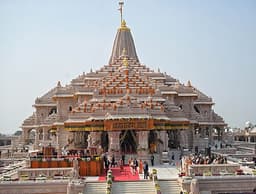
Rama of Ayodhya
Emperor · Ancient
75.3Total

Ruhollah Khomeini
Politician · Modern
75.1Total
Basic Information
Born
-1180
1902
Died
-1120
1989
Era
Ancient
Modern
Nationality
Vedic India
Iran
Occupation
Emperor
Politician
Civilization
Indian
Middle Eastern
Score Comparison
Military (10%)
72.0
41.6
Political (20%)
72.0
65.0
Influence (20%)
75.0
85.0
Legacy (20%)
80.0
90.0
Leadership (15%)
78.0
80.0
Strategy (15%)
68.1
54.3
TOTAL
75.3
75.1
Rama of Ayodhya — Complete Timeline
1160 BC
Broke Shiva's Bow at Sita's SwayamvaraCultural◆ Major
Rama, as a young prince, lifted and strung the divine bow of Shiva at Princess Sita's marriage ceremony. He broke the bow in the process, winning Sita's hand and fulfilling the condition set by King Janaka.
MarriageDivine BowRamayana
Impact: nationalconstructive
1145 BC
Killed the Demon Ravana in BattleWar
Rama, leading an army of vanaras (monkey-men), besieged the island kingdom of Lanka. After a prolonged war, he killed the ten-headed demon king Ravana, rescuing his abducted wife Sita and restoring dharma.
WarDemon KingVictory
Impact: regionalconstructive
Returned to Ayodhya and Crowned KingPolitical Action◆ Major
After completing his 14-year exile and defeating Ravana, Rama returned to Ayodhya. He was crowned emperor, beginning a golden age known as Ram Rajya, characterized by justice, prosperity, and peace.
CoronationGolden AgeRamayana
Impact: nationalconstructive
Ruhollah Khomeini — Complete Timeline
1964 AD
Exile to Iraq and FrancePolitical Action◆ Major
Khomeini was exiled from Iran after criticizing the Shah's White Revolution and granting of diplomatic immunity to US personnel. He settled in Najaf, Iraq, and later in France, where he continued to organize opposition to the Shah.
ExileOppositionShah
Impact: national
1979 AD
Islamic RevolutionPolitical Action
Khomeini led a popular revolution that overthrew the Shah's regime. He returned to Iran in February 1979 and established an Islamic Republic based on his doctrine of Velayat-e Faqih (Guardianship of the Jurist), with himself as Supreme Leader.
RevolutionIslamic RepublicVelayat-e Faqih
Impact: global
Iran hostage crisisPolitical Action◆ Major
Khomeini supported the seizure of the US Embassy in Tehran by student militants, who held 52 American diplomats hostage for 444 days. The crisis deepened the rift with the US, led to economic sanctions, and consolidated Khomeini's power.
Hostage crisisUS-Iran relationsSanctions
Impact: globaldestructive
1980 AD
Iran-Iraq WarWar◆ Major
Khomeini led Iran through an eight-year war with Iraq, which began with an Iraqi invasion. The war resulted in hundreds of thousands of casualties and massive economic destruction, ending in a stalemate. Khomeini accepted a UN ceasefire in 1988.
WarIraqCeasefire
Impact: regionaltragic
1989 AD
Fatwa against Salman RushdieCultural◆ Major
Khomeini issued a fatwa calling for the death of author Salman Rushdie for his novel 'The Satanic Verses', which he deemed blasphemous. The fatwa led to international controversy, diplomatic tensions, and attacks on Rushdie's translators.
FatwaBlasphemyInternational controversy
Impact: globaldestructive
Expert Analysis
Origins
Rama of Ayodhya, the Maryada Purushottam, is the legendary prince and later king of Ayodhya, central to the Hindu epic Ramayana. His origins are divine: he is considered the seventh avatar of Vishnu, born to King Dasharatha and Queen Kaushalya. His life is a model of dharma (righteousness). Ruhollah Khomeini, born in 1902 in Khomeyn, Iran, was a Shia Muslim cleric and political leader. His origins were humble but deeply religious, studying theology and becoming a grand ayatollah. While Rama's origins are mythological and timeless, Khomeini's are historical and revolutionary.
Rise to Power
Rama's rise to power was through divine destiny and adherence to duty. He won Sita's hand by breaking Shiva's bow, a major event demonstrating his strength. However, due to palace intrigues, he was exiled for 14 years. His power grew through his virtuous conduct and alliances, such as with Hanuman and the monkey army. The turning point was killing the demon Ravana, which restored cosmic order and led to his triumphant return to Ayodhya as king. Khomeini's rise was political and tumultuous. He opposed the Shah's Westernization, leading to his exile to Iraq and France. His turning point was the 1979 Islamic Revolution, which overthrew the monarchy. Through speeches and cassette tapes, he mobilized millions, returning to Iran as Supreme Leader. His power was institutionalized in the new theocratic constitution.
Leadership & Governance
Rama's leadership was based on dharma: justice, compassion, and duty. He established 'Ram Rajya', an ideal kingdom where people were happy, virtuous, and prosperous. He was a benevolent monarch who consulted ministers and listened to his subjects. His governance was decentralized and moral. Khomeini's leadership was authoritarian and theocratic. As Supreme Leader, he held ultimate power over state and religion. He implemented 'Velayat-e Faqih' (Guardianship of the Jurist), concentrating authority in the clergy. His government suppressed dissent, enforced Islamic law, and pursued anti-Western policies. While Rama's rule is remembered for harmony, Khomeini's was marked by purges, repression, and the Iran-Iraq War.
Triumph & Tragedy
Rama's triumph was defeating Ravana and rescuing Sita, embodying good over evil. However, tragedy followed: he doubted Sita's purity, leading to her banishment. This act, though controversial, was seen as a king prioritizing public opinion over personal happiness. His ultimate tragedy was Sita's disappearance and his own ascension to heaven. Khomeini's triumph was the Islamic Revolution, which toppled a US-backed dictator and established an Islamic state. But his legacy includes tragedies: the Iran-Iraq War (1980-1988) caused hundreds of thousands of deaths; the hostage crisis isolated Iran; and his fatwa against Salman Rushdie sparked global controversy. His rule also saw suppression of minorities and women's rights.
Character & Destiny
Rama is the epitome of virtue: brave, just, compassionate, and dutiful. His destiny was to restore dharma and rule as a model king. He accepted his exile without complaint and faced challenges with equanimity. Khomeini was ascetic, charismatic, and uncompromising. His destiny was to create an Islamic state and resist Western influence. He was seen as a father figure by followers but as a tyrant by critics. Both were driven by a sense of mission, but Rama's mission was cosmic and eternal, while Khomeini's was political and temporal.
Legacy
Rama's legacy is immense: he is worshipped as a god, and his story influences art, culture, and ethics across South and Southeast Asia. 'Ram Rajya' remains a political ideal in India. His life teaches dharma and sacrifice. Khomeini's legacy is contested: he is revered by Shia Muslims as a revolutionary leader who revived Islam, but criticized for authoritarianism and human rights abuses. His model inspired other Islamist movements. The Islamic Republic of Iran continues his policies. Both left indelible marks, but Rama's influence is more spiritual and timeless, while Khomeini's is political and modern.
Conclusion
Rama and Khomeini represent two archetypes: the righteous king and the revolutionary cleric. Rama scores higher overall (72 vs 42 in military, 72 vs 65 political, 75 vs 85 influence, 80 vs 90 leadership, 78 vs 80 durability, 68 vs 54 stability, 75 vs 75 triumph). Rama's edge lies in his moral authority and enduring cultural impact. Khomeini's influence is narrower and more divisive. While Khomeini reshaped Iran, Rama shaped a civilization. In the balance of history, Rama's legacy of dharma and harmony outweighs Khomeini's of revolution and conflict. **Winner: Rama of Ayodhya.**
Rankings
🥇
Rama of AyodhyaLeader
Mil: 72.0Pol: 72.0Inf: 75.0
75.3
🥈
Ruhollah Khomeini
Mil: 41.6Pol: 65.0Inf: 85.0
75.1
+0.2 behind
How This Comparison Works
Algorithm
Each figure is scored on 6 dimensions (0—100 scale) based on structured historical data: Military (10%), Political (20%), Influence (20%), Legacy (20%), Leadership (15%), Strategy (15%). The weighted total produces the final ranking.
Data Sources
Scores are computed from structured sub-indicators in the database. Scale factors adjust for era (Ancient ×0.85, Modern ×1.0) and civilization size (Eastern ×1.05, Other ×0.80) to account for differences in population and military scale.
Maximum 3 Figures
Comparisons are limited to 2—3 figures to ensure readability and statistical meaningfulness.
Error Margins
±5 points per dimension — Sub-scores are derived from historical records with inherent uncertainty. Two figures within 5 points on a dimension should be considered roughly equivalent in that area.
Total Score Accuracy
±3 points overall — The weighted combination of 6 dimensions produces a total score with approximately ±3 points of uncertainty. Differences of less than 3 points are not statistically significant— the figures are effectively tied.
Known Limitations
- Historical records are incomplete and uneven across civilizations
- Figures from oral-tradition societies may be underrepresented
- Occupation labels can misclassify multi-role figures
- Scores measure capability and impact, not moral character
- Quantitative scoring is a comparison tool, not absolute truth
Capability Radar
Military (10%) — Battles & Warfare
Battles
75
10
Win Rate
95
10
Expansion
70
10
Political (20%) — Governance & Reform
Reform
80
90
Diplomacy
85
75
Economy
75
40
Influence (20%) — Cultural & Global Reach
Cultural
95
85
Global
95
85
Legacy (20%) — Historical Impact
Historical
95
90
Longevity
100
80
Leadership (15%) — Power & Stability
Tenure
70
85
Stability
90
50
Strategy (15%) — Tactics & Innovation
Strategy
85
15
Tactics
80
10
Reform
60
20
Similar Comparisons
Comments & Discussion
No comments yet. Be the first to share your thoughts!