Loading...
Ram Manohar Lohia vs Vaclav Havel
Vaclav Havel leads by 9.1 pts · 2 figures compared
…

Ram Manohar Lohia
Politician · Modern
55.3Total
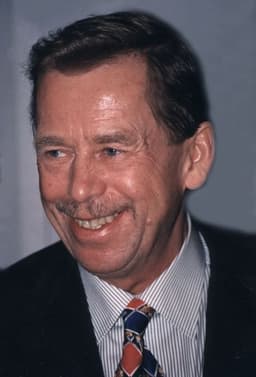
Vaclav Havel
Politician · Modern
64.4Total
Basic Information
Born
1910
1936
Died
1967
—
Era
Modern
Modern
Nationality
India
Czech Republic
Occupation
Politician
Politician
Civilization
Indian
Western
Score Comparison
Military (10%)
38.5
50.0
Political (20%)
68.0
82.0
Influence (20%)
58.0
65.0
Legacy (20%)
50.0
55.0
Leadership (15%)
55.3
78.0
Strategy (15%)
60.0
54.3
TOTAL
55.3
64.4
Ram Manohar Lohia — Complete Timeline
1934 AD
Founding of Socialist PartyPolitical Action◆ Major
Ram Manohar Lohia co-founded the Congress Socialist Party within the Indian National Congress. He advocated for a socialist agenda that included land reforms, decentralization, and opposition to caste hierarchy.
SocialismPoliticsIndia
Impact: nationalconstructive
1942 AD
Quit India Movement ParticipationPolitical Action◆ Major
Lohia was a key organizer of the Quit India Movement, leading underground activities against British rule. He was arrested and imprisoned for his role, spending several years in jail.
Freedom StruggleBritish RajSocialism
Impact: national
1964 AD
Formation of Samyukta Socialist PartyPolitical Action◆ Major
Lohia merged several socialist factions to form the Samyukta Socialist Party. He led the party in opposition to the Congress government, advocating for socialist policies and criticizing Nehru's economic model.
SocialismPoliticsOpposition
Impact: nationalconstructive
1965 AD
Advocacy for Reservation for Backward CastesPolitical Action
Lohia campaigned for reservations in education and government jobs for Other Backward Classes. His efforts influenced the Mandal Commission later, and he became a key figure in the backward caste political movement.
CasteReservationSocial Justice
Impact: nationalprogressive
Vaclav Havel — Complete Timeline
1977 AD
Charter 77 foundingPolitical Action◆ Major
Havel became a leading figure and spokesperson for Charter 77, a Czechoslovak human rights manifesto that criticized the communist government for failing to implement its own laws on human rights. This led to his persecution and imprisonment.
Human RightsDissidenceCold War
Impact: nationalconstructive
1989 AD
Velvet Revolution leadershipPolitical Action
Havel co-founded the Civic Forum and emerged as the key leader of the non-violent Velvet Revolution in Czechoslovakia. Mass protests forced the communist government to resign, ending 41 years of one-party rule.
RevolutionDemocracyCold War
Impact: globalconstructive
Elected President of CzechoslovakiaPolitical Action◆ Major
Following the Velvet Revolution, Havel was elected President of Czechoslovakia by the Federal Assembly. He became the first non-communist leader of the country since 1948, symbolizing the transition to democracy.
DemocracyPresidencyPost-Communism
Impact: nationalconstructive
1993 AD
Dissolution of CzechoslovakiaPolitical Action◆ Major
Havel resigned as President of Czechoslovakia in July 1992 after failing to prevent the country's dissolution. The Czech Republic and Slovakia separated peacefully on January 1, 1993. Havel then became the first President of the Czech Republic.
State DissolutionNationalismPost-Communism
Impact: regional
1999 AD
NATO accession of Czech RepublicPolitical Action◆ Major
Under Havel's presidency, the Czech Republic joined NATO in 1999. This marked a major shift in foreign policy, integrating the country into Western security structures and moving away from its Soviet-era alignment.
NATOForeign PolicyPost-Communism
Impact: regionalconstructive
Expert Analysis
Origins
Ram Manohar Lohia was born in 1910 in Akbarpur, India, into a middle-class family. His father was a nationalist and teacher, instilling early political awareness. Lohia studied at the University of Calcutta and later at the University of Berlin, where he was exposed to socialist ideas. His education shaped his commitment to anti-colonialism and social justice.
Vaclav Havel was born in 1936 in Prague, Czechoslovakia, into a wealthy family. His father was a well-known architect and entrepreneur. Havel's privileged background gave him access to education and culture, but his family's bourgeois status made them targets under communism. He studied economics but was barred from humanities due to his class origin. Havel worked as a playwright and became a leading figure in the Czech dissident movement.
Rise to Power
Lohia's rise began in the 1930s when he joined the Indian National Congress and co-founded the Congress Socialist Party in 1934. He was a key organizer of the Quit India Movement in 1942, leading underground activities against British rule. After independence, he broke from Congress and founded the Socialist Party in 1952. His advocacy for backward castes gained traction, and he formed the Samyukta Socialist Party in 1964. Lohia's political strength peaked in the 1960s as a vocal opposition leader.
Havel's rise was rooted in his work as a playwright and dissident. He co-founded Charter 77 in 1977, a human rights manifesto that criticized the communist regime. This led to his imprisonment and international recognition. In 1989, he co-founded the Civic Forum and became the leader of the non-violent Velvet Revolution. Mass protests forced the communist government to step down, and Havel was elected President of Czechoslovakia in December 1989. His rise was rapid, from dissident to head of state in weeks.
Leadership & Governance
Lohia's leadership was marked by his role as a staunch opposition figure. He focused on social justice, advocating for reservations for backward castes in education and government jobs. His governance approach was ideological, pushing for land reforms and socialist policies. However, he never held executive power; his influence was through agitation and parliamentary opposition. Lohia's political score of 68.0 reflects his impact on Indian politics, but his leadership score of 55.3 is lower due to his inability to implement his agenda directly.
Havel, in contrast, held the presidency from 1989 to 1992 in Czechoslovakia and later as President of the Czech Republic from 1993 to 2003. He led the transition from communism to democracy, focusing on human rights, integration with the West, and non-violent diplomacy. Havel's leadership score of 78.0 reflects his effective governance during a fragile transition. He navigated the dissolution of Czechoslovakia peacefully and pursued NATO membership for the Czech Republic, achieved in 1999. His political score of 82.0 underscores his success in consolidating democracy.
Triumph & Tragedy
Lohia's greatest triumph was his advocacy for backward castes, which laid the groundwork for the Mandal Commission in 1979. His efforts brought social justice issues to the forefront of Indian politics. However, his tragedy was his inability to form a government or sustain a unified socialist party. The Samyukta Socialist Party fragmented after his death in 1967, and his legacy was overshadowed by the dominant Congress party. His military score of 38.5 reflects his non-military approach.
Havel's triumph was leading the Velvet Revolution and overseeing the peaceful end of communism in Czechoslovakia. He became a symbol of moral leadership in politics. His tragedy was the dissolution of Czechoslovakia in 1993, which he opposed but could not prevent. He resigned as president in 1992 when it became clear the federation would split. Despite this, his legacy as a democratic leader remained strong. Havel's military score of 50.0 indicates his limited engagement with military matters.
Character & Destiny
Lohia was a fiery orator and ideologue, known for his uncompromising stance on social justice. His character was shaped by his intellectual background and commitment to socialism. He was often at odds with mainstream politics, which limited his reach but amplified his moral authority. His destiny was to be a perpetual opposition leader, influencing policy from the sidelines rather than holding power.
Havel was a reflective playwright who emphasized truth and morality in politics. His character was defined by his experience as a dissident, giving him a unique perspective on power. He believed in "living in truth" and used his presidency to promote human rights globally. His destiny was to lead a nation through a transformative period, but his idealism sometimes clashed with political realities.
Legacy
Lohia's legacy is most evident in India's reservation policies for Other Backward Classes. The Mandal Commission implemented his ideas in 1990, reshaping Indian politics. He is remembered as a champion of social justice and a key figure in the socialist movement. His influence score of 58.0 and legacy score of 50.0 reflect his enduring but niche impact.
Havel's legacy is global. He is remembered as a symbol of peaceful resistance and democratic transition. The Velvet Revolution inspired other anti-communist movements. His writings on civil society and human rights continue to influence dissidents and activists. His legacy score of 55.0 and influence score of 65.0 indicate a broader international impact.
Conclusion
Vaclav Havel had a greater impact than Ram Manohar Lohia, as reflected in their total scores: Havel 64.4 versus Lohia 55.3. Havel's direct role in ending communism in Czechoslovakia and his successful presidency gave him tangible political achievements. Lohia's contributions to social justice were significant but limited to opposition politics. Havel's leadership during a pivotal historical moment and his lasting influence on democratic movements worldwide place him ahead. While Lohia's ideas shaped Indian policy, Havel's actions changed the course of a nation and inspired the world.
Rankings
🥇
Vaclav HavelLeader
Mil: 50.0Pol: 82.0Inf: 65.0
64.4
🥈
Ram Manohar Lohia
Mil: 38.5Pol: 68.0Inf: 58.0
55.3
+9.1 behind
How This Comparison Works
Algorithm
Each figure is scored on 6 dimensions (0—100 scale) based on structured historical data: Military (10%), Political (20%), Influence (20%), Legacy (20%), Leadership (15%), Strategy (15%). The weighted total produces the final ranking.
Data Sources
Scores are computed from structured sub-indicators in the database. Scale factors adjust for era (Ancient ×0.85, Modern ×1.0) and civilization size (Eastern ×1.05, Other ×0.80) to account for differences in population and military scale.
Maximum 3 Figures
Comparisons are limited to 2—3 figures to ensure readability and statistical meaningfulness.
Error Margins
±5 points per dimension — Sub-scores are derived from historical records with inherent uncertainty. Two figures within 5 points on a dimension should be considered roughly equivalent in that area.
Total Score Accuracy
±3 points overall — The weighted combination of 6 dimensions produces a total score with approximately ±3 points of uncertainty. Differences of less than 3 points are not statistically significant— the figures are effectively tied.
Known Limitations
- Historical records are incomplete and uneven across civilizations
- Figures from oral-tradition societies may be underrepresented
- Occupation labels can misclassify multi-role figures
- Scores measure capability and impact, not moral character
- Quantitative scoring is a comparison tool, not absolute truth
Capability Radar
Military (10%) — Battles & Warfare
Battles
42
28
Win Rate
50
31
Expansion
49
36
Political (20%) — Governance & Reform
Reform
60
85
Diplomacy
50
80
Economy
40
55
Influence (20%) — Cultural & Global Reach
Cultural
45
70
Global
35
70
Legacy (20%) — Historical Impact
Historical
50
75
Longevity
40
65
Leadership (15%) — Power & Stability
Tenure
20
65
Stability
30
60
Strategy (15%) — Tactics & Innovation
Strategy
50
39
Tactics
55
43
Reform
60
41
Similar Comparisons
Comments & Discussion
No comments yet. Be the first to share your thoughts!