Loading...
Branko Crvenkovski vs Vaclav Havel
Vaclav Havel leads by 11.4 pts · 2 figures compared
…
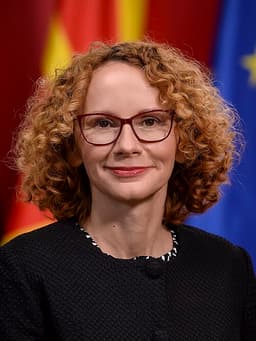
Branko Crvenkovski
Politician · Modern
53.0Total
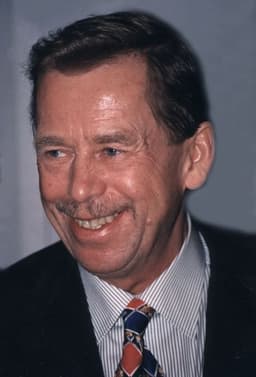
Vaclav Havel
Politician · Modern
64.4Total
Basic Information
Born
1962
1936
Died
—
—
Era
Modern
Modern
Nationality
North Macedonia
Czech Republic
Occupation
Politician
Politician
Civilization
Western
Western
Score Comparison
Military (10%)
49.3
50.0
Political (20%)
68.0
82.0
Influence (20%)
49.4
65.0
Legacy (20%)
41.7
55.0
Leadership (15%)
72.0
78.0
Strategy (15%)
43.0
54.3
TOTAL
53.0
64.4
Branko Crvenkovski — Complete Timeline
1992 AD
Elected Prime Minister of MacedoniaPolitical Action◆ Major
Crvenkovski became the first post-communist Prime Minister of independent Macedonia, leading the country through its early years of independence, including the 2001 insurgency and economic transition.
IndependenceGovernmentMacedonia
Impact: nationalconstructive
2001 AD
Signed the Ohrid Framework AgreementPolitical Action
As Prime Minister, Crvenkovski signed the Ohrid Framework Agreement, ending the 2001 insurgency by ethnic Albanian rebels. The agreement granted greater rights to Albanians, including language and decentralization.
Peace AgreementEthnic ConflictOhrid
Impact: nationalconstructive
2004 AD
Elected President of MacedoniaPolitical Action◆ Major
Crvenkovski was elected President, serving until 2009. His presidency focused on Euro-Atlantic integration, but was marked by political instability and the unresolved name dispute with Greece.
PresidencyIntegrationMacedonia
Impact: nationalconstructive
2009 AD
Lost presidential re-election bidPolitical Action
Crvenkovski lost the presidential election to Gjorge Ivanov, ending his tenure. His defeat reflected public dissatisfaction with the pace of reforms and the ongoing name dispute.
ElectionDefeatPolitics
Impact: national
Vaclav Havel — Complete Timeline
1977 AD
Charter 77 foundingPolitical Action◆ Major
Havel became a leading figure and spokesperson for Charter 77, a Czechoslovak human rights manifesto that criticized the communist government for failing to implement its own laws on human rights. This led to his persecution and imprisonment.
Human RightsDissidenceCold War
Impact: nationalconstructive
1989 AD
Velvet Revolution leadershipPolitical Action
Havel co-founded the Civic Forum and emerged as the key leader of the non-violent Velvet Revolution in Czechoslovakia. Mass protests forced the communist government to resign, ending 41 years of one-party rule.
RevolutionDemocracyCold War
Impact: globalconstructive
Elected President of CzechoslovakiaPolitical Action◆ Major
Following the Velvet Revolution, Havel was elected President of Czechoslovakia by the Federal Assembly. He became the first non-communist leader of the country since 1948, symbolizing the transition to democracy.
DemocracyPresidencyPost-Communism
Impact: nationalconstructive
1993 AD
Dissolution of CzechoslovakiaPolitical Action◆ Major
Havel resigned as President of Czechoslovakia in July 1992 after failing to prevent the country's dissolution. The Czech Republic and Slovakia separated peacefully on January 1, 1993. Havel then became the first President of the Czech Republic.
State DissolutionNationalismPost-Communism
Impact: regional
1999 AD
NATO accession of Czech RepublicPolitical Action◆ Major
Under Havel's presidency, the Czech Republic joined NATO in 1999. This marked a major shift in foreign policy, integrating the country into Western security structures and moving away from its Soviet-era alignment.
NATOForeign PolicyPost-Communism
Impact: regionalconstructive
Expert Analysis
Origins
Branko Crvenkovski was born in 1962 in Sarajevo, Bosnia, but grew up in Skopje, Macedonia. He studied mechanical engineering at the University of Skopje and later joined the League of Communists of Yugoslavia. His early political career was within the communist system, serving as a member of the Macedonian parliament from 1990. In contrast, Vaclav Havel was born in 1936 in Prague, Czechoslovakia, into a wealthy intellectual family. He studied at the Czech Technical University but was barred from formal study due to his bourgeois background. Instead, he worked in theater and became a playwright, using his art to critique communism. Havel's early dissident activities led to multiple imprisonments, shaping his moral authority.
Rise to Power
Crvenkovski rose to prominence in the early 1990s as a reformist communist. In 1992, he became the first post-communist Prime Minister of independent Macedonia at age 30, leading a coalition government. His key turning point was signing the Ohrid Framework Agreement in 2001, which ended an ethnic Albanian insurgency by granting greater rights but also exposed him to criticism from nationalists. Havel's rise was through the Velvet Revolution of 1989. He co-founded the Civic Forum and became the face of the non-violent movement. In December 1989, he was elected President of Czechoslovakia, a position he held until the country's dissolution in 1992. Havel's moral credibility as a dissident propelled him to power.
Leadership & Governance
Crvenkovski's leadership style was pragmatic and consensus-oriented. As Prime Minister (1992-1998, 2002-2004) and later President (2004-2009), he focused on Euro-Atlantic integration, overseeing Macedonia's NATO and EU candidacy. However, his governance was marked by political instability, corruption allegations, and slow reforms. He scored 72.0 in leadership but only 43.0 in strategy, reflecting his reactive approach. Havel, scoring 78.0 in leadership, led with moral vision and intellectual clarity. He promoted human rights, civil society, and Western integration. As President, he oversaw Czechoslovakia's peaceful dissolution and later the Czech Republic's NATO accession in 1999. His governance was less hands-on but symbolically powerful.
Triumph & Tragedy
Crvenkovski's greatest triumph was the Ohrid Framework Agreement, which prevented a full-scale civil war. His tragedy was his inability to sustain reform momentum, leading to his defeat in the 2009 presidential election. Under his watch, Macedonia faced a stalled EU accession process and a naming dispute with Greece. Havel's triumph was leading the Velvet Revolution and establishing a democratic Czechoslovakia. His tragedy was his failure to prevent the country's dissolution in 1992, though he later became the first President of the Czech Republic. Havel's moral authority was sometimes criticized as detached from practical politics.
Character & Destiny
Crvenkovski was a pragmatic technocrat, willing to compromise but often perceived as indecisive. His character shaped a career of survival within the system, but he lacked the transformative vision of Havel. Havel, a philosopher-playwright, was principled and courageous, but his idealism sometimes clashed with political realities. Historians note Havel's consistent defense of human rights, while Crvenkovski is seen as a transitional figure who managed conflict but failed to inspire.
Legacy
Crvenkovski's legacy is mixed: he is credited with preserving peace in Macedonia through the Ohrid Agreement, but criticized for weak governance and corruption. His political score of 68.0 reflects his moderate impact. Havel's legacy is profound: he is a symbol of peaceful resistance, influencing dissidents worldwide. His influence score of 65.0 and legacy of 55.0 reflect his enduring moral authority, though his political achievements were limited by institutional constraints. The Czech Republic's NATO membership and democratic consolidation are partly his legacy.
Conclusion
While Crvenkovski played a crucial role in Macedonia's early independence and conflict resolution, Havel's impact on global democracy and human rights is far greater. Havel's total score of 64.4 exceeds Crvenkovski's 53.0 by 11.4 points, primarily due to higher political (82.0 vs 68.0) and influence (65.0 vs 49.4) scores. Havel's moral leadership and role in the Velvet Revolution transformed Czechoslovakia and inspired movements worldwide. Crvenkovski's pragmatic leadership was necessary for Macedonia's stability, but it lacked the transformative reach of Havel's vision. Thus, Vaclav Havel had a greater and more lasting historical impact.
Rankings
🥇
Vaclav HavelLeader
Mil: 50.0Pol: 82.0Inf: 65.0
64.4
🥈
Branko Crvenkovski
Mil: 49.3Pol: 68.0Inf: 49.4
53.0
+11.4 behind
How This Comparison Works
Algorithm
Each figure is scored on 6 dimensions (0—100 scale) based on structured historical data: Military (10%), Political (20%), Influence (20%), Legacy (20%), Leadership (15%), Strategy (15%). The weighted total produces the final ranking.
Data Sources
Scores are computed from structured sub-indicators in the database. Scale factors adjust for era (Ancient ×0.85, Modern ×1.0) and civilization size (Eastern ×1.05, Other ×0.80) to account for differences in population and military scale.
Maximum 3 Figures
Comparisons are limited to 2—3 figures to ensure readability and statistical meaningfulness.
Error Margins
±5 points per dimension — Sub-scores are derived from historical records with inherent uncertainty. Two figures within 5 points on a dimension should be considered roughly equivalent in that area.
Total Score Accuracy
±3 points overall — The weighted combination of 6 dimensions produces a total score with approximately ±3 points of uncertainty. Differences of less than 3 points are not statistically significant— the figures are effectively tied.
Known Limitations
- Historical records are incomplete and uneven across civilizations
- Figures from oral-tradition societies may be underrepresented
- Occupation labels can misclassify multi-role figures
- Scores measure capability and impact, not moral character
- Quantitative scoring is a comparison tool, not absolute truth
Capability Radar
Military (10%) — Battles & Warfare
Battles
27
28
Win Rate
34
31
Expansion
35
36
Political (20%) — Governance & Reform
Reform
55
85
Diplomacy
60
80
Economy
50
55
Influence (20%) — Cultural & Global Reach
Cultural
20
70
Global
15
70
Legacy (20%) — Historical Impact
Historical
30
75
Longevity
20
65
Leadership (15%) — Power & Stability
Tenure
65
65
Stability
45
60
Strategy (15%) — Tactics & Innovation
Strategy
40
39
Tactics
40
43
Reform
44
41
Similar Comparisons
Comments & Discussion
No comments yet. Be the first to share your thoughts!