Loading...
Nitin Gadkari vs Vaclav Havel
Vaclav Havel leads by 5.2 pts · 2 figures compared
…

Nitin Gadkari
Politician · Modern
59.2Total
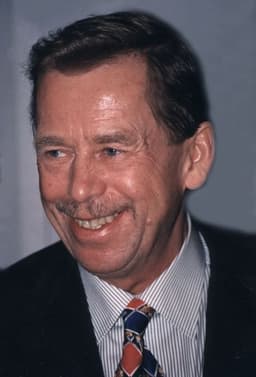
Vaclav Havel
Politician · Modern
64.4Total
Basic Information
Born
1957
1936
Died
—
—
Era
Modern
Modern
Nationality
India
Czech Republic
Occupation
Politician
Politician
Civilization
Indian
Western
Score Comparison
Military (10%)
40.3
50.0
Political (20%)
62.7
82.0
Influence (20%)
57.2
65.0
Legacy (20%)
54.0
55.0
Leadership (15%)
80.0
78.0
Strategy (15%)
60.0
54.3
TOTAL
59.2
64.4
Nitin Gadkari — Complete Timeline
2016 AD
Faced allegations in the Purti Group loan default casePolitical Action
Gadkari's company, Purti Group, was investigated for defaulting on loans from state-run banks. He denied wrongdoing, and the case was closed by the CBI in 2018, but it raised questions about his business dealings.
CorruptionLoansBusiness
Impact: nationaldestructive
2017 AD
Launched the Bharatmala Pariyojana highway projectReform◆ Major
As Minister of Road Transport and Highways, Gadkari launched the Bharatmala Pariyojana, a
InfrastructureHighwaysDevelopment
Impact: nationalconstructive
2018 AD
Introduced ethanol blending policy for fuelReform◆ Major
Gadkari pushed for the National Policy on Biofuels, promoting ethanol blending with petrol to reduce oil imports and support farmers. The policy set a target of 20% ethanol blending by 2030, leading to increased ethanol production from sugarcane.
BiofuelsEnergyEnvironment
Impact: nationalprogressive
Vaclav Havel — Complete Timeline
1977 AD
Charter 77 foundingPolitical Action◆ Major
Havel became a leading figure and spokesperson for Charter 77, a Czechoslovak human rights manifesto that criticized the communist government for failing to implement its own laws on human rights. This led to his persecution and imprisonment.
Human RightsDissidenceCold War
Impact: nationalconstructive
1989 AD
Velvet Revolution leadershipPolitical Action
Havel co-founded the Civic Forum and emerged as the key leader of the non-violent Velvet Revolution in Czechoslovakia. Mass protests forced the communist government to resign, ending 41 years of one-party rule.
RevolutionDemocracyCold War
Impact: globalconstructive
Elected President of CzechoslovakiaPolitical Action◆ Major
Following the Velvet Revolution, Havel was elected President of Czechoslovakia by the Federal Assembly. He became the first non-communist leader of the country since 1948, symbolizing the transition to democracy.
DemocracyPresidencyPost-Communism
Impact: nationalconstructive
1993 AD
Dissolution of CzechoslovakiaPolitical Action◆ Major
Havel resigned as President of Czechoslovakia in July 1992 after failing to prevent the country's dissolution. The Czech Republic and Slovakia separated peacefully on January 1, 1993. Havel then became the first President of the Czech Republic.
State DissolutionNationalismPost-Communism
Impact: regional
1999 AD
NATO accession of Czech RepublicPolitical Action◆ Major
Under Havel's presidency, the Czech Republic joined NATO in 1999. This marked a major shift in foreign policy, integrating the country into Western security structures and moving away from its Soviet-era alignment.
NATOForeign PolicyPost-Communism
Impact: regionalconstructive
Expert Analysis
Origins
Nitin Gadkari was born on 27 May 1957 in Nagpur, India, into a middle-class family. His father was a doctor, and his mother a homemaker. He studied commerce at Nagpur University and later earned a law degree. His early involvement with the Rashtriya Swayamsevak Sangh (RSS) shaped his political ideology.
Vaclav Havel was born on 5 October 1936 in Prague, Czechoslovakia, into a wealthy and cultured family. His father was a civil engineer and entrepreneur. Havel was denied access to higher education due to his bourgeois background; he worked as a lab technician and later studied economics for two years. He became a playwright and essayist, gaining prominence through his absurdist plays.
Rise to Power
Gadkari rose through the ranks of the Bharatiya Janata Party (BJP). He became a member of the Maharashtra Legislative Council in 1990 and served as Minister for Public Works in Maharashtra (1995-1999). His effective implementation of the Mumbai-Pune Expressway project earned him a reputation as a capable administrator. In 2009, he became the President of the BJP, serving until 2013. His rise was marked by organizational skills and fundraising ability.
Havel's rise came through his dissident activities. He co-founded the human rights manifesto Charter 77 in 1977, which led to his imprisonment for four years. During the Velvet Revolution in 1989, he co-founded the Civic Forum and became the movement's leader. Mass protests forced the communist government to resign, and on 29 December 1989, Havel was elected President of Czechoslovakia.
Leadership & Governance
Gadkari's leadership style is technocratic and focused on infrastructure. As Minister of Road Transport and Highways since 2014, he launched the Bharatmala Pariyojana, a ₹5.35 lakh crore (US$74 billion) project to build 34,800 km of highways. He also introduced the National Policy on Biofuels, pushing ethanol blending to reduce oil imports. His governance prioritizes project execution and cost efficiency.
Havel's leadership was moral and symbolic. He emphasized human rights, civil society, and European integration. As president, he oversaw the peaceful dissolution of Czechoslovakia in 1993 and led the Czech Republic into NATO in 1999. His governance focused on democratic consolidation and international diplomacy.
Triumph & Tragedy
Gadkari's greatest success is the transformation of India's highway network; the length of national highways increased from 91,287 km in 2014 to over 140,000 km by 2023. However, his tenure faced controversy: the Purti Group loan default case in 2016 involved allegations of fraud, though the case was closed by the CBI in 2020.
Havel's triumph was leading the Velvet Revolution and becoming the first non-communist president of Czechoslovakia. He received numerous awards, including the Presidential Medal of Freedom. His tragedy was failing to prevent the dissolution of Czechoslovakia in 1992, despite his efforts. He resigned as president in July 1992.
Character & Destiny
Gadkari is pragmatic and driven by results. His ability to navigate bureaucracy and secure funding for large projects has defined his career. His destiny is tied to India's infrastructure boom, but his political ambitions beyond that remain limited.
Havel was an intellectual who believed in the power of truth and morality in politics. His character as a dissident shaped his presidency, but his idealism sometimes clashed with political realities. He died in 2011, leaving a legacy of moral leadership.
Legacy
Gadkari's legacy is tangible: thousands of kilometers of highways, improved connectivity, and a push for alternative fuels. His policies have influenced India's transport sector for decades.
Havel's legacy is intangible but profound: he inspired dissidents worldwide and championed human rights. His writings and political example continue to influence democratic movements.
Conclusion
While both men have made significant contributions, Havel's impact on global politics and human rights is greater. His role in ending communist rule and promoting democracy has a wider resonance. Gadkari's work is important for India's development, but Havel's influence transcends national borders. With a total score of 64.4 against Gadkari's 59.2, Havel emerges as the more influential historical figure.
Rankings
🥇
Vaclav HavelLeader
Mil: 50.0Pol: 82.0Inf: 65.0
64.4
🥈
Nitin Gadkari
Mil: 40.3Pol: 62.7Inf: 57.2
59.2
+5.2 behind
How This Comparison Works
Algorithm
Each figure is scored on 6 dimensions (0—100 scale) based on structured historical data: Military (10%), Political (20%), Influence (20%), Legacy (20%), Leadership (15%), Strategy (15%). The weighted total produces the final ranking.
Data Sources
Scores are computed from structured sub-indicators in the database. Scale factors adjust for era (Ancient ×0.85, Modern ×1.0) and civilization size (Eastern ×1.05, Other ×0.80) to account for differences in population and military scale.
Maximum 3 Figures
Comparisons are limited to 2—3 figures to ensure readability and statistical meaningfulness.
Error Margins
±5 points per dimension — Sub-scores are derived from historical records with inherent uncertainty. Two figures within 5 points on a dimension should be considered roughly equivalent in that area.
Total Score Accuracy
±3 points overall — The weighted combination of 6 dimensions produces a total score with approximately ±3 points of uncertainty. Differences of less than 3 points are not statistically significant— the figures are effectively tied.
Known Limitations
- Historical records are incomplete and uneven across civilizations
- Figures from oral-tradition societies may be underrepresented
- Occupation labels can misclassify multi-role figures
- Scores measure capability and impact, not moral character
- Quantitative scoring is a comparison tool, not absolute truth
Capability Radar
Military (10%) — Battles & Warfare
Battles
46
28
Win Rate
45
31
Expansion
50
36
Political (20%) — Governance & Reform
Reform
85
85
Diplomacy
60
80
Economy
90
55
Influence (20%) — Cultural & Global Reach
Cultural
30
70
Global
45
70
Legacy (20%) — Historical Impact
Historical
55
75
Longevity
50
65
Leadership (15%) — Power & Stability
Tenure
70
65
Stability
65
60
Strategy (15%) — Tactics & Innovation
Strategy
55
39
Tactics
58
43
Reform
60
41
Similar Comparisons
Comments & Discussion
No comments yet. Be the first to share your thoughts!