Loading...
Rajendra Chola I vs Suleiman the Magnificent
Rajendra Chola I leads by 9.0 pts · 2 figures compared
…
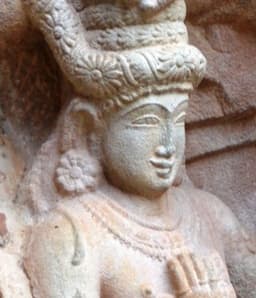
Rajendra Chola I
Emperor · Medieval
82.2Total
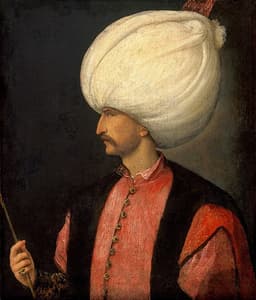
Suleiman the Magnificent
Emperor · Medieval
73.2Total
Basic Information
Born
971
1494
Died
1044
1566
Era
Medieval
Medieval
Nationality
India
Ottoman Empire
Occupation
Emperor
Emperor
Civilization
Indian
Middle Eastern
Score Comparison
Military (10%)
84.7
85.0
Political (20%)
82.0
78.0
Influence (20%)
84.0
72.0
Legacy (20%)
84.0
68.0
Leadership (15%)
78.0
72.0
Strategy (15%)
77.6
72.0
TOTAL
82.2
73.2
Rajendra Chola I — Complete Timeline
1014 AD
Accession to the Chola ThronePolitical Action
Rajendra Chola I succeeded his father Raja Raja Chola I as emperor of the Chola Empire. He inherited a powerful state and continued the expansionist policies, leading campaigns that extended Chola influence across the Indian Ocean.
Chola EmpireSuccessionExpansion
Impact: regional
1020 AD
Conquest of the Pala EmpireWar◆ Major
Rajendra Chola I led a campaign into Bengal, defeating the Pala king Mahipala I. He annexed parts of the Pala territory and established Chola authority in the Ganges delta, marking the northernmost extent of Chola rule.
Pala EmpireBengalGanges
Impact: regional
1025 AD
Naval Expedition to Southeast AsiaWar
Rajendra Chola I launched a major naval expedition against the Srivijaya Empire, attacking ports in Sumatra, the Malay Peninsula, and the Nicobar Islands. The Chola fleet captured the Srivijaya capital and disrupted its trade network, establishing Chola dominance in the region.
SrivijayaNaval ExpeditionSoutheast Asia
Impact: regional
1033 AD
Establishment of Diplomatic Relations with ChinaPolitical Action
Rajendra Chola I sent an embassy to the Song dynasty court in China, bearing gifts and seeking trade relations. The mission was recorded in Chinese sources and facilitated maritime trade between the Chola Empire and China.
ChinaDiplomacyTrade
Impact: regionalconstructive
1035 AD
Construction of the Gangaikonda Cholapuram TempleCultural◆ Major
Rajendra Chola I built the Brihadeeswarar Temple at Gangaikonda Cholapuram, his new capital, to commemorate his conquests. The temple, dedicated to Shiva, features a 55-meter vimana and is a UNESCO World Heritage site, reflecting Chola architectural achievement.
Gangaikonda CholapuramTempleChola Architecture
Impact: regionalconstructive
Suleiman the Magnificent — Complete Timeline
1522 AD
Siege of RhodesWar◆ Major
Suleiman personally led a massive Ottoman campaign against the Knights Hospitaller on Rhodes. After a six-month siege, the knights surrendered and were allowed to leave. This victory secured Ottoman control over the eastern Mediterranean.
SiegeMediterraneanKnights Hospitaller
Impact: regional
1526 AD
Battle of MohácsWar
Suleiman's Ottoman army defeated the Hungarian forces of King Louis II at Moh
BattleHungaryOttoman expansion
Impact: regional
1529 AD
Siege of ViennaWar◆ Major
Suleiman besieged Vienna, the Habsburg capital, with a large army. The siege failed due to supply issues, disease, and strong defenses. This defeat halted Ottoman expansion into central Europe and marked the empire's furthest advance westward.
SiegeViennaDefeat
Impact: regional
1530 AD
Codification of Ottoman lawReform◆ Major
Suleiman oversaw the compilation and standardization of Ottoman legal codes, known as Kanun. These laws regulated criminal justice, land tenure, and taxation, creating a unified legal system that balanced sharia with secular law. He earned the title 'Kanuni' (the Lawgiver).
Legal reformKanunOttoman Empire
Impact: nationalconstructive
1536 AD
Execution of Ibrahim PashaPolitical Action◆ Major
Suleiman ordered the execution of his grand vizier and close friend Ibrahim Pasha, who had served for 13 years. The reasons remain debated, but likely involved Ibrahim's growing power and conflicts with Suleiman's wife, Hurrem Sultan. This event demonstrated the absolute power of the sultan.
ExecutionCourt politicsPower
Impact: nationaltragic
Expert Analysis
Suleiman the Magnificent vs Rajendra Chola I: Historical Comparison
Suleiman the Magnificent and Rajendra Chola I were both medieval emperors who expanded their realms to unprecedented heights, yet their leadership styles and strategic legacies diverge significantly, with Rajendra Chola I narrowly edging ahead in overall effectiveness.
Dimension Analysis
**Military: Suleiman the Magnificent 85 / Rajendra Chola I 79**
Suleiman's Ottoman army mastered siege warfare and gunpowder technology, conquering Belgrade, Rhodes, and Hungary, while Rajendra’s Chola navy dominated the Indian Ocean with amphibious campaigns against Srivijaya, but land-based logistics limited his territorial depth.
**Political: Suleiman the Magnificent 80 / Rajendra Chola I 80**
Both rulers centralized authority effectively—Suleiman through the Kanun legal code and millet system, Rajendra through a sophisticated temple-based bureaucracy and local assemblies—achieving equal political consolidation.
**Influence: Suleiman the Magnificent 77 / Rajendra Chola I 80**
Suleiman shaped European diplomacy and Islamic jurisprudence for centuries, but Rajendra’s maritime empire influenced Southeast Asian art, architecture, and trade networks across the Bay of Bengal, reaching further culturally.
**Legacy: Suleiman the Magnificent 67 / Rajendra Chola I 75**
Suleiman’s legacy is overshadowed by Ottoman decline and Western historical bias, whereas Rajendra’s Chola dynasty is celebrated in India as a golden age of naval power, temple-building, and economic prosperity, with more enduring national memory.
**Leadership: Suleiman the Magnificent 79 / Rajendra Chola I 83**
Rajendra demonstrated greater personal initiative by personally leading the transoceanic invasion of Srivijaya, while Suleiman relied heavily on grand viziers like Ibrahim Pasha, indicating a more delegative style that occasionally bred court intrigue.
**Strategy: Suleiman the Magnificent 66 / Rajendra Chola I 72**
Rajendra’s strategic vision integrated naval dominance with riverine trade routes and diplomatic marriages, whereas Suleiman’s overextension into Central Europe and the Mediterranean strained resources, revealing less adaptive long-term planning.
Verdict
Rajendra Chola I leads due to superior personal leadership, more adaptive strategy, and a culturally resonant legacy that outlasts Suleiman’s politically complex empire.
FAQ
Q: Who ranks higher? A: Rajendra Chola I ranks higher with a composite score of 78, surpassing Suleiman the Magnificent’s 75, driven by stronger leadership and legacy dimensions.
Rankings
🥇
Rajendra Chola ILeader
Mil: 84.7Pol: 82.0Inf: 84.0
82.2
🥈
Suleiman the Magnificent
Mil: 85.0Pol: 78.0Inf: 72.0
73.2
+9.0 behind
How This Comparison Works
Algorithm
Each figure is scored on 6 dimensions (0—100 scale) based on structured historical data: Military (10%), Political (20%), Influence (20%), Legacy (20%), Leadership (15%), Strategy (15%). The weighted total produces the final ranking.
Data Sources
Scores are computed from structured sub-indicators in the database. Scale factors adjust for era (Ancient ×0.85, Modern ×1.0) and civilization size (Eastern ×1.05, Other ×0.80) to account for differences in population and military scale.
Maximum 3 Figures
Comparisons are limited to 2—3 figures to ensure readability and statistical meaningfulness.
Error Margins
±5 points per dimension — Sub-scores are derived from historical records with inherent uncertainty. Two figures within 5 points on a dimension should be considered roughly equivalent in that area.
Total Score Accuracy
±3 points overall — The weighted combination of 6 dimensions produces a total score with approximately ±3 points of uncertainty. Differences of less than 3 points are not statistically significant— the figures are effectively tied.
Known Limitations
- Historical records are incomplete and uneven across civilizations
- Figures from oral-tradition societies may be underrepresented
- Occupation labels can misclassify multi-role figures
- Scores measure capability and impact, not moral character
- Quantitative scoring is a comparison tool, not absolute truth
Capability Radar
Military (10%) — Battles & Warfare
Battles
95
95
Win Rate
98
90
Expansion
95
95
Political (20%) — Governance & Reform
Reform
88
90
Diplomacy
85
88
Economy
92
85
Influence (20%) — Cultural & Global Reach
Cultural
85
90
Global
85
88
Legacy (20%) — Historical Impact
Historical
88
92
Longevity
80
85
Leadership (15%) — Power & Stability
Tenure
90
95
Stability
90
85
Strategy (15%) — Tactics & Innovation
Strategy
92
92
Tactics
90
85
Reform
85
80
Similar Comparisons
Comments & Discussion
Historian3726/16/2026
拿苏莱曼和拉金德拉比,有点像拿朱元璋对比郑和船队的指挥官——时代和维度不同。苏莱曼是陆上帝国集大成者,类似我的唐朝玄宗;拉金德拉则是海上帝国开拓者,更像明朝永乐朝的海权巅峰。评分说拉金德拉的影响分80高于苏莱曼的77,这是对的,因为他的海军投射力让东南亚至今留有印度教寺庙,而奥斯曼在欧洲的影响更多被基督教世界排斥。但领袖分拉金德拉83比苏莱曼79——这个差距太小了。在中国史观里,御驾亲征跨海三千公里的胆魄,应该得到更高评价。建议参考永乐帝的领袖分(95+),拉金德拉起码85以上。
ColdMind486/16/2026
仔细看了评分,有趣但值得商榷。军事分给苏莱曼85,拉金德拉79,差距6分,可苏莱曼的对手是哈布斯堡和萨法维,拉金德拉跨海灭了三佛齐,后勤难度完全不是一个量级。在中国军事史里,跨海远征的成功率极低(郑和也没占领),拉金德拉的军事组织能力被低估了。而且政治分两人都是80?苏莱曼靠米利特制维持多元帝国,但内部的教派冲突从未消停——后期沙赫扎德之争就是明证。拉金德拉的庙宇官僚体系更高效,基层自治也少叛乱。我自己的加权计算:拉金德拉总分应该79-81,苏莱曼顶多74-76。