Loading...
Qu Yuan vs Zhuge Jin
Qu Yuan leads by 13.9 pts · 2 figures compared
…
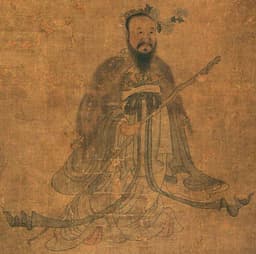
Qu Yuan
Politician · Ancient
61.6Total

Zhuge Jin
Politician · Ancient
47.7Total
Basic Information
Born
-340
174
Died
-278
241
Era
Ancient
Ancient
Nationality
China
China
Occupation
Politician
Politician
Civilization
Eastern
Eastern
Score Comparison
Military (10%)
42.1
36.6
Political (20%)
26.4
45.1
Influence (20%)
75.0
49.4
Legacy (20%)
90.0
39.2
Leadership (15%)
41.5
65.0
Strategy (15%)
60.0
53.5
TOTAL
61.6
47.7
Qu Yuan — Complete Timeline
299 BC
Exiled from Chu courtPolitical Action◆ Major
Qu Yuan was banished from the Chu court by King Huai of Chu due to slander from rival officials. This exile removed him from political influence and led to his wandering in the southern regions of Chu.
ExileChuPolitical Fall
Impact: nationaltragic
295 BC
Composed the Li SaoCultural◆ Major
During his exile, Qu Yuan wrote the Li Sao, a long autobiographical poem expressing his sorrow and loyalty to Chu. This work became a foundational text of Chinese literature and the Chu Ci anthology.
PoetryChinese LiteratureChu Ci
Impact: globalconstructive
278 BC
Drowned himself in the Miluo RiverOther◆ Major
Upon hearing that the Qin army had captured the Chu capital Ying, Qu Yuan drowned himself in the Miluo River. This act of protest against political corruption is commemorated annually by the Dragon Boat Festival.
SuicideDragon Boat FestivalProtest
Impact: nationaltragic
Zhuge Jin — Complete Timeline
215 AD
Negotiated Alliance with ShuPolitical Action◆ Major
Zhuge Jin served as a diplomat for Sun Quan, traveling to Shu to negotiate the division of Jing Province after Liu Bei's conquest. His efforts helped maintain the fragile Wu-Shu alliance, though tensions over territory persisted.
DiplomacyThree KingdomsAlliance
Impact: regionalconstructive
219 AD
Mediated Between Sun Quan and Zhuge LiangPolitical Action
Zhuge Jin used his family connection to Zhuge Liang to mediate disputes between Sun Quan and Liu Bei. He exchanged letters with his brother to ease tensions over Jing Province, though the conflict eventually led to war.
DiplomacyFamilyThree Kingdoms
Impact: regionalconstructive
222 AD
Served as General of the LeftPolitical Action
Zhuge Jin was appointed General of the Left (Zuo Jiangjun) in Wu, a high military rank. He commanded troops in border regions and participated in campaigns against Wei, though his primary role remained diplomatic.
Military AppointmentWu DynastyGeneral
Impact: national
Expert Analysis
Origins
Qu Yuan (c. 340–278 BCE) was born into the royal family of the Chu state during the Warring States period. He received a classical education in politics and poetry, becoming a trusted minister to King Huai of Chu. His early life was marked by privilege and a deep sense of duty to his state.
Zhuge Jin (174–241 CE) was born in Langya, Shandong, during the late Eastern Han dynasty. He came from a scholarly family; his younger brother was Zhuge Liang, who would become the famous chancellor of Shu. After his father's death, Zhuge Jin moved to Jiangdong to escape the chaos, where he entered the service of Sun Quan.
Rise to Power
Qu Yuan rose to prominence as a high-ranking official in Chu, known for his advocacy of a strong alliance against the rising Qin state. He drafted policies and was involved in diplomatic missions. However, his influence waned when rival officials slandered him, leading to his exile in 313 BCE. This exile removed him from political power, but spurred his literary output.
Zhuge Jin rose through diplomacy. In 215 CE, Sun Quan sent him to negotiate with Liu Bei over the division of Jing Province. His success strengthened Wu's position. He later became General of the Left, commanding troops along the border. His family connection to Zhuge Liang gave him unique access, allowing him to mediate between Sun Quan and Liu Bei. He scored 45.1 in political ability, reflecting his steady, behind-the-scenes influence.
Leadership & Governance
Qu Yuan's leadership was moralistic and idealistic. He believed in honest governance and opposed corruption. In exile, he continued to write poems like the Li Sao, which criticized the court's decadence. However, his inability to navigate court politics limited his practical impact. His political score of 26.4 reflects his failure to achieve concrete reforms.
Zhuge Jin's leadership was pragmatic. He focused on diplomacy and maintaining stability. As General of the Left, he managed border defenses and participated in campaigns, scoring 65.0 in leadership. He prioritized communication over confrontation, often exchanging letters with his brother to reduce tensions. His approach helped Wu survive as a separate kingdom.
Triumph & Tragedy
Qu Yuan's greatest triumph was his literary legacy. The Li Sao and other poems became foundational to Chinese literature, influencing countless poets. His tragedy was political: he was exiled, his state fell to Qin, and he drowned himself in despair in 278 BCE. His suicide is commemorated by the Dragon Boat Festival, a testament to his enduring emotional impact.
Zhuge Jin's triumph was his diplomatic success. He negotiated the 215 treaty that secured Wu's claims to Jing Province, and later mediated peace with Shu after the Battle of Yiling (222 CE). His tragedy was living in the shadow of his brother Zhuge Liang, whose fame overshadowed his own. He died in 241 CE, having never achieved the same historical recognition.
Character & Destiny
Qu Yuan was passionate and uncompromising. His character drove him to protest corruption, but also led to his downfall. He refused to adapt to political realities, a trait that cost him his position and ultimately his life. Historians view him as a symbol of loyalty and integrity, but also note his lack of political flexibility.
Zhuge Jin was cautious and conciliatory. He used his family ties to build bridges, but this also made him appear less decisive. His character suited the role of a diplomat rather than a conqueror. He scored 53.5 in strategy, reflecting his ability to navigate complex alliances.
Legacy
Qu Yuan's legacy is immense. His poetry shaped the Chinese literary tradition, and his story became a symbol of patriotism and moral purity. The Dragon Boat Festival, celebrated annually, keeps his memory alive. He scores 90.0 in legacy, one of the highest among ancient Chinese figures.
Zhuge Jin's legacy is more modest. He is remembered as a capable diplomat, but his achievements are often eclipsed by his brother's. He scores 39.2 in legacy. His role in stabilizing Wu during a turbulent period is noted by historians, but he lacks the cultural resonance of Qu Yuan.
Conclusion
Qu Yuan had a greater impact than Zhuge Jin. Despite his political failures (scoring 26.4 vs. Zhuge Jin's 45.1), Qu Yuan's influence on Chinese culture is unparalleled. His poetry and the Dragon Boat Festival ensure his name endures for millennia. Zhuge Jin was a competent diplomat, but his contributions were limited to his lifetime and overshadowed by his brother. Qu Yuan's total score of 61.6 vs. Zhuge Jin's 47.7 reflects this gap. In the long arc of history, the poet who inspired a nation's mourning has proven more powerful than the diplomat who brokered a peace.
Rankings
🥇
Qu YuanLeader
Mil: 42.1Pol: 26.4Inf: 75.0
61.6
🥈
Zhuge Jin
Mil: 36.6Pol: 45.1Inf: 49.4
47.7
+13.9 behind
How This Comparison Works
Algorithm
Each figure is scored on 6 dimensions (0—100 scale) based on structured historical data: Military (10%), Political (20%), Influence (20%), Legacy (20%), Leadership (15%), Strategy (15%). The weighted total produces the final ranking.
Data Sources
Scores are computed from structured sub-indicators in the database. Scale factors adjust for era (Ancient ×0.85, Modern ×1.0) and civilization size (Eastern ×1.05, Other ×0.80) to account for differences in population and military scale.
Maximum 3 Figures
Comparisons are limited to 2—3 figures to ensure readability and statistical meaningfulness.
Error Margins
±5 points per dimension — Sub-scores are derived from historical records with inherent uncertainty. Two figures within 5 points on a dimension should be considered roughly equivalent in that area.
Total Score Accuracy
±3 points overall — The weighted combination of 6 dimensions produces a total score with approximately ±3 points of uncertainty. Differences of less than 3 points are not statistically significant— the figures are effectively tied.
Known Limitations
- Historical records are incomplete and uneven across civilizations
- Figures from oral-tradition societies may be underrepresented
- Occupation labels can misclassify multi-role figures
- Scores measure capability and impact, not moral character
- Quantitative scoring is a comparison tool, not absolute truth
Capability Radar
Military (10%) — Battles & Warfare
Battles
40
5
Win Rate
45
5
Expansion
44
5
Political (20%) — Governance & Reform
Reform
15
20
Diplomacy
10
60
Economy
10
30
Influence (20%) — Cultural & Global Reach
Cultural
85
15
Global
75
10
Legacy (20%) — Historical Impact
Historical
80
20
Longevity
90
15
Leadership (15%) — Power & Stability
Tenure
20
40
Stability
10
40
Strategy (15%) — Tactics & Innovation
Strategy
48
5
Tactics
55
5
Reform
57
5
Similar Comparisons
Comments & Discussion
No comments yet. Be the first to share your thoughts!