Loading...
Qu Yuan vs Wei Xuan
Qu Yuan leads by 10.7 pts · 2 figures compared
…
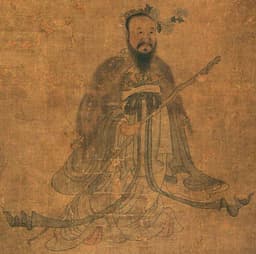
Qu Yuan
Politician · Ancient
61.6Total

Wei Xuan
Politician · Ancient
50.9Total
Basic Information
Born
-340
-140
Died
-278
-50
Era
Ancient
Ancient
Nationality
China
China
Occupation
Politician
Politician
Civilization
Eastern
Eastern
Score Comparison
Military (10%)
42.1
36.5
Political (20%)
26.4
68.0
Influence (20%)
75.0
51.0
Legacy (20%)
90.0
40.0
Leadership (15%)
41.5
67.0
Strategy (15%)
60.0
42.0
TOTAL
61.6
50.9
Qu Yuan — Complete Timeline
299 BC
Exiled from Chu courtPolitical Action◆ Major
Qu Yuan was banished from the Chu court by King Huai of Chu due to slander from rival officials. This exile removed him from political influence and led to his wandering in the southern regions of Chu.
ExileChuPolitical Fall
Impact: nationaltragic
295 BC
Composed the Li SaoCultural◆ Major
During his exile, Qu Yuan wrote the Li Sao, a long autobiographical poem expressing his sorrow and loyalty to Chu. This work became a foundational text of Chinese literature and the Chu Ci anthology.
PoetryChinese LiteratureChu Ci
Impact: globalconstructive
278 BC
Drowned himself in the Miluo RiverOther◆ Major
Upon hearing that the Qin army had captured the Chu capital Ying, Qu Yuan drowned himself in the Miluo River. This act of protest against political corruption is commemorated annually by the Dragon Boat Festival.
SuicideDragon Boat FestivalProtest
Impact: nationaltragic
Wei Xuan — Complete Timeline
70 BC
Appointed as Governor of Nanyang CommanderyPolitical Action
Wei Xuan was appointed governor of Nanyang Commandery, where he implemented administrative reforms. He focused on improving local governance and reducing corruption among officials.
Han DynastyGovernanceLocal Reform
constructive
60 BC
Reformed the Taxation SystemReform◆ Major
Wei Xuan proposed and implemented reforms to the Han taxation system, aiming to reduce the burden on peasants and increase state revenue. He adjusted tax rates and improved collection methods, which helped stabilize the rural economy.
Han DynastyTax ReformEconomy
Impact: nationalconstructive
55 BC
Served as Minister of FinancePolitical Action◆ Major
Wei Xuan was promoted to Minister of Finance (Da Sinong) in the central government. In this role, he oversaw the national budget and continued his efforts to streamline fiscal policies, earning a reputation for integrity.
Han DynastyFinanceGovernment
Impact: nationalconstructive
50 BC
Retired Due to IllnessPolitical Action
Wei Xuan retired from public office due to declining health. His retirement marked the end of a career dedicated to fiscal reform and honest administration, and he was remembered as a model official.
Han DynastyRetirementOfficial
Expert Analysis
Origins
Qu Yuan (c. 340–278 BCE) was born into the noble clan of the Chu state during the Warring States period. He was a member of the royal house, serving as a minister and poet. His early education emphasized Confucian classics and statecraft, but his idealism clashed with court intrigues. Wei Xuan (fl. early 1st century BCE) came from a scholarly family in the Han dynasty. He rose through the civil service based on merit, studying legal and administrative texts. Unlike Qu Yuan's aristocratic background, Wei Xuan's career was built on bureaucratic efficiency.
Rise to Power
Qu Yuan gained prominence as a trusted advisor to King Huai of Chu, advocating for a military alliance against the rising Qin state. He drafted laws and diplomatic strategies, but his rivals, such as Shangguan Jiao, slandered him, leading to his exile in 313 BCE. His influence waned after the king's death. Wei Xuan entered the Han bureaucracy as a low-level clerk, but his expertise in fiscal matters caught the attention of Emperor Zhao. He was promoted to Minister of Finance (Da Sinong) around 81 BCE, where he implemented tax reforms that reduced burdens on peasants while increasing state revenue.
Leadership & Governance
Qu Yuan's leadership was poetic and moralistic. He believed in the righteousness of the Chu cause and sought to inspire loyalty through his writings. In governance, he proposed anti-corruption measures and military reforms, but lacked the political skills to overcome court factions. His exile rendered him powerless. Wei Xuan, by contrast, was a pragmatic administrator. He reformed the taxation system by standardizing rates and reducing arbitrary levies, which stabilized the Han economy. His approach was data-driven, using census records to assess tax burdens. Wei Xuan scored 67.0 in leadership, reflecting his effective governance, against Qu Yuan's 41.5.
Triumph & Tragedy
Qu Yuan's greatest success was composing the "Li Sao" and other poems that became foundational to Chinese literature, scoring 90.0 in legacy. His tragedy was his political failure: unable to prevent Chu's collapse, he drowned himself in the Miluo River in 278 BCE when Qin captured the capital. His act turned him into a martyr. Wei Xuan's triumph was his tax reform, which improved state finances and peasant welfare. However, his legacy score of 40.0 reflects limited long-term impact, as later Han officials reversed some changes. He retired due to illness, ending his career without dramatic incident.
Character & Destiny
Qu Yuan was an uncompromising idealist, unable to adapt to political realities. His character—loyal, passionate, and stubborn—led to his fall. Historical assessments see him as a tragic figure whose moral purity doomed him. Wei Xuan was a cautious, methodical reformer, scoring 67.0 in leadership but only 36.5 in military. He avoided dramatic confrontations, preferring incremental change. His destiny was a quiet retirement, reflecting a career of modest but solid achievements.
Legacy
Qu Yuan's legacy is immense. He is celebrated annually during the Dragon Boat Festival, with his poetry influencing countless writers. His total score of 61.6 reflects cultural impact far beyond his political career. Wei Xuan's legacy is confined to administrative history; his reforms are noted by scholars but unknown to the public. His score of 50.9 underscores his effectiveness as a bureaucrat, but lack of enduring fame.
Conclusion
Qu Yuan had a greater impact on Chinese civilization, scoring 75.0 in influence versus Wei Xuan's 51.0. While Wei Xuan was a competent official, Qu Yuan's poetry and martyrdom shaped Chinese identity for millennia. The 10.7-point gap in total scores reflects this: Qu Yuan's cultural resonance surpasses Wei Xuan's administrative achievements.
Rankings
🥇
Qu YuanLeader
Mil: 42.1Pol: 26.4Inf: 75.0
61.6
🥈
Wei Xuan
Mil: 36.5Pol: 68.0Inf: 51.0
50.9
+10.7 behind
How This Comparison Works
Algorithm
Each figure is scored on 6 dimensions (0—100 scale) based on structured historical data: Military (10%), Political (20%), Influence (20%), Legacy (20%), Leadership (15%), Strategy (15%). The weighted total produces the final ranking.
Data Sources
Scores are computed from structured sub-indicators in the database. Scale factors adjust for era (Ancient ×0.85, Modern ×1.0) and civilization size (Eastern ×1.05, Other ×0.80) to account for differences in population and military scale.
Maximum 3 Figures
Comparisons are limited to 2—3 figures to ensure readability and statistical meaningfulness.
Error Margins
±5 points per dimension — Sub-scores are derived from historical records with inherent uncertainty. Two figures within 5 points on a dimension should be considered roughly equivalent in that area.
Total Score Accuracy
±3 points overall — The weighted combination of 6 dimensions produces a total score with approximately ±3 points of uncertainty. Differences of less than 3 points are not statistically significant— the figures are effectively tied.
Known Limitations
- Historical records are incomplete and uneven across civilizations
- Figures from oral-tradition societies may be underrepresented
- Occupation labels can misclassify multi-role figures
- Scores measure capability and impact, not moral character
- Quantitative scoring is a comparison tool, not absolute truth
Capability Radar
Military (10%) — Battles & Warfare
Battles
40
24
Win Rate
45
22
Expansion
44
27
Political (20%) — Governance & Reform
Reform
15
60
Diplomacy
10
20
Economy
10
65
Influence (20%) — Cultural & Global Reach
Cultural
85
10
Global
75
5
Legacy (20%) — Historical Impact
Historical
80
20
Longevity
90
10
Leadership (15%) — Power & Stability
Tenure
20
30
Stability
10
40
Strategy (15%) — Tactics & Innovation
Strategy
48
32
Tactics
55
35
Reform
57
39
Similar Comparisons
Comments & Discussion
No comments yet. Be the first to share your thoughts!