Loading...
Qu Yuan vs Su Qin
Qu Yuan leads by 7.0 pts · 2 figures compared
…
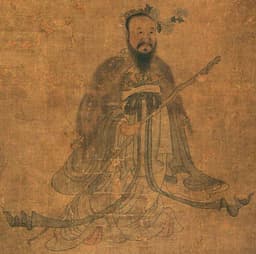
Qu Yuan
Politician · Ancient
61.6Total

Su Qin
Politician · Ancient
54.6Total
Basic Information
Born
-340
-380
Died
-278
-284
Era
Ancient
Ancient
Nationality
China
China
Occupation
Politician
Politician
Civilization
Eastern
Eastern
Score Comparison
Military (10%)
42.1
40.3
Political (20%)
26.4
60.0
Influence (20%)
75.0
58.3
Legacy (20%)
90.0
55.0
Leadership (15%)
41.5
48.4
Strategy (15%)
60.0
60.0
TOTAL
61.6
54.6
Qu Yuan — Complete Timeline
299 BC
Exiled from Chu courtPolitical Action◆ Major
Qu Yuan was banished from the Chu court by King Huai of Chu due to slander from rival officials. This exile removed him from political influence and led to his wandering in the southern regions of Chu.
ExileChuPolitical Fall
Impact: nationaltragic
295 BC
Composed the Li SaoCultural◆ Major
During his exile, Qu Yuan wrote the Li Sao, a long autobiographical poem expressing his sorrow and loyalty to Chu. This work became a foundational text of Chinese literature and the Chu Ci anthology.
PoetryChinese LiteratureChu Ci
Impact: globalconstructive
278 BC
Drowned himself in the Miluo RiverOther◆ Major
Upon hearing that the Qin army had captured the Chu capital Ying, Qu Yuan drowned himself in the Miluo River. This act of protest against political corruption is commemorated annually by the Dragon Boat Festival.
SuicideDragon Boat FestivalProtest
Impact: nationaltragic
Su Qin — Complete Timeline
334 BC
Formed the Vertical Alliance against QinPolitical Action
Su Qin, a strategist from the School of Diplomacy, traveled to the courts of Zhao, Han, Wei, Yan, Qi, and Chu, persuading them to form a 'Vertical Alliance' (hezong) against the expansionist state of Qin. This alliance temporarily united the six states and checked Qin's aggression.
DiplomacyAllianceAnti-Qin Coalition
Impact: regionalconstructive
333 BC
Served as Chancellor of Six StatesPolitical Action◆ Major
Su Qin was appointed chancellor of all six allied states simultaneously, a unique achievement in Chinese history. He coordinated their military and diplomatic strategies, though the alliance was fragile and ultimately failed due to internal rivalries.
Government ServiceAllianceDiplomacy
Impact: regionalconstructive
330 BC
Promoted the School of DiplomacyCultural
Su Qin's career exemplified the School of Diplomacy (Zonghengjia), which emphasized persuasion and alliance-building over military force. His strategies influenced later diplomatic thought and were recorded in the 'Intrigues of the Warring States'.
DiplomacyPhilosophyWarring States
Impact: nationalconstructive
284 BC
Assassinated in QiPolitical Action◆ Major
Su Qin was assassinated by rivals in Qi who accused him of being a spy for Yan. According to some accounts, he had himself publicly executed to expose the assassins, a ruse that led to their capture and execution after his death.
AssassinationSpyDeath
Impact: nationaltragic
Expert Analysis
Origins
Qu Yuan (c. 340–278 BCE) was born into the royal clan of the Chu state during the Warring States period. His family name, Mi, was shared with the Chu royal house, giving him aristocratic standing. He received a classical education in poetry, history, and statecraft, and served as a high-ranking official in the Chu court under King Huai. His early life was marked by loyalty to Chu and a deep concern for its political decline.
Su Qin (c. 380–284 BCE) hailed from a modest family in the Zhou kingdom. He studied under the legendary philosopher Guiguzi, mastering the art of persuasion and diplomacy. Unlike Qu Yuan's aristocratic birth, Su Qin's rise depended entirely on his rhetorical skills. He initially failed to gain employment in several states, facing ridicule, but persisted in his studies, eventually developing the strategies that would make him famous.
Rise to Power
Qu Yuan rose to prominence as a trusted advisor to King Huai of Chu. He was appointed as a minister (zuotu) and later as a royal secretary, responsible for drafting laws and advising on foreign policy. His key achievement was advocating for a reformist agenda to strengthen Chu against the rising power of Qin. However, his influence waned after rival officials, such as Zi Lan and Jin Shang, slandered him, leading to his first exile around 313 BCE.
Su Qin's rise was more dramatic. After years of rejection, he successfully persuaded the King of Zhao to adopt his Vertical Alliance strategy. In 334 BCE, he traveled to the other states—Han, Wei, Yan, Qi, and Chu—and convinced them to unite against Qin. His diplomatic tour resulted in the formation of a coalition that made him chancellor of all six states simultaneously, a feat unmatched in Chinese history. His power peaked around 330 BCE when the alliance effectively checked Qin's expansion.
Leadership & Governance
Qu Yuan's leadership style was idealistic and reform-oriented. He advocated for honest governance, anti-corruption measures, and a strong military. His political approach was rooted in Confucian principles, emphasizing moral rectitude and loyalty to the state. However, his lack of pragmatism and inability to navigate court intrigue led to his downfall. He scored 41.5 in leadership and 26.4 in political acumen, reflecting his poor practical execution.
Su Qin, by contrast, was a master of realpolitik. He led through persuasion and strategic alliance-building, not through administrative reforms. His governance was characterized by constant negotiation and manipulation. He scored 48.4 in leadership and 60.0 in political skill, indicating a more pragmatic approach. However, his reliance on personal influence meant the alliance was fragile and collapsed after his death.
Triumph & Tragedy
Qu Yuan's greatest triumph was his literary legacy. His poem "Li Sao" (Encountering Sorrow) is a masterpiece of Chinese literature, influencing countless poets for over two millennia. His other works, collected in the "Chu Ci," established a new poetic tradition. His tragedy was his political failure: exiled twice, he witnessed the Qin conquest of Chu's capital Ying in 278 BCE, leading him to drown himself in the Miluo River. His death symbolized his despair and became the origin of the Dragon Boat Festival.
Su Qin's triumph was the formation of the Vertical Alliance, which temporarily halted Qin's expansion. He achieved the rare honor of being chancellor of six states, demonstrating his diplomatic genius. His tragedy was the alliance's fragility and his own violent end. He was assassinated in Qi after being accused of espionage for Yan. Some accounts claim he orchestrated his own death to expose the assassins, but his legacy was overshadowed by the eventual Qin unification.
Character & Destiny
Qu Yuan was characterized by unwavering integrity and emotional intensity. His poetry reveals a deeply passionate and sorrowful nature. His decision to drown himself was an act of protest—a final statement against corruption and political decay. Historians like Sima Qian praised his loyalty but noted his inability to compromise. His personality scored 60.0 in strategy, reflecting his visionary ideas, but his rigidness doomed his political career.
Su Qin was cunning, ambitious, and adaptable. He used flattery, threats, and logic to persuade rulers. His character was more pragmatic, willing to switch alliances for advantage. However, his reliance on deception made him vulnerable to suspicion. His assassination highlights the risks of his high-stakes game. His strategic score of 60.0 mirrors Qu Yuan's, but applied to diplomacy rather than literary vision.
Legacy
Qu Yuan's legacy is immense in Chinese culture. He is revered as the first great poet, and his works are part of the classical canon. The Dragon Boat Festival, celebrated annually, commemorates his death. His influence score of 75.0 and legacy score of 90.0 reflect his enduring impact on literature and national identity. He is seen as a symbol of patriotism and moral integrity.
Su Qin's legacy is more mixed. He is remembered as a master strategist and diplomat, but his methods were often criticized by Confucian historians who valued moral rectitude over cunning. The School of Diplomacy, which he championed, declined after the Qin unification. His influence score of 58.3 and legacy of 55.0 indicate a more limited long-term impact, though his tactics are still studied in military and business strategy.
Conclusion
Qu Yuan had a greater overall impact than Su Qin, with a total score of 61.6 compared to 54.6. While Su Qin's diplomatic achievements were remarkable, they were temporary and did not survive the Qin conquest. Qu Yuan's literary contributions, however, have endured for over two millennia, shaping Chinese poetry and culture. His martyrdom turned him into a national symbol of resistance and integrity. Therefore, Qu Yuan's influence on Chinese civilization surpasses Su Qin's political maneuvering.
Rankings
🥇
Qu YuanLeader
Mil: 42.1Pol: 26.4Inf: 75.0
61.6
🥈
Su Qin
Mil: 40.3Pol: 60.0Inf: 58.3
54.6
+7.0 behind
How This Comparison Works
Algorithm
Each figure is scored on 6 dimensions (0—100 scale) based on structured historical data: Military (10%), Political (20%), Influence (20%), Legacy (20%), Leadership (15%), Strategy (15%). The weighted total produces the final ranking.
Data Sources
Scores are computed from structured sub-indicators in the database. Scale factors adjust for era (Ancient ×0.85, Modern ×1.0) and civilization size (Eastern ×1.05, Other ×0.80) to account for differences in population and military scale.
Maximum 3 Figures
Comparisons are limited to 2—3 figures to ensure readability and statistical meaningfulness.
Error Margins
±5 points per dimension — Sub-scores are derived from historical records with inherent uncertainty. Two figures within 5 points on a dimension should be considered roughly equivalent in that area.
Total Score Accuracy
±3 points overall — The weighted combination of 6 dimensions produces a total score with approximately ±3 points of uncertainty. Differences of less than 3 points are not statistically significant— the figures are effectively tied.
Known Limitations
- Historical records are incomplete and uneven across civilizations
- Figures from oral-tradition societies may be underrepresented
- Occupation labels can misclassify multi-role figures
- Scores measure capability and impact, not moral character
- Quantitative scoring is a comparison tool, not absolute truth
Capability Radar
Military (10%) — Battles & Warfare
Battles
40
38
Win Rate
45
47
Expansion
44
46
Political (20%) — Governance & Reform
Reform
15
0
Diplomacy
10
95
Economy
10
0
Influence (20%) — Cultural & Global Reach
Cultural
85
60
Global
75
50
Legacy (20%) — Historical Impact
Historical
80
70
Longevity
90
65
Leadership (15%) — Power & Stability
Tenure
20
10
Stability
10
30
Strategy (15%) — Tactics & Innovation
Strategy
48
51
Tactics
55
53
Reform
57
58
Similar Comparisons
Comments & Discussion
No comments yet. Be the first to share your thoughts!