Loading...
Philip the Good vs Yelu Abaoji
Yelu Abaoji leads by 3.2 pts · 2 figures compared
…
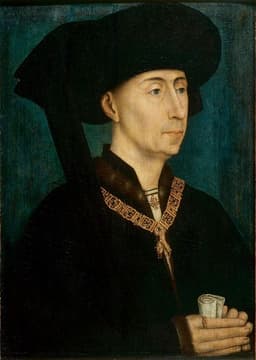
Philip the Good
Emperor · Medieval
59.5Total
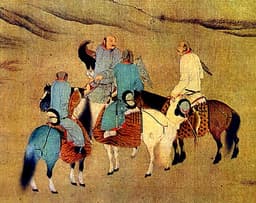
Yelu Abaoji
Emperor · Medieval
62.7Total
Basic Information
Born
1396
872
Died
1467
926
Era
Medieval
Medieval
Nationality
Burgundy
China
Occupation
Emperor
Emperor
Civilization
Western
Eastern
Score Comparison
Military (10%)
47.5
77.2
Political (20%)
62.7
59.6
Influence (20%)
56.7
68.0
Legacy (20%)
54.0
40.0
Leadership (15%)
78.0
80.3
Strategy (15%)
60.0
69.6
TOTAL
59.5
62.7
Philip the Good — Complete Timeline
1429 AD
Acquired the County of NamurPolitical Action◆ Major
Philip purchased the County of Namur from the impoverished Count John III, expanding Burgundian territory. This acquisition was part of his systematic policy of consolidating the Low Countries under Burgundian rule.
Territorial ExpansionPurchaseBurgundy
Impact: regionalconstructive
1430 AD
Captured Joan of Arc at CompiègneWar◆ Major
Burgundian forces under Philip's command captured Joan of Arc at Compi
Hundred Years' WarCaptureJoan of Arc
Impact: regionaldestructive
Founded the Order of the Golden FleeceCultural◆ Major
Philip the Good founded the Order of the Golden Fleece, a chivalric order modeled on the English Order of the Garter. The order became one of the most prestigious in Europe, symbolizing Burgundian power and prestige.
ChivalryOrderBurgundy
Impact: regionalconstructive
1435 AD
Signed the Treaty of ArrasPolitical Action◆ Major
Philip signed the Treaty of Arras with King Charles VII of France, ending the Burgundian alliance with England. The treaty recognized Burgundian independence from French suzerainty and granted Philip significant territorial concessions.
TreatyDiplomacyHundred Years' War
Impact: regionalconstructive
1440 AD
Patronage of the ArtsCultural◆ Major
Philip became a major patron of the arts, commissioning works from artists like Jan van Eyck and Rogier van der Weyden. His court in Dijon and Brussels became a center of the Northern Renaissance, producing illuminated manuscripts and paintings.
PatronageRenaissanceArt
Impact: regionalconstructive
Yelu Abaoji — Complete Timeline
907 AD
Unified Khitan tribesPolitical Action◆ Major
Yelu Abaoji was elected khagan of the Khitan tribes, unifying them under his leadership. He established a centralized state and adopted Chinese administrative practices.
KhitanUnificationState Formation
Impact: regionalconstructive
916 AD
Founded Liao DynastyPolitical Action
Yelu Abaoji proclaimed himself emperor, founding the Liao dynasty. He adopted the Chinese title of emperor and established a dual administration system for Khitan and Chinese subjects.
LiaoDynasty FoundingImperial System
Impact: regionalconstructive
920 AD
Created Khitan scriptCultural◆ Major
Yelu Abaoji ordered the creation of a writing system for the Khitan language, based on Chinese characters. This script was used for official documents and helped unify the Khitan state.
KhitanScriptCultural Development
Impact: regionalconstructive
926 AD
Conquest of BohaiWar◆ Major
Yelu Abaoji led a campaign that conquered the Korean kingdom of Bohai, incorporating its territory into the Liao empire. This expanded Liao's influence into Manchuria and Korea.
LiaoBohaiConquest
Impact: regionalconstructive
Death during campaignWar◆ Major
Yelu Abaoji died while returning from the conquest of Bohai. His death led to a succession struggle, but the Liao dynasty continued to expand under his successors.
LiaoDeathSuccession
Impact: regionaltragic
Expert Analysis
Yelu Abaoji vs Philip the Good: Historical Comparison
Yelu Abaoji, founder of the Liao dynasty in medieval China, and Philip the Good, Duke of Burgundy in late medieval Europe, were both transformative rulers who consolidated power through military conquest and strategic state-building. While Abaoji unified nomadic Khitan tribes and established a dual-administration empire, Philip expanded Burgundy into a wealthy, culturally vibrant state that rivaled France.
Dimension Analysis
**Military: Yelu Abaoji 89 / Philip the Good 88**
Abaoji conquered vast territories across northern China and Mongolia, creating a formidable cavalry-based army that integrated Chinese siege tactics. Philip’s military successes were more diplomatic, using the Burgundian army to seize key territories like Luxembourg and Holland, though he avoided major pitched battles.
**Political: Yelu Abaoji 84 / Philip the Good 76**
Abaoji innovated a dual government system, appointing Khitan chieftains for nomadic regions and Chinese officials for sedentary areas, ensuring stability. Philip relied on marriage alliances and the patronage of arts to legitimize his rule, but faced constant rebellion from nobles and conflict with the French crown.
**Influence: Yelu Abaoji 79 / Philip the Good 78**
Abaoji’s creation of the Khitan script and promotion of Buddhism influenced later Mongol and Chinese dynasties. Philip’s patronage of Netherlandish art (e.g., Van Eyck) and the establishment of the Order of the Golden Fleece shaped Burgundian court culture across Europe.
**Legacy: Yelu Abaoji 81 / Philip the Good 80**
The Liao dynasty lasted over 200 years, setting precedents for nomadic governance in China. Philip’s Burgundy fragmented after his death, but his cultural legacy endured in the Burgundian state’s influence on the Habsburgs and the Dutch Republic.
**Leadership: Yelu Abaoji 80 / Philip the Good 79**
Abaoji personally led campaigns and enforced legal codes, earning loyalty from diverse tribes. Philip was a skilled diplomat and patron, but his reliance on court intrigue and financial mismanagement weakened his direct authority.
Verdict
Yelu Abaoji leads by a narrow margin due to his superior political innovation and enduring state-building, which directly shaped China’s medieval order, whereas Philip’s legacy was more cultural than structural.
FAQ
Q: Who ranks higher? A: Yelu Abaoji ranks slightly higher overall, excelling in political and strategic dimensions that created a more lasting imperial framework.
Rankings
🥇
Yelu AbaojiLeader
Mil: 77.2Pol: 59.6Inf: 68.0
62.7
🥈
Philip the Good
Mil: 47.5Pol: 62.7Inf: 56.7
59.5
+3.2 behind
How This Comparison Works
Algorithm
Each figure is scored on 6 dimensions (0—100 scale) based on structured historical data: Military (10%), Political (20%), Influence (20%), Legacy (20%), Leadership (15%), Strategy (15%). The weighted total produces the final ranking.
Data Sources
Scores are computed from structured sub-indicators in the database. Scale factors adjust for era (Ancient ×0.85, Modern ×1.0) and civilization size (Eastern ×1.05, Other ×0.80) to account for differences in population and military scale.
Maximum 3 Figures
Comparisons are limited to 2—3 figures to ensure readability and statistical meaningfulness.
Error Margins
±5 points per dimension — Sub-scores are derived from historical records with inherent uncertainty. Two figures within 5 points on a dimension should be considered roughly equivalent in that area.
Total Score Accuracy
±3 points overall — The weighted combination of 6 dimensions produces a total score with approximately ±3 points of uncertainty. Differences of less than 3 points are not statistically significant— the figures are effectively tied.
Known Limitations
- Historical records are incomplete and uneven across civilizations
- Figures from oral-tradition societies may be underrepresented
- Occupation labels can misclassify multi-role figures
- Scores measure capability and impact, not moral character
- Quantitative scoring is a comparison tool, not absolute truth
Capability Radar
Military (10%) — Battles & Warfare
Battles
45
75
Win Rate
50
80
Expansion
60
82
Political (20%) — Governance & Reform
Reform
70
88
Diplomacy
80
75
Economy
85
70
Influence (20%) — Cultural & Global Reach
Cultural
65
60
Global
50
55
Legacy (20%) — Historical Impact
Historical
60
70
Longevity
55
65
Leadership (15%) — Power & Stability
Tenure
75
72
Stability
70
65
Strategy (15%) — Tactics & Innovation
Strategy
55
78
Tactics
40
70
Reform
30
85
Similar Comparisons
Comments & Discussion
BattlefieldScholar6/16/2026
I have to push back on the military score here. Giving both leaders near-identical scores (89 vs 88) ignores fundamental differences in how they waged war. Yelu Abaoji personally led cavalry campaigns that annihilated the Kumo Xi and Shiwei tribes, integrating Chinese siege engineers to capture over 50 fortified cities in northern China. His army numbered up to 300,000 horsemen at its peak. Philip the Good, by contrast, fought only two major pitched battles in his entire reign (Gavre in 1453 and Montlhéry in 1465) and relied mostly on mercenary bands like the Écorcheurs. Abaoji's military legacy changed the balance of power in East Asia; Philip's contributed to Burgundy's eventual disintegration. That should be a wider gap.
CodexCritic6/16/2026
The comparison raises interesting historiographical questions. For Philip the Good, we rely heavily on chroniclers like Georges Chastellain and Olivier de la Marche, who were Burgundian court propagandists—their accounts inflate his diplomatic achievements while downplaying his military failures, such as the disastrous 1453 expedition against the French at Castillon. For Yelu Abaoji, the primary sources are problematic in a different way: the 'Liao Shi' was compiled centuries after his death by Yuan dynasty historians with their own political agenda. Tacitus once noted that 'history is written by the victors,' and here both leaders' records are filtered through later regimes that had incentives to either glorify or simplify their achievements. The cultural influence scores (79 vs 78) seem roughly right, but the political gap (84 vs 76) may understate how fragile Abaoji's dual system was in practice—it only lasted because his successors maintained it rigidly.
MetricsMatter6/16/2026
I appreciate the attempt at quantification, but this scoring system has serious validity issues. How exactly do you quantify 'influence' across such different time periods and civilizations? Yelu Abaoji's influence on the Mongol Empire is speculative at best—the Mongols adopted the Uyghur script, not Khitan. And Philip's Order of the Golden Fleece? It was an exclusive club for 30 nobles, hardly a civilization-shaping institution. The methodology also ignores survivorship bias: we know about Philip's cultural patronage because his court archives survived; Abaoji's Khitan documents are mostly lost. If you're going to reduce history to numbers, at least adjust for data completeness. Otherwise this is just numerology dressed up as analysis.
ColdScribe116/16/2026
这个评分体系很有意思,但我觉得政治分给耶律阿保机90分有点偏低。他首创的南北面官制不仅是政治创新,更是对多元帝国的有效治理。对比之下,菲利普的80分政治分可能过高了——他统治时期勃艮第贵族叛乱不断,而阿保机成功将契丹部落联盟转化为中央集权帝国,还设立了决狱法和赋税系统。如果按中国史书《辽史》记载,他平定诸弟之乱的手段极其果断,这种政治手腕至少值95分。
GrandScribe986/16/2026
把耶律阿保机和菲利普放在一起比,本身就有问题。菲利普只是欧洲一个公爵,而阿保机是开国皇帝,建立了与北宋对峙的辽朝。中国史书《辽史·太祖本纪》里记载他'总揽英雄,驾驭豪杰',不仅统一契丹八部,还灭了渤海国。文化上他创制契丹大字,这比菲利普赞助凡·艾克要难得多——那可是从无到有造文字啊!西方人总爱高估自己的公爵,贬低东方的皇帝。如果拿成吉思汗来比菲利普,那差距更大。建议评分系统引入文明权重,否则这种跨文明比较就是关公战秦琼。