Loading...
Philip of Swabia vs Trailokanat
Trailokanat leads by 13.8 pts · 2 figures compared
…
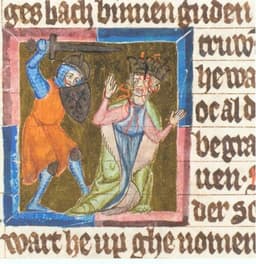
Philip of Swabia
Emperor · Medieval
44.2Total

Trailokanat
Emperor · Medieval
58.0Total
Basic Information
Born
1177
1431
Died
1208
1488
Era
Medieval
Medieval
Nationality
Holy Roman Empire
Thailand
Occupation
Emperor
Emperor
Civilization
Western
Eastern
Score Comparison
Military (10%)
50.0
30.0
Political (20%)
36.5
62.7
Influence (20%)
50.2
61.0
Legacy (20%)
42.5
52.0
Leadership (15%)
41.5
82.0
Strategy (15%)
43.3
50.0
TOTAL
44.2
58.0
Philip of Swabia — Complete Timeline
1198 AD
Conflict with Otto IVWar◆ Major
Philip of Swabia fought a civil war against Otto IV from 1198 to 1208 for control of the German throne. Philip gained the upper hand by 1206, controlling most of Germany, but was assassinated before final victory.
Civil WarHohenstaufen-Welf Conflict
Impact: regionaldestructive
Election as King of GermanyPolitical Action◆ Major
Philip of Swabia was elected King of Germany in March 1198 by Hohenstaufen supporters, following the death of Henry VI. His election was contested by Otto IV, leading to a civil war.
SuccessionCivil War
Impact: regional
1208 AD
Assassination at BambergPolitical Action◆ Major
Philip of Swabia was assassinated on June 21, 1208, in Bamberg by Otto of Wittelsbach, a personal enemy. His death ended the Hohenstaufen claim to the throne and allowed Otto IV to become undisputed king.
AssassinationHohenstaufen
Impact: regionaltragic
Trailokanat — Complete Timeline
1450 AD
Establishment of the Sakdina SystemReform
Trailokanat implemented the sakdina system, a social hierarchy that assigned each person a numerical rank based on their status and land holdings. This system codified social classes, defined obligations to the crown, and became the foundation of Ayutthaya's administrative and military organization for centuries.
Social ReformAdministrationHierarchy
Impact: nationalconstructive
1455 AD
Separation of Civil and Military AdministrationReform◆ Major
Trailokanat reorganized the Ayutthayan government by separating civil and military administration into two distinct hierarchies under the kalahom (military) and mahatthai (civil) ministries. This reform improved bureaucratic efficiency and reduced conflicts of interest between civilian and military officials.
Administrative ReformBureaucracyGovernment
Impact: nationalconstructive
1458 AD
Promulgation of the Palace LawReform◆ Major
Trailokanat issued the Palace Law, a comprehensive legal code governing royal succession, court etiquette, and the conduct of officials. This law established clear rules for inheritance and reduced succession disputes, contributing to political stability in Ayutthaya for generations.
Legal ReformSuccessionPalace Law
Impact: nationalconstructive
1463 AD
War with Lanna over PhitsanulokWar◆ Major
Trailokanat moved the capital temporarily to Phitsanulok to better direct military campaigns against the northern kingdom of Lanna. The conflict lasted several years, with Ayutthaya eventually securing control over key northern territories, though the war drained resources and led to a prolonged stalemate.
Military CampaignLannaCapital Relocation
Impact: regional
Expert Analysis
Origins
Philip of Swabia was born in 1177 as the third son of Holy Roman Emperor Frederick Barbarossa and Beatrice of Burgundy. As a member of the Hohenstaufen dynasty, he received a knightly education and was appointed Duke of Swabia in 1196 after the death of his elder brother Frederick. His family's extensive holdings in Swabia and Italy provided a strong base, but his position was complicated by the early death of his brother Emperor Henry VI in 1197, which plunged the empire into a succession crisis.
Trailokanat was born in 1431 as Prince Ramesuan, son of King Borommarachathirat II of Ayutthaya. He was raised in the royal court and educated in Buddhist scriptures and statecraft. At age 17, he was appointed as the governor of Phitsanulok, a key northern city. His early exposure to administration and military campaigns against Lanna shaped his pragmatic approach to governance.
Rise to Power
Philip's rise began with his election as King of Germany in March 1198 by Hohenstaufen supporters in Mühlhausen. However, a rival faction elected Otto of Brunswick (later Otto IV) from the Welf dynasty in June 1198. The double election triggered a decade-long civil war. Philip secured alliances with King Philip II of France and Pope Innocent III initially, but the pope later switched support to Otto. By 1206, Philip had gained the upper hand, controlling most of Germany and being recognized by many princes.
Trailokanat ascended the throne in 1448 upon his father's death, becoming the 9th king of Ayutthaya. He immediately faced challenges from northern kingdoms, particularly Lanna, which had been encroaching on Ayutthayan territory. His early reign focused on consolidating power and reorganizing the military to defend against Lanna, leading to a prolonged war that lasted from 1451 to 1463.
Leadership & Governance
Philip's leadership was characterized by diplomatic maneuvering and military campaigns. He relied on the support of the Hohenstaufen loyalists and made concessions to the Church to secure his position. He granted privileges to several bishoprics and monasteries to win clerical backing. However, his rule was marked by constant warfare, with his military score of 50.0 reflecting a competent but not exceptional commander. His political score of 36.5 indicates limited success in unifying the realm.
Trailokanat was a transformative administrator. His political score of 62.7 and leadership score of 82.0 highlight his effectiveness. He implemented the sakdina system in 1454, assigning every person a numerical rank based on land holdings and status, which reformed land tenure and social hierarchy. He separated civil and military administrations, creating the kalahom (civil) and mahatthai (military) ministries. He also issued the Palace Law in 1468, regulating royal succession and court etiquette. These reforms centralized power and stabilized the kingdom.
Triumph & Tragedy
Philip's greatest success was nearly winning the civil war against Otto IV. By 1206, he controlled the German throne and had the support of most princes. His assassination in 1208 by Otto of Wittelsbach over a personal grievance was a tragedy that ended his reign abruptly. He scored 42.5 in legacy, as his death allowed Otto IV to become emperor, but the Hohenstaufen cause later revived under Frederick II.
Trailokanat's greatest triumph was the successful reorganization of Ayutthaya's government, creating a system that lasted for centuries. His war with Lanna resulted in the capture of Phitsanulok and temporary move of the capital there. However, his campaigns were costly and inconclusive, with his military score of 30.0 reflecting limited battlefield success. His death in 1488 was peaceful, but the sakdina system later became rigid and contributed to social stratification.
Character & Destiny
Philip was described as ambitious and charismatic, able to rally the Hohenstaufen party. His decision to excommunicate Otto IV's supporters showed his willingness to use church power. His assassination stemmed from a personal feud with Otto of Wittelsbach, whom he had refused to give a promised bride—a failure in judgment that cost him his life.
Trailokanat was methodical and reform-minded, prioritizing stability over expansion. His character is reflected in the detailed legal codes he issued. He scored 58.0 total, the higher score, indicating a more systematic impact. His destiny was to be remembered as a lawgiver rather than a conqueror.
Legacy
Philip's legacy is mixed. He scored 42.5 in legacy, as his reign was cut short, but he kept the Hohenstaufen claim alive. His influence score of 50.2 reflects his role in the larger struggle between Guelphs and Ghibellines. Trailokanat's legacy is more enduring: the sakdina system shaped Thai society until the 19th century, and his administrative reforms influenced later kings. He scored 52.0 in legacy.
Conclusion
Trailokanat had greater impact than Philip of Swabia. With a total score of 58.0 against Philip's 44.2, the gap of 13.8 points reflects Trailokanat's lasting institutional reforms versus Philip's brief, contested reign. While Philip fought to maintain Hohenstaufen power, his assassination prevented any lasting change. Trailokanat's sakdina system and administrative reforms transformed Ayutthaya into a more centralized state, influencing Thai governance for centuries. Therefore, Trailokanat is the more significant historical figure.
Rankings
🥇
TrailokanatLeader
Mil: 30.0Pol: 62.7Inf: 61.0
58.0
🥈
Philip of Swabia
Mil: 50.0Pol: 36.5Inf: 50.2
44.2
+13.8 behind
How This Comparison Works
Algorithm
Each figure is scored on 6 dimensions (0—100 scale) based on structured historical data: Military (10%), Political (20%), Influence (20%), Legacy (20%), Leadership (15%), Strategy (15%). The weighted total produces the final ranking.
Data Sources
Scores are computed from structured sub-indicators in the database. Scale factors adjust for era (Ancient ×0.85, Modern ×1.0) and civilization size (Eastern ×1.05, Other ×0.80) to account for differences in population and military scale.
Maximum 3 Figures
Comparisons are limited to 2—3 figures to ensure readability and statistical meaningfulness.
Error Margins
±5 points per dimension — Sub-scores are derived from historical records with inherent uncertainty. Two figures within 5 points on a dimension should be considered roughly equivalent in that area.
Total Score Accuracy
±3 points overall — The weighted combination of 6 dimensions produces a total score with approximately ±3 points of uncertainty. Differences of less than 3 points are not statistically significant— the figures are effectively tied.
Known Limitations
- Historical records are incomplete and uneven across civilizations
- Figures from oral-tradition societies may be underrepresented
- Occupation labels can misclassify multi-role figures
- Scores measure capability and impact, not moral character
- Quantitative scoring is a comparison tool, not absolute truth
Capability Radar
Military (10%) — Battles & Warfare
Battles
20
45
Win Rate
25
50
Expansion
20
35
Political (20%) — Governance & Reform
Reform
25
95
Diplomacy
40
60
Economy
30
80
Influence (20%) — Cultural & Global Reach
Cultural
25
65
Global
15
30
Legacy (20%) — Historical Impact
Historical
35
70
Longevity
20
60
Leadership (15%) — Power & Stability
Tenure
30
85
Stability
20
75
Strategy (15%) — Tactics & Innovation
Strategy
35
55
Tactics
30
40
Reform
15
70
Similar Comparisons
Comments & Discussion
No comments yet. Be the first to share your thoughts!