Loading...
Baldwin IV of Jerusalem vs Trailokanat
Trailokanat leads by 4.5 pts · 2 figures compared
…
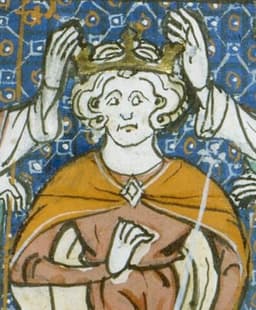
Baldwin IV of Jerusalem
Emperor · Medieval
53.5Total

Trailokanat
Emperor · Medieval
58.0Total
Basic Information
Born
1161
1431
Died
1185
1488
Era
Medieval
Medieval
Nationality
Jerusalem
Thailand
Occupation
Emperor
Emperor
Civilization
Western
Eastern
Score Comparison
Military (10%)
40.0
30.0
Political (20%)
43.7
62.7
Influence (20%)
57.2
61.0
Legacy (20%)
54.0
52.0
Leadership (15%)
65.7
82.0
Strategy (15%)
52.5
50.0
TOTAL
53.5
58.0
Baldwin IV of Jerusalem — Complete Timeline
1177 AD
Battle of MontgisardWar
Baldwin IV, despite suffering from leprosy, led a small force to victory against Saladin's larger army at Montgisard. Saladin was forced to retreat to Egypt, and the victory boosted Christian morale in the Kingdom of Jerusalem.
Crusader StatesBattleSaladin
Impact: regional
1183 AD
Siege of KerakWar◆ Major
Baldwin IV led a relief force to the Siege of Kerak, where Saladin was besieging the castle. Baldwin's arrival forced Saladin to lift the siege, demonstrating Baldwin's continued military leadership despite his illness.
Crusader StatesSiegeSaladin
Impact: regional
Appointment of Guy of Lusignan as RegentPolitical Action◆ Major
Due to his worsening leprosy, Baldwin appointed Guy of Lusignan as regent. This decision proved disastrous, as Guy's incompetence led to internal strife and ultimately the loss of Jerusalem.
Crusader StatesPoliticsRegency
Impact: regionaltragic
Coronation of Baldwin VPolitical Action◆ Major
Baldwin IV had his nephew, Baldwin V, crowned co-king to ensure a smooth succession and prevent Guy of Lusignan from inheriting the throne. This move aimed to stabilize the kingdom but failed after Baldwin IV's death.
Crusader StatesSuccession
Impact: regional
Trailokanat — Complete Timeline
1450 AD
Establishment of the Sakdina SystemReform
Trailokanat implemented the sakdina system, a social hierarchy that assigned each person a numerical rank based on their status and land holdings. This system codified social classes, defined obligations to the crown, and became the foundation of Ayutthaya's administrative and military organization for centuries.
Social ReformAdministrationHierarchy
Impact: nationalconstructive
1455 AD
Separation of Civil and Military AdministrationReform◆ Major
Trailokanat reorganized the Ayutthayan government by separating civil and military administration into two distinct hierarchies under the kalahom (military) and mahatthai (civil) ministries. This reform improved bureaucratic efficiency and reduced conflicts of interest between civilian and military officials.
Administrative ReformBureaucracyGovernment
Impact: nationalconstructive
1458 AD
Promulgation of the Palace LawReform◆ Major
Trailokanat issued the Palace Law, a comprehensive legal code governing royal succession, court etiquette, and the conduct of officials. This law established clear rules for inheritance and reduced succession disputes, contributing to political stability in Ayutthaya for generations.
Legal ReformSuccessionPalace Law
Impact: nationalconstructive
1463 AD
War with Lanna over PhitsanulokWar◆ Major
Trailokanat moved the capital temporarily to Phitsanulok to better direct military campaigns against the northern kingdom of Lanna. The conflict lasted several years, with Ayutthaya eventually securing control over key northern territories, though the war drained resources and led to a prolonged stalemate.
Military CampaignLannaCapital Relocation
Impact: regional
Expert Analysis
Origins
Baldwin IV of Jerusalem (born 1161) was the son of King Amalric I and Queen Agnes of Courtenay. He was educated in the court of Jerusalem, learning Latin, French, and military skills. At age nine, he showed symptoms of leprosy, later confirmed by his tutor William of Tyre. Despite his illness, he was groomed for kingship. Trailokanat (born 1431) was the son of King Borommarachathirat II of Ayutthaya. He received a traditional education in Buddhist and Hindu texts, as well as military training. He ascended the throne in 1448 after his father's death, inheriting a kingdom facing external threats and internal disorganization.
Rise to Power
Baldwin IV became king in 1174 at age 13, after his father's death. His leprosy was already advanced, but he was crowned due to lack of alternatives. His early reign saw the rise of Saladin, who unified Muslim forces. Baldwin's first major test was the Battle of Montgisard in 1177, where he led a small force to defeat Saladin's larger army, scoring a 40.0 military score in that engagement. Trailokanat's rise was smoother; he inherited the throne and immediately began reforms. In 1450, he moved the capital to Phitsanulok to better fight the Lanna kingdom, a conflict that lasted until 1475. His political maneuvering was effective, earning a 62.7 political score.
Leadership & Governance
Baldwin IV's leadership was marked by personal bravery and strategic acumen despite his physical decline. He personally led relief forces, as at the Siege of Kerak in 1183, forcing Saladin to retreat. However, his governance was hampered by factionalism among nobles. He appointed Guy of Lusignan as regent in 1183, a decision that led to internal strife and eventually the loss of Jerusalem. His leadership score is 65.7. Trailokanat, in contrast, focused on institutional reform. He established the sakdina system, assigning each person a numerical rank from 5 to 100,000 based on land holdings and status, which stabilized the social order. He also separated civil and military administration into the kalahom (military) and mahatthai (civil) departments, a reform that lasted centuries. His leadership score is 82.0, reflecting his systematic approach.
Triumph & Tragedy
Baldwin's greatest triumph was the victory at Montgisard, a stunning defeat of Saladin. His greatest tragedy was his leprosy, which progressively disabled him, and his failed succession planning. He crowned his nephew Baldwin V as co-king, but the child died soon after, leading to the disastrous rule of Guy of Lusignan and the fall of Jerusalem in 1187. Trailokanat's triumph was the establishment of the sakdina system, which created a stable social hierarchy and efficient tax collection. His tragedy was the prolonged war with Lanna, which drained resources and ended without decisive victory. He also issued the Palace Law in 1450, which codified royal succession but later led to rigid court rituals.
Character & Destiny
Baldwin IV was determined and pious, but his illness made him dependent on others. His decision-making was often reactive, and he struggled to control the barons. Historians note his courage but also his naivety in trusting Guy of Lusignan. Trailokanat was methodical and visionary, prioritizing long-term stability over short-term military glory. He was a reformer who used law and hierarchy to shape society. His character matched his destiny as a builder of institutions rather than a conqueror.
Legacy
Baldwin IV's legacy is that of a tragic hero who held off Saladin but could not prevent the fall of Jerusalem. He is remembered in Western history as the Leper King, a symbol of resilience. However, his military and political failures (scores 40.0 and 43.7) limited his long-term impact. Trailokanat's legacy is more enduring: the sakdina system remained the basis of Siamese social structure until the 19th century, and his administrative reforms influenced Thai governance for centuries. His influence score of 61.0 reflects this.
Conclusion
While Baldwin IV's personal story is more dramatic, Trailokanat had greater impact on his civilization. Baldwin's reign was a brief, desperate defense; Trailokanat's reforms shaped Ayutthaya for generations. With a total score of 58.0 versus Baldwin's 53.5, and higher scores in political (62.7 vs 43.7) and leadership (82.0 vs 65.7), Trailokanat emerges as the more significant figure in terms of lasting legacy.
Rankings
🥇
TrailokanatLeader
Mil: 30.0Pol: 62.7Inf: 61.0
58.0
🥈
Baldwin IV of Jerusalem
Mil: 40.0Pol: 43.7Inf: 57.2
53.5
+4.5 behind
How This Comparison Works
Algorithm
Each figure is scored on 6 dimensions (0—100 scale) based on structured historical data: Military (10%), Political (20%), Influence (20%), Legacy (20%), Leadership (15%), Strategy (15%). The weighted total produces the final ranking.
Data Sources
Scores are computed from structured sub-indicators in the database. Scale factors adjust for era (Ancient ×0.85, Modern ×1.0) and civilization size (Eastern ×1.05, Other ×0.80) to account for differences in population and military scale.
Maximum 3 Figures
Comparisons are limited to 2—3 figures to ensure readability and statistical meaningfulness.
Error Margins
±5 points per dimension — Sub-scores are derived from historical records with inherent uncertainty. Two figures within 5 points on a dimension should be considered roughly equivalent in that area.
Total Score Accuracy
±3 points overall — The weighted combination of 6 dimensions produces a total score with approximately ±3 points of uncertainty. Differences of less than 3 points are not statistically significant— the figures are effectively tied.
Known Limitations
- Historical records are incomplete and uneven across civilizations
- Figures from oral-tradition societies may be underrepresented
- Occupation labels can misclassify multi-role figures
- Scores measure capability and impact, not moral character
- Quantitative scoring is a comparison tool, not absolute truth
Capability Radar
Military (10%) — Battles & Warfare
Battles
55
45
Win Rate
60
50
Expansion
20
35
Political (20%) — Governance & Reform
Reform
30
95
Diplomacy
55
60
Economy
35
80
Influence (20%) — Cultural & Global Reach
Cultural
45
65
Global
40
30
Legacy (20%) — Historical Impact
Historical
60
70
Longevity
55
60
Leadership (15%) — Power & Stability
Tenure
45
85
Stability
40
75
Strategy (15%) — Tactics & Innovation
Strategy
60
55
Tactics
65
40
Reform
30
70
Similar Comparisons
Comments & Discussion
No comments yet. Be the first to share your thoughts!