Loading...
Louis IX vs Trailokanat
Louis IX leads by 11.8 pts · 2 figures compared
…
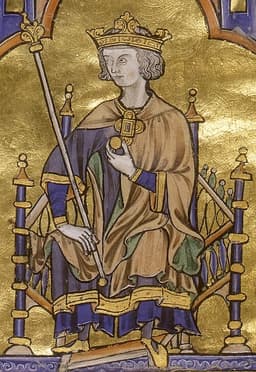
Louis IX
Emperor · Medieval
69.8Total

Trailokanat
Emperor · Medieval
58.0Total
Basic Information
Born
1214
1431
Died
1270
1488
Era
Medieval
Medieval
Nationality
France
Thailand
Occupation
Emperor
Emperor
Civilization
Western
Eastern
Score Comparison
Military (10%)
46.7
30.0
Political (20%)
72.0
62.7
Influence (20%)
82.0
61.0
Legacy (20%)
68.0
52.0
Leadership (15%)
72.0
82.0
Strategy (15%)
60.0
50.0
TOTAL
69.8
58.0
Louis IX — Complete Timeline
1248 AD
Seventh CrusadeWar◆ Major
Louis IX led the Seventh Crusade to Egypt. He captured Damietta but was later defeated at the Battle of Al Mansurah. Louis was captured and held for ransom. He spent four years in the Holy Land after his release, fortifying crusader positions.
CrusadeEgyptCapture
Impact: globaltragic
1254 AD
Reforms of Royal JusticeReform◆ Major
Louis IX issued a series of ordinances reforming the French royal administration and judicial system. He established the Parlement of Paris as a supreme court, prohibited private warfare, and introduced the presumption of innocence in criminal trials.
Legal ReformJusticeAdministration
Impact: nationalconstructive
1270 AD
Eighth Crusade and DeathWar◆ Major
Louis IX launched the Eighth Crusade, targeting Tunis in North Africa. Shortly after arriving, an epidemic (likely dysentery or plague) swept through the crusader camp. Louis died of the disease. The crusade was abandoned soon after his death.
CrusadeDeathTunis
Impact: globaltragic
Trailokanat — Complete Timeline
1450 AD
Establishment of the Sakdina SystemReform
Trailokanat implemented the sakdina system, a social hierarchy that assigned each person a numerical rank based on their status and land holdings. This system codified social classes, defined obligations to the crown, and became the foundation of Ayutthaya's administrative and military organization for centuries.
Social ReformAdministrationHierarchy
Impact: nationalconstructive
1455 AD
Separation of Civil and Military AdministrationReform◆ Major
Trailokanat reorganized the Ayutthayan government by separating civil and military administration into two distinct hierarchies under the kalahom (military) and mahatthai (civil) ministries. This reform improved bureaucratic efficiency and reduced conflicts of interest between civilian and military officials.
Administrative ReformBureaucracyGovernment
Impact: nationalconstructive
1458 AD
Promulgation of the Palace LawReform◆ Major
Trailokanat issued the Palace Law, a comprehensive legal code governing royal succession, court etiquette, and the conduct of officials. This law established clear rules for inheritance and reduced succession disputes, contributing to political stability in Ayutthaya for generations.
Legal ReformSuccessionPalace Law
Impact: nationalconstructive
1463 AD
War with Lanna over PhitsanulokWar◆ Major
Trailokanat moved the capital temporarily to Phitsanulok to better direct military campaigns against the northern kingdom of Lanna. The conflict lasted several years, with Ayutthaya eventually securing control over key northern territories, though the war drained resources and led to a prolonged stalemate.
Military CampaignLannaCapital Relocation
Impact: regional
Expert Analysis
Origins
Louis IX was born in 1214 at Poissy, France, to King Louis VIII and Blanche of Castile. His father died when Louis was 12, leaving Blanche as regent. She instilled in him a deep religious piety and a sense of duty. Louis received a thorough education in chivalry, theology, and statecraft. His mother's influence shaped his commitment to justice and his role as a protector of the Church.
Trailokanat was born around 1431 as Prince Ramesuan, son of King Borommarachathirat II of Ayutthaya (now Thailand). Little is known of his early life, but he was likely trained in martial arts and administrative skills. He ascended the throne in 1448 after his father's death. The kingdom faced threats from the northern Lanna kingdom and internal administrative challenges.
Rise to Power
Louis IX became king at age 12 in 1226, with his mother Blanche as regent until 1234. The early years were marked by baronial revolts, which Blanche skillfully suppressed. Louis assumed full power in 1234 and quickly asserted royal authority. He married Margaret of Provence in 1234, strengthening ties with southern France. His reputation for piety and justice grew, leading to his role as a mediator in European disputes.
Trailokanat ascended the throne in 1448 without major opposition. His early reign focused on consolidating power and reforming the administration. He faced a significant challenge from Lanna, which had captured the city of Phitsanulok. In 1463, he moved the capital to Phitsanulok to better direct the war, a bold strategic move. He also introduced the sakdina system to organize society and the military.
Leadership & Governance
Louis IX was a model of Christian kingship. He reformed the French legal system, establishing the Parlement of Paris as a supreme court and prohibiting trial by ordeal. He issued ordinances to improve governance, such as the "Etablissements de Saint Louis," which codified laws. He also patronized the arts and built the Sainte-Chapelle to house relics. His leadership scored 72.0 in political governance, reflecting his administrative reforms.
Trailokanat was a great reformer. His sakdina system assigned every individual a numerical rank based on land holdings, creating a clear social hierarchy. He separated civil and military administration, with the kalahom overseeing military affairs and the mahatthai handling civil matters. This system improved efficiency and reduced corruption. His political score of 62.7 reflects these structured reforms, though his military score of 30.0 indicates limited martial success.
Triumph & Tragedy
Louis IX's greatest triumph was his canonization in 1297, becoming the only French king to be declared a saint. His reforms strengthened the monarchy and justice. However, his crusades were disasters. The Seventh Crusade (1248-1254) ended in his capture and a huge ransom. The Eighth Crusade (1270) led to his death from disease in Tunis. His military score of 46.7 reflects these failures.
Trailokanat's triumph was the establishment of the sakdina system, which lasted for centuries and shaped Thai society. His administrative reforms created a stable bureaucracy. However, his war with Lanna was indecisive; he failed to conquer the north permanently. His military score of 30.0 indicates limited battlefield success. His legacy score of 52.0 is moderate because his reforms were later modified.
Character & Destiny
Louis IX was deeply pious, charitable, and ascetic. He wore a hairshirt, washed the feet of the poor, and sought justice for all. His character drove him to crusade, leading to his death. His leadership score of 72.0 reflects his moral authority, but his strategic score of 60.0 shows poor military judgment.
Trailokanat was pragmatic and reform-minded. He prioritized administration over conquest, moving his capital to face threats. His character was methodical, evident in the detailed Palace Law. His leadership score of 82.0 is the highest among his scores, indicating effective governance, but his strategic score of 50.0 shows caution.
Legacy
Louis IX's legacy is profound. He became the ideal Christian king, inspiring later monarchs. His legal reforms influenced French law until the Revolution. He is remembered as Saint Louis, with many churches and places named after him. His total score of 69.8 reflects his enduring influence.
Trailokanat's legacy is primarily in Thailand. The sakdina system persisted until the 19th century, and his administrative divisions influenced modern Thai governance. However, his impact outside Thailand is minimal. His total score of 58.0 is lower, reflecting a more localized legacy.
Conclusion
Louis IX had greater impact than Trailokanat. His overall score of 69.8 versus 58.0 demonstrates a broader influence across religion, law, and governance. While Trailokanat's reforms were significant for Thailand, Louis IX's model of kingship and legal innovations shaped Western civilization. His canonization and role as a saint give him a unique global legacy. Therefore, Louis IX is the more consequential figure.
Rankings
🥇
Louis IXLeader
Mil: 46.7Pol: 72.0Inf: 82.0
69.8
🥈
Trailokanat
Mil: 30.0Pol: 62.7Inf: 61.0
58.0
+11.8 behind
How This Comparison Works
Algorithm
Each figure is scored on 6 dimensions (0—100 scale) based on structured historical data: Military (10%), Political (20%), Influence (20%), Legacy (20%), Leadership (15%), Strategy (15%). The weighted total produces the final ranking.
Data Sources
Scores are computed from structured sub-indicators in the database. Scale factors adjust for era (Ancient ×0.85, Modern ×1.0) and civilization size (Eastern ×1.05, Other ×0.80) to account for differences in population and military scale.
Maximum 3 Figures
Comparisons are limited to 2—3 figures to ensure readability and statistical meaningfulness.
Error Margins
±5 points per dimension — Sub-scores are derived from historical records with inherent uncertainty. Two figures within 5 points on a dimension should be considered roughly equivalent in that area.
Total Score Accuracy
±3 points overall — The weighted combination of 6 dimensions produces a total score with approximately ±3 points of uncertainty. Differences of less than 3 points are not statistically significant— the figures are effectively tied.
Known Limitations
- Historical records are incomplete and uneven across civilizations
- Figures from oral-tradition societies may be underrepresented
- Occupation labels can misclassify multi-role figures
- Scores measure capability and impact, not moral character
- Quantitative scoring is a comparison tool, not absolute truth
Capability Radar
Military (10%) — Battles & Warfare
Battles
45
45
Win Rate
30
50
Expansion
20
35
Political (20%) — Governance & Reform
Reform
75
95
Diplomacy
65
60
Economy
60
80
Influence (20%) — Cultural & Global Reach
Cultural
80
65
Global
60
30
Legacy (20%) — Historical Impact
Historical
85
70
Longevity
75
60
Leadership (15%) — Power & Stability
Tenure
70
85
Stability
70
75
Strategy (15%) — Tactics & Innovation
Strategy
35
55
Tactics
40
40
Reform
50
70
Similar Comparisons
Comments & Discussion
No comments yet. Be the first to share your thoughts!