Loading...
Philip IV of France vs Sancho III of Navarre
Philip IV of France leads by 1.3 pts · 2 figures compared
…
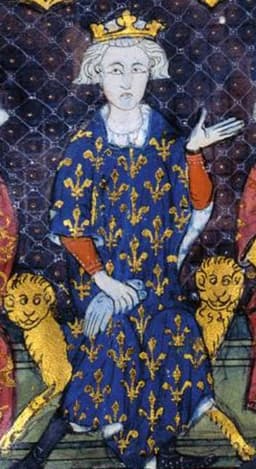
Philip IV of France
Emperor · Medieval
56.4Total
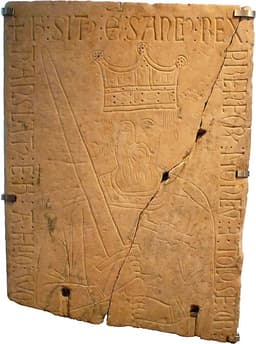
Sancho III of Navarre
Emperor · Medieval
55.1Total
Basic Information
Born
1268
985
Died
1314
1035
Era
Medieval
Medieval
Nationality
France
Navarre
Occupation
Emperor
Emperor
Civilization
Western
Western
Score Comparison
Military (10%)
38.3
47.5
Political (20%)
45.0
68.0
Influence (20%)
60.0
56.4
Legacy (20%)
56.0
48.3
Leadership (15%)
72.0
53.2
Strategy (15%)
60.0
60.0
TOTAL
56.4
55.1
Philip IV of France — Complete Timeline
1302 AD
Conflict with Pope Boniface VIIIPolitical Action◆ Major
Philip IV clashed with Pope Boniface VIII over taxation of the clergy and royal authority. Boniface issued the bull Unam Sanctam, asserting papal supremacy. Philip sent agents to arrest the Pope at Anagni. Boniface died shortly after, and Philip secured a more compliant pope.
PapacyConflictUnam Sanctam
Impact: globaldestructive
Convocation of the Estates GeneralPolitical Action◆ Major
Philip IV convened the first Estates General of France to gain support against Pope Boniface VIII. The assembly included clergy, nobles, and commoners. This marked the first time the three estates were formally summoned together in French history.
Estates GeneralAssemblyFrance
Impact: national
1307 AD
Suppression of the Knights TemplarPolitical Action◆ Major
Philip IV ordered the mass arrest of Knights Templar in France on charges of heresy, blasphemy, and sodomy. Templars were tortured to extract confessions. The order was dissolved by Pope Clement V in 1312, and its wealth was seized by the French crown.
Knights TemplarPersecutionHeresy
Impact: globaldestructive
1308 AD
Marriage of Isabella of FrancePolitical Action
Philip IV arranged the marriage of his daughter Isabella to King Edward II of England. The marriage was intended to strengthen the alliance between France and England. Isabella later became a key figure in the deposition of Edward II.
MarriageAllianceEngland
Impact: regional
Sancho III of Navarre — Complete Timeline
1004 AD
Inheritance of the Kingdom of PamplonaPolitical Action◆ Major
Sancho III inherited the Kingdom of Pamplona (Navarre) from his father Garc
Medieval IberiaKingdom of NavarreSuccession
Impact: regionalconstructive
1029 AD
Conquest of CastileWar◆ Major
Sancho III conquered the County of Castile after the assassination of Count Garc
Medieval IberiaConquestCastile
Impact: regional
1034 AD
Title of 'Emperor of Spain'Political Action◆ Major
Sancho III claimed the title 'Imperator totius Hispaniae' (Emperor of all Spain) after capturing Le
Medieval IberiaImperial TitleHegemony
Impact: regional
1035 AD
Division of the kingdomPolitical Action◆ Major
Upon his death, Sancho III divided his territories among his sons: Garc
Medieval IberiaSuccessionFragmentation
Impact: regionaldestructive
Expert Analysis
Origins
Philip IV of France was born in 1268 at Fontainebleau, the second son of King Philip III and Isabella of Aragon. He was not initially destined for the throne but became heir after the death of his older brother Louis in 1276. His upbringing was steeped in Capetian tradition, emphasizing royal authority and piety. He married Joan I of Navarre in 1284, which later brought the Kingdom of Navarre under French control. Philip was educated by scholars and clerics, but his personality was described as cold and aloof, earning him the epithet 'the Fair' for his handsome appearance rather than his temperament.
Sancho III of Navarre, known as Sancho the Great, was born around 985, son of García Sánchez II of Pamplona and Jimena of Cea. He inherited the Kingdom of Pamplona (Navarre) in 1004 at a young age. His early years were marked by the need to consolidate power in a fragmented Christian Iberia, surrounded by the Caliphate of Córdoba and competing Christian counties. He was likely educated in the court of Sancho García of Castile, his relative, and married Muniadona of Castile, which later facilitated his claims to Castile. His reign began with the challenge of asserting Navarrese hegemony.
Rise to Power
Philip IV ascended to the French throne in 1285 upon his father's death from dysentery during the Aragonese Crusade. He was 17. His early reign focused on expanding royal domain and asserting authority over powerful vassals. A key turning point was the conflict with England over Gascony, leading to war in 1294. Philip also fought a costly war with Flanders, which ended in 1305. His most significant rise in power came through his confrontation with the papacy. In 1296, Philip imposed taxes on the clergy without papal consent, sparking a bitter struggle with Pope Boniface VIII. By 1303, Philip's agents captured Boniface at Anagni, leading to the pope's death shortly after. This event dramatically increased royal power over the Church in France.
Sancho III's rise began with his inheritance of Pamplona in 1004. He quickly expanded his realm through a combination of marriage, diplomacy, and military action. In 1016, he secured the County of Castile through his wife's inheritance after the assassination of Count García Sánchez. He also annexed the County of Sobrarbe and Ribagorza. His major turning point came in 1034 when he captured León, the traditional heart of Christian Iberia, and claimed the title 'Imperator totius Hispaniae' (Emperor of all Spain). This was a symbolic assertion of supremacy over all Christian and Muslim rulers in the peninsula. By 1035, his realm stretched from Galicia to Barcelona, making him the most powerful Christian ruler in Iberia.
Leadership & Governance
Philip IV's leadership style was bureaucratic and legalistic. He relied heavily on 'legists'—trained lawyers who expanded royal authority through legal reforms. He convened the first Estates General in 1302 to gain support against the pope, an early example of representative assembly. He centralized administration, reformed coinage, and expelled Jews and Lombard bankers in 1306 to seize their assets. His governance was ruthless: the destruction of the Knights Templar in 1307 was a calculated move to confiscate their wealth and eliminate a powerful independent order. He scored 45.0 in political skill, reflecting his ability to manipulate institutions, but his heavy-handedness often caused unrest.
Sancho III governed through a more personal and feudal style. He expanded his realm by installing family members as counts and bishops, creating a network of loyal vassals. He issued charters and promoted the pilgrimage route to Santiago de Compostela, which boosted the economy and cultural exchange. He also fostered alliances with Muslim taifa kingdoms, extracting tribute (parias) rather than conquering them outright. His political score of 68.0 shows superior diplomatic acumen compared to Philip. However, his decision to divide his kingdom among his sons upon his death in 1035—a common practice in Navarre—undermined his achievements, leading to fragmentation.
Triumph & Tragedy
Philip IV's greatest triumph was the suppression of the Knights Templar, which he executed with brutal efficiency. On October 13, 1307, he ordered the mass arrest of Templars across France, followed by torture to extract confessions. The order was dissolved in 1312, and Philip seized their wealth. He also humiliated Pope Boniface VIII, establishing royal supremacy over the Church in France. However, his greatest failure was the disastrous war with Flanders, culminating in the Battle of Courtrai in 1302 where the French nobility was decimated by Flemish militia. His financial policies, including debasement of coinage and heavy taxation, led to widespread unrest. Philip's legacy is also tarnished by the scandal of the Tour de Nesle affair (1314), where his daughters-in-law were convicted of adultery, weakening the dynasty.
Sancho III's triumph was the unification of most of Christian Iberia under his rule. He was the first to claim the title 'Emperor of Spain', a symbol of his hegemony. He also expanded the Kingdom of Navarre to its greatest extent. However, his tragic flaw was the division of his kingdom. By splitting his territories among his sons, he ensured that his empire fragmented immediately after his death. His son Ferdinand I became the first king of Castile and León, but the unity was lost. Sancho's military score of 47.5 reflects his effective conquests, but his failure to secure succession cost him lasting influence.
Character & Destiny
Philip IV was cold, calculating, and secretive. He was known as 'the Fair' for his appearance, but his character was iron-willed and ruthless. He rarely spoke in public and let his ministers take the lead. His decision-making was driven by a desire for absolute royal authority and financial gain. Historians have described him as a 'king of stone' due to his impassive demeanor. His conflict with Boniface VIII was a clash of wills, and Philip's victory set a precedent for secular control over the Church. However, his avarice and cruelty, particularly towards the Templars, stained his reputation.
Sancho III was ambitious and charismatic, able to inspire loyalty and forge alliances. He was a skilled diplomat who balanced military conquest with marriage and tribute. His claim to the imperial title showed his vision of a unified Christian Spain. However, his decision to divide his kingdom reflected the traditional Navarrese custom of partible inheritance, which doomed his legacy. His character was more generous than Philip's, but he lacked the foresight to establish a lasting centralized state. He scored 53.2 in leadership, lower than Philip's 72.0, indicating Philip's stronger grip on power.
Legacy
Philip IV's legacy is mixed. He permanently weakened the papacy in France, leading to the Avignon Papacy. His destruction of the Knights Templar eliminated a powerful military order and set a precedent for state-sponsored persecution. He also strengthened the French monarchy through legal and administrative reforms. However, his financial mismanagement and conflicts with Flanders sowed seeds of future instability. His influence score of 60.0 reflects his role in shaping French absolutism. He is remembered as a controversial figure who expanded royal power at great cost.
Sancho III's legacy is that of a unifier who briefly brought Christian Iberia under one rule. He is considered the founder of the Kingdom of Castile's greatness, as his son Ferdinand I became a powerful king. The title 'Emperor of Spain' was revived later by Alfonso VI and others. However, his division of the kingdom prevented a lasting union. His legacy score of 48.3 reflects this ephemeral impact. He is remembered as 'Sancho the Great' in Spanish historiography, but his achievements were overshadowed by the subsequent fragmentation.
Conclusion
Philip IV of France had a greater impact than Sancho III of Navarre. Despite scoring only 56.4 overall compared to Sancho's 55.1, Philip's actions had enduring consequences for European history. His suppression of the Knights Templar and conflict with the papacy altered the balance of power between church and state. His centralization of French governance laid groundwork for absolutism. Sancho's unification of Iberia was impressive but temporary; his division of the kingdom prevented lasting change. Philip's political score of 45.0 is lower than Sancho's 68.0, but his leadership score of 72.0 (vs. 53.2) and influence of 60.0 (vs. 56.4) show he exerted more power over his domain and beyond. Therefore, Philip IV's legacy is more significant in shaping the medieval world.
Rankings
🥇
Philip IV of FranceLeader
Mil: 38.3Pol: 45.0Inf: 60.0
56.4
🥈
Sancho III of Navarre
Mil: 47.5Pol: 68.0Inf: 56.4
55.1
+1.3 behind
How This Comparison Works
Algorithm
Each figure is scored on 6 dimensions (0—100 scale) based on structured historical data: Military (10%), Political (20%), Influence (20%), Legacy (20%), Leadership (15%), Strategy (15%). The weighted total produces the final ranking.
Data Sources
Scores are computed from structured sub-indicators in the database. Scale factors adjust for era (Ancient ×0.85, Modern ×1.0) and civilization size (Eastern ×1.05, Other ×0.80) to account for differences in population and military scale.
Maximum 3 Figures
Comparisons are limited to 2—3 figures to ensure readability and statistical meaningfulness.
Error Margins
±5 points per dimension — Sub-scores are derived from historical records with inherent uncertainty. Two figures within 5 points on a dimension should be considered roughly equivalent in that area.
Total Score Accuracy
±3 points overall — The weighted combination of 6 dimensions produces a total score with approximately ±3 points of uncertainty. Differences of less than 3 points are not statistically significant— the figures are effectively tied.
Known Limitations
- Historical records are incomplete and uneven across civilizations
- Figures from oral-tradition societies may be underrepresented
- Occupation labels can misclassify multi-role figures
- Scores measure capability and impact, not moral character
- Quantitative scoring is a comparison tool, not absolute truth
Capability Radar
Military (10%) — Battles & Warfare
Battles
30
45
Win Rate
40
50
Expansion
30
60
Political (20%) — Governance & Reform
Reform
70
40
Diplomacy
65
70
Economy
60
50
Influence (20%) — Cultural & Global Reach
Cultural
50
45
Global
50
35
Legacy (20%) — Historical Impact
Historical
65
50
Longevity
55
40
Leadership (15%) — Power & Stability
Tenure
75
65
Stability
55
55
Strategy (15%) — Tactics & Innovation
Strategy
40
55
Tactics
35
40
Reform
45
30
Similar Comparisons
Comments & Discussion
No comments yet. Be the first to share your thoughts!