Loading...
Louis the Pious vs Sancho III of Navarre
Sancho III of Navarre leads by 6.2 pts · 2 figures compared
…
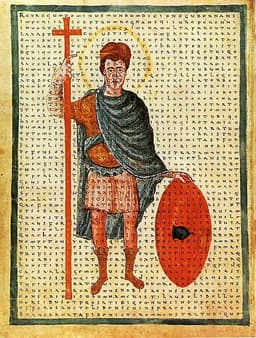
Louis the Pious
Emperor · Medieval
48.9Total
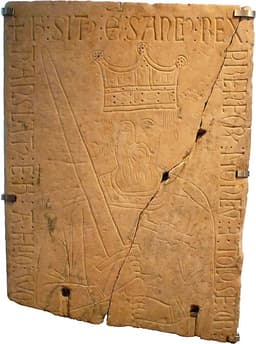
Sancho III of Navarre
Emperor · Medieval
55.1Total
Basic Information
Born
778
985
Died
840
1035
Era
Medieval
Medieval
Nationality
Frankish Empire
Navarre
Occupation
Emperor
Emperor
Civilization
Western
Western
Score Comparison
Military (10%)
50.0
47.5
Political (20%)
39.4
68.0
Influence (20%)
54.1
56.4
Legacy (20%)
45.0
48.3
Leadership (15%)
62.2
53.2
Strategy (15%)
38.6
60.0
TOTAL
48.9
55.1
Louis the Pious — Complete Timeline
817 AD
Ordinatio ImperiiPolitical Action◆ Major
Louis issued the Ordinatio Imperii, dividing the Frankish Empire among his three sons: Lothair, Pepin, and Louis the German. This plan aimed to maintain unity under Lothair's seniority but led to civil wars after Pepin's death.
SuccessionDivisionCivil War
Impact: regional
822 AD
Penance at AttignyPolitical Action
Louis performed public penance at Attigny for the death of his nephew Bernard of Italy, whom he had blinded. This act weakened his authority and set a precedent for ecclesiastical intervention in royal affairs.
PenanceChurchBernard of Italy
Impact: nationaltragic
841 AD
Battle of FontenoyWar◆ Major
After Louis's death, his sons fought the Battle of Fontenoy, where Charles the Bald and Louis the German defeated Lothair. This battle was a key event in the Carolingian civil wars that led to the empire's fragmentation.
Civil WarCarolingianDivision
Impact: regionaldestructive
Sancho III of Navarre — Complete Timeline
1004 AD
Inheritance of the Kingdom of PamplonaPolitical Action◆ Major
Sancho III inherited the Kingdom of Pamplona (Navarre) from his father Garc
Medieval IberiaKingdom of NavarreSuccession
Impact: regionalconstructive
1029 AD
Conquest of CastileWar◆ Major
Sancho III conquered the County of Castile after the assassination of Count Garc
Medieval IberiaConquestCastile
Impact: regional
1034 AD
Title of 'Emperor of Spain'Political Action◆ Major
Sancho III claimed the title 'Imperator totius Hispaniae' (Emperor of all Spain) after capturing Le
Medieval IberiaImperial TitleHegemony
Impact: regional
1035 AD
Division of the kingdomPolitical Action◆ Major
Upon his death, Sancho III divided his territories among his sons: Garc
Medieval IberiaSuccessionFragmentation
Impact: regionaldestructive
Expert Analysis
Origins
Louis the Pious (778-840) was the son of Charlemagne and Hildegard. Born in Chasseneuil, he was raised in the Frankish court and educated by scholars like Alcuin. He was crowned king of Aquitaine in 781 at age three, gaining early experience in governance. His piety, reflected in his nickname, was shaped by his religious upbringing.
Sancho III of Navarre (c. 985-1035) was born into the Jiménez dynasty, inheriting the Kingdom of Pamplona from his father García Sánchez II in 1004. He was raised in the Christian kingdoms of northern Iberia, with exposure to both military and political affairs. His marriage to Muniadona of Castile later became key to his expansion.
Rise to Power
Louis became co-emperor with Charlemagne in 813 and sole emperor in 814 after Charlemagne's death. His rise was smooth due to his father's legacy, but he faced immediate challenges from court factions. In 817, he issued the Ordinatio Imperii, dividing the empire among his sons Lothair, Pepin, and Louis the German, which aimed to maintain unity but sowed discord.
Sancho III inherited a small kingdom but expanded through strategic marriages and conquests. He married Muniadona of Castile, and after the assassination of Count García Sánchez of Castile in 1029, Sancho seized the county. He also annexed the County of Sobrarbe and Ribagorza, and in 1034 captured León, claiming the title 'Imperator totius Hispaniae'. His political score of 68.0 reflects his skill in consolidating power.
Leadership & Governance
Louis the Pious attempted to maintain the Carolingian reforms of his father, promoting church unity and issuing capitularies. However, his leadership style was indecisive, often yielding to factions. His public penance at Attigny in 822 for blinding his nephew Bernard of Italy severely weakened his authority, setting a precedent for ecclesiastical intervention in secular rule. His leadership score of 62.2 is dragged down by political missteps (39.4).
Sancho III governed through a mix of feudal loyalty and administrative consolidation. He established a system of counties and alliances, using marriage to bind territories. He promoted the Cluniac reform in his realms, strengthening ties with the Papacy. His political score (68.0) and strategy (60.0) indicate a more effective governance approach than Louis's.
Triumph & Tragedy
Louis's greatest success was maintaining the Carolingian empire for his reign, despite internal strife. He also supported monastic reforms and the spread of Christianity. His greatest failure was the Ordinatio Imperii, which led to civil war after his death, culminating in the Battle of Fontenoy (841). His military score of 50.0 reflects his inability to control his sons.
Sancho's triumph was uniting most of Christian Iberia under his hegemony, including Navarre, Castile, Aragon, and parts of León. He also fostered cultural and religious exchange. His tragedy was the division of his kingdom upon his death (1035), splitting it among his sons: García Sánchez III (Navarre), Ferdinand I (Castile), and Gonzalo (Sobrarbe-Ribagorza). This mirrored Louis's error and weakened Christian unity against the Moors. His legacy score of 48.3 is moderate due to this fragmentation.
Character & Destiny
Louis was deeply religious, sometimes to a fault, as his piety led to political weakness. He sought consensus but lacked the ruthlessness needed to control his family and nobles. His character shaped his fate: his attempts to be just and fair were perceived as indecisiveness, leading to revolts by his sons.
Sancho was ambitious and pragmatic, using marriage, warfare, and diplomacy to expand his realm. He was a skilled strategist (60.0) but also had a long-term vision of Christian unification. His destiny was to create a short-lived hegemony that collapsed due to his division of lands, a common medieval practice.
Legacy
Louis's legacy is the fragmentation of the Carolingian Empire, leading to the emergence of France and Germany. His reign marked the beginning of the end of unified Frankish power. The Ordinatio Imperii influenced later succession practices. He is often overshadowed by his father.
Sancho's legacy is more positive in Spanish history. He is considered the first great king of Navarre and a unifier of Christian Iberia. His son Ferdinand I became the first king of León and Castile, laying foundations for the Reconquista. Sancho's claim as 'Emperor of Spain' foreshadowed later imperial titles. His influence score (56.4) is slightly higher than Louis's (54.1).
Conclusion
Sancho III of Navarre had greater impact than Louis the Pious. Despite Louis's higher profile as Charlemagne's son, his reign was a period of decline, while Sancho briefly unified Christian Iberia and set the stage for future consolidation. Sancho's total score (55.1) exceeds Louis's (48.9) by 6.2 points, and his political and strategic scores are significantly higher. Louis's legacy is one of fragmentation, while Sancho's is a foundation for the Reconquista. Thus, Sancho III emerges as the more effective ruler.
Rankings
🥇
Sancho III of NavarreLeader
Mil: 47.5Pol: 68.0Inf: 56.4
55.1
🥈
Louis the Pious
Mil: 50.0Pol: 39.4Inf: 54.1
48.9
+6.2 behind
How This Comparison Works
Algorithm
Each figure is scored on 6 dimensions (0—100 scale) based on structured historical data: Military (10%), Political (20%), Influence (20%), Legacy (20%), Leadership (15%), Strategy (15%). The weighted total produces the final ranking.
Data Sources
Scores are computed from structured sub-indicators in the database. Scale factors adjust for era (Ancient ×0.85, Modern ×1.0) and civilization size (Eastern ×1.05, Other ×0.80) to account for differences in population and military scale.
Maximum 3 Figures
Comparisons are limited to 2—3 figures to ensure readability and statistical meaningfulness.
Error Margins
±5 points per dimension — Sub-scores are derived from historical records with inherent uncertainty. Two figures within 5 points on a dimension should be considered roughly equivalent in that area.
Total Score Accuracy
±3 points overall — The weighted combination of 6 dimensions produces a total score with approximately ±3 points of uncertainty. Differences of less than 3 points are not statistically significant— the figures are effectively tied.
Known Limitations
- Historical records are incomplete and uneven across civilizations
- Figures from oral-tradition societies may be underrepresented
- Occupation labels can misclassify multi-role figures
- Scores measure capability and impact, not moral character
- Quantitative scoring is a comparison tool, not absolute truth
Capability Radar
Military (10%) — Battles & Warfare
Battles
25
45
Win Rate
30
50
Expansion
10
60
Political (20%) — Governance & Reform
Reform
40
40
Diplomacy
35
70
Economy
30
50
Influence (20%) — Cultural & Global Reach
Cultural
30
45
Global
25
35
Legacy (20%) — Historical Impact
Historical
40
50
Longevity
30
40
Leadership (15%) — Power & Stability
Tenure
60
65
Stability
20
55
Strategy (15%) — Tactics & Innovation
Strategy
25
55
Tactics
20
40
Reform
15
30
Similar Comparisons
Comments & Discussion
No comments yet. Be the first to share your thoughts!