Loading...
Joscelin II of Edessa vs Philip IV of France
Philip IV of France leads by 15.2 pts · 2 figures compared
…
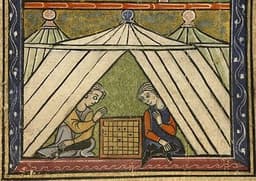
Joscelin II of Edessa
Emperor · Medieval
41.2Total
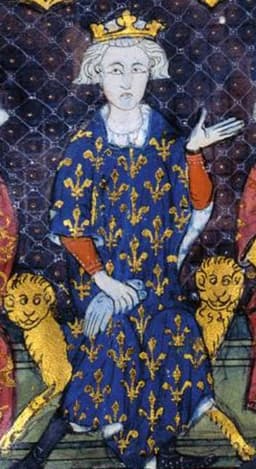
Philip IV of France
Emperor · Medieval
56.4Total
Basic Information
Born
1113
1268
Died
1159
1314
Era
Medieval
Medieval
Nationality
County of Edessa
France
Occupation
Emperor
Emperor
Civilization
Western
Western
Score Comparison
Military (10%)
50.0
38.3
Political (20%)
32.1
45.0
Influence (20%)
45.5
60.0
Legacy (20%)
36.7
56.0
Leadership (15%)
39.0
72.0
Strategy (15%)
50.0
60.0
TOTAL
41.2
56.4
Joscelin II of Edessa — Complete Timeline
1144 AD
Loss of EdessaWar
Joscelin II was absent from Edessa when Zengi besieged the city. The city fell after a short siege, marking the first major Crusader territory loss and triggering the Second Crusade.
CrusadesSiegeEdessaZengi
Impact: regionaltragic
1148 AD
Second Crusade CampaignWar◆ Major
Joscelin II participated in the Second Crusade's failed siege of Damascus. The campaign's failure further weakened the Crusader states and left Edessa's remnants vulnerable to Muslim reconquest.
CrusadesSecond CrusadeDamascus
Impact: regionaltragic
1150 AD
Capture and BlindingWar◆ Major
Joscelin II was captured by Nur ad-Din's forces while traveling in disguise. He was imprisoned in Aleppo and blinded, ending his effective rule and leading to the final loss of the County of Edessa's remaining territories.
CrusadesCaptureNur ad-DinEdessa
Impact: regionaltragic
1159 AD
Death in PrisonOther
Joscelin II died in captivity in Aleppo after nine years of imprisonment. His death marked the end of the County of Edessa as a Crusader state, with its lands absorbed by Nur ad-Din's expanding realm.
CrusadesDeathEdessa
Impact: regionaltragic
Philip IV of France — Complete Timeline
1302 AD
Conflict with Pope Boniface VIIIPolitical Action◆ Major
Philip IV clashed with Pope Boniface VIII over taxation of the clergy and royal authority. Boniface issued the bull Unam Sanctam, asserting papal supremacy. Philip sent agents to arrest the Pope at Anagni. Boniface died shortly after, and Philip secured a more compliant pope.
PapacyConflictUnam Sanctam
Impact: globaldestructive
Convocation of the Estates GeneralPolitical Action◆ Major
Philip IV convened the first Estates General of France to gain support against Pope Boniface VIII. The assembly included clergy, nobles, and commoners. This marked the first time the three estates were formally summoned together in French history.
Estates GeneralAssemblyFrance
Impact: national
1307 AD
Suppression of the Knights TemplarPolitical Action◆ Major
Philip IV ordered the mass arrest of Knights Templar in France on charges of heresy, blasphemy, and sodomy. Templars were tortured to extract confessions. The order was dissolved by Pope Clement V in 1312, and its wealth was seized by the French crown.
Knights TemplarPersecutionHeresy
Impact: globaldestructive
1308 AD
Marriage of Isabella of FrancePolitical Action
Philip IV arranged the marriage of his daughter Isabella to King Edward II of England. The marriage was intended to strengthen the alliance between France and England. Isabella later became a key figure in the deposition of Edward II.
MarriageAllianceEngland
Impact: regional
Expert Analysis
Origins
Joscelin II of Edessa was born around 1130 into the ruling family of the County of Edessa, a Crusader state founded during the First Crusade. His father, Joscelin I, had been a capable ruler, but Joscelin II inherited a vulnerable territory surrounded by Muslim powers. He received typical noble education focused on military skills and governance, but lacked the political acumen of his predecessors. Philip IV of France, born in 1268 in Fontainebleau, was the son of Philip III and Isabella of Aragon. He grew up in the Capetian court, absorbing notions of royal authority and centralized power. His nickname 'the Fair' referred to his appearance, not his policies. Unlike Joscelin, Philip benefited from a stable kingdom and a strong feudal system.
Rise to Power
Joscelin II became count of Edessa in 1131 after his father's death. His early rule was marked by internal dissent and external threats. He failed to secure alliances with neighboring Crusader states, and his absence during Zengi's siege of Edessa in 1144 led to the city's fall. This disaster triggered the Second Crusade (1147-1149), but Joscelin's participation in the failed siege of Damascus further eroded his credibility. Philip IV ascended to the French throne in 1285 at age 17. He quickly asserted authority by surrounding himself with legists—lawyers who championed royal power. His reign saw the expansion of royal domain and the subjugation of powerful vassals. Key turning points included his conflict with Pope Boniface VIII, which he won through political maneuvering and the convocation of the Estates General in 1302.
Leadership & Governance
Joscelin II's leadership was reactive and indecisive. He scored 39.0 in leadership and 32.1 in political skill. His governance of Edessa relied on feudal structures but failed to maintain defensive readiness. He alienated key allies like Raymond of Antioch and did not fortify his borders effectively. In contrast, Philip IV scored 72.0 in leadership and 45.0 in political skill. He centralized French administration, created a professional bureaucracy, and manipulated the Estates General to legitimize his policies. His destruction of the Knights Templar (arrests in 1307) demonstrated his ruthless efficiency: he used legal processes to confiscate their wealth and eliminate a rival power. While Joscelin's realm shrank, Philip's expanded royal authority.
Triumph & Tragedy
Joscelin's greatest triumph was surviving initial attacks and maintaining Edessa's existence for over a decade after the fall of the city itself. However, his tragedies dominate: the loss of Edessa in 1144, his capture and blinding by Nur ad-Din in 1150, and his death in prison in 1159. The County of Edessa was permanently extinguished. Philip IV's triumphs include the suppression of the Templars (1312), the humiliation of Pope Boniface VIII (1303), and the acquisition of territories like Champagne. His tragedy was the failure of his dynastic ambitions: his three sons died without male heirs, ending the direct Capetian line and leading to the Hundred Years' War. Philip's short-term gains came at long-term cost.
Character & Destiny
Joscelin II was described by contemporaries as impulsive and careless. His decision to travel in disguise through enemy territory led to his capture. His character—scoring 50.0 in strategy—was ill-suited for the precarious politics of the Crusader states. Philip IV was cold, calculating, and secretive. He relied on advisers like Guillaume de Nogaret to execute his plans. His character shaped a destiny of consolidation and conflict: he expanded royal power but sowed seeds of future instability. Philip's score of 60.0 in influence reflects his ability to reshape institutions.
Legacy
Joscelin II's legacy is negative: he is remembered as the count who lost Edessa, the first Crusader state to fall. The event galvanized Muslim unity and weakened Crusader morale. His total score of 41.2 reflects limited long-term impact. Philip IV's legacy is more complex. He strengthened the French monarchy, established the Estates General, and broke papal supremacy in France. However, his persecution of the Templars and manipulation of the Church set precedents for state control. His score of 56.4 shows moderate influence, but his actions contributed to the Avignon Papacy and the decline of papal authority. Both figures illustrate medieval power dynamics, but Philip's impact on state-building was more enduring.
Conclusion
While Joscelin II's failures were consequential for the Crusader states, Philip IV's influence on the development of the modern state was far greater. Philip scored 56.4 overall compared to Joscelin's 41.2, a gap of 15.2 points. Philip's political innovations—the Estates General, royal bureaucracy, and subordination of the Church—outlasted him and shaped France for centuries. Joscelin's reign ended in disaster with no positive legacy. Therefore, Philip IV of France had significantly greater historical impact.
Rankings
🥇
Philip IV of FranceLeader
Mil: 38.3Pol: 45.0Inf: 60.0
56.4
🥈
Joscelin II of Edessa
Mil: 50.0Pol: 32.1Inf: 45.5
41.2
+15.2 behind
How This Comparison Works
Algorithm
Each figure is scored on 6 dimensions (0—100 scale) based on structured historical data: Military (10%), Political (20%), Influence (20%), Legacy (20%), Leadership (15%), Strategy (15%). The weighted total produces the final ranking.
Data Sources
Scores are computed from structured sub-indicators in the database. Scale factors adjust for era (Ancient ×0.85, Modern ×1.0) and civilization size (Eastern ×1.05, Other ×0.80) to account for differences in population and military scale.
Maximum 3 Figures
Comparisons are limited to 2—3 figures to ensure readability and statistical meaningfulness.
Error Margins
±5 points per dimension — Sub-scores are derived from historical records with inherent uncertainty. Two figures within 5 points on a dimension should be considered roughly equivalent in that area.
Total Score Accuracy
±3 points overall — The weighted combination of 6 dimensions produces a total score with approximately ±3 points of uncertainty. Differences of less than 3 points are not statistically significant— the figures are effectively tied.
Known Limitations
- Historical records are incomplete and uneven across civilizations
- Figures from oral-tradition societies may be underrepresented
- Occupation labels can misclassify multi-role figures
- Scores measure capability and impact, not moral character
- Quantitative scoring is a comparison tool, not absolute truth
Capability Radar
Military (10%) — Battles & Warfare
Battles
10
30
Win Rate
5
40
Expansion
0
30
Political (20%) — Governance & Reform
Reform
5
70
Diplomacy
15
65
Economy
10
60
Influence (20%) — Cultural & Global Reach
Cultural
5
50
Global
5
50
Legacy (20%) — Historical Impact
Historical
15
65
Longevity
5
55
Leadership (15%) — Power & Stability
Tenure
20
75
Stability
5
55
Strategy (15%) — Tactics & Innovation
Strategy
10
40
Tactics
10
35
Reform
0
45
Similar Comparisons
Comments & Discussion
No comments yet. Be the first to share your thoughts!