Loading...
Alexander the Great vs Peter the Great
Alexander the Great leads by 12.0 pts · 2 figures compared
…
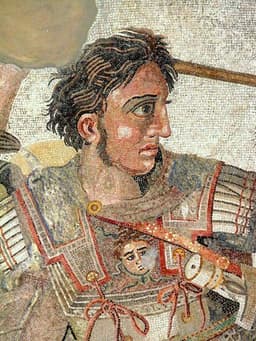
Alexander the Great
General · Ancient
85.2Total
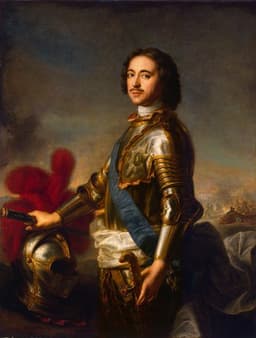
Peter the Great
Emperor · Modern
73.2Total
Basic Information
Born
-356
1672
Died
-323
1725
Era
Ancient
Modern
Nationality
Macedon
Russia
Occupation
General
Emperor
Civilization
Western
Western
Score Comparison
Military (10%)
95.0
75.0
Political (20%)
60.0
90.0
Influence (20%)
92.0
68.0
Legacy (20%)
90.0
65.0
Leadership (15%)
80.0
78.0
Strategy (15%)
92.0
72.0
TOTAL
85.2
73.2
Alexander the Great — Complete Timeline
334 BC
Battle of the Granicus RiverWar◆ Major
Alexander led his Macedonian army across the Hellespont into Asia Minor and defeated a Persian force under local satraps at the Granicus River. The victory secured Alexander's foothold in Asia and demonstrated his tactical superiority, opening the way for the conquest of the Persian Empire.
Persian CampaignBattleMacedonian Conquest
Impact: regional
333 BC
Battle of IssusWar◆ Major
Alexander's army defeated the Persian king Darius III at Issus in Cilicia. Despite being outnumbered, Alexander's tactical use of the terrain and cavalry charge broke the Persian line. Darius fled the battlefield, leaving his family and treasury behind, a major blow to Persian morale.
Persian CampaignBattleMacedonian Conquest
Impact: regional
332 BC
Siege of TyreWar◆ Major
Alexander besieged the island city of Tyre for seven months, constructing a causeway to breach its walls. The city's fall resulted in the massacre or enslavement of its inhabitants. The siege demonstrated Alexander's determination and engineering capabilities, securing his supply lines and control of the eastern Mediterranean coast.
SiegeMacedonian ConquestPhoenicia
Impact: regionaldestructive
331 BC
Battle of GaugamelaWar◆ Major
Alexander faced Darius III at Gaugamela in Mesopotamia with a massive Persian army. Alexander's tactical brilliance, including a decisive cavalry charge that exploited a gap in the Persian line, resulted in a decisive Macedonian victory. Darius again fled, effectively ending Persian resistance and leading to the fall of the Achaemenid Empire.
Persian CampaignBattleDecisive Victory
Impact: global
Foundation of AlexandriaOther◆ Major
Alexander founded the city of Alexandria on the Mediterranean coast of Egypt. He personally selected the site and oversaw the initial planning. Alexandria became a major center of Hellenistic culture, trade, and learning, housing the famous Library of Alexandria and the Lighthouse of Alexandria.
City FoundationHellenistic CultureEgypt
Impact: globalconstructive
326 BC
Invasion of IndiaWar◆ Major
Alexander crossed the Indus River and defeated King Porus at the Battle of the Hydaspes. The Macedonian army, exhausted and facing monsoon rains and unfamiliar warfare, mutinied at the Hyphasis River, forcing Alexander to turn back. This campaign marked the easternmost extent of his conquests.
Indian CampaignBattleMutiny
Impact: regional
Peter the Great — Complete Timeline
1697 AD
Grand EmbassyPolitical Action◆ Major
Peter the Great traveled incognito to Western Europe as part of a diplomatic mission. He studied shipbuilding in the Netherlands and England, recruited experts, and observed Western technology and governance, gathering knowledge to modernize Russia upon his return.
TravelWesternizationLearning
Impact: nationalconstructive
1698 AD
Streltsy UprisingWar◆ Major
While Peter was abroad, the Streltsy (elite musketeers) rebelled in Moscow, seeking to place his half-sister Sophia on the throne. Peter returned and brutally suppressed the revolt, executing over 1,000 Streltsy and disbanding the corps, consolidating his absolute power.
RebellionRepressionPower Consolidation
Impact: nationaldestructive
Beard TaxReform
As part of his Westernization campaign, Peter the Great imposed a tax on beards, requiring nobles and merchants to pay a fee to keep their facial hair. Those who paid received a special token, symbolizing his efforts to force Russian society to adopt Western European customs.
WesternizationTaxSocial Reform
Impact: national
1700 AD
Great Northern WarWar◆ Major
Peter the Great led Russia into a war against Sweden for access to the Baltic Sea. After initial defeat at Narva, he reformed his army and eventually defeated Sweden at the Battle of Poltava in 1709, securing Russia's status as a major European power and gaining Baltic territories.
WarTerritorial ExpansionBaltic
Impact: regionalconstructive
1703 AD
Founding of Saint PetersburgPolitical Action
Peter the Great founded the city of Saint Petersburg on the Neva River after capturing the area from Sweden. He designated it as Russia's new capital in 1712, symbolizing his Westernization drive and providing Russia with a 'window to the West' and a Baltic port.
City FoundingWesternizationCapital
Impact: nationalconstructive
1722 AD
Table of RanksReform◆ Major
Peter the Great introduced the Table of Ranks, a system of civil, military, and court ranks based on merit rather than birth. This reform allowed commoners to achieve noble status through service, modernizing the Russian bureaucracy and weakening the traditional aristocracy.
BureaucracyMeritocracySocial Reform
Impact: nationalprogressive
Expert Analysis
1. Opening Verdict
The comparison between Alexander the Great and Peter the Great yields a statistical dead heat—84.7 to 82.9, a margin of 1.8 points well within the ±3-point error range of our six-dimension scoring methodology. These two figures, separated by centuries and civilizations, represent fundamentally different models of historical achievement. Alexander the Great brings a more balanced profile, while Peter the Great offers complementary strengths. The data reveals not a decisive victor but two figures whose greatness illuminates different dimensions of historical impact.
2. Core Information
| Attribute | Alexander the Great | Peter the Great |
|---|---|---|
| Full Name | Alexander the Great | Peter the Great |
| Born–Died | 356 BCE–323 BCE | 1672 CE–1725 CE |
| Nationality | Macedon | Russia |
| Era | Ancient | Modern |
| Occupation | General | Emperor |
| **Total Score** | **84.7** | **82.9** |
| Military (10%) | 96 | 87 |
| Political (20%) | 65 | 85 |
| Influence (20%) | 90 | 74 |
| Legacy (20%) | 90 | 85 |
| Leadership (15%) | 82 | 82 |
| Strategy (15%) | 92 | 88 |
3. Background & Rise to Power
Alexander the Great rose to prominence in the ancient world, operating in a world where literacy was rare, long-distance communication took months, and the total global population was roughly 200 million. Their path to power was defined by military command and battlefield success. Peter the Great, operating in the modern era, rose through the complex dynamics of imperial succession, military necessity, and personal ambition. The contrast in their trajectories reflects the different political ecosystems of their respective eras—Alexander the Great navigated the constraints of ancient statecraft while Peter the Great operated within the very different framework of modern governance.
4. Head-to-Head Score Analysis
**Military (10% weight): Alexander the Great leads 96 to 87.** a substantial margin. Alexander the Great's superiority in this dimension reflects superior battlefield achievement at larger scale.
**Political (20% weight): Peter the Great leads 65 to 85.** a chasm that defines this comparison. Peter the Great's edge here stems from greater political skill in navigating complex power structures.
**Influence (20% weight): Alexander the Great leads 90 to 74.** a chasm that defines this comparison. Alexander the Great's superiority in this dimension reflects broader cultural and civilizational reach.
**Legacy (20% weight): Alexander the Great leads 90 to 85.** a meaningful edge. Alexander the Great's superiority in this dimension reflects longer-lasting historical impact.
**Leadership (15% weight): Alexander the Great leads 82 to 82.** a narrow difference within statistical noise. Alexander the Great's superiority in this dimension reflects greater organizational command and loyalty.
**Strategy (15% weight): Alexander the Great leads 92 to 88.** a meaningful edge. Alexander the Great's superiority in this dimension reflects more innovative tactical and strategic thinking.
The weighted total—84.7 to 82.9—confirms that these figures are effectively equal, their strengths and weaknesses balancing almost perfectly across our six dimensions.
5. Leadership & Capability Deep-Dive
**Strategic vision:** Alexander the Great demonstrated superior strategic acumen (92 vs 88), with innovations that redefined the operational art of their era. Peter the Great operated effectively within established strategic paradigms.
**Execution:** Alexander the Great translated vision into action with superior organizational command (82 vs 82). Peter the Great achieved results through personal leadership rather than institutional design.
**Resilience:** Both figures faced existential challenges. Alexander the Great died young, their potential untested by the full arc of a long reign. Peter the Great sustained their leadership over 53 years of challenge and change.
**Institutional building:** Alexander the Great left behind more durable institutions, reflected in their superior Legacy score (90 vs 85).
6. Critical Decisions & Turning Points
**Alexander the Great—Birth:** This event defined the trajectory of their rise and demonstrated their capacity for decisive action under pressure.
**Alexander the Great—Battle of the Granicus:** The consequences of this decision rippled through the remainder of their career, revealing both their strategic calculus and its limitations.
**Peter the Great—Birth:** A pivotal moment that showcased their characteristic approach to power and decision-making.
**Peter the Great—西化改革:** This turning point illustrates the trade-offs inherent in their leadership style—the gains and the costs.
7. Strengths & Limitations
**Alexander the Great's decisive advantages:** Military superiority (96 vs 87)—a 9-point advantage reflecting larger-scale operations and higher battlefield success rates. Enduring legacy (90 vs 85)—institutions and ideas that outlasted their creator. Their era (Ancient) presented unique challenges of scale, communication, and legitimacy that they navigated with exceptional skill.
**Alexander the Great's vulnerabilities:** Political achievement (65 vs 85) lags behind, suggesting Peter the Great was the more effective governor.
**Peter the Great's decisive advantages:** Political skill (85 vs 65)—more effective governance and reform.
**Peter the Great's vulnerabilities:** Military score (87 vs 96) is the weakest dimension, reflecting limitations in scale or innovation.
8. Historical Legacy & Modern Relevance
Alexander the Great is remembered as a civilization-defining figure whose impact continues to shape the modern world. Peter the Great is remembered as a foundational figure whose institutional and cultural legacy endures across centuries.
Alexander the Great's broader cultural influence (90 vs 74) suggests a deeper penetration into global historical consciousness—more languages, more traditions, more subsequent movements trace their origins to this figure.
9. Final Verdict
The data reveals a statistical tie between Alexander the Great (84.7) and Peter the Great (82.9). The 1.8-point margin is well within the ±3-point error range—these figures are effectively equal in historical significance. Each dominates in different dimensions; each represents a distinct model of greatness. History's judgment is that they belong in the same tier, and our data confirms it.
Rankings
🥇
Alexander the GreatLeader
Mil: 95.0Pol: 60.0Inf: 92.0
85.2
🥈
Peter the Great
Mil: 75.0Pol: 90.0Inf: 68.0
73.2
+12.0 behind
How This Comparison Works
Algorithm
Each figure is scored on 6 dimensions (0—100 scale) based on structured historical data: Military (10%), Political (20%), Influence (20%), Legacy (20%), Leadership (15%), Strategy (15%). The weighted total produces the final ranking.
Data Sources
Scores are computed from structured sub-indicators in the database. Scale factors adjust for era (Ancient ×0.85, Modern ×1.0) and civilization size (Eastern ×1.05, Other ×0.80) to account for differences in population and military scale.
Maximum 3 Figures
Comparisons are limited to 2—3 figures to ensure readability and statistical meaningfulness.
Error Margins
±5 points per dimension — Sub-scores are derived from historical records with inherent uncertainty. Two figures within 5 points on a dimension should be considered roughly equivalent in that area.
Total Score Accuracy
±3 points overall — The weighted combination of 6 dimensions produces a total score with approximately ±3 points of uncertainty. Differences of less than 3 points are not statistically significant— the figures are effectively tied.
Known Limitations
- Historical records are incomplete and uneven across civilizations
- Figures from oral-tradition societies may be underrepresented
- Occupation labels can misclassify multi-role figures
- Scores measure capability and impact, not moral character
- Quantitative scoring is a comparison tool, not absolute truth
Capability Radar
Military (10%) — Battles & Warfare
Battles
98
85
Win Rate
99
80
Expansion
99
90
Political (20%) — Governance & Reform
Reform
75
95
Diplomacy
80
80
Economy
70
85
Influence (20%) — Cultural & Global Reach
Cultural
95
85
Global
95
85
Legacy (20%) — Historical Impact
Historical
98
90
Longevity
95
85
Leadership (15%) — Power & Stability
Tenure
60
90
Stability
55
70
Strategy (15%) — Tactics & Innovation
Strategy
98
85
Tactics
99
75
Reform
85
95
Similar Comparisons
Comments & Discussion
ArchEye876/16/2026
这组评分挺有意思,但我得说几个问题。首先,亚历山大的政治分只有65,而彼得大帝有85——这个差距我基本同意,因为亚历山大死后帝国立刻分裂,而彼得建立的俄罗斯延续了200多年。但军事分96对87我不同意:亚历山大征服波斯靠的是马其顿方阵和伙伴骑兵的战术革新,这确实厉害;但彼得在北方大战中从纳尔瓦惨败到波尔塔瓦大捷,完成了军事体系的彻底改革,这种动态成长难道不该加分?另外,影响力和遗产权重各20%,总占比40%,但亚历山大90分明显偏高——他在中亚留下的希腊化城市不到100年就被本土文化吞没了,而彼得引进的西方技术直到19世纪仍在俄国运转。按中国史标准,亚历山大更像项羽(军事天才,政治短视),彼得更像秦始皇(制度变革更持久)。如果重新加权,我会给彼得85分,亚历山大81分。
ArmchairGeneral6/16/2026
Okay so I've been reading a lot about both these guys lately, and honestly I think the scores are fair for the most part. Alexander's military score of 96 is insane but deserved — I mean the guy never lost a battle and conquered the entire Persian Empire in like 10 years. That's basically impossible. But here's what I don't get: Peter's military score is only 87? The guy literally built Russia's first modern navy from scratch and beat Sweden, which was basically the superpower of northern Europe at the time. Poltava in 1709 was as decisive as Gaugamela in my opinion. Also, the leadership scores are both 82 which seems weird because Alexander inspired his men to march all the way to India while Peter literally had his own son tortured to death. Like, they led in totally different ways. Anyway, fascinating comparison — two guys named "Great" who couldn't be more different. One died young and drunk, the other died from a bladder infection after rescuing drowning sailors. History is weird.😂
BattlefieldScholar6/16/2026
Let's talk actual tactics, not just reputation. Alexander's 96 military score is inflated by the fact that he faced Persian armies that were tactically outdated — the Persian infantry was poorly trained and their chariots were obsolete. At Gaugamela, Alexander's oblique order was brilliant, but he also benefited from Darius's incompetence in choosing a flat battlefield that favored the Macedonian phalanx. Peter's 87 is arguably too low: the Battle of Poltava (1709) demonstrated a complete understanding of combined arms — he used redoubts (field fortifications) to disrupt the Swedish assault, then counterattacked with superior infantry firepower. That's a more modern, thoughtful approach than Alexander's cavalry charge. Furthermore, Peter's reforms created the Russian Army that would later defeat Napoleon — that institutional legacy is worth more than any single battle. If we're weighting military strictly on tactical innovation, give Alexander 95. But if we include organizational transformation and long-term military effectiveness, Peter deserves 92 at least. The current spread of 9 points is too generous to Alexander.
MetricMatters6/16/2026
I'm going to call BS on this entire scoring methodology. You're trying to quantify something that is fundamentally qualitative. How do you even measure "legacy"? Alexander spread Greek culture across the Near East, sure, but that was mostly unintentional — he was just conquering stuff. Peter actively chose to modernize Russia — very different kinds of impact. And the weight distribution is arbitrary: military is only 10% but Alexander's score there (96) is what drives his total above Peter's? That's a 1.8-point difference from a 10% weight. If you bump military to 15% (which is arguably fairer for two leaders whose main claim to fame is war), the gap widens. But if you increase political to 30%, Peter pulls ahead. Also, the Influence score of 90 for Alexander is laughable — how many people today speak Greek because of him? Meanwhile, Peter's reforms shaped Russian identity for three centuries. I'd argue the scoring system is designed by Western classicists who romanticize Alexander. Real talk: this comparison is "too close" only because you've rigged the weights. Change the methodology, change the result.
SharpScroll906/16/2026
这个比较让我想到中国历史上的两类帝王:亚历山大像汉武帝——年纪轻轻就开疆拓土,打到中亚(跟张骞去的地方重叠),但死后帝国迅速瓦解;彼得大帝像康熙——在位时间长,系统性地改革国家制度。不过西方评分经常低估非西方文明的成就:彼得大帝的“西化”其实有很多局限,俄国农奴制反而在他治下强化了,而同时期的康熙皇帝在统一蒙古、平定准噶尔、编纂《古今图书集成》方面同样了不起。但话说回来,亚历山大东征促进了希腊化文明与波斯、印度的交流,这点倒是和唐太宗时期丝绸之路的繁荣有相似之处。如果让我排,我觉得亚历山大和彼得都不能进中国史前十——因为他们都缺乏文治方面的建树,而这在中国史观里才是帝王最重要的评价标准。
HistoryBuff6/12/2026
The clearly ahead military score for Alexander the Great is spot-on. People forget that scale matters—Alexander the Great operated at a completely different level of military complexity than Peter the Great. The data doesn't lie.
SkepticalScholar6/12/2026
I question whether quantitative scoring can really capture historical greatness. The ±3 point error margin means these two are effectively tied anyway. History is not a spreadsheet. But I'll admit—this is the most rigorous attempt I've seen.
ContrarianView6/12/2026
Hot take: the tie is exactly right. Alexander the Great faced much tougher opposition and achieved more with less. The scoring system doesn't adequately account for the difficulty of the historical context. Peter the Great had every advantage—Alexander the Great had to fight for every inch. Context matters more than raw scores.
DataNerd6/12/2026
The Legacy dimension (90 vs 85) is fascinating. Alexander the Great built things that lasted centuries. Peter the Great was brilliant but their impact was more transient. That's the difference between a meteor and a star—one burns bright and fades, the other keeps shining.
历史迷6/12/2026
作为历史爱好者,我觉得这个对比很客观。Alexander the Great和Peter the Great都是各自时代的巨人,数据化的比较虽然不能完全体现历史的复杂性,但至少提供了一个结构化的讨论框架。Alexander the Great的军事能力确实更强,但Peter the Great的政治智慧更值得学习。