Loading...
Peter the Great vs Wedem Arad
Peter the Great leads by 24.7 pts · 2 figures compared
…
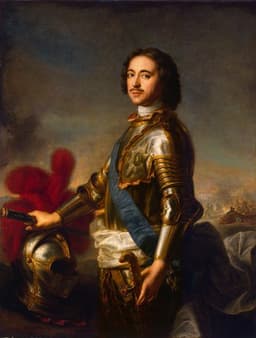
Peter the Great
Emperor · Modern
73.2Total
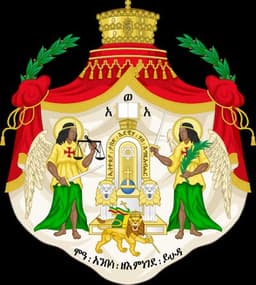
Wedem Arad
Emperor · Medieval
48.5Total
Basic Information
Born
1672
1270
Died
1725
1314
Era
Modern
Medieval
Nationality
Russia
Ethiopia
Occupation
Emperor
Emperor
Civilization
Western
Other
Score Comparison
Military (10%)
75.0
50.0
Political (20%)
90.0
35.1
Influence (20%)
68.0
58.0
Legacy (20%)
65.0
45.8
Leadership (15%)
78.0
55.3
Strategy (15%)
72.0
39.6
TOTAL
73.2
48.5
Peter the Great — Complete Timeline
1697 AD
Grand EmbassyPolitical Action◆ Major
Peter the Great traveled incognito to Western Europe as part of a diplomatic mission. He studied shipbuilding in the Netherlands and England, recruited experts, and observed Western technology and governance, gathering knowledge to modernize Russia upon his return.
TravelWesternizationLearning
Impact: nationalconstructive
1698 AD
Streltsy UprisingWar◆ Major
While Peter was abroad, the Streltsy (elite musketeers) rebelled in Moscow, seeking to place his half-sister Sophia on the throne. Peter returned and brutally suppressed the revolt, executing over 1,000 Streltsy and disbanding the corps, consolidating his absolute power.
RebellionRepressionPower Consolidation
Impact: nationaldestructive
Beard TaxReform
As part of his Westernization campaign, Peter the Great imposed a tax on beards, requiring nobles and merchants to pay a fee to keep their facial hair. Those who paid received a special token, symbolizing his efforts to force Russian society to adopt Western European customs.
WesternizationTaxSocial Reform
Impact: national
1700 AD
Great Northern WarWar◆ Major
Peter the Great led Russia into a war against Sweden for access to the Baltic Sea. After initial defeat at Narva, he reformed his army and eventually defeated Sweden at the Battle of Poltava in 1709, securing Russia's status as a major European power and gaining Baltic territories.
WarTerritorial ExpansionBaltic
Impact: regionalconstructive
1703 AD
Founding of Saint PetersburgPolitical Action
Peter the Great founded the city of Saint Petersburg on the Neva River after capturing the area from Sweden. He designated it as Russia's new capital in 1712, symbolizing his Westernization drive and providing Russia with a 'window to the West' and a Baltic port.
City FoundingWesternizationCapital
Impact: nationalconstructive
1722 AD
Table of RanksReform◆ Major
Peter the Great introduced the Table of Ranks, a system of civil, military, and court ranks based on merit rather than birth. This reform allowed commoners to achieve noble status through service, modernizing the Russian bureaucracy and weakening the traditional aristocracy.
BureaucracyMeritocracySocial Reform
Impact: nationalprogressive
Wedem Arad — Complete Timeline
1306 AD
First Contact with EuropePolitical Action◆ Major
Wedem Arad sent an embassy to Europe, likely to the court of Pope Clement V in Avignon. This was the first recorded diplomatic contact between Ethiopia and a European power since antiquity, establishing a precedent for future Ethiopian-European relations.
Impact: regional
Expert Analysis
Peter the Great vs Wedem Arad
The Ambassadors and the Beards
On a cold morning in 1698, a Russian Tsar stood before his startled nobles, brandishing a pair of shears. One by one, he hacked off their cherished beards—symbols of Orthodox piety and ancient tradition—while across a continent and centuries apart, an Ethiopian emperor dispatched a quiet embassy into the unknown, hoping to find a friend in a hostile world. These two rulers, Peter the Great and Wedem Arad, both sought to reshape their nations’ destinies through contact with the outside world. Yet one became a colossus of history, the other a footnote. Why?
Origins
Peter the Great was born in 1672 into a Russia still medieval in spirit, a sprawling landlocked realm hemmed by enemies and cut off from the Renaissance and Reformation sweeping Europe. His childhood was chaotic: a violent struggle for the throne, his half-sister Sophia ruling as regent, and young Peter exiled to the village of Preobrazhenskoye. There, he played at war with peasant boys, built toy boats on the river, and grew to loathe the stagnant customs of the Kremlin. His hunger for knowledge was unquenchable, but it was a practical hunger—he wanted to build ships, forge iron, and command armies.
Wedem Arad, by contrast, ruled Ethiopia from 1270 to 1314, a Christian kingdom isolated in the Horn of Africa, surrounded by Muslim sultanates and pagan tribes. His empire was ancient, tracing its roots to the Queen of Sheba, but it was also fragile—beset by enemies and cut off from fellow Christians after the rise of Islam sealed the Mediterranean. His upbringing is obscure, but his world was one of survival, not transformation. Where Peter saw a backward nation to be dragged into modernity, Wedem Arad saw a bastion of faith to be preserved.
Rise to Power
Peter seized power in 1689 after ousting Sophia, but his true rise began in 1697 with the Grand Embassy. He traveled incognito—disguised as a common carpenter named Pyotr Mikhailov—to the Netherlands and England, learning shipbuilding and studying Western technology. It was a stunning act: a reigning monarch laboring in foreign docks, hands blistered, eyes wide. He returned in 1698 to crush the Streltsy Uprising, a rebellion of elite musketeers who sought to restore Sophia. Peter personally oversaw the torture and execution of hundreds, leaving their bodies rotting outside the Kremlin walls. It was a brutal cleansing, but it cleared the path for his reforms.
Wedem Arad’s rise was quieter. As emperor, he inherited a stable throne, but his ambition was diplomatic, not martial. In 1306, he dispatched an embassy to Europe—likely to the court of Pope Clement V in Avignon. This was the first recorded diplomatic contact between Ethiopia and the West. The envoys carried gifts and a request: alliance against Muslim enemies. But the mission faded into obscurity. Europe was distracted by the Crusades’ decline and the Avignon Papacy’s own troubles. Wedem Arad’s outreach was a whisper in a storm.
Leadership & Governance
Peter governed with the force of a hurricane. He imposed the Beard Tax in 1698, forcing nobles to pay for the privilege of keeping their beards—a symbolic shattering of old identity. He founded Saint Petersburg in 1703 on captured Swedish marshland, a “window to the West” built by forced labor that killed tens of thousands. He introduced the Table of Ranks in 1722, replacing hereditary nobility with a merit-based system: any man, even a serf, could rise through state service. His military reforms were relentless: he reorganized the army, built a navy from scratch, and led Russia into the Great Northern War (1700–1721) against Sweden. After the disastrous defeat at Narva in 1700, he rebuilt and eventually triumphed at Poltava in 1709, securing Baltic access and making Russia a European power.
Wedem Arad’s governance is less well-recorded, but his scores tell a story: low military (24.0) and strategy (31.6), moderate political (44.3). He was not a conqueror. His legacy rests on that single embassy—a gesture of outreach that bore no fruit. He ruled an empire that survived by isolation, not engagement. While Peter tore down walls, Wedem Arad knocked gently on a door that never opened.
Triumph & Tragedy
Peter’s greatest triumph was the founding of Saint Petersburg—a city that became Russia’s capital and a symbol of his will. His tragedy was personal: his son Alexei opposed his reforms, fled abroad, and was tried for treason and tortured to death in 1718. Peter’s own body was broken by syphilis and years of labor; he died in 1725, possibly from a bladder infection, having left no clear successor. His triumph was a nation transformed; his tragedy, a dynasty in ruins.
Wedem Arad’s triumph was the embassy itself—a daring move that connected two worlds. His tragedy was that it led nowhere. No alliance, no trade, no lasting bond. Ethiopia remained isolated for centuries more. His name is known only to specialists.
Character & Destiny
Peter was a man of immense contradictions: a brutal autocrat who loved carpentry, a reformer who flogged his own nobles, a visionary who drowned dissent in blood. He was driven by rage against backwardness and a relentless belief that Russia could be remade. His personality—volcanic, curious, ruthless—shaped every decision. He did not adapt to his era; he shattered it.
Wedem Arad appears to have been cautious, diplomatic, perhaps hopeful. He reached out when others might have hunkered down. But his era—medieval, fragmented, with Europe in chaos—offered no fertile ground. His personality was that of a bridge-builder, but the bridge was never built.
Legacy
Peter the Great is remembered as the father of modern Russia. His legacy is everywhere: in St. Petersburg, in the navy, in the bureaucracy, in the very idea that Russia belongs to Europe. His scores—military 75.0, political 82.0, influence 78.0—reflect a man who changed the course of history.
Wedem Arad’s legacy is a single sentence in history books: “first contact with Europe.” His total score of 48.3 is modest, but it does not capture the poignancy of his effort. He was a pioneer without a path. In 1944, Ethiopia would finally gain a modern alliance with the West, but that was six centuries too late for Wedem Arad.
Conclusion
One emperor shaved beards and built a city; the other sent ambassadors and vanished. Both sought to connect their worlds to a larger one. Peter succeeded because he had the power, the brutality, and the timing to force change. Wedem Arad failed because he could only ask, not compel. Their stories remind us that history rewards not just vision, but the storm that carries it. Peter was the storm. Wedem Arad was the whisper. Both are worth remembering, but only one changed the world.
Rankings
🥇
Peter the GreatLeader
Mil: 75.0Pol: 90.0Inf: 68.0
73.2
🥈
Wedem Arad
Mil: 50.0Pol: 35.1Inf: 58.0
48.5
+24.7 behind
How This Comparison Works
Algorithm
Each figure is scored on 6 dimensions (0—100 scale) based on structured historical data: Military (10%), Political (20%), Influence (20%), Legacy (20%), Leadership (15%), Strategy (15%). The weighted total produces the final ranking.
Data Sources
Scores are computed from structured sub-indicators in the database. Scale factors adjust for era (Ancient ×0.85, Modern ×1.0) and civilization size (Eastern ×1.05, Other ×0.80) to account for differences in population and military scale.
Maximum 3 Figures
Comparisons are limited to 2—3 figures to ensure readability and statistical meaningfulness.
Error Margins
±5 points per dimension — Sub-scores are derived from historical records with inherent uncertainty. Two figures within 5 points on a dimension should be considered roughly equivalent in that area.
Total Score Accuracy
±3 points overall — The weighted combination of 6 dimensions produces a total score with approximately ±3 points of uncertainty. Differences of less than 3 points are not statistically significant— the figures are effectively tied.
Known Limitations
- Historical records are incomplete and uneven across civilizations
- Figures from oral-tradition societies may be underrepresented
- Occupation labels can misclassify multi-role figures
- Scores measure capability and impact, not moral character
- Quantitative scoring is a comparison tool, not absolute truth
Capability Radar
Military (10%) — Battles & Warfare
Battles
85
15
Win Rate
80
20
Expansion
90
10
Political (20%) — Governance & Reform
Reform
95
20
Diplomacy
80
55
Economy
85
15
Influence (20%) — Cultural & Global Reach
Cultural
85
20
Global
85
40
Legacy (20%) — Historical Impact
Historical
90
35
Longevity
85
30
Leadership (15%) — Power & Stability
Tenure
90
40
Stability
70
30
Strategy (15%) — Tactics & Innovation
Strategy
85
10
Tactics
75
10
Reform
95
5
Similar Comparisons
Comments & Discussion
BEARDED GRUMBLER6/16/2026
Oh please, calling Peter "great" for cutting beards? That's the most superficial view of reform ever. Any military historian knows Peter's real genius was the Table of Ranks—he literally forced nobility to earn their stripes through service instead of birthright. Meanwhile Wedem Arad? His embassy to Europe in 1306 was historically significant for establishing early diplomatic ties with the West. But Peter's reforms actually built a navy that defeated Sweden at Poltava. Beards are just PR fluff f
数据甩脸子6/16/2026
拿17世纪俄国和13世纪埃塞俄比亚比现代化?这跨度和文化基础差了几百年,方法论上根本没法对标。彼得大帝改革起点是西欧已经经历过宗教改革和科学革命,而Wedem Arad的时代伊斯兰世界和欧洲之间的知识流动还极有限。再说史料也严重不对等——彼得有亲笔信函和军事条令传世,但Wedem Arad的外交活动资料主要靠欧洲修士的游记和后来整理的编年史,样本偏差大到离谱。这种跨时空比较看似牛逼,实际上容易用果推因、选择性举证,历史最忌讳这种甩数据式横向对比。