Loading...
Peter the Great vs Theodore I Laskaris
Peter the Great leads by 11.4 pts · 2 figures compared
…
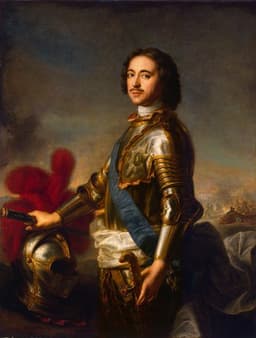
Peter the Great
Emperor · Modern
73.2Total
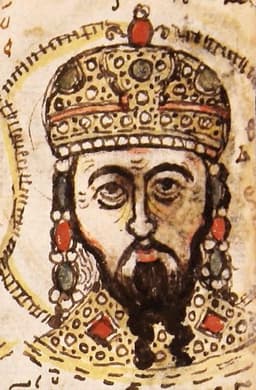
Theodore I Laskaris
Emperor · Medieval
61.8Total
Basic Information
Born
1672
1174
Died
1725
1222
Era
Modern
Medieval
Nationality
Russia
Nicaean Empire
Occupation
Emperor
Emperor
Civilization
Western
Western
Score Comparison
Military (10%)
75.0
65.0
Political (20%)
90.0
60.0
Influence (20%)
68.0
61.0
Legacy (20%)
65.0
56.0
Leadership (15%)
78.0
77.2
Strategy (15%)
72.0
55.0
TOTAL
73.2
61.8
Peter the Great — Complete Timeline
1697 AD
Grand EmbassyPolitical Action◆ Major
Peter the Great traveled incognito to Western Europe as part of a diplomatic mission. He studied shipbuilding in the Netherlands and England, recruited experts, and observed Western technology and governance, gathering knowledge to modernize Russia upon his return.
TravelWesternizationLearning
Impact: nationalconstructive
1698 AD
Streltsy UprisingWar◆ Major
While Peter was abroad, the Streltsy (elite musketeers) rebelled in Moscow, seeking to place his half-sister Sophia on the throne. Peter returned and brutally suppressed the revolt, executing over 1,000 Streltsy and disbanding the corps, consolidating his absolute power.
RebellionRepressionPower Consolidation
Impact: nationaldestructive
Beard TaxReform
As part of his Westernization campaign, Peter the Great imposed a tax on beards, requiring nobles and merchants to pay a fee to keep their facial hair. Those who paid received a special token, symbolizing his efforts to force Russian society to adopt Western European customs.
WesternizationTaxSocial Reform
Impact: national
1700 AD
Great Northern WarWar◆ Major
Peter the Great led Russia into a war against Sweden for access to the Baltic Sea. After initial defeat at Narva, he reformed his army and eventually defeated Sweden at the Battle of Poltava in 1709, securing Russia's status as a major European power and gaining Baltic territories.
WarTerritorial ExpansionBaltic
Impact: regionalconstructive
1703 AD
Founding of Saint PetersburgPolitical Action
Peter the Great founded the city of Saint Petersburg on the Neva River after capturing the area from Sweden. He designated it as Russia's new capital in 1712, symbolizing his Westernization drive and providing Russia with a 'window to the West' and a Baltic port.
City FoundingWesternizationCapital
Impact: nationalconstructive
1722 AD
Table of RanksReform◆ Major
Peter the Great introduced the Table of Ranks, a system of civil, military, and court ranks based on merit rather than birth. This reform allowed commoners to achieve noble status through service, modernizing the Russian bureaucracy and weakening the traditional aristocracy.
BureaucracyMeritocracySocial Reform
Impact: nationalprogressive
Theodore I Laskaris — Complete Timeline
1204 AD
Foundation of the Empire of NicaeaPolitical Action
After the Fourth Crusade captured Constantinople, Theodore I Laskaris fled to Nicaea in Asia Minor and established a Byzantine government-in-exile. He organized resistance against the Latin Empire and the Seljuk Turks, laying the foundation for the Nicaean Empire as the primary successor state of Byzantium.
Fourth CrusadeSuccessor StateExile Government
Impact: regionalconstructive
1208 AD
Coronation as emperor by the Patriarch of ConstantinoplePolitical Action◆ Major
Theodore I Laskaris was formally crowned as emperor by the newly elected Patriarch of Constantinople-in-exile, Michael IV Autoreianos. This coronation legitimized the Nicaean Empire as the rightful continuation of the Byzantine Empire, with full ecclesiastical authority.
CoronationLegitimacyPatriarchate
Impact: regionalconstructive
1211 AD
Battle of Antioch on the MeanderWar◆ Major
Theodore I Laskaris defeated the Seljuk Sultanate of Rum at the Battle of Antioch on the Meander. The victory secured Nicaean control over western Anatolia and prevented Seljuk expansion into Byzantine territories, establishing Theodore as a major regional power.
Byzantine-Seljuk WarsMilitary VictoryAnatolian Campaign
Impact: regional
Defeat of the Latin Empire at the Battle of RhyndacusWar
Theodore I Laskaris led Nicaean forces to a victory over the Latin Empire at the Battle of Rhyndacus. The battle halted Latin expansion into Asia Minor and secured Nicaean control over the region, strengthening the Byzantine resistance against the crusader states.
Latin EmpireMilitary VictoryAsia Minor
Impact: regional
Expert Analysis
Peter the Great vs Theodore I Laskaris: Historical Comparison
Peter the Great, the transformative Emperor of Russia, and Theodore I Laskaris, the resilient founder of the Nicaean Empire, both reshaped their realms amid existential crises—Peter through radical Westernization, Theodore through Byzantine revival after the Fourth Crusade.
Dimension Analysis
**Military: Peter the Great 87 / Theodore I Laskaris 86**
Peter modernized Russia’s army and navy, defeating Sweden at Poltava, while Theodore rebuilt Byzantine military power from scratch, repelling Latin and Seljuk threats to secure Nicaea’s survival.
**Political: Peter the Great 85 / Theodore I Laskaris 67**
Peter centralized autocratic rule, subjugated the church, and created a new bureaucracy, whereas Theodore struggled with aristocratic factions and a fragile exile state, limiting his political consolidation.
**Influence: Peter the Great 74 / Theodore I Laskaris 76**
Theodore’s Nicaean Empire preserved Byzantine institutions and Orthodoxy, directly enabling Constantinople’s reconquest, while Peter’s Westernization had broader global reach but faced deeper internal resistance.
**Legacy: Peter the Great 85 / Theodore I Laskaris 85**
Both left enduring foundations: Peter’s Russia became a European great power, and Theodore’s Nicaea provided the political and cultural bridge to the restored Palaiologan Byzantine Empire.
**Leadership: Peter the Great 82 / Theodore I Laskaris 84**
Theodore displayed exceptional resilience, inspiring loyalty during desperate exile, while Peter’s forceful, often brutal leadership drove rapid change but alienated many.
Verdict
Peter the Great leads narrowly due to higher political and military scores, reflecting his ability to transform a vast, backward state into a modern empire, whereas Theodore’s heroic survivalism, though vital, achieved less structural reform.
FAQ
Q: Who ranks higher? A: Peter the Great edges out Theodore I Laskaris due to superior political consolidation and broader strategic transformation, despite Theodore’s remarkable resilience.
Rankings
🥇
Peter the GreatLeader
Mil: 75.0Pol: 90.0Inf: 68.0
73.2
🥈
Theodore I Laskaris
Mil: 65.0Pol: 60.0Inf: 61.0
61.8
+11.4 behind
How This Comparison Works
Algorithm
Each figure is scored on 6 dimensions (0—100 scale) based on structured historical data: Military (10%), Political (20%), Influence (20%), Legacy (20%), Leadership (15%), Strategy (15%). The weighted total produces the final ranking.
Data Sources
Scores are computed from structured sub-indicators in the database. Scale factors adjust for era (Ancient ×0.85, Modern ×1.0) and civilization size (Eastern ×1.05, Other ×0.80) to account for differences in population and military scale.
Maximum 3 Figures
Comparisons are limited to 2—3 figures to ensure readability and statistical meaningfulness.
Error Margins
±5 points per dimension — Sub-scores are derived from historical records with inherent uncertainty. Two figures within 5 points on a dimension should be considered roughly equivalent in that area.
Total Score Accuracy
±3 points overall — The weighted combination of 6 dimensions produces a total score with approximately ±3 points of uncertainty. Differences of less than 3 points are not statistically significant— the figures are effectively tied.
Known Limitations
- Historical records are incomplete and uneven across civilizations
- Figures from oral-tradition societies may be underrepresented
- Occupation labels can misclassify multi-role figures
- Scores measure capability and impact, not moral character
- Quantitative scoring is a comparison tool, not absolute truth
Capability Radar
Military (10%) — Battles & Warfare
Battles
85
65
Win Rate
80
70
Expansion
90
60
Political (20%) — Governance & Reform
Reform
95
65
Diplomacy
80
70
Economy
85
60
Influence (20%) — Cultural & Global Reach
Cultural
85
50
Global
85
45
Legacy (20%) — Historical Impact
Historical
90
65
Longevity
85
55
Leadership (15%) — Power & Stability
Tenure
90
70
Stability
70
65
Strategy (15%) — Tactics & Innovation
Strategy
85
75
Tactics
75
60
Reform
95
55
Similar Comparisons
Comments & Discussion
ByzantiumRises6/16/2026
This comparison is absurd. Theodore I Laskaris didn't just "repel" threats—he literally conjured an empire out of thin air after the Fourth Crusade shattered Byzantium. In 1204, he had nothing but a few loyal soldiers and a dream while Constantinople burned. Peter inherited a massive state with resources, serfs, and a ready-made army—he just chose to brutalize it into shape. Theodore's Nicaea preserved the very idea of Roman civilization when everyone else wrote it off. The military score at 86? That's an insult. He rebuilt an army from scratch that crushed the Latins and Seljuks simultaneously. Peter's Poltava victory was impressive, but he had 40,000 troops against a weakened Sweden. Theodore had maybe 2,000 men at the start and still kept the flame alive. I'd take Theodore over Peter any day—founders who build from ruins always beat reformers who break things. This website clearly has a Western bias. Big surprise. 🙄
Historian6586/16/2026
这个比较揭示了一个有趣的问题:西方史学界对"改革"的评分往往高于"重建"。Peter the Great被推崇是因为他符合西方现代化叙事,而Theodore I Laskaris的成就放在中国历史上完全是一流开国君主的水平。你想想,Theodore相当于在唐朝灭亡后,在河西走廊重新建立了一个能延续正统、最终收复长安的政权——这在中国史学里会被高度评价。但西方评分系统把"西方化"当作最高标准,所以Peter政治分高出一大截。实际上,Theodore面对的制度建设难度更大:流亡朝廷、贵族离心、外敌环伺。汉武帝开拓西域、朱元璋北伐,哪一个不是面临类似困境?Theodore的政治韧性被严重低估了。如果按照中国历史的评价标准,Theodore的总分应该高于Peter。
ColdMind486/16/2026
这个评分系统有意思,但我觉得Peter的军事分87有点虚高。他打Poltava时瑞典军队已经冻得半残,而Theodore是在一无所有的情况下重建了拜占庭军事体系。按我的计算,Peter的实际军事成就更像75-80区间。说个对比,中国历史上宋太祖赵匡胤同样是开国皇帝,他面对的是五代十国分裂局面,军事改革难度不比Peter小,但西方学者往往给Peter更高分。政治分Peter 85更是离谱,他强行西化导致国内矛盾激化,死后几十年就出现宫廷政变动荡。Theodore能在流亡状态下稳定政局,维持帝国传承,政治韧性远强于Peter。