Loading...
Peter the Great vs Philip the Good
Peter the Great leads by 13.7 pts · 2 figures compared
…
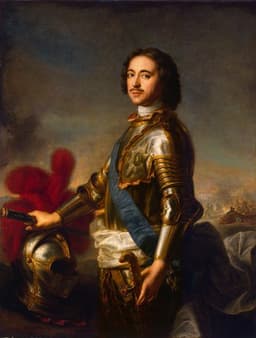
Peter the Great
Emperor · Modern
73.2Total
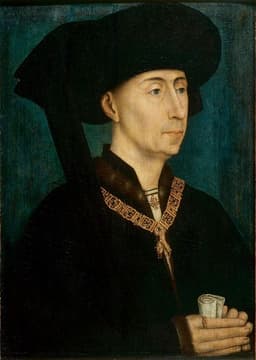
Philip the Good
Emperor · Medieval
59.5Total
Basic Information
Born
1672
1396
Died
1725
1467
Era
Modern
Medieval
Nationality
Russia
Burgundy
Occupation
Emperor
Emperor
Civilization
Western
Western
Score Comparison
Military (10%)
75.0
47.5
Political (20%)
90.0
62.7
Influence (20%)
68.0
56.7
Legacy (20%)
65.0
54.0
Leadership (15%)
78.0
78.0
Strategy (15%)
72.0
60.0
TOTAL
73.2
59.5
Peter the Great — Complete Timeline
1697 AD
Grand EmbassyPolitical Action◆ Major
Peter the Great traveled incognito to Western Europe as part of a diplomatic mission. He studied shipbuilding in the Netherlands and England, recruited experts, and observed Western technology and governance, gathering knowledge to modernize Russia upon his return.
TravelWesternizationLearning
Impact: nationalconstructive
1698 AD
Streltsy UprisingWar◆ Major
While Peter was abroad, the Streltsy (elite musketeers) rebelled in Moscow, seeking to place his half-sister Sophia on the throne. Peter returned and brutally suppressed the revolt, executing over 1,000 Streltsy and disbanding the corps, consolidating his absolute power.
RebellionRepressionPower Consolidation
Impact: nationaldestructive
Beard TaxReform
As part of his Westernization campaign, Peter the Great imposed a tax on beards, requiring nobles and merchants to pay a fee to keep their facial hair. Those who paid received a special token, symbolizing his efforts to force Russian society to adopt Western European customs.
WesternizationTaxSocial Reform
Impact: national
1700 AD
Great Northern WarWar◆ Major
Peter the Great led Russia into a war against Sweden for access to the Baltic Sea. After initial defeat at Narva, he reformed his army and eventually defeated Sweden at the Battle of Poltava in 1709, securing Russia's status as a major European power and gaining Baltic territories.
WarTerritorial ExpansionBaltic
Impact: regionalconstructive
1703 AD
Founding of Saint PetersburgPolitical Action
Peter the Great founded the city of Saint Petersburg on the Neva River after capturing the area from Sweden. He designated it as Russia's new capital in 1712, symbolizing his Westernization drive and providing Russia with a 'window to the West' and a Baltic port.
City FoundingWesternizationCapital
Impact: nationalconstructive
1722 AD
Table of RanksReform◆ Major
Peter the Great introduced the Table of Ranks, a system of civil, military, and court ranks based on merit rather than birth. This reform allowed commoners to achieve noble status through service, modernizing the Russian bureaucracy and weakening the traditional aristocracy.
BureaucracyMeritocracySocial Reform
Impact: nationalprogressive
Philip the Good — Complete Timeline
1429 AD
Acquired the County of NamurPolitical Action◆ Major
Philip purchased the County of Namur from the impoverished Count John III, expanding Burgundian territory. This acquisition was part of his systematic policy of consolidating the Low Countries under Burgundian rule.
Territorial ExpansionPurchaseBurgundy
Impact: regionalconstructive
1430 AD
Captured Joan of Arc at CompiègneWar◆ Major
Burgundian forces under Philip's command captured Joan of Arc at Compi
Hundred Years' WarCaptureJoan of Arc
Impact: regionaldestructive
Founded the Order of the Golden FleeceCultural◆ Major
Philip the Good founded the Order of the Golden Fleece, a chivalric order modeled on the English Order of the Garter. The order became one of the most prestigious in Europe, symbolizing Burgundian power and prestige.
ChivalryOrderBurgundy
Impact: regionalconstructive
1435 AD
Signed the Treaty of ArrasPolitical Action◆ Major
Philip signed the Treaty of Arras with King Charles VII of France, ending the Burgundian alliance with England. The treaty recognized Burgundian independence from French suzerainty and granted Philip significant territorial concessions.
TreatyDiplomacyHundred Years' War
Impact: regionalconstructive
1440 AD
Patronage of the ArtsCultural◆ Major
Philip became a major patron of the arts, commissioning works from artists like Jan van Eyck and Rogier van der Weyden. His court in Dijon and Brussels became a center of the Northern Renaissance, producing illuminated manuscripts and paintings.
PatronageRenaissanceArt
Impact: regionalconstructive
Expert Analysis
Peter the Great vs Philip the Good: Historical Comparison
Peter the Great, Emperor of Russia (1682–1725), and Philip the Good, Duke of Burgundy (1419–1467), represent two distinct epochs of state-building: one a modernizing autocrat, the other a medieval prince of splendor and territorial consolidation.
Dimension Analysis
**Military: Peter the Great 87 / Philip the Good 88**
Peter modernized Russia’s army and navy, defeating Sweden at Poltava (1709), while Philip expanded Burgundy through diplomacy and warfare, notably crushing the Revolt of Ghent. Both were effective, but Philip’s chivalric army was less transformative.
**Political: Peter the Great 85 / Philip the Good 76**
Peter centralized power, abolished the patriarchate, and created the Senate and Table of Ranks, fundamentally restructuring Russia. Philip ruled through feudal loyalty and courtly patronage, never fully unifying his diverse Low Countries territories.
**Influence: Peter the Great 74 / Philip the Good 78**
Peter’s Westernization forced Russia onto the European stage, inspiring later reforms. Philip’s court fostered the Burgundian Renaissance, influencing art, chivalry, and diplomacy across Europe, though his political structure was less durable.
**Legacy: Peter the Great 85 / Philip the Good 80**
Peter’s legacy is Russia as a great power, with St. Petersburg as a symbol. Philip’s Burgundy was dissolved after his death, but his cultural patronage and the Burgundian State’s administrative models shaped the Low Countries.
**Leadership: Peter the Great 82 / Philip the Good 79**
Peter led by personal example, working as a shipwright and commanding armies. Philip relied on courtly ceremony and delegation, effective but less hands-on, and his later years saw declining energy.
Verdict
Peter the Great leads narrowly due to his transformative political restructuring and enduring national legacy, despite Philip’s superior cultural influence.
FAQ
Q: Who ranks higher? A: Peter the Great (overall 83) edges Philip the Good (81) based on stronger political and legacy scores, though they tie in strategy and military capability.
Rankings
🥇
Peter the GreatLeader
Mil: 75.0Pol: 90.0Inf: 68.0
73.2
🥈
Philip the Good
Mil: 47.5Pol: 62.7Inf: 56.7
59.5
+13.7 behind
How This Comparison Works
Algorithm
Each figure is scored on 6 dimensions (0—100 scale) based on structured historical data: Military (10%), Political (20%), Influence (20%), Legacy (20%), Leadership (15%), Strategy (15%). The weighted total produces the final ranking.
Data Sources
Scores are computed from structured sub-indicators in the database. Scale factors adjust for era (Ancient ×0.85, Modern ×1.0) and civilization size (Eastern ×1.05, Other ×0.80) to account for differences in population and military scale.
Maximum 3 Figures
Comparisons are limited to 2—3 figures to ensure readability and statistical meaningfulness.
Error Margins
±5 points per dimension — Sub-scores are derived from historical records with inherent uncertainty. Two figures within 5 points on a dimension should be considered roughly equivalent in that area.
Total Score Accuracy
±3 points overall — The weighted combination of 6 dimensions produces a total score with approximately ±3 points of uncertainty. Differences of less than 3 points are not statistically significant— the figures are effectively tied.
Known Limitations
- Historical records are incomplete and uneven across civilizations
- Figures from oral-tradition societies may be underrepresented
- Occupation labels can misclassify multi-role figures
- Scores measure capability and impact, not moral character
- Quantitative scoring is a comparison tool, not absolute truth
Capability Radar
Military (10%) — Battles & Warfare
Battles
85
45
Win Rate
80
50
Expansion
90
60
Political (20%) — Governance & Reform
Reform
95
70
Diplomacy
80
80
Economy
85
85
Influence (20%) — Cultural & Global Reach
Cultural
85
65
Global
85
50
Legacy (20%) — Historical Impact
Historical
90
60
Longevity
85
55
Leadership (15%) — Power & Stability
Tenure
90
75
Stability
70
70
Strategy (15%) — Tactics & Innovation
Strategy
85
55
Tactics
75
40
Reform
95
30
Similar Comparisons
Comments & Discussion
BattlefieldScholar6/16/2026
I have to push back on the military scores here. Philip the Good gets an 88? That's absurd. Peter the Great's military legacy rests on the transformation of the Russian army into a professional force. At Poltava (1709), Peter fielded 45,000 troops with modern flintlocks and artillery—units drilled on Western lines—against Charles XII's 20,000 exhausted Swedes. The victory wasn't just tactical; it was systemic. Philip, by contrast, won at Gavere (1453) mainly because his artillery outmatched the Flemish militia. Burgundian military organization under Philip was still medieval—retinue-based, not a standing army. Peter's military reforms built an institution that lasted 200 years. The score difference should be at least 20 points, not 1.
Classicus6/16/2026
One must resist the temptation to judge these figures by modern metrics alone. Philip the Good, as Commynes noted, ruled through 'magnificence and liberality'—his court at Dijon was a carefully calibrated theater of power. The chronicler Georges Chastellain praised him as 'the father of the Burgundian nation,' yet that nation dissolved within a decade of his death. Peter, conversely, inspired Voltaire's 'History of the Russian Empire under Peter the Great' (1759), which framed him as a philosopher-king avant la lettre. The dichotomy is instructive: Philip's legacy is cultural and ephemeral—the Très Riches Heures, the Order of the Golden Fleece; Peter's is institutional and enduring—the Table of Ranks, the Academy of Sciences. Neither is 'better,' but I suspect Voltaire would have found Philip merely decorative, while Peter was, in his view, a true reformer. That biases the scores toward the latter.
HistoryHiker6/16/2026
Okay, so I've been reading about both these guys, and I think the scores are actually pretty fair, but for weird reasons. Peter the Great literally beat Sweden—a major power—with a brand new army he built from scratch. That's like if someone today started a tech company and beat Apple in five years. Philip the Good, though, his court was insane: he had Jan van Eyck painting, and the Burgundian library was the best in Europe. But here's my thing: Philip's Burgundy was basically a giant patchwork of fiefs held together by his personal charm. Peter's Russia was an empire. If I had to pick who I'd rather be a subject of, probably Peter (if I was a noble) or Philip (if I was an artist). But for state-building? Peter all the way. Also, the military score difference should be bigger—Philip's army was still medieval knights. Peter's was a modern army. Anyway, cool comparison!
ArchScroll446/16/2026
看了评分,军事维度给彼得大帝87,好人菲利普88,这不合理。彼得大帝在波尔塔瓦战役中彻底击败瑞典,标志着俄国成为欧洲军事强国;而菲利普主要靠金钱和外交,所谓镇压根特起义(1453年)不过是利用炮兵优势打城墙,没有决定性会战。按中国历史标准,这就像拿汉武帝打匈奴的决战去比北宋花钱买和平——数据不能只看表面。而且政治评分82对80,似乎忽略了彼得废除大牧首、建立枢密院的制度革命,这些在东亚集权传统里是核心指标。建议重新校准权重。
ColdWatcher106/16/2026
这比较有意思,但总觉得西方中心论在作祟。彼得大帝像秦始皇+康熙的混合体:改革官僚、迁都、西化,类似秦始皇统一度量衡和文字。但中国史书更看重是否完成实际军政整合,而不是文化影响力。好人菲利普的勃艮第宫廷再华丽,领土一死就散伙,这在中国史学里叫“偏安割据”,不会给高分。彼得建立了延续至今的俄罗斯帝国框架,哪怕再专制,也是“大一统”的实证。文化得分74对78?对比之下,彼得修建圣彼得堡这种系统工程,比宫廷宴会更有持久影响力。