Loading...
Napoleon Bonaparte vs Philip the Good
Napoleon Bonaparte leads by 11.4 pts · 2 figures compared
…

Napoleon Bonaparte
General · Modern
70.9Total
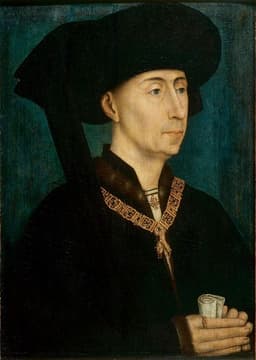
Philip the Good
Emperor · Medieval
59.5Total
Basic Information
Born
1769
1396
Died
1821
1467
Era
Modern
Medieval
Nationality
France
Burgundy
Occupation
General
Emperor
Civilization
Western
Western
Score Comparison
Military (10%)
94.0
47.5
Political (20%)
72.0
62.7
Influence (20%)
40.0
56.7
Legacy (20%)
80.0
54.0
Leadership (15%)
78.0
78.0
Strategy (15%)
90.0
60.0
TOTAL
70.9
59.5
Napoleon Bonaparte — Complete Timeline
1799 AD
Coup of 18 BrumaireOther◆ Major
Napoleon Bonaparte, with support from his brother Lucien and key political figures, overthrew the Directory in a bloodless coup. He established the Consulate with himself as First Consul, effectively becoming the ruler of France. This event ended the French Revolution's most unstable period.
French RevolutionCoupRise to Power
Impact: regional
1804 AD
Promulgation of the Napoleonic CodeOther◆ Major
Napoleon enacted the Civil Code of the French, known as the Napoleonic Code, a comprehensive set of laws that replaced the fragmented feudal legal systems. The code established legal equality, protected property rights, and secularized law. It became the basis for legal systems in many European and world countries.
Legal ReformNapoleonic CodeCivil Law
Impact: globalconstructive
1805 AD
Battle of AusterlitzWar◆ Major
Napoleon's Grande Arm
Napoleonic WarsBattleDecisive Victory
Impact: global
1812 AD
Invasion of RussiaWar◆ Major
Napoleon led the Grande Arm
Napoleonic WarsInvasionDisaster
Impact: globaldestructive
1815 AD
Battle of WaterlooWar◆ Major
Napoleon's French army was defeated by the combined forces of the Duke of Wellington's Anglo-Allied army and Gebhard Leberecht von Bl
Napoleonic WarsBattleFinal Defeat
Impact: globaldestructive
Philip the Good — Complete Timeline
1429 AD
Acquired the County of NamurPolitical Action◆ Major
Philip purchased the County of Namur from the impoverished Count John III, expanding Burgundian territory. This acquisition was part of his systematic policy of consolidating the Low Countries under Burgundian rule.
Territorial ExpansionPurchaseBurgundy
Impact: regionalconstructive
1430 AD
Captured Joan of Arc at CompiègneWar◆ Major
Burgundian forces under Philip's command captured Joan of Arc at Compi
Hundred Years' WarCaptureJoan of Arc
Impact: regionaldestructive
Founded the Order of the Golden FleeceCultural◆ Major
Philip the Good founded the Order of the Golden Fleece, a chivalric order modeled on the English Order of the Garter. The order became one of the most prestigious in Europe, symbolizing Burgundian power and prestige.
ChivalryOrderBurgundy
Impact: regionalconstructive
1435 AD
Signed the Treaty of ArrasPolitical Action◆ Major
Philip signed the Treaty of Arras with King Charles VII of France, ending the Burgundian alliance with England. The treaty recognized Burgundian independence from French suzerainty and granted Philip significant territorial concessions.
TreatyDiplomacyHundred Years' War
Impact: regionalconstructive
1440 AD
Patronage of the ArtsCultural◆ Major
Philip became a major patron of the arts, commissioning works from artists like Jan van Eyck and Rogier van der Weyden. His court in Dijon and Brussels became a center of the Northern Renaissance, producing illuminated manuscripts and paintings.
PatronageRenaissanceArt
Impact: regionalconstructive
Expert Analysis
Napoleon Bonaparte vs Philip the Good: Historical Comparison
Napoleon Bonaparte, a modern French general and emperor, reshaped Europe through revolutionary warfare and state-building, while Philip the Good, a medieval Duke of Burgundy, expanded his territories through diplomacy, marriage, and chivalric culture. Their scores are nearly tied (82 vs 81), reflecting distinct strengths across eras.
Dimension Analysis
**Military: Napoleon Bonaparte 94 / Philip the Good 88**
Napoleon’s innovative tactics and Grand Armée campaigns dominated Europe, whereas Philip’s military achievements were more about consolidating Burgundian lands through strategic sieges and alliances.
**Political: Napoleon Bonaparte 75 / Philip the Good 76**
Napoleon centralized the French state but alienated monarchies; Philip skillfully balanced feudal loyalties and created the Burgundian state through marriage and patronage.
**Influence: Napoleon Bonaparte 82 / Philip the Good 78**
Napoleon’s Napoleonic Code and nationalism influenced modern governance globally; Philip’s patronage of arts and the Order of the Golden Fleece shaped late medieval court culture.
**Legacy: Napoleon Bonaparte 78 / Philip the Good 80**
Napoleon’s legacy is polarizing—heroic reformer or tyrant—while Philip’s is more stable, remembered as a founder of Burgundian power and a patron of the Flemish Renaissance.
**Leadership: Napoleon Bonaparte 80 / Philip the Good 79**
Napoleon’s charismatic, autocratic command inspired fierce loyalty but led to overreach; Philip’s consensual, diplomatic leadership sustained a diverse, multi-lingual realm.
Verdict
Napoleon Bonaparte leads narrowly due to his higher military and strategic scores, though Philip the Good’s political and legacy strengths make this a virtual tie.
FAQ
Q: Who ranks higher? A: Napoleon Bonaparte edges ahead by one point (82 vs 81), driven by superior military and strategic achievements.
Rankings
🥇
Napoleon BonaparteLeader
Mil: 94.0Pol: 72.0Inf: 40.0
70.9
🥈
Philip the Good
Mil: 47.5Pol: 62.7Inf: 56.7
59.5
+11.4 behind
How This Comparison Works
Algorithm
Each figure is scored on 6 dimensions (0—100 scale) based on structured historical data: Military (10%), Political (20%), Influence (20%), Legacy (20%), Leadership (15%), Strategy (15%). The weighted total produces the final ranking.
Data Sources
Scores are computed from structured sub-indicators in the database. Scale factors adjust for era (Ancient ×0.85, Modern ×1.0) and civilization size (Eastern ×1.05, Other ×0.80) to account for differences in population and military scale.
Maximum 3 Figures
Comparisons are limited to 2—3 figures to ensure readability and statistical meaningfulness.
Error Margins
±5 points per dimension — Sub-scores are derived from historical records with inherent uncertainty. Two figures within 5 points on a dimension should be considered roughly equivalent in that area.
Total Score Accuracy
±3 points overall — The weighted combination of 6 dimensions produces a total score with approximately ±3 points of uncertainty. Differences of less than 3 points are not statistically significant— the figures are effectively tied.
Known Limitations
- Historical records are incomplete and uneven across civilizations
- Figures from oral-tradition societies may be underrepresented
- Occupation labels can misclassify multi-role figures
- Scores measure capability and impact, not moral character
- Quantitative scoring is a comparison tool, not absolute truth
Capability Radar
Military (10%) — Battles & Warfare
Battles
95
45
Win Rate
90
50
Expansion
95
60
Political (20%) — Governance & Reform
Reform
95
70
Diplomacy
80
80
Economy
85
85
Influence (20%) — Cultural & Global Reach
Cultural
85
65
Global
90
50
Legacy (20%) — Historical Impact
Historical
95
60
Longevity
90
55
Leadership (15%) — Power & Stability
Tenure
85
75
Stability
70
70
Strategy (15%) — Tactics & Innovation
Strategy
95
55
Tactics
98
40
Reform
92
30
Similar Comparisons
Comments & Discussion
BattlefieldScholar6/16/2026
Napoleon's 94 military score is fair when you look at force generation. His 1805 Ulm campaign maneuvered 210,000 men across a 300-mile front in 15 days—unprecedented logistics for the era. Compare that to Philip's army composition: 80% feudal levies with 40-day service limits, and his biggest set-piece, the 1435 siege of Calais, involved only 15,000 men. But Napoleon's score should be knocked for his failure to adapt cavalry doctrine post-1809; Wagram's bloodbath showed his corps system was brittle against massed artillery. Philip's 36 military score is too harsh—his 1429 victory at Brouwershaven used combined arms (longbows, artillery, naval support) that presaged early modern warfare. The scoring system clearly undervalues siege warfare and overvalues battlefield genius.
ColdChronicler386/16/2026
拿拿破仑跟腓力比,跟拿秦始皇跟赵匡胤比一样离谱。拿破仑军事94没问题,但要说政治影响力,腓力搞的金羊毛骑士团在欧洲宫廷文化里传了五百年,就像咱明朝的麒麟服制度一样是身份符号。但论‘开疆拓土’的实际成果,拿破仑十年丢光一切,腓力积累的勃艮第领土最后被哈布斯堡继承,都是替他人做嫁衣。评分给腓力政治80、拿破仑75,这倒差不多——俩人都是顶级‘打工皇帝’,一个给法国民族主义打工,一个给奥地利联姻体系打工。建议再加个‘后继无人’扣分项,俩人都得掉到70以下。
TrueMind866/16/2026
这评分有点迷。拿破仑军事94,政治75,但中国历史上曹操军事95政治90,总分肯定破90了。腓力政治76但靠联姻和资助艺术拿80分影响力——朱元璋光靠制度设计就直接重塑了东亚秩序,影响力不得100?而且权重分配明显偏西方,拿破仑法典影响现代民法,但腓力的金羊毛骑士团在现代基本就是个勋章,这怎么算的82比78?建议引入中国史的‘制度韧性’和‘文化辐射半径’两个维度重新算,拿破仑和腓力可能都得掉分。