Loading...
Pepin the Short vs Richard III of England
Pepin the Short leads by 4.7 pts · 2 figures compared
…
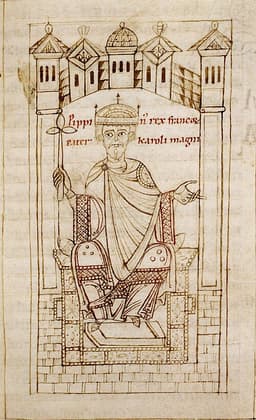
Pepin the Short
Emperor · Medieval
52.9Total
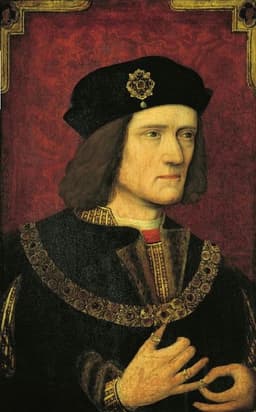
Richard III of England
Emperor · Medieval
48.2Total
Basic Information
Born
714
1452
Died
768
1485
Era
Medieval
Medieval
Nationality
Frankish Empire
England
Occupation
Emperor
Emperor
Civilization
Western
Western
Score Comparison
Military (10%)
70.0
40.0
Political (20%)
53.8
36.5
Influence (20%)
55.0
57.2
Legacy (20%)
40.0
54.0
Leadership (15%)
53.2
38.1
Strategy (15%)
60.7
52.5
TOTAL
52.9
48.2
Pepin the Short — Complete Timeline
751 AD
Anointment as King of the FranksPolitical Action
Pepin deposed the last Merovingian king, Childeric III, with the support of Pope Zachary. He was anointed king by Boniface, establishing the Carolingian dynasty and legitimizing his rule through papal approval.
Carolingian DynastyPapacyAnointment
Impact: regionalconstructive
755 AD
Siege of PaviaWar
Pepin besieged the Lombard capital of Pavia, forcing King Aistulf to surrender and cede territories. This campaign secured Frankish dominance in Italy and fulfilled Pepin's alliance with the papacy.
Lombard WarItalySiege
Impact: regional
756 AD
Donation of PepinPolitical Action◆ Major
Pepin granted the Pope control over territories in central Italy, including Ravenna and the Pentapolis, after defeating the Lombards. This created the Papal States and established the temporal power of the papacy.
Papal StatesLombardsDonation
Impact: regionalconstructive
Richard III of England — Complete Timeline
1471 AD
Battle of TewkesburyWar◆ Major
Richard, then Duke of Gloucester, commanded the vanguard of Edward IV's army at Tewkesbury, defeating the Lancastrian forces. This victory led to the death of Edward of Westminster, Henry VI's son, and the end of the Lancastrian line.
Wars of the RosesBattleVictory
Impact: national
1483 AD
Buckingham's RebellionWar◆ Major
Henry Stafford, Duke of Buckingham, led a rebellion against Richard III, aiming to place Henry Tudor on the throne. The rebellion failed, and Buckingham was executed, but it demonstrated significant opposition to Richard's rule.
RebellionOppositionTudor
Impact: nationaldestructive
Accession as Richard IIIPolitical Action
Richard III was crowned king of England after Parliament declared Edward V illegitimate. His accession followed the imprisonment of the Princes in the Tower and was controversial, leading to accusations of usurpation and murder.
CoronationUsurpationYorkist
Impact: national
1485 AD
Battle of Bosworth FieldWar
Richard III was killed in battle against Henry Tudor's forces at Bosworth Field. His death ended the Plantagenet dynasty and the Wars of the Roses, allowing Henry Tudor to become King Henry VII.
BattleDeathEnd of Dynasty
Impact: nationaltragic
Expert Analysis
Origins
Pepin the Short was born in 714 in the Frankish Empire, the son of Charles Martel, the powerful Mayor of the Palace who defeated the Umayyads at Tours. His family, the Carolingians, effectively ruled the Franks but lacked royal title. Pepin's upbringing was martial and political, groomed to succeed his father as mayor. He was of short stature, hence his epithet, but possessed a strong will. Richard III was born in 1452 at Fotheringhay Castle, England, the youngest son of Richard, Duke of York. His father was killed at the Battle of Wakefield in 1460, and his elder brother Edward IV became king in 1461. Richard grew up amid the Wars of the Roses, receiving military training and a devout education. He was loyal to Edward IV, earning lands and titles, including the Duchy of Gloucester.
Rise to Power
Pepin's rise began after Charles Martel's death in 741. He and his brother Carloman ruled as mayors, but Carloman retired to a monastery in 747, leaving Pepin sole ruler. In 751, with the support of Pope Zachary, Pepin deposed the last Merovingian king, Childeric III, and was anointed king by Boniface. This was a turning point, establishing the Carolingian dynasty and linking royal legitimacy to papal approval. Richard III's rise was more tumultuous. He served his brother Edward IV loyally, commanding at Tewkesbury in 1471, crushing the Lancastrians. When Edward IV died in 1483, Richard was named Lord Protector for the young Edward V. However, he swiftly moved to seize the throne, declaring Edward V illegitimate and imprisoning the princes in the Tower. He was crowned in July 1483. The key turning point was his accession, which sparked rebellion and ultimately led to his downfall.
Leadership & Governance
Pepin's leadership was characterized by consolidation and alliance-building. He partnered with the papacy, granting the Donation of Pepin in 756, which gave the pope control over central Italy, creating the Papal States. This strategic move secured papal support and legitimized Carolingian rule. He also waged successful wars against the Lombards, Saxons, and Aquitanians, expanding Frankish territory. His governance was effective, unifying the Franks under a single king. Richard III's leadership was more divisive. He attempted to win support through reforms, such as introducing the Court of Requests for poor petitioners and promoting trade. But his ruthless seizure of power and the disappearance of the princes alienated many nobles. His governance was short-lived (1483-1485) and marked by rebellion, especially Buckingham's Rebellion in 1483. While Pepin scored 53.2 in leadership, Richard scored 38.1, reflecting his inability to secure stable rule.
Triumph & Tragedy
Pepin's greatest triumph was founding the Carolingian dynasty and securing its legitimacy. His Donation of Pepin established the Papal States, a political entity that lasted over a thousand years. He defeated the Lombards, extending Frankish influence into Italy. His tragedy was his early death in 768, as he died before fully consolidating his empire, leaving it to his sons, Charlemagne and Carloman. Richard's triumph was his victory at Tewkesbury, which helped secure the Yorkist throne for his brother. As king, he passed progressive laws, including bail reform and the translation of laws into English. His tragedy was his defeat at Bosworth Field in 1485, where he was killed, ending the Plantagenet dynasty. The Princes in the Tower likely died under his custody, staining his reputation. Richard scored 40.0 in military, reflecting his defeat, while Pepin scored 70.0.
Character & Destiny
Pepin was pragmatic and pious, using religion to bolster his rule. His decision to seek papal approval was a masterstroke that shaped medieval kingship. He was also a capable military commander, but his primary strength was political maneuvering. His destiny was to be the founder of a dynasty that would dominate Europe. Richard III was ambitious and ruthless, willing to seize power at any cost. His character combined religious devotion with political calculation. However, his actions created enemies, and his destiny was a short reign ending in violent death. Historical assessments of Richard vary; Tudor historians vilified him, while modern revisionists argue he was a capable ruler caught in difficult circumstances. Pepin's character was more suited to long-term success, while Richard's flaws led to his downfall.
Legacy
Pepin's legacy is immense. He established the Carolingian dynasty, whose most famous member, Charlemagne, expanded the Frankish empire and was crowned Emperor. The Donation of Pepin gave the papacy temporal power, influencing European politics for centuries. His anointing set a precedent for divine right of kings. Richard III's legacy is more ambiguous. He is often remembered as a villain, thanks to Shakespeare's play, but his reign saw legal reforms. The discovery of his skeleton under a Leicester car park in 2012 allowed a reassessment of his appearance and death. Historically, his defeat ended the Wars of the Roses and began the Tudor dynasty. Pepin scores 40.0 in legacy, while Richard scores 54.0, reflecting his enduring notoriety. However, Pepin's influence (55.0 vs 57.2) was more substantive, shaping the medieval world.
Conclusion
Pepin the Short had a greater historical impact than Richard III. His total score of 52.9 exceeds Richard's 48.2 by 4.7 points. Pepin founded a dynasty that produced Charlemagne, reshaped Western Europe's political and religious landscape, and created the Papal States. Richard III, despite his reforms, reigned only two years and his legacy is overshadowed by his usurpation and defeat. Pepin's actions had centuries-long consequences, while Richard's impact was largely negative and short-lived. Therefore, Pepin the Short is the more significant historical figure.
Rankings
🥇
Pepin the ShortLeader
Mil: 70.0Pol: 53.8Inf: 55.0
52.9
🥈
Richard III of England
Mil: 40.0Pol: 36.5Inf: 57.2
48.2
+4.7 behind
How This Comparison Works
Algorithm
Each figure is scored on 6 dimensions (0—100 scale) based on structured historical data: Military (10%), Political (20%), Influence (20%), Legacy (20%), Leadership (15%), Strategy (15%). The weighted total produces the final ranking.
Data Sources
Scores are computed from structured sub-indicators in the database. Scale factors adjust for era (Ancient ×0.85, Modern ×1.0) and civilization size (Eastern ×1.05, Other ×0.80) to account for differences in population and military scale.
Maximum 3 Figures
Comparisons are limited to 2—3 figures to ensure readability and statistical meaningfulness.
Error Margins
±5 points per dimension — Sub-scores are derived from historical records with inherent uncertainty. Two figures within 5 points on a dimension should be considered roughly equivalent in that area.
Total Score Accuracy
±3 points overall — The weighted combination of 6 dimensions produces a total score with approximately ±3 points of uncertainty. Differences of less than 3 points are not statistically significant— the figures are effectively tied.
Known Limitations
- Historical records are incomplete and uneven across civilizations
- Figures from oral-tradition societies may be underrepresented
- Occupation labels can misclassify multi-role figures
- Scores measure capability and impact, not moral character
- Quantitative scoring is a comparison tool, not absolute truth
Capability Radar
Military (10%) — Battles & Warfare
Battles
55
55
Win Rate
65
50
Expansion
65
30
Political (20%) — Governance & Reform
Reform
70
35
Diplomacy
65
30
Economy
55
30
Influence (20%) — Cultural & Global Reach
Cultural
50
45
Global
60
40
Legacy (20%) — Historical Impact
Historical
75
60
Longevity
70
55
Leadership (15%) — Power & Stability
Tenure
60
25
Stability
60
20
Strategy (15%) — Tactics & Innovation
Strategy
60
55
Tactics
50
60
Reform
70
40
Similar Comparisons
Comments & Discussion
No comments yet. Be the first to share your thoughts!