Loading...
Edward I Longshanks vs Pepin the Short
Edward I Longshanks leads by 7.1 pts · 2 figures compared
…
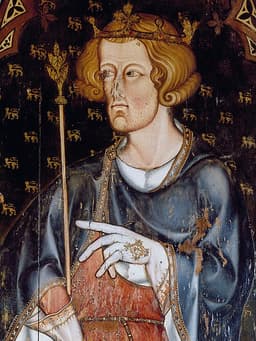
Edward I Longshanks
Emperor · Medieval
60.0Total
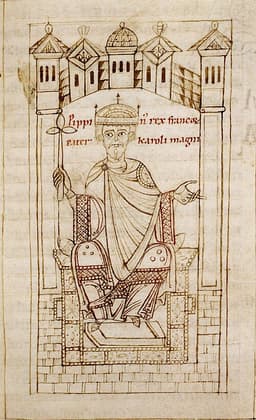
Pepin the Short
Emperor · Medieval
52.9Total
Basic Information
Born
1239
714
Died
1307
768
Era
Medieval
Medieval
Nationality
England
Frankish Empire
Occupation
Emperor
Emperor
Civilization
Western
Western
Score Comparison
Military (10%)
74.7
70.0
Political (20%)
68.0
53.8
Influence (20%)
61.0
55.0
Legacy (20%)
52.0
40.0
Leadership (15%)
53.2
53.2
Strategy (15%)
61.2
60.7
TOTAL
60.0
52.9
Edward I Longshanks — Complete Timeline
1282 AD
Conquest of WalesWar◆ Major
Edward I launched a full-scale conquest of Wales, defeating Llywelyn ap Gruffudd at the Battle of Orewin Bridge. He built castles and imposed English rule, incorporating Wales into the English crown.
ConquestWalesCastles
Impact: regionaldestructive
1284 AD
Statute of RhuddlanPolitical Action◆ Major
Edward I issued the Statute of Rhuddlan, which annexed Wales to the English crown and introduced English common law. This formalized the conquest and established English administration in Wales.
LawAnnexationWales
Impact: regionalconstructive
1295 AD
Model ParliamentPolitical Action◆ Major
Edward I summoned the Model Parliament, which included representatives from the commons, clergy, and nobility. This assembly set a precedent for parliamentary representation and taxation consent.
ParliamentRepresentationTaxation
Impact: nationalconstructive
1296 AD
Scottish Wars of IndependenceWar◆ Major
Edward I invaded Scotland after the death of Margaret, Maid of Norway, claiming overlordship. He defeated the Scots at Dunbar, captured the Stone of Scone, and attempted to impose English rule, sparking a long war.
InvasionScotlandStone of Scone
Impact: regionaldestructive
1298 AD
Battle of FalkirkWar◆ Major
Edward I defeated William Wallace's Scottish army at the Battle of Falkirk. Using longbowmen and cavalry, he broke the Scottish schiltron formations, crushing the rebellion temporarily.
BattleScotlandWilliam Wallace
Impact: regional
Pepin the Short — Complete Timeline
751 AD
Anointment as King of the FranksPolitical Action
Pepin deposed the last Merovingian king, Childeric III, with the support of Pope Zachary. He was anointed king by Boniface, establishing the Carolingian dynasty and legitimizing his rule through papal approval.
Carolingian DynastyPapacyAnointment
Impact: regionalconstructive
755 AD
Siege of PaviaWar
Pepin besieged the Lombard capital of Pavia, forcing King Aistulf to surrender and cede territories. This campaign secured Frankish dominance in Italy and fulfilled Pepin's alliance with the papacy.
Lombard WarItalySiege
Impact: regional
756 AD
Donation of PepinPolitical Action◆ Major
Pepin granted the Pope control over territories in central Italy, including Ravenna and the Pentapolis, after defeating the Lombards. This created the Papal States and established the temporal power of the papacy.
Papal StatesLombardsDonation
Impact: regionalconstructive
Expert Analysis
Origins
**Edward I Longshanks** (born 1239) was the son of King Henry III of England. His upbringing was marked by political instability, including the Second Barons' War, where he fought alongside his father. Edward gained early military experience in the Welsh marches and on Crusade, which shaped his aggressive, expansionist mindset.
**Pepin the Short** (born 714) was the son of Charles Martel, the Frankish mayor of the palace who halted the Umayyad advance at Tours. Pepin's family, the Carolingians, held de facto power but not the crown. He was raised in a military and political environment, learning governance and warfare from his father.
Rise to Power
Edward I ascended the throne in 1272 after his father's death, but he was already a seasoned leader. His first major campaign was the conquest of Wales (1277-1283), culminating in the defeat of Llywelyn ap Gruffudd at the Battle of Orewin Bridge (1282). Edward imposed English law via the Statute of Rhuddlan (1284) and built a ring of castles to secure control.
Pepin became mayor of the palace in 741, jointly with his brother Carloman. In 747, Carloman retired to a monastery, leaving Pepin as sole ruler. With papal approval, he deposed the last Merovingian king, Childeric III, in 751 and was anointed king by Archbishop Boniface. This marked the start of the Carolingian dynasty.
Leadership & Governance
Edward I was a strong, centralized ruler. He reformed English law, issuing statutes that strengthened royal authority and standardized legal procedures. His Model Parliament (1295) included commons, clergy, and nobility, setting a precedent for representative governance. However, his heavy taxation for wars in Scotland and France caused frequent conflict with the barons.
Pepin's governance focused on consolidating Frankish power and forging alliances with the Church. He intervened in Italy against the Lombards, defeating King Aistulf at the Siege of Pavia (755) and granting the Pope the Donation of Pepin, which created the Papal States. This alliance bolstered his legitimacy and expanded Frankish influence.
Triumph & Tragedy
Edward I's greatest success was the conquest of Wales, integrating it into England. His defeat of William Wallace at the Battle of Falkirk (1298) showcased his military skill, scoring 74.7 in military. However, his Scottish campaigns ultimately failed to achieve lasting conquest; the Scots under Robert the Bruce regained independence after Edward's death. His heavy-handed rule also alienated the nobility and led to civil strife.
Pepin's triumph was founding the Carolingian dynasty and securing papal support. His military campaigns against the Lombards and Saxons expanded Frankish territory, scoring 70.0 in military. However, his legacy is overshadowed by his son Charlemagne, and his reign was relatively short (751-768). He failed to fully integrate the conquered Lombard territories.
Character & Destiny
Edward I was determined, ruthless, and ambitious. His nickname 'Longshanks' reflected his imposing stature, and his 'Hammer of the Scots' epithet shows his aggressive persona. He was a skilled administrator but inflexible, which led to rebellions. His character drove him to conquer but also to overreach.
Pepin was pragmatic and diplomatic, knowing when to use force and when to negotiate. His alliance with the papacy was a masterstroke, legitimizing his usurpation. He was less charismatic than his son but laid the groundwork for the Carolingian Renaissance.
Legacy
Edward I's legacy includes the conquest of Wales, the Model Parliament, and English legal reforms. He is remembered as a strong king who expanded English territory but also as a tyrant in Scotland. His castle-building program in Wales remains a UNESCO World Heritage site. He scored 52.0 in legacy.
Pepin's legacy is the Carolingian dynasty, which reached its zenith under Charlemagne. The Donation of Pepin established the Papal States, enduring until 1870. He is often overlooked but was crucial in shifting power from Merovingians to Carolingians. He scored 40.0 in legacy.
Conclusion
Edward I had greater overall impact, scoring 60.0 total versus Pepin's 52.9. Edward's political and legal reforms shaped English governance, and his conquest of Wales had lasting territorial effects. Pepin's founding of a dynasty was significant, but his achievements were eclipsed by his son. Edward's influence on the British Isles and parliamentary development was more enduring. Therefore, Edward I Longshanks is the more impactful ruler.
Rankings
🥇
Edward I LongshanksLeader
Mil: 74.7Pol: 68.0Inf: 61.0
60.0
🥈
Pepin the Short
Mil: 70.0Pol: 53.8Inf: 55.0
52.9
+7.1 behind
How This Comparison Works
Algorithm
Each figure is scored on 6 dimensions (0—100 scale) based on structured historical data: Military (10%), Political (20%), Influence (20%), Legacy (20%), Leadership (15%), Strategy (15%). The weighted total produces the final ranking.
Data Sources
Scores are computed from structured sub-indicators in the database. Scale factors adjust for era (Ancient ×0.85, Modern ×1.0) and civilization size (Eastern ×1.05, Other ×0.80) to account for differences in population and military scale.
Maximum 3 Figures
Comparisons are limited to 2—3 figures to ensure readability and statistical meaningfulness.
Error Margins
±5 points per dimension — Sub-scores are derived from historical records with inherent uncertainty. Two figures within 5 points on a dimension should be considered roughly equivalent in that area.
Total Score Accuracy
±3 points overall — The weighted combination of 6 dimensions produces a total score with approximately ±3 points of uncertainty. Differences of less than 3 points are not statistically significant— the figures are effectively tied.
Known Limitations
- Historical records are incomplete and uneven across civilizations
- Figures from oral-tradition societies may be underrepresented
- Occupation labels can misclassify multi-role figures
- Scores measure capability and impact, not moral character
- Quantitative scoring is a comparison tool, not absolute truth
Capability Radar
Military (10%) — Battles & Warfare
Battles
75
55
Win Rate
70
65
Expansion
75
65
Political (20%) — Governance & Reform
Reform
65
70
Diplomacy
60
65
Economy
55
55
Influence (20%) — Cultural & Global Reach
Cultural
55
50
Global
50
60
Legacy (20%) — Historical Impact
Historical
70
75
Longevity
60
70
Leadership (15%) — Power & Stability
Tenure
70
60
Stability
50
60
Strategy (15%) — Tactics & Innovation
Strategy
80
60
Tactics
65
50
Reform
60
70
Similar Comparisons
Comments & Discussion
No comments yet. Be the first to share your thoughts!