Loading...
Pedro Albizu Campos vs Qin Shi Huang
Qin Shi Huang leads by 43.3 pts · 2 figures compared
…

Pedro Albizu Campos
Revolutionary · Modern
41.9Total
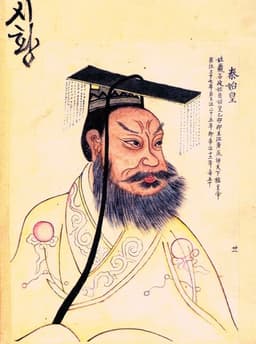
Qin Shi Huang
Emperor · Ancient
85.2Total
Basic Information
Born
1891
-259
Died
1965
-210
Era
Modern
Ancient
Nationality
Puerto Rico
China
Occupation
Revolutionary
Emperor
Civilization
Western
Eastern
Score Comparison
Military (10%)
39.9
80.0
Political (20%)
27.9
90.0
Influence (20%)
49.4
85.0
Legacy (20%)
39.2
90.0
Leadership (15%)
40.9
78.0
Strategy (15%)
54.6
82.0
TOTAL
41.9
85.2
Pedro Albizu Campos — Complete Timeline
1921 AD
Graduation from Harvard Law SchoolCultural
Albizu Campos graduated from Harvard Law School, becoming one of the first Puerto Ricans to earn a law degree from the prestigious institution. His education influenced his legal and political strategies for Puerto Rican independence.
EducationLawHarvard
Impact: nationalconstructive
1930 AD
Leadership of the Puerto Rican Nationalist PartyPolitical Action◆ Major
Albizu Campos became president of the Puerto Rican Nationalist Party, transforming it into a militant organization advocating for armed struggle against U.S. rule. He promoted a platform of independence, social justice, and cultural pride.
NationalismLeadershipMilitancy
Impact: national
1937 AD
Ponce Massacre LeadershipPolitical Action◆ Major
Pedro Albizu Campos was the leader of the Puerto Rican Nationalist Party during the Ponce Massacre, where police fired on a peaceful march, killing 19 people. The event galvanized the independence movement and led to Albizu Campos's arrest and imprisonment.
MassacreNationalismRepression
Impact: nationaltragic
1950 AD
Imprisonment and Torture by U.S. AuthoritiesPolitical Action◆ Major
Albizu Campos was arrested after the Jayuya Uprising and sentenced to 80 years in prison. He alleged torture and was held in solitary confinement. His imprisonment became a symbol of U.S. repression of Puerto Rican independence.
ImprisonmentTortureRepression
Impact: nationaltragic
1954 AD
Attack on the U.S. House of Representatives (1954)Political Action◆ Major
Under Albizu Campos's leadership, Puerto Rican nationalists attacked the U.S. House of Representatives, wounding five congressmen. The attack was intended to draw attention to Puerto Rico's colonial status and resulted in a crackdown on the independence movement.
AttackNationalismU.S. Congress
Impact: globaldestructive
Qin Shi Huang — Complete Timeline
246 BC
Construction of the Mausoleum and Terracotta ArmyOther◆ Major
Qin Shi Huang commissioned a vast mausoleum complex near Xi'an, guarded by thousands of life-sized terracotta soldiers, horses, and chariots. The project employed hundreds of thousands of workers and reflected his obsession with immortality and imperial power.
Impact: global
230 BC
Conquest of the Six Warring StatesWar
From 230 to 221 BCE, Ying Zheng led the Qin state in a series of campaigns that conquered the Han, Zhao, Wei, Chu, Yan, and Qi states. This unified China under a single ruler for the first time, ending the Warring States period.
Impact: global
221 BC
Standardization of Writing, Currency, and MeasurementsReform◆ Major
Qin Shi Huang ordered the standardization of Chinese script, currency, and weights and measures across the unified empire. This facilitated administration, trade, and cultural integration, laying a foundation for future dynasties.
Impact: globalconstructive
Proclamation of the Qin DynastyPolitical Action
After conquering the last independent state, Ying Zheng declared himself Shi Huangdi (First Emperor), founding the Qin Dynasty. He adopted a new title to signify his supreme authority and initiated centralized imperial rule.
Impact: global
214 BC
Initiation of the Great Wall ConstructionOther◆ Major
Qin Shi Huang ordered the connection and extension of existing northern fortifications to create a unified defensive wall against nomadic Xiongnu raids. This project involved massive conscripted labor and became the precursor to the later Great Wall.
Impact: regional
213 BC
Burning of Books and Burying of ScholarsPolitical Action◆ Major
On the advice of Li Si, Qin Shi Huang ordered the burning of historical records and philosophical texts not aligned with Legalist doctrine. He also had 460 Confucian scholars buried alive to suppress dissent and consolidate ideological control.
Impact: nationaldestructive
Expert Analysis
pedro-albizu-campos-vs-qin-shi-huang
### The Emperor and the Revolutionary: Two Visions of Power
On a winter morning in 221 BC, a king from the western edge of the Chinese world stood before his assembled generals and declared himself *Shi Huangdi*—the First Emperor. Two thousand years later, on a sweltering afternoon in 1937, police in Ponce, Puerto Rico, opened fire on a nationalist parade, killing nineteen civilians. Between these two moments lies a chasm of time, culture, and scale, yet both pivot on a single question: what does it mean to forge a nation? Qin Shi Huang conquered six warring states to create a unified empire; Pedro Albizu Campos fought with words and bullets to free an island colony. One built a monument that still stands; the other left a legacy of martyrdom that still burns. Their differences reveal not just divergent paths to power, but the very nature of how history judges success and failure.
### Origins
Qin Shi Huang was born Ying Zheng in 259 BC, a prince of the Qin state during the chaotic Warring States period. His mother, a former concubine, and his father, a king who died when Ying Zheng was thirteen, left him a throne surrounded by enemies. From childhood, he learned that survival meant absolute control. The Qin state already practiced Legalism—a harsh philosophy that valued order over morality—and young Zheng absorbed its lessons: law is the only master, punishment the only teacher.
Pedro Albizu Campos came into the world in 1891, in the barrio of Tenerías, Puerto Rico, then a Spanish colony. His mother was a poor mestiza; his father, a merchant who died when Pedro was a child. He grew up in a world of sugarcane fields and American warships. After the Spanish-American War of 1898, Puerto Rico became a U.S. territory, and young Albizu saw his homeland transformed into a military outpost. He excelled in school, won a scholarship to Harvard, and graduated from its law school in 1921—one of the first Puerto Ricans to do so. But Harvard did not make him an American patriot. It made him a nationalist. He studied Irish independence movements, visited the Caribbean, and returned to Puerto Rico convinced that freedom could not be negotiated—it had to be seized.
Two men, two worlds. One inherited a kingdom and crushed every rival. The other inherited a colony and vowed to tear down its chains.
### Rise to Power
Ying Zheng’s rise was a military campaign. From 230 to 221 BC, he unleashed a series of lightning wars against the six rival states: Han, Zhao, Wei, Chu, Yan, and Qi. He did not fight alone—his generals, like Wang Jian, were brilliant strategists—but he set the direction. He bribed officials, spread disinformation, and used cavalry to outflank traditional armies. By 221 BC, every independent kingdom had fallen. At thirty-eight, he stood as master of all China.
Albizu Campos’s rise was slower and more fragile. In 1930, he became president of the Puerto Rican Nationalist Party, which had been a small, intellectual group. He transformed it into a militant organization, organizing protests, hunger strikes, and boycotts. He traveled the island speaking in Spanish to peasants who had never heard a lawyer argue for independence. He called the United States an empire and its governor a tyrant. His power was not territorial but moral—he gave his people a language of defiance.
### Leadership & Governance
Qin Shi Huang ruled through terror and transformation. He standardized Chinese script, currency, and weights and measures—creating a unified economic system for the first time. He ordered the connection of existing northern walls into what would become the Great Wall, a project that cost thousands of lives. He burned books that did not glorify his regime and buried scholars alive who criticized him. His Legalist minister Li Si wrote: “If the people are not unified, the state will fall.” The First Emperor agreed. He built roads, canals, and a massive mausoleum guarded by the Terracotta Army—a silent legion meant to serve him in the afterlife.
Albizu Campos governed through inspiration and sacrifice. He never controlled a state; he led a movement. His strategy was symbolic violence: the 1950 Jayuya Uprising, the 1954 attack on the U.S. House of Representatives. He believed that only blood could wake the world to Puerto Rico’s plight. He was imprisoned for eighty years, tortured, and held in solitary confinement. He did not build walls or write laws—he wrote manifestos and endured pain.
### Triumph & Tragedy
Qin Shi Huang’s greatest moment was his unification of China—a feat no one before him had achieved. His tragedy was the fragility of his dynasty. He died in 210 BC while on a tour of his empire, and within three years, the Qin Dynasty collapsed in rebellion. His mausoleum remains unopened; his Great Wall was rebuilt by later dynasties. He wanted immortality, but his empire lasted only fifteen years.
Albizu Campos’s greatest moment was the Ponce Massacre of 1937, where his unarmed followers were gunned down by police. He turned that tragedy into a symbol of resistance. His tragedy was that he never saw independence. He died in 1965, still under U.S. custody, his body broken by years of torture. His movement splintered, and Puerto Rico remains a territory today.
### Character & Destiny
Qin Shi Huang was paranoid, ruthless, and visionary. He believed that only absolute control could prevent chaos. He took elixirs of mercury hoping to live forever—a fatal irony. His personality shaped a system that could unite but could not endure.
Albizu Campos was proud, stubborn, and idealistic. He believed that dignity was worth more than survival. He refused to compromise, even when compromise might have freed him. His personality created a movement that could inspire but could not win.
### Legacy
Qin Shi Huang is remembered as the father of China. His standardization of writing and currency echoes in every Chinese character and coin. The Terracotta Army draws millions of tourists. His name is synonymous with both greatness and tyranny.
Albizu Campos is remembered as a martyr. His face appears on murals in San Juan; his words are quoted by activists. The U.S. government still considers him a seditionist; many Puerto Ricans call him a hero. His legacy is not a unified nation but a persistent question: what is the price of freedom?
### Conclusion
Two men, separated by two millennia, each tried to shape a nation. One succeeded through conquest and law; the other through sacrifice and symbol. Qin Shi Huang built an empire that collapsed, but his idea of China endured. Albizu Campos built a movement that never achieved its goal, but his idea of Puerto Rico endures. History does not always reward the victor. Sometimes it remembers those who fought—and lost—with a clarity that victory cannot match. In the end, both men understood something profound: that power is not just about armies or laws, but about the stories we tell ourselves about who we are.
Rankings
🥇
Qin Shi HuangLeader
Mil: 80.0Pol: 90.0Inf: 85.0
85.2
🥈
Pedro Albizu Campos
Mil: 39.9Pol: 27.9Inf: 49.4
41.9
+43.3 behind
How This Comparison Works
Algorithm
Each figure is scored on 6 dimensions (0—100 scale) based on structured historical data: Military (10%), Political (20%), Influence (20%), Legacy (20%), Leadership (15%), Strategy (15%). The weighted total produces the final ranking.
Data Sources
Scores are computed from structured sub-indicators in the database. Scale factors adjust for era (Ancient ×0.85, Modern ×1.0) and civilization size (Eastern ×1.05, Other ×0.80) to account for differences in population and military scale.
Maximum 3 Figures
Comparisons are limited to 2—3 figures to ensure readability and statistical meaningfulness.
Error Margins
±5 points per dimension — Sub-scores are derived from historical records with inherent uncertainty. Two figures within 5 points on a dimension should be considered roughly equivalent in that area.
Total Score Accuracy
±3 points overall — The weighted combination of 6 dimensions produces a total score with approximately ±3 points of uncertainty. Differences of less than 3 points are not statistically significant— the figures are effectively tied.
Known Limitations
- Historical records are incomplete and uneven across civilizations
- Figures from oral-tradition societies may be underrepresented
- Occupation labels can misclassify multi-role figures
- Scores measure capability and impact, not moral character
- Quantitative scoring is a comparison tool, not absolute truth
Capability Radar
Military (10%) — Battles & Warfare
Battles
5
85
Win Rate
5
90
Expansion
5
90
Political (20%) — Governance & Reform
Reform
30
95
Diplomacy
20
75
Economy
10
90
Influence (20%) — Cultural & Global Reach
Cultural
40
95
Global
25
85
Legacy (20%) — Historical Impact
Historical
35
95
Longevity
30
95
Leadership (15%) — Power & Stability
Tenure
20
70
Stability
10
65
Strategy (15%) — Tactics & Innovation
Strategy
10
85
Tactics
10
80
Reform
15
95
Similar Comparisons
Comments & Discussion
孤竹君后人6/17/2026
别拿秦始皇比阿尔比苏·坎波斯,这根本是拿长城比茅草棚。始皇帝坑儒生是政治清洗不假,但人家修驰道、废分封、立郡县,两千年前就玩起中央集权了。这位波多黎各先生呢?1937年庞塞屠杀后他除了演讲还会啥?民族解放靠的是枪杆子,不是法学院文凭。
TheSkepticalSword6/17/2026
This comparison romanticizes failure. Albizu Campos spent 26 years in prison—where was his grand project? Qin Shi Huang conquered six kingdoms in a decade. Numbers don't lie: one ruler controlled 15 million people; the other couldn't hold a crowd of 19,000. History measures results, not intentions. The Emperor built an empire; the revolutionary built a prison cell.
南海观潮6/17/2026
评论家们总爱把失败者捧成圣人。阿尔比苏·坎波斯1930年代在波多黎各搞独立运动,结果呢?美国海军基地照建,甘蔗种植园照开,普通人连英语都还没说利索。反观秦始皇,书同文车同轨,把华夏拧成一股绳,这才是真实力。浪漫主义救不了殖民地,只有铁血能。
TheIronChancellor6/17/2026
The Emperor understood power's essence: infrastructure. He standardized currency, built 4,000 miles of roads, and connected northern China with defensive walls. Albizu Campos understood symbolism: he wore a black glove to conceal his burned hand—a martyr's prop. Give me the man who built the Grand Canal over the one who perfected the political speech.
Chronicler20246/17/2026
Qin Shi Huang unified weights, measures, and script—concrete infrastructure that lasted millennia. Albizu Campos? He couldn't even unite Puerto Rican nationalists against the U.S. Navy. The First Emperor was a pragmatist who built the Great Wall; the revolutionary was a romantic who threw Molotov cocktails at fortresses. One created an empire, the other a footnote for angry undergrads.