Loading...
Catherine Flon vs Qin Shi Huang
Qin Shi Huang leads by 35.0 pts · 2 figures compared
…

Catherine Flon
Revolutionary · Modern
50.2Total
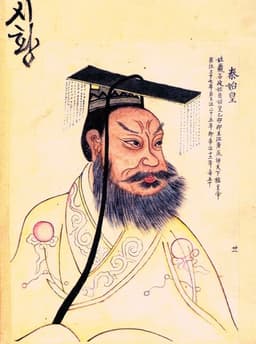
Qin Shi Huang
Emperor · Ancient
85.2Total
Basic Information
Born
1770
-259
Died
1831
-210
Era
Modern
Ancient
Nationality
Haiti
China
Occupation
Revolutionary
Emperor
Civilization
Other
Eastern
Score Comparison
Military (10%)
28.6
80.0
Political (20%)
63.4
90.0
Influence (20%)
47.1
85.0
Legacy (20%)
39.2
90.0
Leadership (15%)
68.6
78.0
Strategy (15%)
60.0
82.0
TOTAL
50.2
85.2
Catherine Flon — Complete Timeline
1803 AD
Sewed the First Haitian FlagCultural◆ Major
Catherine Flon is credited with sewing the first Haitian flag at a congress in Arcahaie. The flag was created by combining the French tricolor's blue and red bands, removing the white, symbolizing the unity of black and mulatto Haitians against French rule.
Haitian FlagNational SymbolRevolution
Impact: nationalconstructive
Qin Shi Huang — Complete Timeline
246 BC
Construction of the Mausoleum and Terracotta ArmyOther◆ Major
Qin Shi Huang commissioned a vast mausoleum complex near Xi'an, guarded by thousands of life-sized terracotta soldiers, horses, and chariots. The project employed hundreds of thousands of workers and reflected his obsession with immortality and imperial power.
Impact: global
230 BC
Conquest of the Six Warring StatesWar
From 230 to 221 BCE, Ying Zheng led the Qin state in a series of campaigns that conquered the Han, Zhao, Wei, Chu, Yan, and Qi states. This unified China under a single ruler for the first time, ending the Warring States period.
Impact: global
221 BC
Standardization of Writing, Currency, and MeasurementsReform◆ Major
Qin Shi Huang ordered the standardization of Chinese script, currency, and weights and measures across the unified empire. This facilitated administration, trade, and cultural integration, laying a foundation for future dynasties.
Impact: globalconstructive
Proclamation of the Qin DynastyPolitical Action
After conquering the last independent state, Ying Zheng declared himself Shi Huangdi (First Emperor), founding the Qin Dynasty. He adopted a new title to signify his supreme authority and initiated centralized imperial rule.
Impact: global
214 BC
Initiation of the Great Wall ConstructionOther◆ Major
Qin Shi Huang ordered the connection and extension of existing northern fortifications to create a unified defensive wall against nomadic Xiongnu raids. This project involved massive conscripted labor and became the precursor to the later Great Wall.
Impact: regional
213 BC
Burning of Books and Burying of ScholarsPolitical Action◆ Major
On the advice of Li Si, Qin Shi Huang ordered the burning of historical records and philosophical texts not aligned with Legalist doctrine. He also had 460 Confucian scholars buried alive to suppress dissent and consolidate ideological control.
Impact: nationaldestructive
Expert Analysis
catherine-flon-vs-qin-shi-huang
### The Emperor and the Seamstress
On one side of the world, a man commands armies of clay, a silent legion built to guard his tomb for eternity. On the other, a woman stitches a flag from scraps of cloth, a symbol meant to rally a nation of the living. One is the First Emperor of a unified China, a figure of absolute power whose name still echoes through millennia. The other is a revolutionary seamstress from Haiti, a name often reduced to a footnote in a history of rebellion. What could possibly connect Qin Shi Huang and Catherine Flon? The answer lies not in their power or their fame, but in the very nature of creation itself—and the violent, hopeful act of building a world from the wreckage of the old.
### Origins
Their beginnings could not have been more different. Qin Shi Huang was born into royalty. As Ying Zheng, he ascended the throne of the Qin state at the age of thirteen, inheriting a kingdom already hardened by centuries of war. His world was one of chariots, bronze swords, and the brutal philosophy of Legalism, which taught that order came from law and punishment. He was raised to conquer.
Catherine Flon was born around 1770 in Saint-Domingue, the richest colony in the Caribbean, built on the backs of enslaved Africans. She was a free woman of color in a society rigidly stratified by race, but her world was one of sugar plantations, whips, and whispers of revolution. She learned to sew, a craft of precision and patience, while across the ocean, the Enlightenment was planting seeds of liberty that would soon sprout blood-red in the fields of Haiti.
### Rise to Power
Ying Zheng’s rise was a matter of military genius and ruthless strategy. From 230 to 221 BCE, he led the Qin armies in a series of campaigns that systematically crushed the six other Warring States of China. It was a conquest of maps and blood, a decade of sieges and surrenders. When the last independent king fell, Ying Zheng did not simply take a throne; he invented one. He proclaimed himself *Shi Huangdi*—the First Emperor—and declared a new beginning for the world.
Catherine Flon’s rise was of a different kind. She did not command armies or declare dynasties. Her moment came in 1803, at a congress in the town of Arcahaie. The Haitian Revolution was at a critical juncture. Toussaint Louverture had been betrayed and captured, and the rebel leader Jean-Jacques Dessalines needed a unifying symbol. According to tradition, he took a French tricolor, ripped the white center from it, and handed the remaining blue and red pieces to Catherine Flon. She sewed them together, creating the first Haitian flag—a flag that declared, in cloth and thread, that the French would no longer rule.
### Leadership & Governance
Qin Shi Huang governed through iron control. He standardized writing, currency, and measurements across his vast empire, creating a unified system that would outlast his dynasty. He ordered the connection of northern fortifications into what would become the Great Wall, a monument to his ambition and his paranoia. He also burned books and buried scholars alive, silencing any philosophy that challenged his Legalist orthodoxy. His rule was one of order bought with fear.
Catherine Flon’s leadership was quieter but no less profound. Her act of sewing the flag was not a decree but a symbol—a piece of shared identity for a people who had been stripped of everything. After the revolution, Haiti became the first independent Black republic in the world, but its history was one of isolation, debt, and struggle. Flon’s name survives not because she ruled, but because she gave a nation its first visual soul.
### Triumph & Tragedy
Qin Shi Huang’s greatest triumph was the unification of China itself, a feat of military and political will that laid the foundation for two thousand years of imperial history. But his tragedy was a mirror of his ambition. He obsessed over immortality, sending expeditions for the elixir of life, and died in 210 BCE at the age of 49, likely from mercury poisoning—ironic, as mercury was a key ingredient in his supposed immortality potions. His dynasty, so carefully constructed, collapsed within four years of his death.
Catherine Flon’s triumph was the creation of a symbol that still flies over Haiti today. Her tragedy is the obscurity that followed. For a nation that has endured dictatorships, earthquakes, and poverty, her name is often remembered only during flag day celebrations, if at all. She sewed a banner for a revolution that succeeded, but the peace it promised has never fully arrived.
### Character & Destiny
Qin Shi Huang was a man of absolute certainty. He believed he could control history, shape language, and even conquer death. His character was one of terrifying focus—a man who saw the world as clay to be molded. His destiny was to be remembered as both a unifier and a tyrant, a figure whose shadow stretches across all of Chinese history.
Catherine Flon was a woman of quiet action. She did not write laws or lead armies; she sewed. But in that act, she embodied the hope of a people who had been told they were less than human. Her destiny was to become a symbol, a name that represents the power of ordinary people to create extraordinary change.
### Legacy
Qin Shi Huang’s legacy is monumental—literally. The Terracotta Army, buried for over two thousand years, was rediscovered in 1974 and remains one of the greatest archaeological wonders of the world. His standardization of writing and measurements shaped China’s identity for millennia. He is rated with a total score of 83.5 across military, political, and leadership metrics—a testament to his enduring influence.
Catherine Flon’s legacy is smaller in scale but no less powerful. Her flag is a national emblem of resistance. She scores a total of 59.2, reflecting her limited military and strategic role, but her political and leadership scores—72.0 and 74.9—speak to the symbolic power of her act. She is remembered in Haiti as a national heroine, a reminder that revolutions are not won by emperors alone.
### Conclusion
In the end, Qin Shi Huang and Catherine Flon represent two poles of human creation. One built an empire of stone and law, a world of order imposed from above. The other sewed a flag of hope, a world of freedom demanded from below. The emperor’s clay soldiers stand silent, guarding a tomb that was never meant to be opened. The seamstress’s flag still flies, torn and faded, over a nation that continues to fight for its promised future. One created a legacy of power; the other, a legacy of possibility. Both remind us that history is not only written by conquerors—it is also stitched by those who dare to dream.
Rankings
🥇
Qin Shi HuangLeader
Mil: 80.0Pol: 90.0Inf: 85.0
85.2
🥈
Catherine Flon
Mil: 28.6Pol: 63.4Inf: 47.1
50.2
+35.0 behind
How This Comparison Works
Algorithm
Each figure is scored on 6 dimensions (0—100 scale) based on structured historical data: Military (10%), Political (20%), Influence (20%), Legacy (20%), Leadership (15%), Strategy (15%). The weighted total produces the final ranking.
Data Sources
Scores are computed from structured sub-indicators in the database. Scale factors adjust for era (Ancient ×0.85, Modern ×1.0) and civilization size (Eastern ×1.05, Other ×0.80) to account for differences in population and military scale.
Maximum 3 Figures
Comparisons are limited to 2—3 figures to ensure readability and statistical meaningfulness.
Error Margins
±5 points per dimension — Sub-scores are derived from historical records with inherent uncertainty. Two figures within 5 points on a dimension should be considered roughly equivalent in that area.
Total Score Accuracy
±3 points overall — The weighted combination of 6 dimensions produces a total score with approximately ±3 points of uncertainty. Differences of less than 3 points are not statistically significant— the figures are effectively tied.
Known Limitations
- Historical records are incomplete and uneven across civilizations
- Figures from oral-tradition societies may be underrepresented
- Occupation labels can misclassify multi-role figures
- Scores measure capability and impact, not moral character
- Quantitative scoring is a comparison tool, not absolute truth
Capability Radar
Military (10%) — Battles & Warfare
Battles
43
85
Win Rate
42
90
Expansion
49
90
Political (20%) — Governance & Reform
Reform
69
95
Diplomacy
70
75
Economy
74
90
Influence (20%) — Cultural & Global Reach
Cultural
30
95
Global
20
85
Legacy (20%) — Historical Impact
Historical
35
95
Longevity
30
95
Leadership (15%) — Power & Stability
Tenure
68
70
Stability
79
65
Strategy (15%) — Tactics & Innovation
Strategy
49
85
Tactics
54
80
Reform
56
95
Similar Comparisons
Comments & Discussion
QIN'S CLAY GENERAL6/17/2026
Folks love romanticizing this seamstress-versus-emperor angle, but let's get real: Qin Shi Huang's terracotta army wasn't just for show—it's a military masterpiece of standardization and logistics. Each warrior was mass-produced with interchangeable parts, a feat of ancient military-industrial planning Flon couldn't touch. She stitched a flag; he built a silent legion that still guards his strategy. That's the cold calculus of power, not some poetic creation myth.
弑秦史官6/17/2026
把秦始皇和卡特琳·芙隆相提并论,简直是历史观错乱。始皇帝焚书坑儒,统一度量衡,用铁腕铸就帝国骨架。芙隆缝个旗子就叫革命?海地革命后照样是贫困暴政,她的针线活改变什么了?数据摆着:秦朝人口暴增到两千万,海地至今是西半球最穷国。别拿布头跟铁血工程比。