Loading...
Diponegoro vs Qin Shi Huang
Qin Shi Huang leads by 37.2 pts · 2 figures compared
…

Diponegoro
Revolutionary · Modern
48.0Total
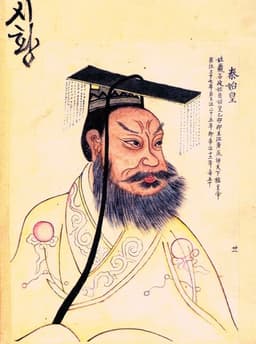
Qin Shi Huang
Emperor · Ancient
85.2Total
Basic Information
Born
1785
-259
Died
1855
-210
Era
Modern
Ancient
Nationality
Indonesia
China
Occupation
Revolutionary
Emperor
Civilization
Eastern
Eastern
Score Comparison
Military (10%)
30.0
80.0
Political (20%)
35.1
90.0
Influence (20%)
55.7
85.0
Legacy (20%)
48.3
90.0
Leadership (15%)
54.2
78.0
Strategy (15%)
56.0
82.0
TOTAL
48.0
85.2
Diponegoro — Complete Timeline
1825 AD
Start of the Java War (1825)War◆ Major
Prince Diponegoro launched a rebellion against Dutch colonial rule in Java, triggered by Dutch interference in Javanese royal succession and land rights. The war became a major anti-colonial struggle, mobilizing Javanese peasants and aristocrats against the Dutch East Indies government.
Java WarAnti-Colonial RebellionDiponegoro
Impact: regionaldestructive
Battle of Magelang (1825)War◆ Major
Diponegoro's forces captured the strategic town of Magelang, inflicting heavy casualties on Dutch troops. This early victory boosted rebel morale and demonstrated the effectiveness of guerrilla tactics against the colonial army, expanding the rebellion's reach.
Java WarBattleGuerrilla Warfare
Impact: regional
1830 AD
Capture and Exile of Diponegoro (1830)Political Action◆ Major
Diponegoro was captured by the Dutch during a peace negotiation in Magelang, violating a safe-conduct agreement. He was exiled first to Manado, then to Makassar, where he remained until his death. His capture effectively ended the Java War.
CaptureExileEnd of Java War
Impact: regionaltragic
1831 AD
Writing of the Babad DiponegoroCultural
During his exile, Diponegoro dictated his autobiography, the Babad Diponegoro, a Javanese chronicle detailing his life, the Java War, and his spiritual reflections. The work became a key historical source and a symbol of Javanese resistance against colonialism.
AutobiographyHistorical DocumentJavanese Literature
Impact: nationalconstructive
Qin Shi Huang — Complete Timeline
246 BC
Construction of the Mausoleum and Terracotta ArmyOther◆ Major
Qin Shi Huang commissioned a vast mausoleum complex near Xi'an, guarded by thousands of life-sized terracotta soldiers, horses, and chariots. The project employed hundreds of thousands of workers and reflected his obsession with immortality and imperial power.
Impact: global
230 BC
Conquest of the Six Warring StatesWar
From 230 to 221 BCE, Ying Zheng led the Qin state in a series of campaigns that conquered the Han, Zhao, Wei, Chu, Yan, and Qi states. This unified China under a single ruler for the first time, ending the Warring States period.
Impact: global
221 BC
Standardization of Writing, Currency, and MeasurementsReform◆ Major
Qin Shi Huang ordered the standardization of Chinese script, currency, and weights and measures across the unified empire. This facilitated administration, trade, and cultural integration, laying a foundation for future dynasties.
Impact: globalconstructive
Proclamation of the Qin DynastyPolitical Action
After conquering the last independent state, Ying Zheng declared himself Shi Huangdi (First Emperor), founding the Qin Dynasty. He adopted a new title to signify his supreme authority and initiated centralized imperial rule.
Impact: global
214 BC
Initiation of the Great Wall ConstructionOther◆ Major
Qin Shi Huang ordered the connection and extension of existing northern fortifications to create a unified defensive wall against nomadic Xiongnu raids. This project involved massive conscripted labor and became the precursor to the later Great Wall.
Impact: regional
213 BC
Burning of Books and Burying of ScholarsPolitical Action◆ Major
On the advice of Li Si, Qin Shi Huang ordered the burning of historical records and philosophical texts not aligned with Legalist doctrine. He also had 460 Confucian scholars buried alive to suppress dissent and consolidate ideological control.
Impact: nationaldestructive
Expert Analysis
diponegoro-vs-qin-shi-huang
# The Emperor and the Prince: Two Paths of Power in the East
In the spring of 221 BC, a twenty-eight-year-old king stood before the walls of a conquered city and declared himself the master of all China. Two millennia later, in the jungles of Java, a fifty-year-old prince watched his army melt away into the mist, knowing that he had been betrayed by the very men who had promised him safe passage. Both men fought to reshape their worlds. One succeeded beyond imagination; the other failed with heartbreaking dignity. What separates a founder from a rebel? Why does one man’s dream become an empire, while another’s becomes a memory?
Origins
Ying Zheng was born in 259 BC, a prince of the Qin state during China’s Warring States period—a brutal era when seven kingdoms bled each other dry for supremacy. His father was a hostage in another state; his mother, a former concubine. The boy grew up surrounded by treachery, learning early that trust was a weapon and power the only shield. By thirteen, he was king. By twenty-two, he had purged his regent and exiled his own mother for plotting against him. The Qin court was a nest of vipers, and Ying Zheng learned to strike first.
Diponegoro entered the world in 1785, a prince of the Yogyakarta Sultanate in Java. But his world was already broken. The Dutch East India Company had been tightening its grip on the island for two centuries, turning Javanese kings into puppets and peasants into serfs. Diponegoro was the eldest son of Sultan Hamengkubuwono III, but his mother was a commoner—a fact that would forever bar him from the throne. He grew up in the royal court yet remained an outsider, a man who could see the corruption of his own class and the suffering of his people. While Ying Zheng learned to command, Diponegoro learned to observe.
Rise to Power
Ying Zheng’s rise was methodical and merciless. From 230 to 221 BC, he unleashed the Qin war machine against the six rival states, one by one. His generals were brilliant, his spies everywhere, and his strategy simple: divide, conquer, and never show mercy. When the last king of Qi surrendered, Ying Zheng did not merely win a war—he erased a world. He renamed himself Shi Huangdi, the First Emperor, and declared that his dynasty would last ten thousand generations.
Diponegoro’s path was different. He did not seek power; power sought him. In 1825, the Dutch began building a road through his ancestral lands, tearing up a sacred grave site. When the prince protested, the Dutch sent troops to arrest him. Thousands of Javanese peasants, already starving under colonial taxes, flocked to his banner. The Java War had begun. Diponegoro never declared himself emperor; he called himself a servant of Islam and Javanese tradition. He led not as a conqueror but as a guardian.
Leadership & Governance
As emperor, Qin Shi Huang governed with terrifying efficiency. He standardized writing, currency, and measurements across his realm—acts that would bind China together for two thousand years. He ordered the construction of a national road network and linked the northern walls into what would become the Great Wall. But his methods were brutal. In 213 BC, on the advice of his minister Li Si, he ordered the burning of all books not dealing with medicine, agriculture, or Qin history. Scholars who resisted were buried alive. The First Emperor believed that unity required uniformity—and that uniformity required fear.
Diponegoro governed differently. During the Java War, he did not build an administrative state; he built a movement. His forces used guerrilla tactics, striking Dutch supply lines and melting into the mountains. He issued decrees in the name of Islam and Javanese kingship, trying to unite a fragmented society. But he could not standardize a rebellion the way Qin Shi Huang standardized an empire. He had no capital, no bureaucracy, no lasting institutions. His power was personal, and personal power dies with its holder.
Triumph & Tragedy
Qin Shi Huang’s greatest triumph was his greatest tragedy. By 210 BC, he had unified China, but he was obsessed with immortality. He sent expeditions for the elixir of life, swallowed mercury pills prescribed by alchemists, and built a mausoleum so vast that its construction employed 700,000 workers. The Terracotta Army—thousands of life-sized soldiers, each with a unique face—stood guard over his tomb. But the mercury killed him. Within four years of his death, the Qin Dynasty collapsed in rebellion. The First Emperor’s dream of ten thousand generations lasted just fifteen years.
Diponegoro’s tragedy was more intimate. In 1830, after five years of war that had killed 200,000 Javanese and 8,000 Dutch, he agreed to negotiate. The Dutch promised safe conduct. Instead, they arrested him at the conference table. He was exiled to Makassar, where he spent the last twenty-five years of his life writing his autobiography, the *Babad Diponegoro*. His war failed, but his story survived.
Character & Destiny
Qin Shi Huang was a man of iron will and paranoia. He believed that history began with him. He erased the records of other kingdoms, built roads that all led to his capital, and even renamed himself with a new title no one had ever used. He was not cruel for cruelty’s sake—he was cruel because he believed that only absolute control could prevent China from falling back into chaos. His destiny was to be the first, and the first always stands alone.
Diponegoro was a man of faith and principle. He refused the throne because of his mother’s low birth. He fought not to rule, but to restore a world that was already dying. His character was shaped by Javanese mysticism and Islamic devotion; he believed that destiny was written by God, not by men. When he was captured, he did not rage. He accepted his exile as fate. His tragedy was that he was too good for the world he lived in.
Legacy
Qin Shi Huang’s legacy is written in stone and bone. The Great Wall, the standardized script, the unified currency—these things outlasted his dynasty. He created the template for Chinese imperial rule that would endure for two millennia. Mao Zedong would later call him a “peerless emperor.” Modern China sees him as a founder. The Terracotta Army stands as a monument to his ambition and his fear.
Diponegoro’s legacy is quieter but no less real. In Indonesia, he is a national hero, the face of resistance against colonialism. His story is taught in every school. The *Babad Diponegoro* remains a masterpiece of Javanese literature. He failed to drive out the Dutch, but he planted a seed of resistance that would flower a century later. His defeat became the foundation of a nation’s pride.
Conclusion
Standing at the end of their stories, one cannot help but ask: who was more successful? Qin Shi Huang, who unified China but died poisoned by his own search for immortality? Or Diponegoro, who lost his war but won the memory of a people? The First Emperor built an empire of laws and walls. The Javanese prince built an empire of the soul. Perhaps the deepest difference is this: Qin Shi Huang tried to conquer time, and time conquered him. Diponegoro surrendered to time, and time made him eternal. In the end, both men are remembered—but for very different reasons. One was the father of a nation. The other was the father of a dream.
Rankings
🥇
Qin Shi HuangLeader
Mil: 80.0Pol: 90.0Inf: 85.0
85.2
🥈
Diponegoro
Mil: 30.0Pol: 35.1Inf: 55.7
48.0
+37.2 behind
How This Comparison Works
Algorithm
Each figure is scored on 6 dimensions (0—100 scale) based on structured historical data: Military (10%), Political (20%), Influence (20%), Legacy (20%), Leadership (15%), Strategy (15%). The weighted total produces the final ranking.
Data Sources
Scores are computed from structured sub-indicators in the database. Scale factors adjust for era (Ancient ×0.85, Modern ×1.0) and civilization size (Eastern ×1.05, Other ×0.80) to account for differences in population and military scale.
Maximum 3 Figures
Comparisons are limited to 2—3 figures to ensure readability and statistical meaningfulness.
Error Margins
±5 points per dimension — Sub-scores are derived from historical records with inherent uncertainty. Two figures within 5 points on a dimension should be considered roughly equivalent in that area.
Total Score Accuracy
±3 points overall — The weighted combination of 6 dimensions produces a total score with approximately ±3 points of uncertainty. Differences of less than 3 points are not statistically significant— the figures are effectively tied.
Known Limitations
- Historical records are incomplete and uneven across civilizations
- Figures from oral-tradition societies may be underrepresented
- Occupation labels can misclassify multi-role figures
- Scores measure capability and impact, not moral character
- Quantitative scoring is a comparison tool, not absolute truth
Capability Radar
Military (10%) — Battles & Warfare
Battles
65
85
Win Rate
55
90
Expansion
30
90
Political (20%) — Governance & Reform
Reform
35
95
Diplomacy
50
75
Economy
20
90
Influence (20%) — Cultural & Global Reach
Cultural
60
95
Global
45
85
Legacy (20%) — Historical Impact
Historical
65
95
Longevity
55
95
Leadership (15%) — Power & Stability
Tenure
45
70
Stability
30
65
Strategy (15%) — Tactics & Innovation
Strategy
68
85
Tactics
70
80
Reform
40
95
Similar Comparisons
Comments & Discussion
Emperor's Ghost6/17/2026
Comparing a Qin emperor who unified China with fire and iron to a Javanese prince fighting colonial puppets is like comparing a sledgehammer to a poisoned kris. Ying Zheng won because he had total control: standardized scripts, roads, armies. Diponegoro lost because he fought the Dutch, who had ships, cannons, and divide-and-rule tactics. Success isn't purity—it's logistics.
数据屠夫6/17/2026
拿战车数量看,秦军在灭楚时就动用了60万大军,而蒂博尼哥罗的爪哇义军满打满算可能不到3万。这不是浪漫主义的"英雄对决",是赤裸裸的规模碾压。秦始皇赢了不是因为更正义,而是因为他有更高效的杀人机器。推崇"尊严失败"的人,往往没在战争里死过人。
反骨史官6/17/2026
蒂博尼哥罗最可悲的不是失败,而是被自己人出卖。秦朝靠法家铁腕铲除了所有反对派——包括吕不韦和嫪毐。但爪哇王子呢?他太相信"圣战"和传统联盟,却忘了荷兰人最擅长的就是收买人心。现代人吹他高尚,那怎么不学他自杀式谈判?这叫浪漫悲剧,不叫战略。
Qin Standardizer6/17/2026
Diponegoro didn't lose because he was less principled—he lost because the Qing didn't have repeating rifles. Ying Zheng's brutality was enabled by total monopoly on violence over a millennium of Chinese statecraft. By 1825, the Dutch had gunpowder, quinine, and a network of local spies. Comparing a 3rd century BC conqueror to a 19th century anti-colonial rebel is comparing a bronze sword to a steamship.
爪哇遗民6/17/2026
你们都在聊胜败,但你们见过爪哇山地的雾气吗?蒂博尼哥罗最后退守的Selarong洞穴至今还在,而秦始皇的陵墓还在兵马俑下面藏着。一个守护记忆,一个埋葬记忆。历史只记住赢家的规矩,但输家的灵魂在地图上永远有位置。我选那个在雾中消失的背影,不选在宫墙上刻字的皇手。