Loading...
Patroclus vs Zu Ti
Zu Ti leads by 3.8 pts · 2 figures compared
…

Patroclus
General · Ancient
46.0Total
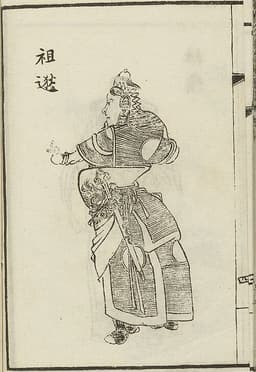
Zu Ti
General · Ancient
49.8Total
Basic Information
Born
-1210
266
Died
-1180
321
Era
Ancient
Ancient
Nationality
Phthia
China
Occupation
General
General
Civilization
Western
Eastern
Score Comparison
Military (10%)
20.0
74.7
Political (20%)
26.4
27.9
Influence (20%)
54.9
54.9
Legacy (20%)
46.7
49.2
Leadership (15%)
57.6
36.9
Strategy (15%)
60.0
66.3
TOTAL
46.0
49.8
Patroclus — Complete Timeline
1180 BC
Killed by Hector of TroyWar
Patroclus, wearing Achilles' armor, led the Myrmidons into battle and drove the Trojans back to their walls. He killed many Trojans including Sarpedon, but was then struck by Apollo, wounded by Euphorbus, and finally killed by Hector.
Trojan WarDeathBattle
Impact: regionaltragic
Led the Greeks into battle wearing Achilles' armorWar◆ Major
With Achilles refusing to fight, Patroclus begged to wear his armor and lead the Myrmidons to save the Greek ships. Achilles agreed, warning him not to pursue the Trojans to the city walls.
Trojan WarCommandArmor
Impact: regional
Killed Sarpedon of LyciaWar◆ Major
During his aristeia, Patroclus encountered Sarpedon, a son of Zeus and king of Lycia, who was fighting for Troy. Patroclus killed Sarpedon in single combat, leading to a fierce battle over the body.
Trojan WarCombatKill
Impact: regionaldestructive
Zu Ti — Complete Timeline
313 AD
Crossed the Yellow River with volunteersWar◆ Major
Zu Ti led a small force of volunteers across the Yellow River to attack the Xiongnu and other northern tribes. He successfully reclaimed several territories for the Eastern Jin dynasty, becoming a symbol of resistance against northern invaders.
Northern ExpeditionJin DynastyResistance
Impact: regionalconstructive
321 AD
Death from frustrationOther◆ Major
Zu Ti died of illness after becoming frustrated by court intrigues and lack of support from the Eastern Jin court. His death ended his campaign to reclaim the north, and his territories were gradually lost.
DeathFrustrationEnd of Campaign
Impact: regionaltragic
Expert Analysis
Origins
Patroclus was born around 1250 BCE in Phthia, Greece, the son of Menoetius. After accidentally killing a playmate, he was sent to the court of Peleus, where he became the companion of Achilles. Their bond deepened during the Trojan War. Zu Ti was born in 266 CE in Fanyang, China, into a family of minor officials during the Western Jin dynasty. He studied history and literature, showing early promise as a military strategist. His family moved south after the fall of Chang'an in 311 CE, which shaped his determination to reclaim northern territories.
Rise to Power
Patroclus rose to prominence primarily through his association with Achilles. In Homer's Iliad, Patroclus is depicted as a compassionate warrior who mediates between Achilles and the Greek commanders. His key turning point came when Achilles withdrew from battle, and Patroclus begged to wear Achilles' armor to rally the Greeks. He led the Myrmidons into battle in 1184 BCE (traditional date), driving the Trojans back to their walls. Zu Ti's rise was more gradual. After the Jin court retreated south, Zu Ti gathered a force of 100 volunteers and petitioned Emperor Yuan of Jin to lead a campaign north. In 313 CE, he crossed the Yellow River without official support, using guile and local alliances to reclaim territories from the Xiongnu and other tribes. His success earned him the title of General Who Pacifies the North.
Leadership & Governance
Patroclus's leadership was characterized by empathy and courage. He convinced Achilles to allow him to lead the Myrmidons, showing diplomatic skill. In battle, he killed 27 Trojans, including Sarpedon, son of Zeus. However, his governance was limited; he acted as a surrogate for Achilles and did not hold independent command for long. His strategy scored 60.0, reflecting his ability to exploit enemy weaknesses. Zu Ti's leadership scored 36.9, lower due to his inability to navigate court politics. He governed reclaimed territories by restoring Han Chinese administration, promoting agriculture, and building alliances with local warlords. His strategy scored 66.3, shown in his use of night raids and psychological warfare. However, his political score of 27.9 reflects his failure to secure sustained support from the Jin court.
Triumph & Tragedy
Patroclus's greatest triumph was his aristeia, where he turned the tide of battle and killed the Lycian king Sarpedon. His tragedy was his death at the hands of Hector, after Apollo disarmed him. Achilles' subsequent grief led to Hector's death and Patroclus's funeral games. Zu Ti's triumph was crossing the Yellow River with volunteers and reclaiming much of Henan province. He defeated the Xiongnu general Shi Le in several engagements. His tragedy came from court intrigues: the Jin court grew suspicious of his power and appointed a rival general to monitor him. Zu Ti died of illness in 321 CE, frustrated by lack of support. His campaigns stalled, and the north was lost again.
Character & Destiny
Patroclus was compassionate and loyal, but his decision to pursue the Trojans against Achilles' orders led to his death. His character shaped his fate as a tragic hero. Zu Ti was determined and resourceful, but his political naivety led to his downfall. Historians note that Zu Ti's death from frustration mirrors the broader failure of the Eastern Jin to reconquer the north. Patroclus's legacy is immortalized in literature; Zu Ti's is a cautionary tale of bureaucratic obstruction.
Legacy
Patroclus's legacy is primarily literary: he appears in Homer's Iliad and later works, influencing Western ideas of friendship and sacrifice. His military impact is minimal (scored 20.0). Zu Ti's legacy is more tangible: he is remembered as a patriotic general who inspired later figures like Yue Fei. His methods of using volunteers and local support influenced Chinese military strategy. However, his actual territorial gains were reversed after his death.
Conclusion
Zu Ti had greater historical impact than Patroclus. Patroclus's influence is confined to myth and literature, while Zu Ti's campaigns, though ultimately unsuccessful, shaped Chinese resistance against northern invaders. Zu Ti's total score of 49.8 exceeds Patroclus's 46.0, reflecting his higher military (74.7 vs 20.0) and strategy (66.3 vs 60.0) scores. Patroclus's legacy score (46.7) is close to Zu Ti's (49.2), but this is due to cultural resonance rather than concrete achievements. Zu Ti's failure was political, not martial, and his efforts inspired generations. Therefore, Zu Ti is the more significant historical figure.
Rankings
🥇
Zu TiLeader
Mil: 74.7Pol: 27.9Inf: 54.9
49.8
🥈
Patroclus
Mil: 20.0Pol: 26.4Inf: 54.9
46.0
+3.8 behind
How This Comparison Works
Algorithm
Each figure is scored on 6 dimensions (0—100 scale) based on structured historical data: Military (10%), Political (20%), Influence (20%), Legacy (20%), Leadership (15%), Strategy (15%). The weighted total produces the final ranking.
Data Sources
Scores are computed from structured sub-indicators in the database. Scale factors adjust for era (Ancient ×0.85, Modern ×1.0) and civilization size (Eastern ×1.05, Other ×0.80) to account for differences in population and military scale.
Maximum 3 Figures
Comparisons are limited to 2—3 figures to ensure readability and statistical meaningfulness.
Error Margins
±5 points per dimension — Sub-scores are derived from historical records with inherent uncertainty. Two figures within 5 points on a dimension should be considered roughly equivalent in that area.
Total Score Accuracy
±3 points overall — The weighted combination of 6 dimensions produces a total score with approximately ±3 points of uncertainty. Differences of less than 3 points are not statistically significant— the figures are effectively tied.
Known Limitations
- Historical records are incomplete and uneven across civilizations
- Figures from oral-tradition societies may be underrepresented
- Occupation labels can misclassify multi-role figures
- Scores measure capability and impact, not moral character
- Quantitative scoring is a comparison tool, not absolute truth
Capability Radar
Military (10%) — Battles & Warfare
Battles
15
55
Win Rate
20
60
Expansion
0
55
Political (20%) — Governance & Reform
Reform
0
30
Diplomacy
5
45
Economy
0
35
Influence (20%) — Cultural & Global Reach
Cultural
40
40
Global
30
30
Legacy (20%) — Historical Impact
Historical
45
50
Longevity
45
45
Leadership (15%) — Power & Stability
Tenure
0
40
Stability
0
30
Strategy (15%) — Tactics & Innovation
Strategy
15
70
Tactics
25
65
Reform
0
50
Similar Comparisons
Comments & Discussion
No comments yet. Be the first to share your thoughts!