Loading...
Cyrus the Younger vs Zu Ti
Zu Ti leads by 1.8 pts · 2 figures compared
…

Cyrus the Younger
General · Ancient
48.0Total
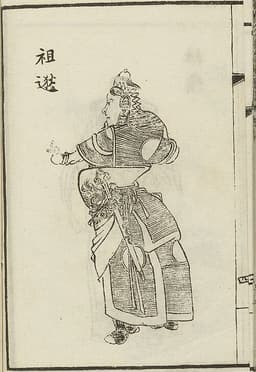
Zu Ti
General · Ancient
49.8Total
Basic Information
Born
-423
266
Died
-401
321
Era
Ancient
Ancient
Nationality
Persia
China
Occupation
General
General
Civilization
Middle Eastern
Eastern
Score Comparison
Military (10%)
20.0
74.7
Political (20%)
35.0
27.9
Influence (20%)
55.7
54.9
Legacy (20%)
49.2
49.2
Leadership (15%)
57.1
36.9
Strategy (15%)
60.0
66.3
TOTAL
48.0
49.8
Cyrus the Younger — Complete Timeline
408 BC
Appointment as satrap of Lydia and commander in AnatoliaPolitical Action◆ Major
Cyrus the Younger was appointed by his father Darius II as satrap of Lydia, Phrygia, and Cappadocia, and commander of all Persian forces in Anatolia. This gave him a power base for his ambitions.
Achaemenid EmpireSatrapAppointment
Impact: regional
407 BC
Support for Sparta in the Peloponnesian WarPolitical Action◆ Major
Cyrus provided financial and military support to Sparta against Athens in the Peloponnesian War. He befriended the Spartan general Lysander, helping Sparta achieve final victory at Aegospotami in 405 BC.
Achaemenid EmpireSpartaPeloponnesian War
Impact: regional
401 BC
Death at the Battle of CunaxaWar
Cyrus's forces engaged Artaxerxes II's army at Cunaxa, near Babylon. Cyrus personally led a charge against his brother but was killed in the fighting. His death ended the rebellion and left the Greek mercenaries stranded.
Achaemenid EmpireBattleDeathRebellion
Impact: regionaltragic
Rebellion against Artaxerxes II and march to CunaxaPolitical Action
Cyrus gathered a Greek mercenary army of about 13,000 men and marched from Sardis to Babylon to overthrow his brother Artaxerxes II. The expedition was recorded by Xenophon in the Anabasis.
Achaemenid EmpireRebellionExpedition
Impact: regional
Zu Ti — Complete Timeline
313 AD
Crossed the Yellow River with volunteersWar◆ Major
Zu Ti led a small force of volunteers across the Yellow River to attack the Xiongnu and other northern tribes. He successfully reclaimed several territories for the Eastern Jin dynasty, becoming a symbol of resistance against northern invaders.
Northern ExpeditionJin DynastyResistance
Impact: regionalconstructive
321 AD
Death from frustrationOther◆ Major
Zu Ti died of illness after becoming frustrated by court intrigues and lack of support from the Eastern Jin court. His death ended his campaign to reclaim the north, and his territories were gradually lost.
DeathFrustrationEnd of Campaign
Impact: regionaltragic
Expert Analysis
Origins
Cyrus the Younger (born c. 423 BCE) was the second son of Persian King Darius II and Queen Parysatis. As an Achaemenid prince, he grew up in the royal court, immersed in palace intrigues and power struggles. His mother favored him over his older brother Artaxerxes II, which shaped his ambition. Cyrus received military training and was appointed satrap of Lydia, Phrygia, and Cappadocia at a young age, commanding Persian forces in Anatolia.
Zu Ti (266–321 CE) was born in a scholarly family during the Western Jin dynasty in China. His grandfather was a governor, and his father served as an official. Zu Ti was known for his bold and generous character, often sharing resources with others. He studied history and military strategy, but the fall of the Western Jin to northern invaders (the Xiongnu and other tribes) forced him to flee south with the Eastern Jin court. His early experiences of displacement fueled his determination to reclaim lost territories.
Rise to Power
Cyrus the Younger rose to prominence as a capable administrator and military commander in Anatolia. During the Peloponnesian War, he befriended the Spartan general Lysander and provided financial and naval support to Sparta against Athens. This alliance not only helped Sparta win the war but also gave Cyrus a powerful ally. His ambition, however, led him to challenge his brother for the throne. In 401 BCE, he gathered an army of about 13,000 Greek mercenaries (the Ten Thousand) and marched from Sardis to Babylon, aiming to overthrow Artaxerxes II.
Zu Ti's rise came after the collapse of the Western Jin. He volunteered to lead a campaign to recover northern China. With only a few hundred volunteers, he crossed the Yangtze River and later the Yellow River. He recruited local Chinese who were oppressed by the northern tribes, gradually building a force that reclaimed several territories. His success earned him the title of General of the Expeditionary Army from the Eastern Jin court. However, his independence and popularity aroused suspicion among court officials, limiting his support.
Leadership & Governance
Cyrus the Younger was a charismatic leader who inspired loyalty among his Greek mercenaries. He paid them well and treated them with respect, which was unusual for Persian commanders. However, his leadership was autocratic and focused on personal ambition. He did not establish lasting governance structures, as his goal was to seize the throne. In contrast, Zu Ti was a pragmatic commander who integrated local populations into his forces. He implemented agricultural policies to supply his army and governed reclaimed lands with a focus on stability. His leadership style was more inclusive, but he lacked the political backing to sustain his campaigns.
Triumph & Tragedy
Cyrus's greatest triumph was assembling and leading the Ten Thousand on a march deep into the Persian Empire, reaching within a day's march of Babylon. His greatest tragedy was his death at the Battle of Cunaxa (401 BCE) when he recklessly charged into the enemy ranks and was killed. His army, though victorious in battle, was left leaderless. The Greek mercenaries had to fight their way back to Greece, an ordeal chronicled by Xenophon.
Zu Ti's triumph was his successful crossing of the Yellow River and recapturing of several commanderies from the Xiongnu. He restored Jin authority in parts of Henan and Shandong. His tragedy came from constant interference by the Eastern Jin court, which withheld resources and appointed rival officials. Zu Ti died of illness in 321 CE, frustrated and unable to complete his reconquest. His death marked the end of serious Jin efforts to reclaim the north for decades.
Character & Destiny
Cyrus the Younger was ambitious and impulsive. His decision to lead a frontal charge against his brother's bodyguard, despite being surrounded, showed reckless courage. Xenophon described him as the most kingly and worthy of rule among the Persians since Cyrus the Great. Yet his impatience led to his downfall. Zu Ti was determined and resourceful, but his character was marked by frustration with court politics. He was a man of action who despised bureaucracy. His destiny was shaped by the limitations of the Eastern Jin state, which was more focused on internal consolidation than external expansion.
Legacy
Cyrus the Younger's legacy is largely literary. Xenophon's *Anabasis* immortalized his expedition and the march of the Ten Thousand, influencing later military thought and Greek perspectives on Persia. His rebellion weakened the Achaemenid Empire by exposing its internal divisions. However, his direct impact on history was limited by his early death. Zu Ti is remembered in China as a patriotic hero who fought to reclaim lost lands. His story inspired later generations, especially during periods of division. The idiom "to rise from the bed and hear the cock crow" (闻鸡起舞) comes from his diligence. Yet his campaigns did not achieve lasting territorial gains.
Conclusion
When comparing Cyrus the Younger (TOTAL score 48.0) and Zu Ti (TOTAL score 49.8), the margin is narrow but favors Zu Ti. While Cyrus's expedition had broader historical significance through its literary legacy, Zu Ti's military achievements (Military: 74.7 vs 20.0) were more substantial in terms of reclaiming territory and fighting against invaders. Cyrus's political and leadership scores (35.0 and 57.1) were higher, but his ultimate failure to achieve his goal and his early death limit his impact. Zu Ti, despite political obstacles (Political: 27.9), demonstrated greater strategic ability (Strategy: 66.3 vs 60.0) and left a more enduring legacy in Chinese history. Therefore, Zu Ti had a greater impact as a military leader who fought for national restoration, while Cyrus's story is more of a tragic adventure.
Rankings
🥇
Zu TiLeader
Mil: 74.7Pol: 27.9Inf: 54.9
49.8
🥈
Cyrus the Younger
Mil: 20.0Pol: 35.0Inf: 55.7
48.0
+1.8 behind
How This Comparison Works
Algorithm
Each figure is scored on 6 dimensions (0—100 scale) based on structured historical data: Military (10%), Political (20%), Influence (20%), Legacy (20%), Leadership (15%), Strategy (15%). The weighted total produces the final ranking.
Data Sources
Scores are computed from structured sub-indicators in the database. Scale factors adjust for era (Ancient ×0.85, Modern ×1.0) and civilization size (Eastern ×1.05, Other ×0.80) to account for differences in population and military scale.
Maximum 3 Figures
Comparisons are limited to 2—3 figures to ensure readability and statistical meaningfulness.
Error Margins
±5 points per dimension — Sub-scores are derived from historical records with inherent uncertainty. Two figures within 5 points on a dimension should be considered roughly equivalent in that area.
Total Score Accuracy
±3 points overall — The weighted combination of 6 dimensions produces a total score with approximately ±3 points of uncertainty. Differences of less than 3 points are not statistically significant— the figures are effectively tied.
Known Limitations
- Historical records are incomplete and uneven across civilizations
- Figures from oral-tradition societies may be underrepresented
- Occupation labels can misclassify multi-role figures
- Scores measure capability and impact, not moral character
- Quantitative scoring is a comparison tool, not absolute truth
Capability Radar
Military (10%) — Battles & Warfare
Battles
30
55
Win Rate
25
60
Expansion
20
55
Political (20%) — Governance & Reform
Reform
10
30
Diplomacy
30
45
Economy
15
35
Influence (20%) — Cultural & Global Reach
Cultural
45
40
Global
40
30
Legacy (20%) — Historical Impact
Historical
55
50
Longevity
50
45
Leadership (15%) — Power & Stability
Tenure
20
40
Stability
15
30
Strategy (15%) — Tactics & Innovation
Strategy
35
70
Tactics
40
65
Reform
10
50
Similar Comparisons
Comments & Discussion
No comments yet. Be the first to share your thoughts!