Loading...
This comparison has not been analyzed yet.
One-time AI generation (~1 minute). Scores and timeline are already available below.
Pan Geng of Shang vs Tiglath-Pileser III
Tiglath-Pileser III leads by 13.6 pts · 2 figures compared
…
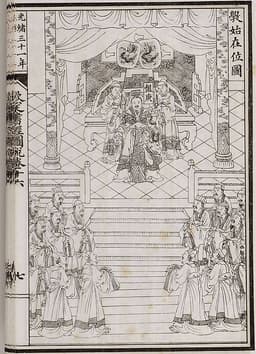
Pan Geng of Shang
Emperor · Ancient
55.4Total
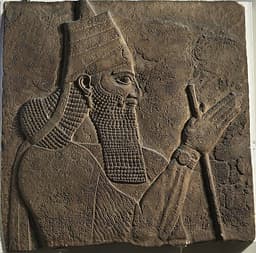
Tiglath-Pileser III
Emperor · Ancient
69.0Total
Basic Information
Born
-1250
-745
Died
-1200
-727
Era
Ancient
Ancient
Nationality
Shang China
Assyria
Occupation
Emperor
Emperor
Civilization
Eastern
Middle Eastern
Score Comparison
Military (10%)
25.9
75.0
Political (20%)
68.0
77.8
Influence (20%)
56.4
65.2
Legacy (20%)
56.0
55.0
Leadership (15%)
72.0
78.0
Strategy (15%)
36.8
80.3
TOTAL
55.4
69.0
Pan Geng of Shang — Complete Timeline
1250 BC
Moved capital to YinPolitical Action
Pan Geng relocated the Shang capital to Yin (near modern Anyang), which became the permanent capital for the remainder of the dynasty. This move ended the pattern of frequent relocations and established a stable administrative center.
Capital MoveYinStability
Impact: nationalconstructive
1240 BC
Implemented major reformsReform
Pan Geng enacted comprehensive reforms that revitalized the Shang state, including administrative, economic, and possibly military changes. These reforms strengthened central authority, improved governance, and ushered in a period of prosperity and expansion.
ReformRevitalizationShang Dynasty
Impact: nationalconstructive
Tiglath-Pileser III — Complete Timeline
740 BC
Reform of the Assyrian ArmyReform
Tiglath-Pileser III reorganized the Assyrian army into a standing professional force with specialized units, including cavalry, chariotry, and siege engineers. This reform made the army more efficient and enabled rapid conquests.
Military ReformStanding ArmyAssyrian Empire
Impact: regionalconstructive
Deportation of PopulationsPolitical Action◆ Major
Tiglath-Pileser III implemented a policy of mass deportation, moving conquered peoples to different parts of the empire. This broke up resistance and integrated diverse groups into the Assyrian economy and administration.
DeportationPopulation TransferImperial Policy
Impact: regionaldestructive
734 BC
Conquest of Syria and PalestineWar◆ Major
Tiglath-Pileser III launched a campaign into Syria and Palestine, defeating the kingdoms of Damascus, Israel, and Philistia. He annexed their territories and imposed tribute, extending Assyrian control to the borders of Egypt.
Military CampaignSyriaPalestine
Impact: regional
729 BC
Coronation as King of BabylonPolitical Action◆ Major
Tiglath-Pileser III conquered Babylon and had himself crowned as King of Babylon under the name Pulu. This personal union of the Assyrian and Babylonian thrones marked a new phase in the relationship between the two regions.
CoronationBabylonPersonal Union
Impact: regional
This comparison has not been analyzed yet.
One-time AI generation (~1 minute). Scores and timeline are already available below.
Rankings
🥇
Tiglath-Pileser IIILeader
Mil: 75.0Pol: 77.8Inf: 65.2
69.0
🥈
Pan Geng of Shang
Mil: 25.9Pol: 68.0Inf: 56.4
55.4
+13.6 behind
How This Comparison Works
Algorithm
Each figure is scored on 6 dimensions (0—100 scale) based on structured historical data: Military (10%), Political (20%), Influence (20%), Legacy (20%), Leadership (15%), Strategy (15%). The weighted total produces the final ranking.
Data Sources
Scores are computed from structured sub-indicators in the database. Scale factors adjust for era (Ancient ×0.85, Modern ×1.0) and civilization size (Eastern ×1.05, Other ×0.80) to account for differences in population and military scale.
Maximum 3 Figures
Comparisons are limited to 2—3 figures to ensure readability and statistical meaningfulness.
Error Margins
±5 points per dimension — Sub-scores are derived from historical records with inherent uncertainty. Two figures within 5 points on a dimension should be considered roughly equivalent in that area.
Total Score Accuracy
±3 points overall — The weighted combination of 6 dimensions produces a total score with approximately ±3 points of uncertainty. Differences of less than 3 points are not statistically significant— the figures are effectively tied.
Known Limitations
- Historical records are incomplete and uneven across civilizations
- Figures from oral-tradition societies may be underrepresented
- Occupation labels can misclassify multi-role figures
- Scores measure capability and impact, not moral character
- Quantitative scoring is a comparison tool, not absolute truth
Capability Radar
Military (10%) — Battles & Warfare
Battles
10
85
Win Rate
10
90
Expansion
10
90
Political (20%) — Governance & Reform
Reform
70
95
Diplomacy
50
85
Economy
60
88
Influence (20%) — Cultural & Global Reach
Cultural
60
75
Global
40
78
Legacy (20%) — Historical Impact
Historical
70
85
Longevity
70
80
Leadership (15%) — Power & Stability
Tenure
60
80
Stability
70
82
Strategy (15%) — Tactics & Innovation
Strategy
10
92
Tactics
10
88
Reform
10
95
Similar Comparisons
Comments & Discussion
No comments yet. Be the first to share your thoughts!