Loading...
Otho vs Pan Geng of Shang
Pan Geng of Shang leads by 15.9 pts · 2 figures compared
…
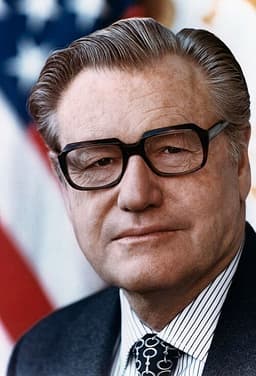
Otho
Emperor · Ancient
39.5Total
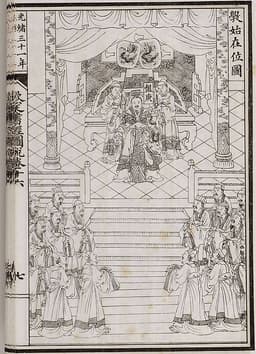
Pan Geng of Shang
Emperor · Ancient
55.4Total
Basic Information
Born
32
-1250
Died
69
-1200
Era
Ancient
Ancient
Nationality
Roman Empire
Shang China
Occupation
Emperor
Emperor
Civilization
Western
Eastern
Score Comparison
Military (10%)
35.0
25.9
Political (20%)
30.8
68.0
Influence (20%)
42.4
56.4
Legacy (20%)
33.3
56.0
Leadership (15%)
55.3
72.0
Strategy (15%)
41.7
36.8
TOTAL
39.5
55.4
Otho — Complete Timeline
69 AD
Battle of BedriacumWar◆ Major
Otho's forces were defeated by the army of Vitellius at the First Battle of Bedriacum in northern Italy. Despite having a numerical advantage, Otho's troops were routed. This defeat led Otho to commit suicide to prevent further civil war.
Civil WarBattleSuicide
Impact: nationaltragic
Proclamation as EmperorPolitical Action◆ Major
Otho was proclaimed emperor by the Praetorian Guard after orchestrating the assassination of Galba. He was a former governor of Lusitania and had been a supporter of Nero. His reign began the second phase of the Year of the Four Emperors.
Year of the Four EmperorsPraetorian GuardCoup
Impact: national
Suicide of OthoPolitical Action◆ Major
After his defeat at Bedriacum, Otho committed suicide by stabbing himself. He chose death to spare Rome further bloodshed, a decision praised by some historians. His reign lasted only three months, ending the second phase of the Year of the Four Emperors.
SuicideYear of the Four EmperorsCivil War
Impact: nationaltragic
Pan Geng of Shang — Complete Timeline
1250 BC
Moved capital to YinPolitical Action
Pan Geng relocated the Shang capital to Yin (near modern Anyang), which became the permanent capital for the remainder of the dynasty. This move ended the pattern of frequent relocations and established a stable administrative center.
Capital MoveYinStability
Impact: nationalconstructive
1240 BC
Implemented major reformsReform
Pan Geng enacted comprehensive reforms that revitalized the Shang state, including administrative, economic, and possibly military changes. These reforms strengthened central authority, improved governance, and ushered in a period of prosperity and expansion.
ReformRevitalizationShang Dynasty
Impact: nationalconstructive
Expert Analysis
Origins
Otho was born in 32 AD into a prominent Roman family. His father was a senator, and Otho was a childhood friend of Nero. He served as governor of Lusitania (modern Portugal) from 58 to 68 AD, where he gained administrative experience. His early life was marked by luxury and political maneuvering.
Pan Geng of Shang, traditionally dated to the 14th century BC, was a king of the Shang dynasty in ancient China. He was likely a son of King Zu Ding and ascended the throne around 1300 BC. The Shang dynasty at that time was plagued by internal strife and frequent capital relocations. Pan Geng's early life is obscure, but he emerged as a determined reformer.
Rise to Power
Otho rose to power through conspiracy. After Nero's suicide in 68 AD, Galba became emperor. Otho initially supported Galba but soon plotted against him when Galba adopted Piso as successor. On January 15, 69 AD, Otho orchestrated Galba's assassination and was proclaimed emperor by the Praetorian Guard. His reign began with promises of stability but was immediately challenged by Vitellius, whose legions in Germany declared for him.
Pan Geng became king of Shang after his brother Yang Jia's death. The Shang had moved capitals many times, causing instability. Pan Geng decided to move the capital to Yin (near modern Anyang), despite opposition from nobles. He argued that the move would strengthen the dynasty and allow for reforms. The relocation was completed around 1300 BC, marking a turning point.
Leadership & Governance
Otho's leadership was pragmatic but short-lived. He tried to consolidate power by offering amnesties and restoring Nero's memory. He also attempted to negotiate with Vitellius, but war was inevitable. Otho's governance was focused on maintaining order in Rome while preparing for conflict. However, his military leadership was weak; he lacked strategic depth and relied on inexperienced advisors.
Pan Geng's leadership was transformative. He implemented administrative reforms, centralizing power and improving tax collection. He also promoted agriculture and possibly reformed the military. By moving the capital to Yin, he ended the nomadic tendencies of the court, creating a stable base. His governance was autocratic but effective. Pan Geng's political score of 68.0 far exceeds Otho's 30.8, reflecting his ability to enact lasting change.
Triumph & Tragedy
Otho's greatest triumph was his suicide, which he hoped would end the civil war. After his defeat at the First Battle of Bedriacum (69 AD), where his forces were routed despite numerical superiority, Otho chose to die by stabbing himself. This act was praised by some as selfless. His tragedy was his failure to secure power: he ruled only 3 months and left no lasting reforms. His military score of 35.0 reflects his poor generalship.
Pan Geng's greatest triumph was the establishment of Yin as the permanent capital, which lasted for the remaining 250 years of the Shang dynasty. The site became a major archaeological treasure (Yinxu). His reforms revitalized the state, leading to a period of stability. His tragedy is the lack of detailed records; his personal fate is unknown. His legacy score of 56.0 is solid, while Otho's is 33.3.
Character & Destiny
Otho was ambitious but impulsive. He was known for his love of luxury and his affair with Nero's wife Poppaea. His decision to commit suicide rather than prolong the war shows a sense of honor, but his inability to command loyalty or strategy doomed him. His character was that of a courtier, not a warrior.
Pan Geng was resolute and visionary. He faced opposition but persisted in his capital move, demonstrating strategic thinking. His character was that of a reformer who prioritized the dynasty's longevity. His destiny was to be remembered as the king who stabilized the Shang.
Legacy
Otho's legacy is minor. He is a footnote in the Year of the Four Emperors, remembered mainly for his dramatic suicide. His reign had no lasting impact on Roman institutions. His influence score is 42.4, but largely due to the dramatic narrative.
Pan Geng's legacy is substantial. The capital Yin became a center of Chinese civilization. The oracle bones found at Yinxu provide crucial insights into early Chinese writing and society. Pan Geng's reforms set a precedent for centralized rule. His total score of 55.4 reflects his enduring impact.
Conclusion
Pan Geng of Shang had a significantly greater impact than Otho. With a total score of 55.4 versus Otho's 39.5, Pan Geng's political and leadership scores are more than double. Otho's brief reign achieved nothing lasting, while Pan Geng's capital move and reforms shaped Chinese history for centuries. The score gap of 15.9 points clearly indicates that Pan Geng's contributions were more substantial and enduring.
Rankings
🥇
Pan Geng of ShangLeader
Mil: 25.9Pol: 68.0Inf: 56.4
55.4
🥈
Otho
Mil: 35.0Pol: 30.8Inf: 42.4
39.5
+15.9 behind
How This Comparison Works
Algorithm
Each figure is scored on 6 dimensions (0—100 scale) based on structured historical data: Military (10%), Political (20%), Influence (20%), Legacy (20%), Leadership (15%), Strategy (15%). The weighted total produces the final ranking.
Data Sources
Scores are computed from structured sub-indicators in the database. Scale factors adjust for era (Ancient ×0.85, Modern ×1.0) and civilization size (Eastern ×1.05, Other ×0.80) to account for differences in population and military scale.
Maximum 3 Figures
Comparisons are limited to 2—3 figures to ensure readability and statistical meaningfulness.
Error Margins
±5 points per dimension — Sub-scores are derived from historical records with inherent uncertainty. Two figures within 5 points on a dimension should be considered roughly equivalent in that area.
Total Score Accuracy
±3 points overall — The weighted combination of 6 dimensions produces a total score with approximately ±3 points of uncertainty. Differences of less than 3 points are not statistically significant— the figures are effectively tied.
Known Limitations
- Historical records are incomplete and uneven across civilizations
- Figures from oral-tradition societies may be underrepresented
- Occupation labels can misclassify multi-role figures
- Scores measure capability and impact, not moral character
- Quantitative scoring is a comparison tool, not absolute truth
Capability Radar
Military (10%) — Battles & Warfare
Battles
10
10
Win Rate
10
10
Expansion
0
10
Political (20%) — Governance & Reform
Reform
0
70
Diplomacy
20
50
Economy
5
60
Influence (20%) — Cultural & Global Reach
Cultural
5
60
Global
5
40
Legacy (20%) — Historical Impact
Historical
15
70
Longevity
5
70
Leadership (15%) — Power & Stability
Tenure
5
60
Stability
5
70
Strategy (15%) — Tactics & Innovation
Strategy
10
10
Tactics
15
10
Reform
0
10
Similar Comparisons
Comments & Discussion
No comments yet. Be the first to share your thoughts!