Loading...
Pachacuti vs Wanyan Aguda
Pachacuti leads by 6.0 pts · 2 figures compared
…
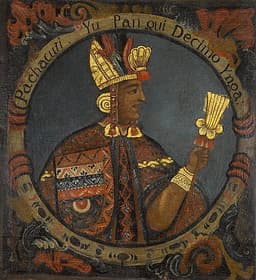
Pachacuti
Emperor · Medieval
69.4Total
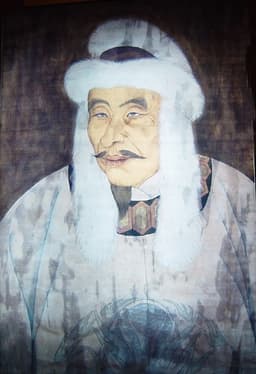
Wanyan Aguda
Emperor · Medieval
63.4Total
Basic Information
Born
1418
1068
Died
1472
1123
Era
Medieval
Medieval
Nationality
Inca Empire
China
Occupation
Emperor
Emperor
Civilization
Other
Eastern
Score Comparison
Military (10%)
78.5
82.0
Political (20%)
58.1
59.3
Influence (20%)
65.0
55.0
Legacy (20%)
72.0
52.0
Leadership (15%)
78.0
85.0
Strategy (15%)
69.2
68.0
TOTAL
69.4
63.4
Pachacuti — Complete Timeline
1438 AD
Conquest of the Chanka KingdomWar
Pachacuti led the Inca army to defeat the Chanka, a powerful rival, in a decisive battle near Cusco. This victory secured his position as Sapa Inca and initiated a period of rapid expansion, transforming the Inca from a small kingdom into a vast empire.
ConquestInca ExpansionChanka
Impact: regional
1440 AD
Reconstruction of CuscoCultural◆ Major
Pachacuti rebuilt Cusco as the imperial capital, designing it in the shape of a puma and constructing massive stone structures like Sacsayhuam
Urban PlanningArchitectureInca Empire
Impact: regionalconstructive
1450 AD
Initiation of Machu Picchu's ConstructionCultural◆ Major
Pachacuti ordered the construction of Machu Picchu, a royal estate and ceremonial site high in the Andes. The complex featured sophisticated dry-stone masonry and terraced agriculture, serving as a symbol of Inca engineering and a retreat for the emperor.
ArchitectureRoyal EstateInca Engineering
Impact: regionalconstructive
Wanyan Aguda — Complete Timeline
1114 AD
Battle of HubudagangWar◆ Major
Aguda's Jurchen forces defeated a Liao army at Hubudagang, marking the first major victory of the rebellion. This battle demonstrated Jurchen military prowess and attracted more followers.
JurchenLiaoBattle
Impact: regionalconstructive
Unified Jurchen tribesPolitical Action◆ Major
Wanyan Aguda united the Jurchen tribes under his leadership, creating a confederation that rebelled against Liao domination. He organized a disciplined army and began the Jurchen revolt.
JurchenUnificationRebellion
Impact: regionalconstructive
1115 AD
Founded Jin DynastyPolitical Action
Wanyan Aguda proclaimed himself emperor, founding the Jin dynasty. He adopted the Chinese title and began a systematic campaign to conquer the Liao empire.
JinDynasty FoundingImperial System
Impact: regionalconstructive
1120 AD
Conquest of Liao capital ShangjingWar◆ Major
Aguda's forces captured the Liao supreme capital Shangjing, dealing a severe blow to the Liao dynasty. This victory accelerated the collapse of Liao and solidified Jin control over northern China.
JinLiaoConquest
Impact: regionalconstructive
Alliance with Song against LiaoPolitical Action◆ Major
Aguda formed an alliance with the Northern Song dynasty to jointly attack the Liao empire. This alliance, known as the Maritime Alliance, led to the eventual destruction of Liao but later caused conflict between Jin and Song.
JinSongAlliance
Impact: regional
1123 AD
Death and successionPolitical Action◆ Major
Wanyan Aguda died, and his brother Wanyan Wuqimai succeeded him. Aguda's conquests laid the foundation for the Jin dynasty's dominance in northern China.
JinDeathSuccession
Impact: regional
Expert Analysis
Pachacuti vs Wanyan Aguda
# The Mountain and the Steppe: Pachacuti and Wanyan Aguda
In the high Andes, a prince stands alone on a battlefield, rallying his fleeing army against a horde of Chanka warriors. In the forests of Manchuria, a chieftain watches his horsemen sweep across a frozen river, shattering the pride of a centuries-old empire. One will build a civilization in the clouds; the other will carve a dynasty from the wilderness. Both are conquerors, but their worlds could not be more different. What made them, and what broke them?
Origins
Pachacuti was born into a world of stone and sky. The ninth son of the Inca king Viracocha, he was never meant to rule. The Incas were then a modest kingdom in the Cusco Valley, surrounded by powerful rivals like the Chanka. His name, which means “earth-shaker,” was earned—not given. The boy grew up in a society that worshipped the sun and measured time by the stars, a people who believed their emperor was descended from the sun god Inti himself.
Wanyan Aguda emerged from a vastly different cradle. The Jurchen tribes lived in the dense forests and river valleys of what is now northeast China, vassals to the mighty Liao dynasty. They were hunters, fishermen, and warriors, bound by clan loyalties and a fierce independence. Aguda was a chieftain of the Wanyan clan, a man who knew the taste of snow and the weight of a bow. His people were considered barbarians by the sophisticated Chinese courts to the south, but they possessed a raw, unpolished strength that the Liao had underestimated for generations.
The difference is fundamental: Pachacuti inherited a spiritual mandate from the heavens; Aguda forged his authority from the earth.
Rise to Power
The turning point for Pachacuti came in 1438, when the Chanka kingdom launched a massive assault on Cusco. King Viracocha and his chosen heir fled the city, abandoning it to its fate. But the young prince, then in his twenties, refused to run. He gathered what soldiers remained and met the Chanka on the battlefield. Legend says the very stones of the valley turned to warriors to fight beside him. The victory was absolute. Pachacuti did not just save Cusco; he seized the throne from his fleeing father and renamed himself “Pachacuti”—the transformer of the earth.
Aguda’s path was more deliberate. For years, the Jurchen had chafed under Liao exploitation—forced tribute, humiliating taxes, the murder of their hunters. In 1114, Aguda united the fractious Jurchen tribes into a single confederation. His first test came in the Battle of Hubudagang, where his outnumbered forces crushed a Liao army by luring them onto a frozen river and breaking the ice under their feet. It was a victory of cunning, not just courage. A year later, in 1115, he proclaimed himself emperor, founding the Jin dynasty. He did not wait for destiny; he declared it.
Pachacuti’s rise was a sudden, desperate act of defiance. Aguda’s was a calculated rebellion, built over years of patience and tribal diplomacy.
Leadership & Governance
Pachacuti was a builder as much as a conqueror. After securing his kingdom, he turned Cusco into an imperial capital, designing it in the shape of a puma—a sacred animal. He commissioned the construction of Machu Picchu around 1450, a breathtaking royal estate perched on a mountain ridge, designed to be both a sanctuary and a symbol of Inca power. His genius lay in administration: he created a system of roads, storehouses, and tribute that bound his vast empire together without the need for a written language. He divided conquered peoples into decimal units, resettled them to break resistance, and imposed the worship of Inti. He was a revolutionary who transformed a kingdom into an empire through organization.
Aguda was a warrior first, an emperor second. He conquered the Liao capital Shangjing in 1120, a victory that shocked East Asia. He then formed the “Maritime Alliance” with the Northern Song dynasty in 1120, agreeing to jointly destroy the Liao. But Aguda was no mere barbarian; he adopted Chinese titles, established a bureaucracy, and began the sinicization of his court. Yet his rule remained personal and tribal. He led from the front, sharing the hardships of his soldiers. His Jin dynasty was a hybrid—a steppe war machine wrapped in Chinese robes.
Pachacuti ruled through institutions; Aguda ruled through loyalty.
Triumph & Tragedy
Pachacuti’s greatest triumph was the transformation of the Inca from a regional power into an empire stretching from modern Ecuador to Chile. His tragedy was that he could not see its fragility. He built a system so dependent on the Sapa Inca’s divine authority that when the Spanish arrived, the empire shattered like glass. Machu Picchu, his mountain masterpiece, was abandoned and forgotten for centuries—a silent monument to a world that vanished.
Aguda’s triumph was the destruction of the Liao dynasty, a feat that seemed impossible when he began. He died in 1123, just after his conquests, leaving his brother Wuqimai to continue the war. His tragedy was that his dynasty, born of rebellion, would eventually fall to the very Chinese culture it adopted. The Jin would be conquered by the Mongols a century later, their Jurchen identity eroded by the very civilization they had sought to rule.
Character & Destiny
Pachacuti was a visionary, a man who saw the world not as it was but as it could be. His ruthlessness was tempered by a belief in order. He killed without hesitation but also built without rest. He was a transformer, and transformation demands destruction.
Aguda was a pragmatist, a survivor who knew that power comes from the sword but is secured by the pen. He was cunning, patient, and fierce. He understood that to defeat an empire, you must think like one.
Both men were shaped by their environments. Pachacuti’s world was vertical, isolated, and spiritual. Aguda’s was horizontal, connected, and competitive. One built a civilization that worshipped mountains; the other built a dynasty that crossed them.
Legacy
Today, Pachacuti is remembered as the father of the Inca Empire, a national hero in Peru, and the name behind Machu Picchu—one of the most iconic archaeological sites on Earth. His legacy is stone and mystery.
Wanyan Aguda is less known in the West but revered in Chinese history as the founder of the Jin dynasty, a ruler who broke the Liao yoke and reshaped the political order of East Asia. His legacy is blood and bureaucracy.
Conclusion
Standing on the ramparts of Machu Picchu, you feel the weight of Pachacuti’s ambition—a dream carved into granite. Walking the frozen rivers of Manchuria, you sense Aguda’s cunning—a trap laid in ice. Both were men who rose from obscurity to reshape their worlds. One built an empire that lasted a century; the other founded a dynasty that ruled for a hundred and twenty years. Neither survived the forces they unleashed. But in their different ways, they remind us that history is not made by gods or geography alone, but by the will of men who refuse to accept the world as they found it.
Rankings
🥇
PachacutiLeader
Mil: 78.5Pol: 58.1Inf: 65.0
69.4
🥈
Wanyan Aguda
Mil: 82.0Pol: 59.3Inf: 55.0
63.4
+6.0 behind
How This Comparison Works
Algorithm
Each figure is scored on 6 dimensions (0—100 scale) based on structured historical data: Military (10%), Political (20%), Influence (20%), Legacy (20%), Leadership (15%), Strategy (15%). The weighted total produces the final ranking.
Data Sources
Scores are computed from structured sub-indicators in the database. Scale factors adjust for era (Ancient ×0.85, Modern ×1.0) and civilization size (Eastern ×1.05, Other ×0.80) to account for differences in population and military scale.
Maximum 3 Figures
Comparisons are limited to 2—3 figures to ensure readability and statistical meaningfulness.
Error Margins
±5 points per dimension — Sub-scores are derived from historical records with inherent uncertainty. Two figures within 5 points on a dimension should be considered roughly equivalent in that area.
Total Score Accuracy
±3 points overall — The weighted combination of 6 dimensions produces a total score with approximately ±3 points of uncertainty. Differences of less than 3 points are not statistically significant— the figures are effectively tied.
Known Limitations
- Historical records are incomplete and uneven across civilizations
- Figures from oral-tradition societies may be underrepresented
- Occupation labels can misclassify multi-role figures
- Scores measure capability and impact, not moral character
- Quantitative scoring is a comparison tool, not absolute truth
Capability Radar
Military (10%) — Battles & Warfare
Battles
85
85
Win Rate
90
90
Expansion
90
85
Political (20%) — Governance & Reform
Reform
92
75
Diplomacy
75
70
Economy
80
65
Influence (20%) — Cultural & Global Reach
Cultural
85
60
Global
65
50
Legacy (20%) — Historical Impact
Historical
80
70
Longevity
70
55
Leadership (15%) — Power & Stability
Tenure
85
70
Stability
82
60
Strategy (15%) — Tactics & Innovation
Strategy
88
85
Tactics
80
80
Reform
85
75
Similar Comparisons
Comments & Discussion
MountainBreaker6/16/2026
Pachacuti built an empire on altitude sickness and human backs. The guy reshaped entire mountainsides into terraces because flat land was too bourgeois for him. Meanwhile Aguda just froze his way to victory. Look at the Huanglongdian battle—he literally waited for a river to ice over then rode across like it was a highway. One's a landscape architect, the other's a weather opportunist. I'm picking the man who made nature his servant, not his accomplice.
霜弓猎手6/16/2026
拿阿骨打跟帕查库蒂比?太荒谬了。一个是从零起步的部落首领,带着几千女真猎人就掀翻了大辽帝国;另一个是坐拥太阳神血统的贵族小儿子,接手现成的印加贵族体系。阿骨打打黄龙府时连铠甲都不够分,帕查库蒂却能用整个帝国的石材修马丘比丘。真正的创业者和富二代,怎么比?
ChronosReviser6/16/2026
Everyone ignores that Pachacuti's supposed "earth-shaking" reforms came mostly from later imperial propaganda. The guy gets credit for inventing the Inca state, but half his military campaigns were just annexing neighbors who had more potatoes than spears. Compare that to Aguda, who genuinely revolutionized Jurchen society by creating a written script and breaking the Khitan grip on Manchuria. Give me the actual innovator over the carefully crafted legend.
雪山叛徒6/16/2026
军事史的角度看,这两人根本不在一个量级。帕查库蒂那套靠的是地形优势和人口基数——安第斯山脉就是天然要塞,印加人有的是劳动力修路修堡垒。阿骨打呢?他带着女真骑兵在东北平原上正面击溃辽国主力,打的还是运动战。一个躲在山上玩防守反击,一个在开阔地玩闪电战。谁更硬核,一目了然。