Loading...
Pachacuti vs Suleiman the Magnificent
Suleiman the Magnificent leads by 3.8 pts · 2 figures compared
…
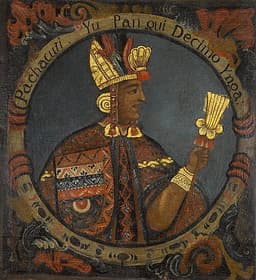
Pachacuti
Emperor · Medieval
69.4Total
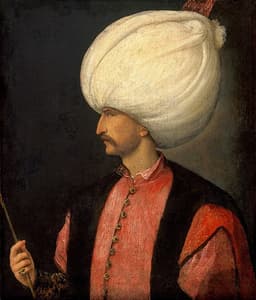
Suleiman the Magnificent
Emperor · Medieval
73.2Total
Basic Information
Born
1418
1494
Died
1472
1566
Era
Medieval
Medieval
Nationality
Inca Empire
Ottoman Empire
Occupation
Emperor
Emperor
Civilization
Other
Middle Eastern
Score Comparison
Military (10%)
78.5
85.0
Political (20%)
58.1
78.0
Influence (20%)
65.0
72.0
Legacy (20%)
72.0
68.0
Leadership (15%)
78.0
72.0
Strategy (15%)
69.2
72.0
TOTAL
69.4
73.2
Pachacuti — Complete Timeline
1438 AD
Conquest of the Chanka KingdomWar
Pachacuti led the Inca army to defeat the Chanka, a powerful rival, in a decisive battle near Cusco. This victory secured his position as Sapa Inca and initiated a period of rapid expansion, transforming the Inca from a small kingdom into a vast empire.
ConquestInca ExpansionChanka
Impact: regional
1440 AD
Reconstruction of CuscoCultural◆ Major
Pachacuti rebuilt Cusco as the imperial capital, designing it in the shape of a puma and constructing massive stone structures like Sacsayhuam
Urban PlanningArchitectureInca Empire
Impact: regionalconstructive
1450 AD
Initiation of Machu Picchu's ConstructionCultural◆ Major
Pachacuti ordered the construction of Machu Picchu, a royal estate and ceremonial site high in the Andes. The complex featured sophisticated dry-stone masonry and terraced agriculture, serving as a symbol of Inca engineering and a retreat for the emperor.
ArchitectureRoyal EstateInca Engineering
Impact: regionalconstructive
Suleiman the Magnificent — Complete Timeline
1522 AD
Siege of RhodesWar◆ Major
Suleiman personally led a massive Ottoman campaign against the Knights Hospitaller on Rhodes. After a six-month siege, the knights surrendered and were allowed to leave. This victory secured Ottoman control over the eastern Mediterranean.
SiegeMediterraneanKnights Hospitaller
Impact: regional
1526 AD
Battle of MohácsWar
Suleiman's Ottoman army defeated the Hungarian forces of King Louis II at Moh
BattleHungaryOttoman expansion
Impact: regional
1529 AD
Siege of ViennaWar◆ Major
Suleiman besieged Vienna, the Habsburg capital, with a large army. The siege failed due to supply issues, disease, and strong defenses. This defeat halted Ottoman expansion into central Europe and marked the empire's furthest advance westward.
SiegeViennaDefeat
Impact: regional
1530 AD
Codification of Ottoman lawReform◆ Major
Suleiman oversaw the compilation and standardization of Ottoman legal codes, known as Kanun. These laws regulated criminal justice, land tenure, and taxation, creating a unified legal system that balanced sharia with secular law. He earned the title 'Kanuni' (the Lawgiver).
Legal reformKanunOttoman Empire
Impact: nationalconstructive
1536 AD
Execution of Ibrahim PashaPolitical Action◆ Major
Suleiman ordered the execution of his grand vizier and close friend Ibrahim Pasha, who had served for 13 years. The reasons remain debated, but likely involved Ibrahim's growing power and conflicts with Suleiman's wife, Hurrem Sultan. This event demonstrated the absolute power of the sultan.
ExecutionCourt politicsPower
Impact: nationaltragic
Expert Analysis
Pachacuti vs Suleiman the Magnificent
# The Sultan and the Sapa Inca: Two Architects of Empire
In the summer of 1529, Suleiman the Magnificent stood before the walls of Vienna, his army of perhaps 100,000 men stretched across the Hungarian plain. The cannons roared, but the city held. Half a world away, in the thin air of the Andes, Pachacuti Inca Yupanqui had already conquered an empire that stretched from the Amazon to the Pacific—yet he had never seen a horse, a cannon, or a wheel in military use. Both men built empires that would awe the world, but they did so from radically different foundations, and their legacies took shapes as distinct as their worlds.
Origins
Suleiman was born into the wealth and complexity of the Ottoman dynasty in 1494, the son of Sultan Selim I. As a prince, he governed provinces in the empire's far reaches, learning the art of rule from the ground up. The Ottoman system was old, literate, and connected to the great trade routes of the Mediterranean and Asia. Suleiman inherited not just a throne but a bureaucratic apparatus, a standing army, and a legal tradition that stretched back centuries.
Pachacuti, born in 1418, emerged from a far humbler world. The Inca were then a small kingdom in the highlands of Peru, one of many competing states. Their capital, Cusco, was a modest town of stone and thatch. They had no writing, no currency, no wheeled vehicles. Their "empire" was little more than a valley. Pachacuti's name—meaning "he who remakes the world"—was not his birth name. He earned it.
Rise to Power
Suleiman's path to power was smooth by comparison. When his father died in 1520, the 26-year-old prince ascended without opposition. The Ottoman succession was brutal but efficient: Suleiman had his brothers strangled, a practice that ensured no civil war. He then turned outward, launching campaigns that would define his reign.
Pachacuti's rise was a story of survival. In 1438, when he was a young prince, the Chanka—a powerful rival kingdom—attacked Cusco. The Inca king, Pachacuti's father, fled. But Pachacuti stayed, rallied the city's defenders, and led a desperate counterattack that shattered the Chanka army. It was a moment of sheer will. His father abdicated, and Pachacuti became Sapa Inca. He was 20 years old. From that battle, he would forge an empire.
Leadership & Governance
Suleiman ruled through law. In 1530, he oversaw the codification of Ottoman law, the Kanun, which standardized criminal, land, and tax regulations across a vast, diverse empire. He was called "the Lawgiver" by his own people—"the Magnificent" was a European invention. His court was a center of poetry, architecture, and scholarship. He commissioned the Süleymaniye Mosque in Istanbul, a masterpiece of the architect Sinan. He governed through a trained bureaucracy, with viziers and judges who answered to the sultan.
Pachacuti ruled through infrastructure and ideology. He rebuilt Cusco in the shape of a puma, using massive stone blocks fitted without mortar—so precisely that a knife blade could not slip between them. He initiated the construction of Machu Picchu around 1450, a royal estate that was also a sacred mountain retreat. But his true genius was administrative: he divided the empire into four quarters, each governed by a trusted relative; he created a system of roads and relay runners that could carry messages from Quito to Santiago in days; he imposed the Quechua language and the worship of the sun god Inti as unifying forces. Where Suleiman used written law, Pachacuti used oral decree and ritual.
Triumph & Tragedy
Suleiman's greatest triumph was the Battle of Mohács in 1526, where his army crushed the Hungarians in under two hours. King Louis II died in the rout, and Hungary fell under Ottoman influence for 150 years. But his greatest failure was Vienna in 1529. The siege collapsed due to supply problems, disease, and the onset of winter. The Habsburg heartland remained unbroken. Suleiman also suffered a personal tragedy: in 1536, he executed his grand vizier and closest friend, Ibrahim Pasha, for reasons still debated—likely fear of his power. It was a cold act that revealed the loneliness of absolute rule.
Pachacuti's triumph was the conquest of the Chanka, which launched his empire. He then conquered the Chimú, the Colla, and dozens of other kingdoms, always integrating their elites into Inca administration. His tragedy was more subtle: he created a system so centralized that it depended entirely on the Sapa Inca's genius. When the Spanish arrived 60 years after his death, the empire collapsed in a few years—partly because the rigid structure he built could not adapt to an entirely new threat.
Character & Destiny
Suleiman was a man of balance: warrior and poet, lawgiver and patron. He wrote verses under the pen name "Muhibbi" (the Lover). He was capable of both mercy and ruthlessness. His personality shaped an empire that was stable, wealthy, and culturally brilliant—but also brittle. The execution of Ibrahim Pasha showed that even the most trusted could fall.
Pachacuti was a visionary who remade reality. He looked at a small kingdom and imagined an empire that would cover a continent. He was relentless, strategic, and deeply religious. His personality shaped an empire that was efficient, unified, and awe-inspiring—but also isolated. The Inca had no contact with the Old World, and their technology remained Neolithic. Pachacuti built a world that was complete, but fragile.
Legacy
Suleiman's legacy is the Ottoman Golden Age, remembered in Istanbul's skyline and in the legal codes that influenced the Middle East for centuries. His empire lasted until 1922. His name is spoken from Budapest to Baghdad.
Pachacuti's legacy is Machu Picchu, the Inca roads, and the Quechua language spoken by millions today. His empire fell, but its bones remain in the Andes. He is remembered as the father of the Inca nation, a figure of almost mythic stature.
Conclusion
Two men, two worlds. Suleiman inherited a machine and improved it; Pachacuti built one from nothing. The sultan's empire was connected, literate, and part of a global conversation; the Sapa Inca's was isolated, oral, and self-contained. Both achieved greatness, but their greatness was shaped by the limits of their worlds. Suleiman's Vienna failed because the Ottoman supply lines stretched too far; Pachacuti's empire fell because it had never needed to imagine a Spanish conquistador. In the end, the lesson is not that one was greater than the other, but that every empire—no matter how magnificent—is a prisoner of its time and place.
Rankings
🥇
Suleiman the MagnificentLeader
Mil: 85.0Pol: 78.0Inf: 72.0
73.2
🥈
Pachacuti
Mil: 78.5Pol: 58.1Inf: 65.0
69.4
+3.8 behind
How This Comparison Works
Algorithm
Each figure is scored on 6 dimensions (0—100 scale) based on structured historical data: Military (10%), Political (20%), Influence (20%), Legacy (20%), Leadership (15%), Strategy (15%). The weighted total produces the final ranking.
Data Sources
Scores are computed from structured sub-indicators in the database. Scale factors adjust for era (Ancient ×0.85, Modern ×1.0) and civilization size (Eastern ×1.05, Other ×0.80) to account for differences in population and military scale.
Maximum 3 Figures
Comparisons are limited to 2—3 figures to ensure readability and statistical meaningfulness.
Error Margins
±5 points per dimension — Sub-scores are derived from historical records with inherent uncertainty. Two figures within 5 points on a dimension should be considered roughly equivalent in that area.
Total Score Accuracy
±3 points overall — The weighted combination of 6 dimensions produces a total score with approximately ±3 points of uncertainty. Differences of less than 3 points are not statistically significant— the figures are effectively tied.
Known Limitations
- Historical records are incomplete and uneven across civilizations
- Figures from oral-tradition societies may be underrepresented
- Occupation labels can misclassify multi-role figures
- Scores measure capability and impact, not moral character
- Quantitative scoring is a comparison tool, not absolute truth
Capability Radar
Military (10%) — Battles & Warfare
Battles
85
95
Win Rate
90
90
Expansion
90
95
Political (20%) — Governance & Reform
Reform
92
90
Diplomacy
75
88
Economy
80
85
Influence (20%) — Cultural & Global Reach
Cultural
85
90
Global
65
88
Legacy (20%) — Historical Impact
Historical
80
92
Longevity
70
85
Leadership (15%) — Power & Stability
Tenure
85
95
Stability
82
85
Strategy (15%) — Tactics & Innovation
Strategy
88
92
Tactics
80
85
Reform
85
80
Similar Comparisons
Comments & Discussion
TheGildedGunner6/16/2026
Suleiman’s sieges were textbook brilliance—relentless logistics, engineer corps, and powder. Pachacuti never saw a cannon, so stop pretending they’re comparable. The Inca remade civilization without horses or wheels; the Ottomans had 200 years of gunpowder advantage. Suleiman conquered, Pachacuti *built*. One ruled by fear and steel, the other by terraces and mitma policy. Which legacy feeds people today?
长城守望者6/16/2026
别被“苏莱曼大帝”的名号唬住了。他那套全靠火器碾压——奥斯曼的火炮比印加的石斧先进600年。帕查库蒂才是真硬汉:不用轮子、不写字,用Mit'a劳役制和石板路粘合帝国。维也纳城下没辙那叫打不赢;马丘比丘屹立五百年叫工程永恒。火药神教的信徒们,醒醒吧!