Loading...
Pachacuti vs Philip the Good
Pachacuti leads by 9.9 pts · 2 figures compared
…
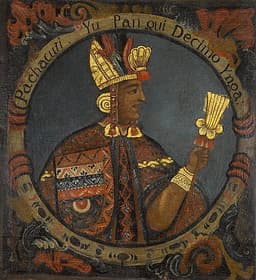
Pachacuti
Emperor · Medieval
69.4Total
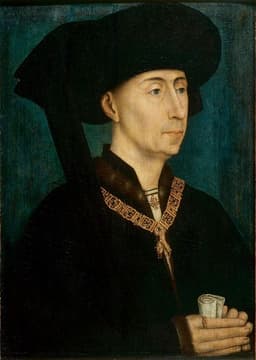
Philip the Good
Emperor · Medieval
59.5Total
Basic Information
Born
1418
1396
Died
1472
1467
Era
Medieval
Medieval
Nationality
Inca Empire
Burgundy
Occupation
Emperor
Emperor
Civilization
Other
Western
Score Comparison
Military (10%)
78.5
47.5
Political (20%)
58.1
62.7
Influence (20%)
65.0
56.7
Legacy (20%)
72.0
54.0
Leadership (15%)
78.0
78.0
Strategy (15%)
69.2
60.0
TOTAL
69.4
59.5
Pachacuti — Complete Timeline
1438 AD
Conquest of the Chanka KingdomWar
Pachacuti led the Inca army to defeat the Chanka, a powerful rival, in a decisive battle near Cusco. This victory secured his position as Sapa Inca and initiated a period of rapid expansion, transforming the Inca from a small kingdom into a vast empire.
ConquestInca ExpansionChanka
Impact: regional
1440 AD
Reconstruction of CuscoCultural◆ Major
Pachacuti rebuilt Cusco as the imperial capital, designing it in the shape of a puma and constructing massive stone structures like Sacsayhuam
Urban PlanningArchitectureInca Empire
Impact: regionalconstructive
1450 AD
Initiation of Machu Picchu's ConstructionCultural◆ Major
Pachacuti ordered the construction of Machu Picchu, a royal estate and ceremonial site high in the Andes. The complex featured sophisticated dry-stone masonry and terraced agriculture, serving as a symbol of Inca engineering and a retreat for the emperor.
ArchitectureRoyal EstateInca Engineering
Impact: regionalconstructive
Philip the Good — Complete Timeline
1429 AD
Acquired the County of NamurPolitical Action◆ Major
Philip purchased the County of Namur from the impoverished Count John III, expanding Burgundian territory. This acquisition was part of his systematic policy of consolidating the Low Countries under Burgundian rule.
Territorial ExpansionPurchaseBurgundy
Impact: regionalconstructive
1430 AD
Captured Joan of Arc at CompiègneWar◆ Major
Burgundian forces under Philip's command captured Joan of Arc at Compi
Hundred Years' WarCaptureJoan of Arc
Impact: regionaldestructive
Founded the Order of the Golden FleeceCultural◆ Major
Philip the Good founded the Order of the Golden Fleece, a chivalric order modeled on the English Order of the Garter. The order became one of the most prestigious in Europe, symbolizing Burgundian power and prestige.
ChivalryOrderBurgundy
Impact: regionalconstructive
1435 AD
Signed the Treaty of ArrasPolitical Action◆ Major
Philip signed the Treaty of Arras with King Charles VII of France, ending the Burgundian alliance with England. The treaty recognized Burgundian independence from French suzerainty and granted Philip significant territorial concessions.
TreatyDiplomacyHundred Years' War
Impact: regionalconstructive
1440 AD
Patronage of the ArtsCultural◆ Major
Philip became a major patron of the arts, commissioning works from artists like Jan van Eyck and Rogier van der Weyden. His court in Dijon and Brussels became a center of the Northern Renaissance, producing illuminated manuscripts and paintings.
PatronageRenaissanceArt
Impact: regionalconstructive
Expert Analysis
Pachacuti vs Philip the Good
# The Puma and the Fleece: Two Visions of Power in the Fifteenth Century
In the high Andes, a warrior-king stood atop a mountain he would soon reshape. In the lowlands of Flanders, a prince in velvet robes watched a painter mix lapis lazuli into the blue of a virgin’s cloak. Both men ruled in the fifteenth century. Both built empires. But Pachacuti Inca Yupanqui and Philip the Good, Duke of Burgundy, inhabited different worlds so entirely that their only common ground was the ambition to leave something permanent behind. One carved his legacy from stone and blood; the other wove his from diplomacy, gold leaf, and the silken threads of chivalry.
Origins
Pachacuti was born in 1418 into a kingdom that was not yet an empire. The Incas were one of many small states in the Peruvian highlands, constantly threatened by the powerful Chanka confederation to the south. His father, Viracocha Inca, was a competent ruler, but the realm was fragile. Young Yupanqui—he would later take the name Pachacuti, meaning “earth-shaker”—grew up in a world where survival depended on military prowess and the favor of the sun god Inti.
Philip the Good, born in 1396 in Dijon, inherited a different kind of fragility. The Valois dukes of Burgundy ruled a patchwork of territories from the Low Countries to the Franche-Comté, theoretically vassals of the French crown but in practice independent. Philip’s father, John the Fearless, had been assassinated in 1419 on a bridge at Montereau, in the presence of the French dauphin. That murder marked Philip for life: he learned early that politics was a game of knives, both literal and figurative.
Rise to Power
Pachacuti’s rise came through war. In 1438, when he was twenty years old, the Chanka launched a massive assault on Cusco. Viracocha fled the city with his chosen heir, leaving young Yupanqui to defend the capital with a ragtag army. Against all odds, he routed the Chanka in a battle that became the founding myth of the Inca Empire. The victory was so complete that the stone warriors of the Chanka were said to have turned to stone in terror. Yupanqui deposed his father, took the throne, and began the conquests that would create the largest empire in pre-Columbian America.
Philip’s path was more circuitous. He was already duke when his father was murdered, but he spent the first decade of his reign avenging that death. He allied with the English against France, and in 1430 his troops captured Joan of Arc at Compiègne—a moment that defined his early reputation. He sold her to the English, who burned her. But Philip was not a man of simple vengeance. In 1435, he signed the Treaty of Arras with Charles VII, the very man complicit in his father’s murder, and switched sides. It was a masterstroke of realpolitik: Burgundy gained territory, independence, and the king’s acknowledgment of its sovereignty.
Leadership & Governance
Pachacuti ruled as a conqueror and an architect. He rebuilt Cusco in the shape of a puma, the sacred animal of the Incas, with massive stone walls that fit together without mortar—so precisely that a knife blade could not be inserted between them. He initiated the construction of Machu Picchu around 1450, a royal estate perched on a ridge between two peaks, designed to harmonize with the sacred landscape. His administrative reforms were equally monumental: he divided the empire into four provinces, imposed the Quechua language, and created a system of roads and storehouses that allowed a runner to carry fresh fish from the coast to Cusco in two days.
Philip governed through patronage, marriage, and gold. He never led an army in battle, but he acquired territory through purchase—buying the County of Namur in 1429 from its impoverished count—and through strategic marriages. His court in Bruges and Dijon became the most brilliant in Europe north of the Alps. In 1430, he founded the Order of the Golden Fleece, a chivalric order that bound the greatest nobles of his realm to him through oaths of loyalty and the shared symbolism of the fleece—a reference to both Jason’s quest and the wool trade that made Burgundy rich. He commissioned Jan van Eyck to paint the Ghent Altarpiece and Rogier van der Weyden to create works of such luminous detail that they seemed to capture light itself.
Triumph & Tragedy
Pachacuti’s greatest triumph was the transformation of a minor kingdom into an empire that stretched from modern Ecuador to Chile. His tragedy was that he could not see its fragility. The Inca system depended entirely on the Sapa Inca’s authority; when the Spanish arrived in 1532, the empire was in the midst of a civil war between his grandsons. The stones of Machu Picchu would be abandoned, swallowed by jungle, unknown to the outside world for four centuries.
Philip’s triumph was the Burgundian state itself—a wealthy, cultured, and stable realm that seemed to transcend the chaos of the Hundred Years’ War. His tragedy was that it could not outlast him. His son, Charles the Bold, inherited the duchy’s wealth but not its patience. Charles’s aggression would provoke a coalition that destroyed Burgundian power in 1477, and the territories Philip had assembled so carefully were divided between France and the Habsburgs.
Character & Destiny
Pachacuti was a man of stone and fire. He believed he was chosen by the sun, and that belief gave him the certainty to reshape mountains. His personality was absolute, his vision total. When he conquered a people, he either incorporated them through generous terms or annihilated them. There was no middle ground.
Philip was a man of silk and calculation. He knew when to fight and when to buy, when to avenge and when to forgive. He understood that power in Europe was a matter of perception: a magnificent court, a famous painter, a chivalric order—these were as effective as armies in binding men to his will. Where Pachacuti demanded worship, Philip demanded loyalty.
Legacy
Pachacuti’s legacy is etched into the Andes. Machu Picchu draws millions of visitors each year, a testament to Inca engineering and the vision of one man. The Quechua language he imposed still lives. But his empire collapsed so completely that for centuries, the Incas were remembered only as a footnote to the Spanish conquest.
Philip’s legacy is more diffuse but perhaps more durable. The Order of the Golden Fleece still exists, and the paintings he commissioned hang in the world’s greatest museums. The Burgundian court set the standard for Renaissance splendor, and the treaty system he pioneered shaped European diplomacy for centuries. Yet his state vanished, absorbed by larger powers.
Conclusion
Two rulers, two empires, two kinds of permanence. Pachacuti built with stone, believing that if the walls were strong enough, the empire would last forever. Philip built with alliances, believing that if the bonds were clever enough, the state would endure. Both were wrong. The earth-shaker’s temples fell to invaders; the diplomat’s duchy was carved up by heirs. What remains is not the power they sought but the beauty they left behind: a city shaped like a puma, a painting of a man in a red turban, a mountain estate where the clouds still drift through empty windows. In the end, the most lasting monuments are the ones no empire can destroy.
Rankings
🥇
PachacutiLeader
Mil: 78.5Pol: 58.1Inf: 65.0
69.4
🥈
Philip the Good
Mil: 47.5Pol: 62.7Inf: 56.7
59.5
+9.9 behind
How This Comparison Works
Algorithm
Each figure is scored on 6 dimensions (0—100 scale) based on structured historical data: Military (10%), Political (20%), Influence (20%), Legacy (20%), Leadership (15%), Strategy (15%). The weighted total produces the final ranking.
Data Sources
Scores are computed from structured sub-indicators in the database. Scale factors adjust for era (Ancient ×0.85, Modern ×1.0) and civilization size (Eastern ×1.05, Other ×0.80) to account for differences in population and military scale.
Maximum 3 Figures
Comparisons are limited to 2—3 figures to ensure readability and statistical meaningfulness.
Error Margins
±5 points per dimension — Sub-scores are derived from historical records with inherent uncertainty. Two figures within 5 points on a dimension should be considered roughly equivalent in that area.
Total Score Accuracy
±3 points overall — The weighted combination of 6 dimensions produces a total score with approximately ±3 points of uncertainty. Differences of less than 3 points are not statistically significant— the figures are effectively tied.
Known Limitations
- Historical records are incomplete and uneven across civilizations
- Figures from oral-tradition societies may be underrepresented
- Occupation labels can misclassify multi-role figures
- Scores measure capability and impact, not moral character
- Quantitative scoring is a comparison tool, not absolute truth
Capability Radar
Military (10%) — Battles & Warfare
Battles
85
45
Win Rate
90
50
Expansion
90
60
Political (20%) — Governance & Reform
Reform
92
70
Diplomacy
75
80
Economy
80
85
Influence (20%) — Cultural & Global Reach
Cultural
85
65
Global
65
50
Legacy (20%) — Historical Impact
Historical
80
60
Longevity
70
55
Leadership (15%) — Power & Stability
Tenure
85
75
Stability
82
70
Strategy (15%) — Tactics & Innovation
Strategy
88
55
Tactics
80
40
Reform
85
30
Similar Comparisons
Comments & Discussion
PumaTamer_Atahualpa6/16/2026
Military historian here: stop romanticizing Pachacuti’s "genius." His real innovation wasn’t strategy—it was terror. He depopulated whole valleys, resettled conquered peoples as mitmaq, and force-fed them Inca religion. That’s not statecraft, that’s ethnic cleansing with llamas. Philip the Good at least bribed his enemies into submission; Pachacuti just massacred until the ground stopped screaming.|
丝绸与铁血6/16/2026
数据怀疑论者说:你们比的是两种不同的“帝国幻觉”。勃艮第的菲利普三世控制着低地国家最富庶的城市,税收比卡斯提尔王国还多,但军事上他连瑞士民兵都打不过。帕查库蒂的印加没有货币、没有文字,却征服了上万平方英里。论治理效率,菲利普的花哨宫廷纯属浪费粮食,只是金银箔包着的封建残骸。
SpearPointPhilologist6/16/2026
Classics scholar here with a bronze-age reality check: calling Pachacuti a "fifteenth-century" ruler is historically lazy—he’s late Iron Age in mindset, technology, and logistics. No horses, no wheels, no writing, no iron weapons. Philip’s court had Gutenberg’s press, Flemish primitives, and artillery. Comparing them is like comparing a Polynesian navigator to a Venetian admiral: both wet, but not the same ocean.|
边锤与羊皮6/16/2026
历史爱好者角度:帕查库蒂是真正的实干家,他亲手设计马丘比丘的排水系统,亲自带兵翻越安第斯山脊。菲利普呢?赞助凡·艾克画《根特祭坛画》花了十年,自己连颜料成分都搞不清。一个是把山削平建帝国的alpha,一个是在宴会厅里看挂毯流口水的贵族小少爷。别用“不同文明”当借口,帕查库蒂动真格的。
HabsburgGhost6/16/2026
Revisionist critic: both are overrated feudal thugs with good PR. Pachacuti’s "earth-shaker" nickname was self-awarded; Philip’s "Good" came from towns he didn’t sack (yet). The real difference? Genocide efficiency. Pachacuti’s systematic resettlement destroyed Quechua diversity forever. Philip burned Joan of Arc—that’s personal. Stop calling them builders; they were wreckers with good tailors and better poets.