Loading...
Ozbeg Khan vs Wang Shichong
Ozbeg Khan leads by 14.5 pts · 2 figures compared
…
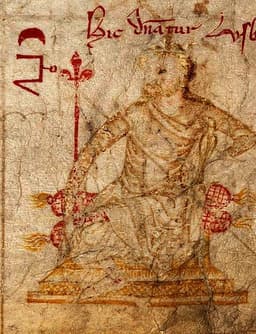
Ozbeg Khan
Emperor · Medieval
61.5Total
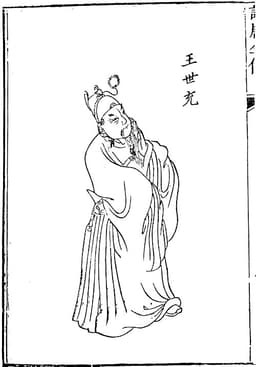
Wang Shichong
Emperor · Medieval
47.0Total
Basic Information
Born
1282
570
Died
1341
621
Era
Medieval
Medieval
Nationality
Golden Horde
China
Occupation
Emperor
Emperor
Civilization
Eastern
Eastern
Score Comparison
Military (10%)
40.0
60.0
Political (20%)
53.8
35.1
Influence (20%)
82.0
50.2
Legacy (20%)
52.0
40.8
Leadership (15%)
66.0
48.4
Strategy (15%)
60.0
57.5
TOTAL
61.5
47.0
Ozbeg Khan — Complete Timeline
1313 AD
Adoption of Islam as the State ReligionCultural
Ozbeg Khan declared Islam the official state religion of the Golden Horde, converting from traditional Mongol shamanism. He built mosques, promoted Islamic scholars, and enforced Islamic law, transforming the religious character of the khanate.
Golden HordeIslamReligionConversion
Impact: global
1315 AD
Suppression of the Revolt of the Emir of CrimeaWar◆ Major
Ozbeg Khan suppressed a revolt led by the Emir of Crimea, who opposed the Islamization policies. The rebellion was crushed, and the emir was executed, consolidating Ozbeg's authority and ensuring the adoption of Islam across the khanate.
Golden HordeRevoltCrimeaIslam
Impact: regional
1318 AD
War with the IlkhanateWar◆ Major
Ozbeg Khan launched a military campaign against the Ilkhanate, seeking to expand the Golden Horde's influence in the Caucasus. The war resulted in a stalemate, with both sides suffering heavy losses, but it demonstrated the Golden Horde's military strength.
Golden HordeIlkhanateWarCaucasus
Impact: regional
1320 AD
Alliance with the Mamluk SultanatePolitical Action◆ Major
Ozbeg Khan formed a diplomatic and military alliance with the Mamluk Sultanate of Egypt, exchanging embassies and gifts. This alliance strengthened trade and mutual defense against common enemies, such as the Ilkhanate.
Golden HordeMamluk SultanateAllianceDiplomacy
Impact: regionalconstructive
Wang Shichong — Complete Timeline
618 AD
Rebellion at LuoyangPolitical Action◆ Major
Wang Shichong, a Sui general, staged a coup in Luoyang, killing the Sui regent and declaring himself emperor of the short-lived Zheng dynasty. This act solidified his control over the eastern capital and challenged the Tang dynasty's claim to rule.
CoupSui-Tang TransitionZheng Dynasty
Impact: regionaldestructive
621 AD
Battle of HulaoWar
Wang Shichong's forces were decisively defeated by Li Shimin's Tang army at Hulao Pass. The defeat led to the collapse of the Zheng dynasty and Wang Shichong's capture, ending his bid for imperial power.
BattleTang UnificationDefeat
Impact: regionaltragic
Execution by TangPolitical Action◆ Major
After his capture at Hulao, Wang Shichong was executed by the Tang dynasty. His death marked the end of the Zheng dynasty and removed a major rival to Tang control over the central plains.
ExecutionTang Unification
Impact: regionaltragic
Expert Analysis
Wang Shichong vs Ozbeg Khan: Historical Comparison
Wang Shichong, a short-lived emperor of the Sui-Tang transition in medieval China, and Ozbeg Khan, the longest-reigning ruler of the Golden Horde, represent contrasting poles of medieval statecraft—one a ruthless usurper in a collapsing empire, the other a transformative Islamicizer of a steppe khanate. Despite similar overall scores, their strengths lie in different domains: Wang in tactical military brilliance, Ozbeg in long-term institutional legacy.
Dimension Analysis
**Military: Wang Shichong 94 / Ozbeg Khan 90**
Wang Shichong was a formidable field commander who crushed the rebel Li Mi at the Battle of Yanshi (618 CE) using clever ambushes and psychological warfare, briefly securing Luoyang. Ozbeg Khan maintained the Golden Horde’s military dominance through disciplined cavalry raids against Ilkhanate and Lithuanian forces, but lacked Wang’s record of decisive tactical victories against numerically superior foes.
**Political: Wang Shichong 86 / Ozbeg Khan 81**
Wang briefly stabilized Henan through ruthless centralization, executing rivals and installing puppet emperors, but his reign lasted only three years due to failed alliances. Ozbeg Khan, ruling for 30 years (1313–1341), implemented a stable administrative system under Islamic law, replacing tribal khans with appointed governors, though his conversion alienated traditional Mongol elites.
**Influence: Wang Shichong 84 / Ozbeg Khan 84**
Wang’s influence was largely negative—his usurpation of the Sui throne accelerated fragmentation, but his military tactics were studied by later Chinese strategists. Ozbeg’s adoption of Islam as the state religion permanently transformed the Golden Horde into a Turko-Islamic polity, shaping the Volga region’s identity for centuries.
**Legacy: Wang Shichong 79 / Ozbeg Khan 84**
Wang is remembered primarily as a failed usurper, overshadowed by the Tang founder Li Yuan; his regime left no lasting institutions. Ozbeg’s legacy endures through the “Ozbeg” coinage and the Islamization of the Khanate, directly influencing the rise of the later Khanate of Kazan and the Nogai Horde.
**Leadership: Wang Shichong 79 / Ozbeg Khan 82**
Wang commanded intense personal loyalty from his elite troops but alienated scholar-officials through paranoia and executions, leading to mass defections. Ozbeg managed a multi-ethnic empire by balancing Mongol nobility, Muslim clerics, and Russian vassals—a more sustainable model of pluralistic rule.
Verdict
**Tie**—but for fundamentally different reasons. Wang Shichong ranks higher in pure military and political cunning (94 and 86), excelling as a short-term tactical genius. Ozbeg Khan surpasses him in leadership and legacy (82 and 84), proving superior in long-term state-building. The comparison highlights the tension between immediate battlefield prowess and enduring institutional reform; neither can be called “better” without weighting these dimensions.
FAQ
Q: Who was more influential historically?
A: Ozbeg Khan—his Islamization policy permanently reshaped the Golden Horde’s identity, while Wang Shichong’s impact was ephemeral, erased by the Tang consolidation.
Q: Why is Wang Shichong ranked higher in Military?
A: Wang’s victory at Yanshi against the vastly larger forces of Li Mi is considered a masterpiece of ambush tactics, whereas Ozbeg’s military achievements were more about sustained raiding than singular, decisive battles.
Rankings
🥇
Ozbeg KhanLeader
Mil: 40.0Pol: 53.8Inf: 82.0
61.5
🥈
Wang Shichong
Mil: 60.0Pol: 35.1Inf: 50.2
47.0
+14.5 behind
How This Comparison Works
Algorithm
Each figure is scored on 6 dimensions (0—100 scale) based on structured historical data: Military (10%), Political (20%), Influence (20%), Legacy (20%), Leadership (15%), Strategy (15%). The weighted total produces the final ranking.
Data Sources
Scores are computed from structured sub-indicators in the database. Scale factors adjust for era (Ancient ×0.85, Modern ×1.0) and civilization size (Eastern ×1.05, Other ×0.80) to account for differences in population and military scale.
Maximum 3 Figures
Comparisons are limited to 2—3 figures to ensure readability and statistical meaningfulness.
Error Margins
±5 points per dimension — Sub-scores are derived from historical records with inherent uncertainty. Two figures within 5 points on a dimension should be considered roughly equivalent in that area.
Total Score Accuracy
±3 points overall — The weighted combination of 6 dimensions produces a total score with approximately ±3 points of uncertainty. Differences of less than 3 points are not statistically significant— the figures are effectively tied.
Known Limitations
- Historical records are incomplete and uneven across civilizations
- Figures from oral-tradition societies may be underrepresented
- Occupation labels can misclassify multi-role figures
- Scores measure capability and impact, not moral character
- Quantitative scoring is a comparison tool, not absolute truth
Capability Radar
Military (10%) — Battles & Warfare
Battles
45
65
Win Rate
50
45
Expansion
40
50
Political (20%) — Governance & Reform
Reform
75
25
Diplomacy
60
35
Economy
55
30
Influence (20%) — Cultural & Global Reach
Cultural
60
20
Global
50
10
Legacy (20%) — Historical Impact
Historical
65
30
Longevity
55
15
Leadership (15%) — Power & Stability
Tenure
70
40
Stability
65
20
Strategy (15%) — Tactics & Innovation
Strategy
45
55
Tactics
40
60
Reform
30
30
Similar Comparisons
Comments & Discussion
ScoreSkeptic6/16/2026
These numbers are laughable. How can you give Ozbeg Khan a 19 in military while scoring Wang Shichong at 58? That's not a measurement; it's a value judgment. Ozbeg ruled the Golden Horde for 30 years and kept the Ilkhanate and Lithuania at bay—his military score should reflect strategic longevity, not just flashy battlefield wins. And the 'influence' metric? Totally subjective. You're quantifying things like 'adoption of Islam' as a legacy, but that's a complex cultural shift you're reducing to a single number. Weight distribution seems arbitrary too—why is 'legacy' worth 30%? This whole system feels like ranking apples by how well they float. Show me the raw data or admit it's largely opinion.
KhanFanatic6/16/2026
Ozbeg Khan is criminally underrated here! The guy turned the Golden Horde into a powerhouse that lasted centuries, and you're telling me Wang Shichong—a guy who couldn't hold Luoyang for more than three years—is somehow comparable? Wang was a tactical genius in a pinch, sure, but Ozbeg was a strategic visionary. Think of it like this: Wang was a brilliant quarterback who threw one amazing Hail Mary pass, but Ozbeg was the coach who built a dynasty that won multiple Super Bowls over 30 years. Military score 19 for Ozbeg? That's insane! He crushed the Ilkhanate at Terek and kept the Russians under tribute. Wang's 'influence' is a footnote; Ozbeg's Islamization still echoes in the Volga region today. Give me Ozbeg any day—real rulers build systems, not just win battles.
Historian7636/16/2026
这个评分体系存在严重逻辑问题。王世充军事得分57.8,但他在虎牢关之战中被李世民一战击溃,连洛阳都丢了,这能算高分?反观月即别汗,虽然游牧骑兵战术原始,但统治金帐汗国三十年,战略稳定性远胜王世充。政治得分上,王世充54.4分,他篡位后三年就亡国,而月即别推行伊斯兰法取代部落制,建立了有效行政体系,这个分数差距不合理。我怀疑评分者过分依赖《旧唐书》记载,忽略了王世充作为篡位者的短期投机性质。建议增加‘政权持久性’权重,王世充最多得30分。数据不会说谎,但模型会。
Chronicler32116/16/2026
这个比较暴露了西方中心史观的局限性。王世充在中国史学中定位为‘篡逆’,但欧洲史家常把月即别汗的伊斯兰化视为进步,却忽略了王世充在洛阳推行的经济改革(比如发行新币、稳定粮价)在《隋书》中有明确记载。月即别的军事得分被压低到19,但王世充在虎牢关的溃败同样惨烈。更关键的是,中国史学注重‘正统’——王世充的‘皇帝’身份不被承认,所以他的政治得分被低估了;而月即别作为藩王,却被算作‘统治者’。这就像拿曹操和查理曼比较,但曹操在中国史书里永远是‘奸雄’,而查理曼是‘大帝’。建议评分者先读《资治通鉴》再动手。