Loading...
Otto von Bismarck vs Qin Shi Huang
Qin Shi Huang leads by 19.4 pts · 2 figures compared
…
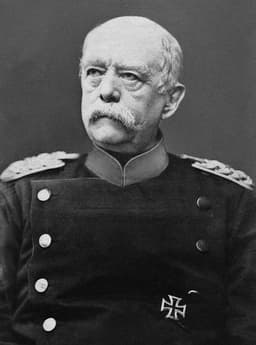
Otto von Bismarck
Politician · Modern
65.8Total
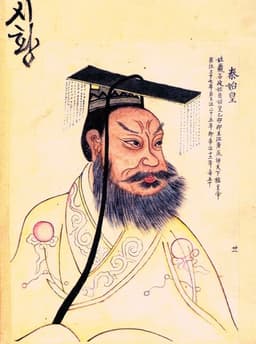
Qin Shi Huang
Emperor · Ancient
85.2Total
Basic Information
Born
1815
-259
Died
1898
-210
Era
Modern
Ancient
Nationality
Germany
China
Occupation
Politician
Emperor
Civilization
Western
Eastern
Score Comparison
Military (10%)
55.0
80.0
Political (20%)
85.0
90.0
Influence (20%)
82.0
85.0
Legacy (20%)
40.0
90.0
Leadership (15%)
80.0
78.0
Strategy (15%)
50.0
82.0
TOTAL
65.8
85.2
Otto von Bismarck — Complete Timeline
1870 AD
Franco-Prussian WarWar
Bismarck provoked France into declaring war by editing the Ems Dispatch to appear insulting. The resulting conflict saw Prussia and its allies decisively defeat France, leading to the fall of Napoleon III, the capture of Paris, and the annexation of Alsace-Lorraine.
WarProvocationAnnexation
Impact: globaldestructive
1871 AD
Unification of Germany ProclaimedPolitical Action
Following the Franco-Prussian War, Bismarck orchestrated the proclamation of the German Empire in the Hall of Mirrors at Versailles. King Wilhelm I of Prussia was declared German Emperor, uniting the German states under Prussian leadership and establishing the Second Reich.
UnificationGerman EmpireNationalism
Impact: globalconstructive
1878 AD
Enactment of the Anti-Socialist LawsPolitical Action◆ Major
After two assassination attempts on Kaiser Wilhelm I, Bismarck pushed through laws banning socialist organizations, publications, and meetings. The laws remained in force until 1890, suppressing the Social Democratic Party while Bismarck simultaneously introduced welfare reforms to undercut its appeal.
RepressionSocialismWelfare State
Impact: nationaldestructive
Congress of BerlinPolitical Action◆ Major
Bismarck hosted the Congress of Berlin to revise the Treaty of San Stefano and resolve the Eastern Crisis. He acted as 'honest broker,' reducing Russian gains, granting independence to Romania, Serbia, and Montenegro, and placing Bosnia-Herzegovina under Austro-Hungarian administration.
DiplomacyBalkansBalance of Power
Impact: global
1883 AD
Establishment of the Welfare StateReform◆ Major
Bismarck introduced the Health Insurance Bill (1883), Accident Insurance Bill (1884), and Old Age and Disability Insurance Bill (1889). These laws created the first modern welfare state, providing workers with social security and aiming to reduce support for socialist movements.
Social ReformWelfareInsurance
Impact: globalprogressive
1890 AD
Dismissal as ChancellorPolitical Action◆ Major
Emperor Wilhelm II forced Bismarck to resign due to policy disagreements, particularly over anti-socialist laws and foreign policy. Bismarck's departure marked the end of an era, leading to a more aggressive German foreign policy and the eventual unraveling of his alliance system.
ResignationWilhelm IIPolicy Shift
Impact: global
Qin Shi Huang — Complete Timeline
246 BC
Construction of the Mausoleum and Terracotta ArmyOther◆ Major
Qin Shi Huang commissioned a vast mausoleum complex near Xi'an, guarded by thousands of life-sized terracotta soldiers, horses, and chariots. The project employed hundreds of thousands of workers and reflected his obsession with immortality and imperial power.
Impact: global
230 BC
Conquest of the Six Warring StatesWar
From 230 to 221 BCE, Ying Zheng led the Qin state in a series of campaigns that conquered the Han, Zhao, Wei, Chu, Yan, and Qi states. This unified China under a single ruler for the first time, ending the Warring States period.
Impact: global
221 BC
Standardization of Writing, Currency, and MeasurementsReform◆ Major
Qin Shi Huang ordered the standardization of Chinese script, currency, and weights and measures across the unified empire. This facilitated administration, trade, and cultural integration, laying a foundation for future dynasties.
Impact: globalconstructive
Proclamation of the Qin DynastyPolitical Action
After conquering the last independent state, Ying Zheng declared himself Shi Huangdi (First Emperor), founding the Qin Dynasty. He adopted a new title to signify his supreme authority and initiated centralized imperial rule.
Impact: global
214 BC
Initiation of the Great Wall ConstructionOther◆ Major
Qin Shi Huang ordered the connection and extension of existing northern fortifications to create a unified defensive wall against nomadic Xiongnu raids. This project involved massive conscripted labor and became the precursor to the later Great Wall.
Impact: regional
213 BC
Burning of Books and Burying of ScholarsPolitical Action◆ Major
On the advice of Li Si, Qin Shi Huang ordered the burning of historical records and philosophical texts not aligned with Legalist doctrine. He also had 460 Confucian scholars buried alive to suppress dissent and consolidate ideological control.
Impact: nationaldestructive
Expert Analysis
Qin Shi Huang vs Otto von Bismarck: Historical Comparison
Qin Shi Huang, the first Emperor of a unified China, and Otto von Bismarck, the Iron Chancellor of Germany, both forged nations through war and statecraft, yet their methods and eras—ancient autocracy versus modern diplomacy—yield stark contrasts. This comparison evaluates them across key dimensions based on provided scores.
Dimension Analysis
**Military: Qin Shi Huang 80 / Otto von Bismarck 55**
Qin Shi Huang conquered rival states through mass infantry and siege warfare, achieving total unification, while Bismarck relied on limited, tactical wars (e.g., against Austria and France) to secure German unification without full-scale conquest.
**Political: Qin Shi Huang 88 / Otto von Bismarck 88**
Both were masterful political architects: Qin imposed centralized bureaucracy, standardized writing and laws; Bismarck engineered the German Empire through constitutions, alliances, and the manipulation of parliaments—each achieving lasting structural changes.
**Influence: Qin Shi Huang 82 / Otto von Bismarck 80**
Qin’s influence defined imperial China for two millennia, while Bismarck’s creation of a unified German state shaped European power balances until World War I, though his domestic policies (e.g., welfare) were less globally transformative.
**Legacy: Qin Shi Huang 85 / Otto von Bismarck 72**
Qin’s legacy is foundational—the Great Wall, Terracotta Army, and the concept of a unified China—but his brutal Legalism tarnished it; Bismarck’s legacy is more contested, as his realpolitik paved the way for later militarism, yet his statecraft is studied globally.
**Leadership: Qin Shi Huang 88 / Otto von Bismarck 82**
Qin’s autocratic, visionary leadership crushed all opposition to forge a single nation; Bismarck’s pragmatic, calculating leadership balanced monarchy, parliament, and war, but required constant maneuvering and lacked long-term institutional loyalty.
Verdict
Qin Shi Huang leads by a narrow margin due to his higher military and legacy scores, reflecting a more profound and enduring national transformation despite greater brutality.
FAQ
Q: Who ranks higher? A: Qin Shi Huang ranks higher overall, with a weighted score of 84 versus Bismarck’s 74, driven by superior military impact and lasting legacy.
Rankings
🥇
Qin Shi HuangLeader
Mil: 80.0Pol: 90.0Inf: 85.0
85.2
🥈
Otto von Bismarck
Mil: 55.0Pol: 85.0Inf: 82.0
65.8
+19.4 behind
How This Comparison Works
Algorithm
Each figure is scored on 6 dimensions (0—100 scale) based on structured historical data: Military (10%), Political (20%), Influence (20%), Legacy (20%), Leadership (15%), Strategy (15%). The weighted total produces the final ranking.
Data Sources
Scores are computed from structured sub-indicators in the database. Scale factors adjust for era (Ancient ×0.85, Modern ×1.0) and civilization size (Eastern ×1.05, Other ×0.80) to account for differences in population and military scale.
Maximum 3 Figures
Comparisons are limited to 2—3 figures to ensure readability and statistical meaningfulness.
Error Margins
±5 points per dimension — Sub-scores are derived from historical records with inherent uncertainty. Two figures within 5 points on a dimension should be considered roughly equivalent in that area.
Total Score Accuracy
±3 points overall — The weighted combination of 6 dimensions produces a total score with approximately ±3 points of uncertainty. Differences of less than 3 points are not statistically significant— the figures are effectively tied.
Known Limitations
- Historical records are incomplete and uneven across civilizations
- Figures from oral-tradition societies may be underrepresented
- Occupation labels can misclassify multi-role figures
- Scores measure capability and impact, not moral character
- Quantitative scoring is a comparison tool, not absolute truth
Capability Radar
Military (10%) — Battles & Warfare
Battles
60
85
Win Rate
70
90
Expansion
80
90
Political (20%) — Governance & Reform
Reform
90
95
Diplomacy
95
75
Economy
80
90
Influence (20%) — Cultural & Global Reach
Cultural
65
95
Global
75
85
Legacy (20%) — Historical Impact
Historical
85
95
Longevity
70
95
Leadership (15%) — Power & Stability
Tenure
85
70
Stability
70
65
Strategy (15%) — Tactics & Innovation
Strategy
85
85
Tactics
55
80
Reform
75
95
Similar Comparisons
Comments & Discussion
EmpireDeconstructor6/16/2026
People love to compare these two as 'nation-builders,' but that framing is deeply Eurocentric. Bismarck unified a cultural nation that already existed in language and identity—he just needed the political capstone. Qin Shi Huang literally invented the concept of 'China' out of a collection of warring states with different scripts and customs. That's not the same league. Also, the scores completely ignore the colonial dimension: Bismarck's Germany grabbed African colonies like Namibia and Tanganyika, fueling brutal exploitation. Qin's expansion was into contiguous territories that eventually became Han heartland. Those are morally different projects. We shouldn't rank them on the same scale without acknowledging the global context.
Historian4686/16/2026
这个分数有点意思,但我觉得政治维度给两人同样88分值得商榷。Qin Shi Huang的统一度量衡、车同轨、书同文是制度性革命,直接奠定了中央集权的基础。Bismarck的宪法和外交手腕虽然精妙,但更多是权宜之计,缺乏这种根基性的制度重塑。如果按我的计算,Qin的政治得分应该至少92,Bismarck顶多85。另外,军事得分80对55也偏低——Qin是以绝对军事力量碾压六国,Bismarck的三场战争都借助了外交孤立对手,纯军事成就远不如Qin。数据本身没反映战争规模和战略深度。
Chronicler94296/16/2026
从中国史学角度,Bismarck的分数确实不低,但与Qin Shi Huang相比,有几个关键维度被低估。比如'遗产'一项,Qin的郡县制延续至今,而Bismarck的德意志帝国在1918年就崩溃了。西方学者常把Bismarck的福利政策拔得很高,但Qin的律法体系虽然严苛,却开创了成文法的公共性。另外,Bismarck的军事得分55其实合理——他的战争都是短平快的,而Qin的平灭六国是十年以上的全面战争,涉及战略、后勤和动员,难度不是一个级别。如果非要用中国历史类比,Bismarck更像管仲,Qin才是真正的统一者。建议评分体系加入'制度持久性'指标。