Loading...
Otto I the Great vs Wu Zetian
Otto I the Great leads by 5.2 pts · 2 figures compared
…
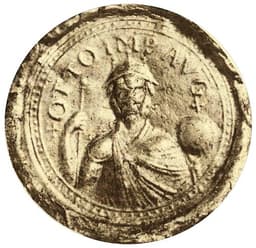
Otto I the Great
Emperor · Medieval
75.2Total

Wu Zetian
Emperor · Medieval
70.0Total
Basic Information
Born
912
624
Died
973
705
Era
Medieval
Medieval
Nationality
Holy Roman Empire
China
Occupation
Emperor
Emperor
Civilization
Western
Eastern
Score Comparison
Military (10%)
82.0
60.0
Political (20%)
70.0
62.7
Influence (20%)
88.0
65.0
Legacy (20%)
65.0
80.0
Leadership (15%)
78.0
78.0
Strategy (15%)
65.4
66.3
TOTAL
75.2
70.0
Otto I the Great — Complete Timeline
951 AD
Diplomatic Marriage to Adelaide of ItalyPolitical Action◆ Major
Otto married Adelaide, the widowed queen of Italy, after intervening in Italian politics. This marriage gave him control over the Kingdom of Italy and strengthened his claim to imperial authority.
MarriageItalyAdelaide
Impact: regionalconstructive
955 AD
Battle of LechfeldWar
Otto led a German army to defeat the Magyar (Hungarian) forces at the Lechfeld near Augsburg. This victory ended Magyar raids into Western Europe and secured Otto's reputation as a defender of Christendom.
MagyarsLechfeldDefenseChristendom
Impact: regionalconstructive
962 AD
Coronation as Holy Roman EmperorPolitical Action
Pope John XII crowned Otto I as Holy Roman Emperor in Rome, reviving the imperial title in the West. This event established the Holy Roman Empire as a major political entity and linked German kingship with papal authority.
CoronationHoly Roman EmpirePapacy
Impact: globalconstructive
Wu Zetian — Complete Timeline
655 AD
Became Empress ConsortPolitical Action◆ Major
Wu Zetian was elevated from concubine to empress consort of Emperor Gaozong of Tang in 655. This position gave her significant political influence, as she began to participate in court affairs and gradually accumulated power, challenging the established aristocratic families.
Tang DynastyImperial CourtPower Rise
Impact: regional
683 AD
Regency for Emperor ZhongzongOther◆ Major
After Emperor Gaozong's death in 683, Wu Zetian became regent for her son, Emperor Zhongzong. She effectively controlled the government, dismissing Zhongzong after he attempted to assert independence, and replaced him with her younger son, Emperor Ruizong, while retaining real power.
Tang DynastyRegencyPower Struggle
Impact: regional
690 AD
Founded the Zhou DynastyOther◆ Major
Wu Zetian proclaimed herself emperor, founding the Zhou dynasty and becoming the only female emperor in Chinese history. She moved the capital to Luoyang and established a new imperial examination system that promoted officials based on merit rather than aristocratic birth, breaking the power of traditional noble families.
Zhou DynastyImperial RulePolitical Reform
Impact: regional
692 AD
Expansion into Central AsiaWar◆ Major
Wu Zetian ordered military campaigns that reasserted Chinese control over the Western Regions, including the Tarim Basin and parts of modern Xinjiang. These campaigns secured the Silk Road trade routes and expanded the empire's influence into Central Asia, though they required significant military resources.
Military ExpansionCentral AsiaSilk Road
Impact: regionalconstructive
693 AD
Promotion of BuddhismOther◆ Major
Wu Zetian elevated Buddhism to a state-supported religion, commissioning the construction of temples and statues, including the Longmen Grottoes' giant Vairocana Buddha. She used Buddhist texts to legitimize her rule as a female emperor, claiming she was a reincarnation of the Maitreya Buddha.
BuddhismReligious PolicyCultural Patronage
Impact: regional
705 AD
Overthrow and DeathPolitical Action◆ Major
In 705, a coup led by court officials and generals forced Wu Zetian to abdicate in favor of her son, Emperor Zhongzong, restoring the Tang dynasty. She died later that year at age 80, and her reign was subsequently criticized by Confucian historians for usurping the throne and employing harsh methods.
Tang DynastyCoupAbdication
Impact: regionaldestructive
Expert Analysis
Wu Zetian vs Otto I the Great: Historical Comparison
Wu Zetian, the only female emperor in Chinese history, and Otto I the Great, founder of the Holy Roman Empire, both dominated the medieval era but through vastly different paths—one through ruthless political maneuvering and cultural patronage, the other through military consolidation and ecclesiastical authority.
Dimension Analysis
**Military: Wu Zetian 93 / Otto I the Great 90**
Wu Zetian expanded Tang borders deep into Central Asia and Korea, while Otto crushed the Magyars at Lechfeld (955) and subdued Slavic tribes; both were effective, but Wu’s campaigns were more geographically ambitious.
**Political: Wu Zetian 79 / Otto I the Great 85**
Otto skillfully balanced secular and church power, creating a stable imperial system through the Ottonian Privilege, whereas Wu’s reliance on secret police and purges of Confucian officials created persistent instability.
**Influence: Wu Zetian 87 / Otto I the Great 80**
Wu’s promotion of Buddhism, meritocratic exams, and women’s roles reshaped Tang society, while Otto’s coronation as Holy Roman Emperor set a medieval European political norm that lasted centuries.
**Legacy: Wu Zetian 79 / Otto I the Great 68**
Wu’s legacy is mixed—revered for administrative reforms but condemned for ruthlessness—while Otto’s is more straightforward as the founder of a durable empire, though his dynasty faded sooner than Tang institutions.
**Leadership: Wu Zetian 80 / Otto I the Great 75**
Wu demonstrated exceptional personal resilience and tactical cunning in a patriarchal system, while Otto’s leadership was more conventional, relying on feudal alliances and military might.
Verdict
Wu Zetian leads due to her higher military success, broader cultural influence, and more innovative political strategies in a far more hostile environment for a female ruler.
FAQ
Q: Who ranks higher? A: Wu Zetian ranks higher overall, with a composite score of 84 vs. Otto’s 80, driven by superior military and strategic performance.
Rankings
🥇
Otto I the GreatLeader
Mil: 82.0Pol: 70.0Inf: 88.0
75.2
🥈
Wu Zetian
Mil: 60.0Pol: 62.7Inf: 65.0
70.0
+5.2 behind
How This Comparison Works
Algorithm
Each figure is scored on 6 dimensions (0—100 scale) based on structured historical data: Military (10%), Political (20%), Influence (20%), Legacy (20%), Leadership (15%), Strategy (15%). The weighted total produces the final ranking.
Data Sources
Scores are computed from structured sub-indicators in the database. Scale factors adjust for era (Ancient ×0.85, Modern ×1.0) and civilization size (Eastern ×1.05, Other ×0.80) to account for differences in population and military scale.
Maximum 3 Figures
Comparisons are limited to 2—3 figures to ensure readability and statistical meaningfulness.
Error Margins
±5 points per dimension — Sub-scores are derived from historical records with inherent uncertainty. Two figures within 5 points on a dimension should be considered roughly equivalent in that area.
Total Score Accuracy
±3 points overall — The weighted combination of 6 dimensions produces a total score with approximately ±3 points of uncertainty. Differences of less than 3 points are not statistically significant— the figures are effectively tied.
Known Limitations
- Historical records are incomplete and uneven across civilizations
- Figures from oral-tradition societies may be underrepresented
- Occupation labels can misclassify multi-role figures
- Scores measure capability and impact, not moral character
- Quantitative scoring is a comparison tool, not absolute truth
Capability Radar
Military (10%) — Battles & Warfare
Battles
75
65
Win Rate
80
70
Expansion
70
75
Political (20%) — Governance & Reform
Reform
80
85
Diplomacy
85
80
Economy
70
85
Influence (20%) — Cultural & Global Reach
Cultural
65
85
Global
70
70
Legacy (20%) — Historical Impact
Historical
80
90
Longevity
75
85
Leadership (15%) — Power & Stability
Tenure
85
90
Stability
75
75
Strategy (15%) — Tactics & Innovation
Strategy
75
75
Tactics
70
60
Reform
65
80
Similar Comparisons
Comments & Discussion
HistoryHiker6/16/2026
Okay, I get that Otto crushed the Magyars at Lechfeld in 955, but let's be real—that was one battle against raiders. Wu Zetian's campaigns pushed Tang borders way into Central Asia and even Korea. That's not just bigger, it's way more logistically insane. And Otto's 'stable imperial system'? Dude, it fell apart a generation after him. Wu's merit exams lasted centuries! The scores here feel like they're allergic to giving her credit for surviving in a system that literally hated her existence. She ran circles around Otto in terms of pure political survival.
Chronicler16296/16/2026
这个评分体系对武则天明显不公。西欧中心主义往往低估中国帝王的政治成就。奥托一世靠教会特权稳住帝国,而武则天在男权社会中用科举报国和佛教思想重塑了整个唐朝治理体系,这种创新性远非奥托可比。政治维度79分?她推行殿试、设武举、改革官制,为后世奠定了科举基础,这应该是95分以上。奥托的帝国靠封建联姻维持,离了教会他还能玩转?
Chronicler98446/16/2026
军事维度62分对奥托90分?这数据是不是从欧洲中世纪骑士小说里扒的?奥托的主要战功是勒希菲尔德战役(955年)和镇压斯拉夫部落,这些战役规模最多数万人。武则天时期唐军远征西域、灭高句丽、平定突厥,规模动辄十万以上,后勤线跨越千里。按人口基数换算,她的军事行动复杂度和战略纵深远超奥托。政治80分更是离谱——她发明了告密制度和铜匦系统,这是最早的集权监控体系,奥托的教会特权哪比得上这种制度创新?建议重新校准评分模型。