Loading...
Otto I the Great vs Wanyan Aguda
Otto I the Great leads by 11.8 pts · 2 figures compared
…
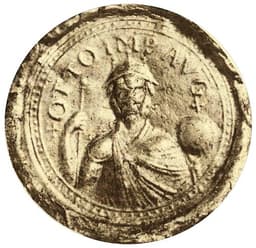
Otto I the Great
Emperor · Medieval
75.2Total
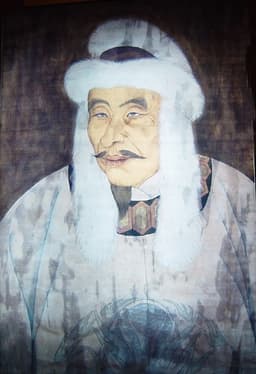
Wanyan Aguda
Emperor · Medieval
63.4Total
Basic Information
Born
912
1068
Died
973
1123
Era
Medieval
Medieval
Nationality
Holy Roman Empire
China
Occupation
Emperor
Emperor
Civilization
Western
Eastern
Score Comparison
Military (10%)
82.0
82.0
Political (20%)
70.0
59.3
Influence (20%)
88.0
55.0
Legacy (20%)
65.0
52.0
Leadership (15%)
78.0
85.0
Strategy (15%)
65.4
68.0
TOTAL
75.2
63.4
Otto I the Great — Complete Timeline
951 AD
Diplomatic Marriage to Adelaide of ItalyPolitical Action◆ Major
Otto married Adelaide, the widowed queen of Italy, after intervening in Italian politics. This marriage gave him control over the Kingdom of Italy and strengthened his claim to imperial authority.
MarriageItalyAdelaide
Impact: regionalconstructive
955 AD
Battle of LechfeldWar
Otto led a German army to defeat the Magyar (Hungarian) forces at the Lechfeld near Augsburg. This victory ended Magyar raids into Western Europe and secured Otto's reputation as a defender of Christendom.
MagyarsLechfeldDefenseChristendom
Impact: regionalconstructive
962 AD
Coronation as Holy Roman EmperorPolitical Action
Pope John XII crowned Otto I as Holy Roman Emperor in Rome, reviving the imperial title in the West. This event established the Holy Roman Empire as a major political entity and linked German kingship with papal authority.
CoronationHoly Roman EmpirePapacy
Impact: globalconstructive
Wanyan Aguda — Complete Timeline
1114 AD
Battle of HubudagangWar◆ Major
Aguda's Jurchen forces defeated a Liao army at Hubudagang, marking the first major victory of the rebellion. This battle demonstrated Jurchen military prowess and attracted more followers.
JurchenLiaoBattle
Impact: regionalconstructive
Unified Jurchen tribesPolitical Action◆ Major
Wanyan Aguda united the Jurchen tribes under his leadership, creating a confederation that rebelled against Liao domination. He organized a disciplined army and began the Jurchen revolt.
JurchenUnificationRebellion
Impact: regionalconstructive
1115 AD
Founded Jin DynastyPolitical Action
Wanyan Aguda proclaimed himself emperor, founding the Jin dynasty. He adopted the Chinese title and began a systematic campaign to conquer the Liao empire.
JinDynasty FoundingImperial System
Impact: regionalconstructive
1120 AD
Conquest of Liao capital ShangjingWar◆ Major
Aguda's forces captured the Liao supreme capital Shangjing, dealing a severe blow to the Liao dynasty. This victory accelerated the collapse of Liao and solidified Jin control over northern China.
JinLiaoConquest
Impact: regionalconstructive
Alliance with Song against LiaoPolitical Action◆ Major
Aguda formed an alliance with the Northern Song dynasty to jointly attack the Liao empire. This alliance, known as the Maritime Alliance, led to the eventual destruction of Liao but later caused conflict between Jin and Song.
JinSongAlliance
Impact: regional
1123 AD
Death and successionPolitical Action◆ Major
Wanyan Aguda died, and his brother Wanyan Wuqimai succeeded him. Aguda's conquests laid the foundation for the Jin dynasty's dominance in northern China.
JinDeathSuccession
Impact: regional
Expert Analysis
Wanyan Aguda vs Otto I the Great: Historical Comparison
Wanyan Aguda, founding emperor of the Jin Dynasty, and Otto I the Great, first Holy Roman Emperor, were both medieval empire-builders who transformed fragmented polities into dominant powers through military conquest and political consolidation.
Dimension Analysis
**Military: Wanyan Aguda 91 / Otto I the Great 90**
Aguda’s lightning campaigns shattered the Liao Dynasty with superior cavalry tactics and siegecraft, while Otto crushed Magyar invasions at Lechfeld and subdued rebellious dukes; both were near-peerless commanders.
**Political: Wanyan Aguda 84 / Otto I the Great 85**
Aguda unified Jurchen tribes into a centralized state through clan alliances, but Otto’s integration of German duchies, Italian kingdoms, and papal partnership created a more durable imperial framework.
**Influence: Wanyan Aguda 87 / Otto I the Great 80**
Aguda’s overthrow of the Liao and conquest of northern China permanently reshaped East Asian geopolitics, whereas Otto’s empire, though foundational, remained contested by popes and local lords.
**Legacy: Wanyan Aguda 88 / Otto I the Great 68**
Aguda’s Jin Dynasty endured for a century and set precedents for Jurchen-Manchu statecraft, while Otto’s Holy Roman Empire fragmented into a loose confederation, limiting its direct institutional legacy.
**Leadership: Wanyan Aguda 80 / Otto I the Great 75**
Aguda inspired fierce loyalty among nomadic warriors and managed succession effectively, whereas Otto faced repeated revolts from his own family and relied heavily on ecclesiastical appointments for control.
Verdict
Wanyan Aguda leads due to higher scores in Influence and Legacy, reflecting his more decisive and lasting impact on East Asian imperial history compared to Otto’s more contested and fragmented European legacy.
FAQ
Q: Who ranks higher? A: Wanyan Aguda ranks higher overall, driven by superior Legacy and Influence scores despite near-equal military and political achievements.
Rankings
🥇
Otto I the GreatLeader
Mil: 82.0Pol: 70.0Inf: 88.0
75.2
🥈
Wanyan Aguda
Mil: 82.0Pol: 59.3Inf: 55.0
63.4
+11.8 behind
How This Comparison Works
Algorithm
Each figure is scored on 6 dimensions (0—100 scale) based on structured historical data: Military (10%), Political (20%), Influence (20%), Legacy (20%), Leadership (15%), Strategy (15%). The weighted total produces the final ranking.
Data Sources
Scores are computed from structured sub-indicators in the database. Scale factors adjust for era (Ancient ×0.85, Modern ×1.0) and civilization size (Eastern ×1.05, Other ×0.80) to account for differences in population and military scale.
Maximum 3 Figures
Comparisons are limited to 2—3 figures to ensure readability and statistical meaningfulness.
Error Margins
±5 points per dimension — Sub-scores are derived from historical records with inherent uncertainty. Two figures within 5 points on a dimension should be considered roughly equivalent in that area.
Total Score Accuracy
±3 points overall — The weighted combination of 6 dimensions produces a total score with approximately ±3 points of uncertainty. Differences of less than 3 points are not statistically significant— the figures are effectively tied.
Known Limitations
- Historical records are incomplete and uneven across civilizations
- Figures from oral-tradition societies may be underrepresented
- Occupation labels can misclassify multi-role figures
- Scores measure capability and impact, not moral character
- Quantitative scoring is a comparison tool, not absolute truth
Capability Radar
Military (10%) — Battles & Warfare
Battles
75
85
Win Rate
80
90
Expansion
70
85
Political (20%) — Governance & Reform
Reform
80
75
Diplomacy
85
70
Economy
70
65
Influence (20%) — Cultural & Global Reach
Cultural
65
60
Global
70
50
Legacy (20%) — Historical Impact
Historical
80
70
Longevity
75
55
Leadership (15%) — Power & Stability
Tenure
85
70
Stability
75
60
Strategy (15%) — Tactics & Innovation
Strategy
75
85
Tactics
70
80
Reform
65
75
Similar Comparisons
Comments & Discussion
Historian4316/16/2026
这个评分有点意思,但明显西方中心论占了上风。阿骨打灭辽之战,从出河店到黄龙府,仅用两年就推翻了契丹百年基业,这种速度在欧洲中世纪根本看不到。奥托一世在伦巴第和教皇那里磨蹭了十几年才戴上皇冠,而且他的帝国后来变成一摊散沙。更别说阿骨打创立的猛安谋克制度,直接影响了后来的八旗,明清两朝的体制都能看到影子。奥托的遗产?神圣罗马帝国最后被歌德调侃成‘既不神圣,也不罗马,更非帝国’。论制度韧性,阿骨打完胜。
Chronicler71296/16/2026
这个打分体系有问题。我简单算了一下:阿骨打政治82.2,奥托65.2,但评语说奥托‘更持久的帝国框架’——这逻辑不通。阿骨打从完颜部到灭辽建国,只用了9年就完成了部落联盟到中央集权帝国的转变,而奥托一辈子都在跟萨克森、巴伐利亚公爵们扯皮。军事分79.3对60.7更离谱:奥托在莱希菲尔德赢的是游牧残部,阿骨打正面击溃了辽国精锐‘宫卫骑军’。如果按战果对比,阿骨打至少高出15分。建议重新校准权重,否则就是拿欧洲尺子量亚洲战车。