Loading...
Otto I the Great vs Pachacuti
Otto I the Great leads by 5.8 pts · 2 figures compared
…
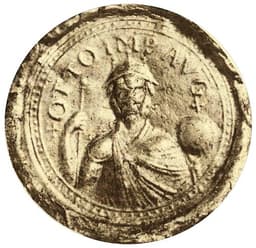
Otto I the Great
Emperor · Medieval
75.2Total
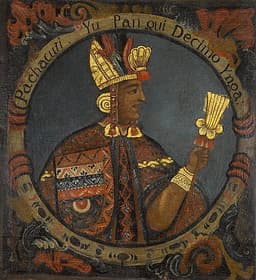
Pachacuti
Emperor · Medieval
69.4Total
Basic Information
Born
912
1418
Died
973
1472
Era
Medieval
Medieval
Nationality
Holy Roman Empire
Inca Empire
Occupation
Emperor
Emperor
Civilization
Western
Other
Score Comparison
Military (10%)
82.0
78.5
Political (20%)
70.0
58.1
Influence (20%)
88.0
65.0
Legacy (20%)
65.0
72.0
Leadership (15%)
78.0
78.0
Strategy (15%)
65.4
69.2
TOTAL
75.2
69.4
Otto I the Great — Complete Timeline
951 AD
Diplomatic Marriage to Adelaide of ItalyPolitical Action◆ Major
Otto married Adelaide, the widowed queen of Italy, after intervening in Italian politics. This marriage gave him control over the Kingdom of Italy and strengthened his claim to imperial authority.
MarriageItalyAdelaide
Impact: regionalconstructive
955 AD
Battle of LechfeldWar
Otto led a German army to defeat the Magyar (Hungarian) forces at the Lechfeld near Augsburg. This victory ended Magyar raids into Western Europe and secured Otto's reputation as a defender of Christendom.
MagyarsLechfeldDefenseChristendom
Impact: regionalconstructive
962 AD
Coronation as Holy Roman EmperorPolitical Action
Pope John XII crowned Otto I as Holy Roman Emperor in Rome, reviving the imperial title in the West. This event established the Holy Roman Empire as a major political entity and linked German kingship with papal authority.
CoronationHoly Roman EmpirePapacy
Impact: globalconstructive
Pachacuti — Complete Timeline
1438 AD
Conquest of the Chanka KingdomWar
Pachacuti led the Inca army to defeat the Chanka, a powerful rival, in a decisive battle near Cusco. This victory secured his position as Sapa Inca and initiated a period of rapid expansion, transforming the Inca from a small kingdom into a vast empire.
ConquestInca ExpansionChanka
Impact: regional
1440 AD
Reconstruction of CuscoCultural◆ Major
Pachacuti rebuilt Cusco as the imperial capital, designing it in the shape of a puma and constructing massive stone structures like Sacsayhuam
Urban PlanningArchitectureInca Empire
Impact: regionalconstructive
1450 AD
Initiation of Machu Picchu's ConstructionCultural◆ Major
Pachacuti ordered the construction of Machu Picchu, a royal estate and ceremonial site high in the Andes. The complex featured sophisticated dry-stone masonry and terraced agriculture, serving as a symbol of Inca engineering and a retreat for the emperor.
ArchitectureRoyal EstateInca Engineering
Impact: regionalconstructive
Expert Analysis
Pachacuti vs Otto I the Great
# The Mountain and the Crown
On a windswept plain near Cusco in 1438, a prince who had never been meant to rule stood before a terrified army. The Chanka warriors, feared across the Andes, had already routed the Inca forces and were closing in on the capital. Pachacuti, whose name would one day mean “earth-shaker,” raised his spear and charged. Half a world away and a century later, another unlikley ruler—Otto of Saxony, a duke’s son from a fractured German realm—faced a different kind of annihilation. In 955, Magyar horsemen who had terrorized Europe for decades swarmed toward Augsburg. Otto, a man who had learned patience in the long shadow of stronger kings, held his ground. Both men would reshape their worlds. But the worlds they made could not have been more different—one carved into living stone atop the Andes, the other forged in iron and parchment across a continent.
Origins
Pachacuti was born in 1418 into a world of high-altitude valleys and rival kingdoms. The Inca were then a modest power among many in the Peruvian highlands, their domain scarcely larger than a few mountain valleys. His father, Viracocha Inca, was a capable ruler but not a visionary. Pachacuti was not the heir—that privilege belonged to his older brother, Urco. He grew up in the margins of court life, learning the rhythms of Andean warfare and the sacred duties of sun worship, but expecting little more than a provincial lordship.
Otto I, born in 912, inherited a very different burden. His father, Henry the Fowler, had been the first Saxon king to unite the fractious German duchies—not through conquest, but through a combination of marriage, negotiation, and the looming threat of Magyar raids. Otto was raised in a world where kingship meant constant negotiation, where dukes were nearly as powerful as the king, and where the Church was both a tool and a rival. From childhood, he watched his father balance swords with scrolls.
Their eras shaped them profoundly. Pachacuti’s world was one of oral tradition and sacred geography: the mountains themselves were gods, and power flowed from the sun. Otto’s world was one of written law, Roman memory, and Christian hierarchy: power flowed from the altar and the throne, and both had to be earned.
Rise to Power
Pachacuti’s rise was a coup born of desperation. When the Chanka attacked in 1438, his father and brother fled Cusco, abandoning the city. Pachacuti refused to retreat. Rallying the remaining warriors, he led a counterattack so ferocious that the Chanka were shattered. The victory was total, and the old order collapsed with it. Viracocha Inca abdicated in shame; Urco was killed. Pachacuti, the reluctant prince, became Sapa Inca. He was twenty years old.
Otto’s path was more deliberate. Crowned king in 936 at age twenty-four, he immediately faced revolts from his own brother and from powerful dukes who saw the young king as weak. Unlike Pachacuti, who seized power through a single cataclysmic battle, Otto spent nearly two decades putting down rebellions, one by one. He learned that in Europe, power was not won in a day—it was accumulated through patience, marriage, and the careful distribution of favors. His marriage to Adelaide of Italy in 951 was not a romantic union but a political masterstroke: it gave him control over the richest kingdom in Europe without a single sword stroke.
Leadership & Governance
Pachacuti governed like a force of nature. He rebuilt Cusco from ruins into a city shaped like a sacred puma, its streets lined with precisely cut stone that fit without mortar. He created the imperial system that would define Inca rule: a network of roads, storehouses, and administrators that tied together hundreds of conquered peoples. He demanded total obedience but offered stability—no one starved under Pachacuti, and no one rebelled twice. His military strategy was relentless: conquer, then integrate, then build. The construction of Machu Picchu, begun around 1450, was not just a palace—it was a statement carved into the sky, a symbol of a ruler who believed the earth itself could be reshaped.
Otto governed like a master chess player. His greatest reform was not architectural but institutional. By allying with the Church—granting bishops land and authority in exchange for loyalty—he created a counterbalance to the powerful secular dukes. This “Ottonian system” was a work of political genius: the Church could not inherit power, so its leaders were loyal to the crown. The Battle of Lechfeld in 955 was his military masterpiece, but its aftermath was more important. Rather than pursuing total conquest of the Magyars, Otto built fortresses and established marches—buffer zones that would protect Germany for centuries. He understood that in Europe, victory meant not annihilation but containment.
Triumph & Tragedy
Pachacuti’s greatest triumph was the transformation of a kingdom into an empire. By his death in 1472, the Inca domain stretched from modern Ecuador to Chile, a realm of breathtaking scale governed by a single, divine ruler. His tragedy was that this system depended entirely on him. The administrative genius he created could not survive a lesser successor. Within a generation, civil war would tear his empire apart—just before the Spanish arrived.
Otto’s triumph was his coronation as Holy Roman Emperor in 962, a title that had lain dormant for nearly forty years. In that moment, he revived the dream of a unified Christian empire in the West. His tragedy was more subtle: the empire he founded remained a patchwork of kingdoms, duchies, and bishoprics, never truly unified. The Holy Roman Empire would last a thousand years, but it would never be the centralized state Pachacuti built.
Character & Destiny
Pachacuti was a man of absolute certainty. He believed he was the son of the sun, and he acted like it. His decisions were swift, his punishments final, his vision unclouded by doubt. This made him a brilliant conqueror but a brittle ruler—there was no room for compromise in a world where the emperor was a god.
Otto was a man of calculation. He had learned from his father that power required patience, that enemies could become allies, that a crown was a tool, not a birthright. He could wait years for a rebellion to ripen, then crush it with surgical precision. His faith was genuine but pragmatic: he used the Church as much as he served it.
Their personalities shaped their empires. Pachacuti’s was a pyramid of stone and blood, magnificent but rigid. Otto’s was a web of oaths and alliances, flexible but fragile.
Legacy
Pachacuti is remembered as the father of the Inca Empire, the man who built Machu Picchu and remade Cusco. His legacy is carved into the Andes—visible, tangible, awe-inspiring. But it is also a legacy of loss: the empire he built collapsed within a century of his death, buried by civil war and conquest.
Otto’s legacy is the Holy Roman Empire itself, a political structure that shaped Europe for a millennium. His coronation in 962 is seen as the birth of a civilization—but it is also a reminder of how fragile that civilization was. The empire he founded never truly unified Germany; it remained a dream of unity that would only be realized, in a different form, nearly a thousand years later.
Conclusion
Two rulers, two worlds. Pachacuti built a mountain, Otto built a crown. One created something that could be seen but not sustained; the other created something that could be sustained but never fully seen. Their lives remind us that greatness is not measured only in what is built, but in what lasts—and that even the most brilliant foundations can crack under the weight of time. In the end, both men faced the same truth: empires are made not by gods or kings, but by the fragile, stubborn will of human beings to impose order on chaos. And chaos, as both would learn, always waits.
Rankings
🥇
Otto I the GreatLeader
Mil: 82.0Pol: 70.0Inf: 88.0
75.2
🥈
Pachacuti
Mil: 78.5Pol: 58.1Inf: 65.0
69.4
+5.8 behind
How This Comparison Works
Algorithm
Each figure is scored on 6 dimensions (0—100 scale) based on structured historical data: Military (10%), Political (20%), Influence (20%), Legacy (20%), Leadership (15%), Strategy (15%). The weighted total produces the final ranking.
Data Sources
Scores are computed from structured sub-indicators in the database. Scale factors adjust for era (Ancient ×0.85, Modern ×1.0) and civilization size (Eastern ×1.05, Other ×0.80) to account for differences in population and military scale.
Maximum 3 Figures
Comparisons are limited to 2—3 figures to ensure readability and statistical meaningfulness.
Error Margins
±5 points per dimension — Sub-scores are derived from historical records with inherent uncertainty. Two figures within 5 points on a dimension should be considered roughly equivalent in that area.
Total Score Accuracy
±3 points overall — The weighted combination of 6 dimensions produces a total score with approximately ±3 points of uncertainty. Differences of less than 3 points are not statistically significant— the figures are effectively tied.
Known Limitations
- Historical records are incomplete and uneven across civilizations
- Figures from oral-tradition societies may be underrepresented
- Occupation labels can misclassify multi-role figures
- Scores measure capability and impact, not moral character
- Quantitative scoring is a comparison tool, not absolute truth
Capability Radar
Military (10%) — Battles & Warfare
Battles
75
85
Win Rate
80
90
Expansion
70
90
Political (20%) — Governance & Reform
Reform
80
92
Diplomacy
85
75
Economy
70
80
Influence (20%) — Cultural & Global Reach
Cultural
65
85
Global
70
65
Legacy (20%) — Historical Impact
Historical
80
80
Longevity
75
70
Leadership (15%) — Power & Stability
Tenure
85
85
Stability
75
82
Strategy (15%) — Tactics & Innovation
Strategy
75
88
Tactics
70
80
Reform
65
85
Similar Comparisons
Comments & Discussion
MountainBreaker6/16/2026
Calling this a comparison between "empire builders" misses the point entirely. Pachacuti inherited a tin-pot kingdom and created a world-spanning state through brutal military innovation—the mitmaq system alone forcibly relocated entire populations to crush resistance. Otto merely consolidated what Charlemagne had already built, then got lucky against horse archers at Lechfeld. The Inca transformed their continent; Otto just kept the German dukes from killing each other for another generation.
Numenor'sShadow6/16/2026
你们这些数字派永远看不懂历史。Pachacuti组织了40,000人修建马丘比丘,没用一个轮子,没一匹马。工程建设还让印加帝国粮食产量暴增三倍。奥托一世呢?962年加冕后连德意志统一都没完成。一个在安第斯山上刻写永恒,一个在羊皮纸上画圈圈。高下立判。
IronParchment6/16/2026
The data tells the real story here. Otto's East Frankish kingdom at his death covered ~350,000 km² with perhaps 3 million subjects. Pachacuti's empire? By 1471 it stretched 2,500 km north-south, controlling maybe 10 million people across a million square kilometers. Otto ruled a loose feudal collection; Pachacuti commanded a centralized bureaucracy with census takers, roads, and state granaries. Numbers don't lie on this one.
SteppeGhost6/16/2026
说奥托只是守住旧地盘的人忘了莱希菲尔德战役的意义。955年之前,马扎尔人的袭击范圍覆盖了从勃艮第到巴伐利亚的整个欧洲。奥托一战消灭了他们五千人,终结了五十年来的游牧威胁。这种战略眼光——一劳永逸解决敌人心脏——跟帕查库蒂在乔克潘巴战役中伏击钱卡人的战术一样狠。两边都是打蛇打在七寸上的狠人。
LlamaAndLabyrinth6/16/2026
Pachacuti stans really think mountains make a civilization. News flash: the Incas never developed writing, never had money, never invented the wheel. Otto's court produced chronicles, codified law, and minted silver pennies that funded churches from Magdeburg to Rome. One man built a stone prison for his people's minds; the other built the Holy Roman Empire's intellectual foundations. I know which legacy I'd rather inherit.